Why Chicago-Area Refineries Face the Strictest Sewer FOG Limit in the U.S.
The Metropolitan Water Reclamation District of Greater Chicago (MWRD) caps Fats, Oils, and Greases (FOG) at 0.0025 mg/L grab, 0.001 mg/L daily composite, and 0.0005 mg/L monthly average under Appendix B, Section 1 of its Sewage and Waste Control Ordinance — the strictest sewer FOG ceiling in the United States, forcing chemical emulsion breaking on every refinery, terminal, and petrochemical plant that ties into MWRD's collection system (source: MWRD Sewage and Waste Control Ordinance, Appendix B). MWRD serves more than 380 square miles across the City of Chicago and 128 suburbs, with the Pretreatment and Cost Recovery (PTCR) group currently holding over 300 Discharge Authorization permits for Significant Industrial Users (source: mwrd.org, 2026). The FOG limit is the binding design driver because federal 40 CFR Part 419 daily-maximum O&G ceilings for the petroleum refining category typically run 15–38 mg/L — orders of magnitude looser than the local monthly average. A standard Gulf Coast API/DAF train sized to meet 15 mg/L O&G will not pass in the Calumet corridor. Underlying both is the 40 CFR 403.5 general prohibition on discharges that cause pass-through or interference at the POTW; MWRD's FOG numbers are the local codification of that duty, written as enforceable Appendix B ceilings rather than narrative criteria.
The 2026 Standards Stack: 40 CFR Part 419, 40 CFR 403, and MWRD Ordinance
Four regulatory layers govern refinery sewer discharge, requiring adherence to the most stringent limit for every pollutant. The hierarchy runs 40 CFR Part 419 (petroleum refining categorical) → 40 CFR 403 (general pretreatment) → MWRD Sewage and Waste Control Ordinance → site-specific Discharge Authorization permit. Where layers conflict, the more stringent limit governs (per Sec. 18-64.6 of the West Chicago Pretreatment Ordinance, which mirrors MWRD's "more restrictive controls" clause). Engineers must map every analyte in their Discharge Authorization to a specific federal subcategory before designing the treatment train. 40 CFR Part 419 subdivides petroleum refining into six subcategories that touch Chicago-area assets: Topping (419.21), Cracking (419.22), Reforming (419.23), Petrochemical (419.24), Lube Oil (419.25), and Integrated (419.26). Two safety envelopes from 40 CFR 261.21 cap the design: a closed-cup flash point cutoff of 60°C (140°F), and a Lower Explosive Limit rule prohibiting two successive meter readings above 5% or any single reading above 10% at the nearest accessible point to the POTW (source: 40 CFR 261.21, adopted verbatim in MWRD's Article V). 35 Illinois Administrative Code 307 acts as the receiving-water-quality backstop that MWRD must meet under its own NPDES permit, and Section 307.103 sets a mercury limit of 0.0005 mg/L — the same order of magnitude as the FOG monthly average.
| Federal subcategory | O&G daily max (mg/L) | TSS daily max (mg/L) | pH range |
|---|---|---|---|
| 419.21 Topping | 15 | 30 | 6.0–9.0 |
| 419.22 Cracking | 18 | 36 | 6.0–9.0 |
| 419.23 Reforming | 26 | 30 | 6.0–9.0 |
| 419.24 Petrochemical | 28 | 32 | 6.0–9.0 |
| 419.25 Lube Oil | 38 | 54 | 6.0–9.0 |
| 419.26 Integrated | 15 | 30 | 6.0–9.0 |
| MWRD Appendix B (local ceiling) | 0.0005 (mo. avg.) | Site-specific | 5.0–10.0 |
The gap between the federal daily-max O&G and the MWRD monthly average is roughly four orders of magnitude, which explains why gravity-only treatment trains do not qualify.
The Four-Stage Oily Water Equipment Train Chicago Refineries Actually Run
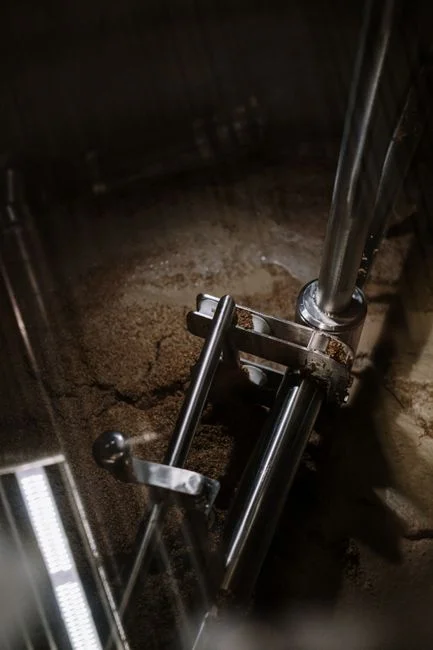
A refinery that consistently hits the MWRD Appendix B FOG monthly average runs four unit operations in series, each with a defined inlet and outlet envelope. Stage 1 — API gravity oil/water separator per API 421: typically 60 minutes of hydraulic retention, with a design capture of free oil down to approximately 150 mg/L O&G and removal of settleable solids. Stage 2 — Corrugated Plate Interceptor (CPI): inclined plates at 20–40 m/h plate loading coalesce remaining free oil, dropping the stream to 30–60 mg/L O&G. Stage 3 — Dissolved Air Flotation (DAF) with emulsion-breaking chemistry: cationic polyacrylamide dosed at 5–20 mg/L plus pH adjustment breaks emulsified oil that API and CPI cannot, with an air-to-solids ratio of 0.03–0.06 (typically), achieving <5–10 mg/L O&G and <20 mg/L TSS at the outlet. A Dissolved Air Flotation (DAF) system is the workhorse unit, sized for 3–5 gpm/ft² hydraulic loading on the contact zone. Stage 4 — Polishing: either induced gas flotation, biological activated sludge, or activated carbon/stripping to address dissolved organics, benzene, toluene, xylene, and phenols against the MWRD Appendix B volatile organics triggers. pH is held between 5.0 and 10.0 with sulfuric acid or caustic; sulfide is controlled with iron salts (ferrous chloride or ferric sulfate at 10–30 mg/L as Fe) or biological oxidation to stay below the Appendix B threshold. Temperature at the point of discharge must not exceed 65°C (150°F) per Article V of the Ordinance. For a complementary view on how similar trains are configured in the Houston ship channel, see this chemical plant pretreatment compliance guide for Houston.
| Stage | Equipment | Inlet O&G (mg/L) | Outlet O&G (mg/L) | Outlet TSS (mg/L) | Key chemistry / control |
|---|---|---|---|---|---|
| 1 | API 421 gravity separator | 500–2,000 | ~150 | ~100 | 60-min retention, sludge drag |
| 2 | CPI (inclined plates) | ~150 | 30–60 | ~50 | 20–40 m/h plate loading |
| 3 | DAF + emulsion breaking | 30–60 | <5–10 | <20 | 5–20 mg/L cationic polyacrylamide, pH 6.5–7.5 |
| 4 | IGF / activated sludge / carbon / stripper | <10 | <1 (post-carbon) | <10 | Benzene stripper, GAC polishing, sulfide polishing |
For sites co-discharging cyanide-bearing streams, the polishing stage must also address weak-acid-dissociable cyanide against the 0.30 mg/L ceiling — see the broader cyanide wastewater treatment guide for design specs.
Sampling, Monitoring, and Slug-Control: What MWRD Actually Audits
MWRD's PTCR group audits data, notification timing, and physical sampling access on a regular cadence. Significant Industrial Users file semi-annual self-monitoring reports under Discharge Authorization Special Condition 2 using the Continued Compliance Report (RD-115), with due dates fixed in the permit. For any spill, slug, treatment-system malfunction, or bypass into the public sewer, the IU must phone MWRD within 1 hour of becoming aware, follow up by email to [email protected], and submit a written RD-116 notification within 5 calendar days — failure to follow these steps is Significant Noncompliance and triggers a Cease & Desist Order under Appendix F, Section I (source: MWRD Sewage and Waste Control Ordinance, Article V, Section 13). A separate 24-hour phone notification is required for any effluent violation of Appendix A or B limits, regardless of whether the final analytical report confirms the exceedance (source: MWRD Ordinance, Article V, Section 8). On the physical side, the Discharge Authorization specifies a control manhole and sampling chamber with 24-hour composite sampling per 40 CFR 136 methods, while FOG, pH, hexavalent chromium, and cyanide are grab-sampled. Each sample point is assessed an annual administrative charge alongside the User Charge Certified Statement (RD-925). Plants that pretreat via an automatic chemical dosing system with logged setpoints and a rotary mechanical bar screen protecting the CPI typically have shorter inspection findings. For reference on flotation selection at the Stage 3 step, the pressure flotation system selection guide walks through the air-to-solids and recycle-rate trade-offs.
2026 Compliance Roadmap: A Six-Month Readiness Timeline for the Discharge Authorization Renewal

Six months is the required window to close compliance gaps before the renewal clock starts. Months 6–5: pull the last 24 months of Discharge Monitoring Report (DMR) data and the current Discharge Authorization permit; benchmark every parameter against MWRD Appendix A and B and the applicable 40 CFR Part 419 subcategory. Flag every parameter that has run >80% of its limit at any point. Months 4–3: commission a jar test on the DAF stage at current organic and hydraulic loads to confirm O&G and TSS performance; identify whether polymer dose, air-to-solids ratio, or plate pack fouling is the bottleneck. Months 2–1: close any gap in the slug control plan; update the RD-116 notification procedure; confirm the 1-hour call tree (control room, EHS manager, pretreatment lead) and the 24-hour violation call tree are staffed 24/7. Month 0: submit the Continued Compliance Report (RD-115), any non-discharging categorical certifications (EL 248), and schedule the MWRD annual inspection. Plants that complete this sequence in 2026 typically clear renewal without a Cease & Desist Order; plants that skip the jar test at Month 4 often discover plate fouling during the inspection itself (HydropureWater field data, 2026).
Frequently Asked Questions
What is the MWRD FOG limit for refineries discharging to the Chicago sewer system?
Under Appendix B, Section 1 of the MWRD Sewage and Waste Control Ordinance, FOG is capped at 0.0025 mg/L on a grab sample, 0.001 mg/L as a daily composite, and 0.0005 mg/L as a monthly average — the strictest sewer FOG ceiling in the United States. A standard API separator with no chemical stage will not meet this limit.
Which 40 CFR Part 419 subcategory applies to a Chicago-area refinery?
Applicability
Frequently Asked Questions
What is the MWRD FOG limit for petroleum refineries discharging to the sewer in Chicago?
The Metropolitan Water Reclamation District of Greater Chicago (MWRD) enforces a specific Fats, Oils, and Grease (FOG) limit of 100 milligrams per liter (mg/L) for industrial users. This numerical limit is set forth in the MWRD Sewage and Waste Control Ordinance to prevent interference with the operation of the district's intercepting sewers and treatment plants.
Do Chicago refineries have to follow 40 CFR Part 419 or the MWRD Sewage and Waste Control Ordinance?
Refineries must comply with both sets of regulations. 40 CFR Part 419 establishes federal categorical pretreatment standards for the petroleum refining point source category, while the MWRD Sewage and Waste Control Ordinance provides local limits that are often more stringent to protect the regional wastewater infrastructure. Facilities must adhere to whichever standard is more restrictive for a specific pollutant parameter.
What is the best pretreatment equipment train for a petroleum plant to meet Chicago sewer discharge limits?
An effective pretreatment train typically begins with an API separator for primary oil-water separation, followed by Dissolved Air Flotation (DAF) units to remove emulsified oils and suspended solids. For final polishing to meet stringent 2026 limits, refineries often integrate multimedia filtration or membrane bioreactors (MBR) combined with granular activated carbon (GAC) to ensure compliance with volatile organic compound (VOC) and residual FOG discharge thresholds.
How long does a refinery have to report a slug discharge to MWRD?
In the event of a slug load or accidental discharge, the industrial user must notify the MWRD via telephone immediately upon discovery. This initial notification must be followed by a formal written report submitted to the District within five business days, detailing the cause of the discharge and the corrective measures taken to prevent future occurrences.
What is the FOG limit for industrial users discharging to MWRD?
For all industrial users discharging into the MWRD sewerage system, the FOG concentration limit is 100 mg/L. This limit applies to all petroleum-based oils, non-petroleum-based grease, and floating substances that could cause obstructions or interference at the wastewater reclamation plant.