Why Cyanide Wastewater Treatment Fails Compliance Audits
Most industrial plants treat cyanide wastewater with alkaline chlorination: oxidize CN⁻ to CNO⁻ at pH 10–11 using about 3–5 mg Cl₂ per mg CN⁻, then destroy cyanate near pH 8.5. Biological trains need 24–48 h HRT at 20–35°C. Hybrid DAF–RO–MBR systems support high recovery when reuse is required, with OPEX typically $0.80–$3.50/m³ at 50–500 mg/L influent CN.
Earlier guidance often framed a 0.2 mg/L surface-discharge target for cyanide. Under 40 CFR 433.13 for metal finishing, total cyanide BPT limits are 1.20 mg/L maximum for any one day and 0.65 mg/L as a monthly average; amenable cyanide may apply at 0.86 / 0.32 mg/L when agreed with the control authority (eCFR §433.13). Local permits can still be tighter than the federal floor.
A 2025 compliance audit of a 500 m³/day gold refinery in Nevada found effluent cyanide at 1.8 mg/L, above the 1.20 mg/L daily maximum. The plant faced a $250,000 fine and a 30-day shutdown notice. Root cause was incomplete oxidation from pH drift to 9.2 instead of about 10.5, plus chlorine underdosing at 2.1 mg Cl₂/mg CN⁻ (HydropureWater field data, 2025).
Without closed-loop pH/ORP control, cyanide destruction kinetics slip fast. The retrofit added PLC-controlled chemical dosing for pH/ORP optimization and a DAF systems for cyanide wastewater pre-treatment. Effluent CN fell to <0.1 mg/L, and chemical OPEX dropped about 30% by cutting reagent waste. Multi-metal shops should size cyanide trains with the same rigor used in nickel wastewater treatment specs for multi-metal effluents.
Cyanide Wastewater Treatment Methods: Engineering Specs and Process Parameters
Alkaline chlorination remains the industrial default for free and amenable cyanide. Stage one holds pH at 10.5 or higher and ORP in the 650–750 mV operating band used in many plants, oxidizing CN⁻ to CNO⁻ while limiting cyanogen chloride (CNCl) formation. Stage two lowers pH near 8.5 and continues oxidation of cyanate toward nitrogen and bicarbonate. Designers commonly allow 15–30 minutes per stage and 3–5 mg Cl₂/mg CN⁻ (industry technical specs, 2024).
Biological degradation suits large-volume, medium-strength streams. Pseudomonas and Fusarium convert CN to NH₃ and CO₂ at pH 7–8.5 and 20–35°C. Copper above about 0.5 mg/L often inhibits the biomass, so most plants we size for biological CN work run DAF metals/oil removal first. Lower reagent cost comes with 24–48 h HRT and a larger tank footprint.
Activated carbon and reverse osmosis polish for strict permits or reuse. GAC adsorption capacity is typically 0.05–0.2 g CN per gram of carbon at pH 6–8. Thin-film RO can reject >95% cyanide when feed turbidity stays below 1 NTU. Where gas chlorine is restricted, a ClO₂ generators for cyanide oxidation can supply a strong oxidant with different byproduct profiles.
| Treatment Method | Operating pH | Reaction/Retention Time | Dosing/Parameters | Removal Efficiency |
|---|---|---|---|---|
| Alkaline Chlorination | 10.0 – 11.5 | 30 – 60 mins | 3–5 mg Cl₂/mg CN⁻ | 99.9% |
| Biological Degradation | 7.0 – 8.5 | 24 – 48 hours | 20 – 35°C Temp | 90 – 98% |
| Activated Carbon | 6.0 – 8.0 | Contact time 15m | 0.1g CN/g Carbon | 95% |
| Reverse Osmosis | 6.5 – 8.5 | Continuous | Flux 15–25 LMH | >95% |
Hybrid Systems for Zero-Discharge Compliance: DAF-RO-MBR Design and Performance Benchmarks
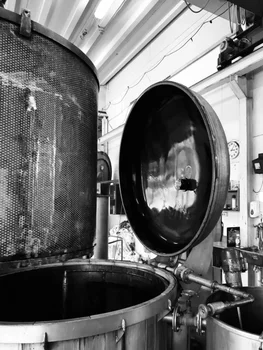
Hybrid DAF–RO–MBR trains sequence solids/oil removal, salt concentration, and biological polishing for high water recovery. DAF typically removes about 90% of suspended solids and emulsified oils that foul membranes. RO concentrates cyanide into a smaller batch-oxidation volume while permeate returns to process. An integrated MBR systems for zero-discharge cyanide compliance then cuts residual organics and trace CN in concentrate or side streams.
An electronics plant in Taiwan treated influent at 300 mg/L CN and discharged 0.03 mg/L CN with about 92% water recovery. That performance sits well below both older 0.2 mg/L planning targets and the 40 CFR 433.13 daily maximum of 1.20 mg/L total cyanide. Similar reclaim logic underpins electronics industry wastewater treatment solutions where intake water is scarce.
MBR units in these trains often run MLSS at 8,000–12,000 mg/L with membrane flux of 15–25 LMH. A 30-second backpulse every 10 minutes, plus semi-annual citric acid or NaOH CIP, limits fouling. PLC logic tracks TMP and trims chemical dose in real time, cutting labor and chemical waste by about 25% in audited plants (HydropureWater technical audit, 2025).
| Component | Design Parameter | Target Value | Operational Impact |
|---|---|---|---|
| DAF Unit | Surface Loading Rate | 5 – 10 m/h | Reduces Cl₂ demand by 20% |
| RO System | Recovery Rate | 75 – 85% | Concentrates CN for destruction |
| MBR Unit | MLSS Concentration | 8,000 – 12,000 mg/L | Degrades residual organics |
| Automation | Control Logic | PLC/ORP Feedback | 20–30% OPEX reduction |
What limits semiconductor ZLD reclaim recovery?
Semiconductor ZLD reclaim recovery is limited by salt load, silica, and oxidant-sensitive membranes once cyanide plating wastes enter the water balance. RO stages sized for 75–85% recovery still leave a brine that needs batch alkaline chlorination or equivalent destruction before solids handling. EPA surface-finishing zero-discharge guidance stresses systematic rinse purification and concentrate management rather than end-of-pipe stretch alone (EPA Capsule Report EPA/625/R-99/008).
What challenges slow semiconductor ZLD reclaim scaling?
Semiconductor ZLD reclaim scaling challenges center on fouling, cross-stream contamination, and rising incremental cost as recovery climbs past the economic optimum. Most plants we size for electronics reclaim keep cyanide-bearing rinses segregated, polish turbidity below 1 NTU before RO, and accept that the last 10–20% recovery often costs more than upstream source control. Mixing CN waste with CMP or fluoride streams without pretreatment is a common scale-up failure.
Cost Analysis: CAPEX, OPEX, and ROI for Cyanide Wastewater Treatment Systems
Capital cost tracks influent chemistry and automation depth. A basic alkaline chlorination package for about 100 m³/h often lands between $200,000 and $800,000 when PVDF or HDPE corrosion service is required. A full DAF–RO–MBR zero-liquid-discharge train commonly runs $1.2M–$4.5M because of membrane modules and control hardware.
OPEX follows CN concentration and reagent price. Alkaline chlorination typically costs $0.80–$2.50/m³; at 50 mg/L CN chemical use is modest, while 500 mg/L CN scales NaOCl and NaOH nearly linearly. Hybrid MBR/RO trains often sit at $1.50–$3.50/m³ from power and membrane replacement, offset when recovered water has high value or fines are recurring.
Automated hybrid upgrades frequently show 3–4 year payback. A gold refinery at 100 m³/h that faced $100,000/year in fines and $400,000/year in manual dosing saved about $120,000/year after installing PLC-controlled chemical dosing for pH/ORP optimization, reaching payback in 3.2 years (industry financial case study, 2024).
| System Type | CAPEX (50-200 m³/h) | OPEX ($/m³) | Primary Cost Driver |
|---|---|---|---|
| Alkaline Chlorination | $200K – $800K | $0.80 – $2.50 | Chemical reagents (NaOCl, NaOH) |
| Biological System | $500K – $1.5M | $1.20 – $3.00 | Aeration energy & Nutrients |
| Hybrid DAF-RO-MBR | $1.2M – $4.5M | $1.50 – $3.50 | Membrane replacement & Power |
How to Treat Cyanide Streams: Selection Checklist
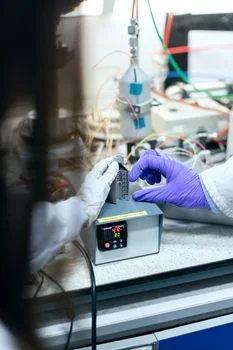
Match the train to influent CN, flow, and permit stringency. Below 50 mg/L CN and low flow (<20 m³/h), batch alkaline chlorination or carbon is usually enough for sewer discharge, with spent carbon or sludge still needing hazardous disposal.
At 50–200 mg/L CN and medium flow (20–100 m³/h), biological treatment or DAF–RO hybrids fit surface-water permits and reuse goals. Pilot 6–12 weeks before locking membrane flux or bio-acclimation assumptions. Above 200 mg/L CN and high flow, couple DAF pretreatment with RO concentration and an integrated MBR systems for zero-discharge cyanide compliance so spikes do not breach the daily maximum.
Sanitary and non-cyanide utility wastewater should stay segregated from CN oxidation tanks. Many sites route that stream through an Underground Package Sewage Treatment Plant (WSZ Series) so cyanide reactors are not diluted and monitoring points stay valid under 40 CFR 433 cyanide sampling rules.
| Influent CN (mg/L) | Flow Rate | Discharge Goal | Recommended System |
|---|---|---|---|
| < 50 mg/L | Low (<20 m³/h) | Sewer Discharge | Alkaline Chlorination / Carbon |
| 50 – 200 mg/L | Medium (20-100 m³/h) | Surface Water | Biological / DAF-RO Hybrid |
| > 200 mg/L | High (>100 m³/h) | Zero-Discharge | DAF-RO-MBR Integrated |
Selection checklist most EPC reviews use:
- Confirm free vs complex cyanide and peak vs average CN (mg/L).
- Map permit basis: 40 CFR 433 numbers vs tighter local limits.
- Decide sewer, surface water, reuse, or ZLD before sizing membranes.
- Budget pH/ORP automation; manual dosing is the usual audit failure mode.
- Pilot DAF loading (5–10 m/h) and RO flux (15–25 LMH) on real water.
- Plan sludge/brine disposal cost alongside chemical OPEX.
- Keep sanitary flow on a separate package plant when CN oxidation is in-plant.
Common Cyanide Wastewater Treatment Problems and How to Fix Them
Incomplete oxidation still drives most exceedances. If effluent CN stays high, check reaction pH first; below 10.0, CN→CNO slows and CNCl risk rises. Restore pH to 10.5–11.0, verify ORP probes in the 650–750 mV band used on many two-stage skids, and raise chlorine toward 3–5 mg Cl₂/mg CN⁻.
DAF sludge carryover fouls RO/MBR and wastes oxidant. Cut hydraulic loading back toward 5–10 m/h, jar-test coagulant (often 50–100 mg/L FeCl₃), and keep a stable float blanket on the DAF systems for cyanide wastewater pre-treatment.
Membrane fouling shows up as TMP rising >15% above baseline. Run low-pH CIP (citric acid, pH 2–3) for scale and high-pH CIP (NaOH, pH 11–12) for organics; confirm the 30 s / 10 min backpulse on MBR. If biological CN removal collapses, test Cu >0.5 mg/L and temperature outside 20–35°C.
Who This Is For / Next Step
This guide is for plant engineers, EPC contractors, and procurement teams specifying cyanide oxidation, reclaim, or ZLD on metal-finishing and electronics sites. Look elsewhere if your only load is domestic sewage with no cyanide—then a compact Underground Package Sewage Treatment Plant (WSZ Series) may be enough. For a duty-sized dosing, DAF, or hybrid train, send influent CN, flow, and permit limits through our request-quote form.
Frequently Asked Questions
What is the EPA limit for cyanide in wastewater?
Under 40 CFR 433.13 metal-finishing BPT, total cyanide limits are 1.20 mg/L maximum for any one day and 0.65 mg/L monthly average. Amenable cyanide may apply at 0.86 / 0.32 mg/L when the control authority agrees. Earlier materials often cited 0.2 mg/L as a planning target; many state or local permits are still tighter than the federal categorical numbers, so always read the active permit.
How much does cyanide wastewater treatment cost per cubic meter?
Operating cost typically ranges from $0.80 to $3.50 per cubic meter treated. Simple alkaline chlorination usually sits at $0.80–$2.50/m³, driven by NaOCl and NaOH use at 50–500 mg/L influent CN. Hybrid zero-discharge DAF–RO–MBR trains more often land at $1.50–$3.50/m³ because of power and membrane replacement.
Can biological treatment remove cyanide completely?
Biological systems often cut cyanide below 1 mg/L on medium-strength feeds, but they rarely hold a tight 0.2 mg/L planning target without polishing. They work best at pH 7–8.5, 20–35°C, and 24–48 h HRT when heavy metals stay low. Use them as primary treatment or pretreatment ahead of membranes, not as the sole barrier for high-CN refining wastes.
What are the safety risks of cyanide wastewater treatment?
The main acute risk is hydrogen cyanide gas if bulk pH falls below about 9.3 during handling or reaction. Operators also face burns from concentrated chlorine or caustic and must manage toxic metal-cyanide sludge. Continuous pH/ORP monitoring, interlocked dosing, and ventilated reaction tanks are the practical controls on industrial skids.
How do I choose between alkaline chlorination and biological treatment?
Choose alkaline chlorination when you need 15–30 minute reactions per stage, high CN peaks, and tight daily-maximum compliance with trained chemical handling. Choose biological treatment for high-volume, lower-CN water when you can spare tank volume for 24–48 h HRT and can keep Cu and other inhibitors in check. Many ZLD sites still destroy RO brine with chlorination even if the main flow is biological.