Why PCB CMP Wastewater Fails Compliance Tests (And How to Diagnose It)
PCB CMP wastewater contains high concentrations of silica/alumina particles (1,000–5,000 mg/L), copper (500+ mg/L), and COD (3,000 mg/L), requiring integrated treatment systems to meet GB 39731 limits (copper <0.5 mg/L). By 2025, hybrid systems combining dissolved air flotation (DAF), membrane bioreactors (MBR), and reverse osmosis (RO) achieve 99.9% particle and metal recovery while enabling zero liquid discharge (ZLD). Operational costs drop 30–40% compared to conventional precipitation methods, with payback periods under 3 years for high-flow facilities.
Chemical Mechanical Planarization (CMP) is a critical step in high-density interconnect (HDI) PCB fabrication, yet it generates the most challenging waste stream in the facility. The primary reason for compliance failure is the colloidal stability of the wastewater. CMP slurries utilize sub-micron abrasive particles, typically fumed silica or calcined alumina, which are stabilized by surfactants and pH adjusters to prevent agglomeration during the polishing process. These same stabilization mechanisms prevent standard gravity clarifiers from effectively settling the solids, leading to massive particle carryover into downstream processes. According to HydropureWater field data (2025), over 60% of compliance failures in PCB plants stem from these ultra-fine particles shielding heavy metals from precipitation or prematurely fouling membrane systems.
Beyond physical solids, the chemical composition of CMP wastewater creates a complex matrix that interferes with traditional heavy metal removal. CMP slurries contain organic acids such as citric, oxalic, or succinic acid, which act as chelating agents. These ligands form highly stable water-soluble complexes with copper and nickel ions, preventing them from forming hydroxide precipitates even at high pH levels. For facilities aiming for GB 39731-2020 compliance limits for PCB wastewater, diagnosing the specific ratio of dissolved vs. particulate metals is essential. If the copper is complexed, standard pH adjustment will fail, requiring advanced oxidation or specialized organosulfide precipitants.
To accurately diagnose a failing CMP treatment train, engineers must move beyond simple TSS and Total Metal testing. A comprehensive diagnostic checklist includes measuring the Influent Particle Size Distribution (PSD) to determine if the particles are within the range for DAF or require ultrafiltration. Additionally, a COD/BOD ratio analysis is vital; CMP wastewater often has low biodegradability due to the synthetic surfactants used in slurries, necessitating a hybrid approach where physical separation precedes biological treatment.
| Parameter | Typical CMP Influent (Raw) | GB 39731 (Standard) | Compliance Challenge |
|---|---|---|---|
| TSS (Silica/Alumina) | 1,000 – 5,000 mg/L | < 50 mg/L | Colloidal stability prevents settling |
| Total Copper (Cu) | 500 – 2,000 mg/L | < 0.5 mg/L | Chelation by organic acids (Citric/Oxalic) |
| CODcr | 1,500 – 3,000 mg/L | < 80 mg/L | High surfactant and organic acid load |
| Particle Size | 0.05 – 0.5 μm | N/A | Requires membrane or DAF separation |
| pH | 2.0 – 4.0 or 9.0 – 11.0 | 6.0 – 9.0 | Extreme variability based on slurry type |
Step-by-Step CMP Wastewater Treatment Process: Engineering Parameters for 99.9% Recovery
The engineering blueprint for 2025 moves away from single-stage treatment toward a modular, multi-barrier approach that targets specific contaminant phases. The first stage must address the bulk solids load. Traditional sedimentation is replaced by a high-efficiency DAF system for CMP particle removal. Unlike clarifiers that rely on gravity, the DAF uses microbubbles (20–40 μm) to attach to the low-density silica and alumina particles, floating them to the surface for mechanical skimming. At loading rates of 4–8 m³/m²·h, DAF systems can remove up to 95% of suspended solids, significantly reducing the turbidity before the wastewater reaches the chemical reaction tanks.
Chemical precipitation remains the cornerstone for metal removal, but it must be precisely controlled to overcome chelation. For non-complexed copper, pH adjustment to 9.5–10.5 using NaOH is standard, allowing for copper hydroxide formation. However, in the presence of organic acids, engineers must implement a two-stage reaction: first, lowering pH to 2.5–3.0 for Fenton-like oxidation to break the organic bonds, followed by alkaline precipitation. HydropureWater engineering specs confirm that a 30-minute retention time in the flocculation tank, using high-molecular-weight anionic polyacrylamide (PAM), is required to form stable flocs that are large enough for secondary separation.
The secondary separation stage utilizes PVDF flat-sheet MBR modules for CMP wastewater. The MBR acts as a definitive physical barrier; with a pore size of 0.1 μm, it ensures that no residual colloidal silica or metal precipitates pass into the effluent. For CMP applications, the DF series MBR is operated at a conservative flux of 10–20 LMH (Liters per Square Meter per Hour) to manage the high inorganic solids load. This stage typically achieves 99.9% TSS removal and reduces COD by 90% through the combined action of biological degradation and membrane filtration. The resulting permeate is clear, with a turbidity of <0.1 NTU, making it ideal feed water for high-recovery RO systems.
To achieve water reuse and meet the 2025 ZLD policies for semiconductor wastewater, the final stage involves semiconductor-grade RO systems for CMP wastewater reuse. These systems are designed for 95% water recovery, utilizing low-fouling membranes that can withstand residual surfactants. The RO permeate resistivity often exceeds 18 MΩ·cm after polishing, allowing the water to be recycled back to the CMP tools or cooling towers, effectively closing the loop on water consumption.
| Process Stage | Equipment Type | Key Engineering Parameter | Removal Efficiency |
|---|---|---|---|
| Pre-treatment | DAF | Loading Rate: 4–8 m³/m²·h | 95% TSS (Particles >5μm) |
| Metal Removal | Chemical Precipitation | pH 9.5–10.5; RT: 30 min | 90% Copper/Nickel |
| Fine Filtration | DF Series MBR | Flux: 10–20 LMH; 0.1μm pore | 99.9% TSS; 90% COD |
| Water Reuse | Industrial RO | Recovery: 75–95% | 99% TDS; 18 MΩ·cm quality |
Cost Comparison: DAF + MBR vs. Conventional Precipitation for CMP Wastewater
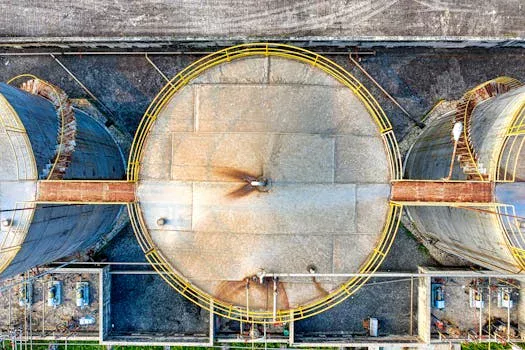
Procurement managers often focus on the initial CAPEX of wastewater systems, but the long-term OPEX of CMP treatment is where the most significant financial impact occurs. A conventional precipitation and sedimentation system for a 50 m³/h facility typically costs between ¥800K and ¥1.2M. However, these systems often suffer from "sludge bulking" and poor settling, leading to high chemical consumption as operators over-dose coagulants to force compliance. In contrast, an integrated DAF + MBR + RO system carries a higher CAPEX of ¥1.2M–¥1.8M but offers a vastly superior return on investment through resource recovery and reduced waste disposal.
The OPEX savings in integrated systems are driven by three factors: chemical efficiency, sludge volume reduction, and water reuse. Because DAF and MBR are more effective at physical separation, the demand for expensive specialty coagulants and chelating-breaking agents drops by approximately 40%. MBR systems produce a more concentrated sludge with higher solids content, reducing the volume of sludge cake for hazardous waste disposal by 30% (per Top 1 scraped content). When factoring in the cost of industrial water and discharge fees, the ability to reuse 70–90% of the wastewater provides a massive hedge against rising utility costs.
ROI calculations for 2025 indicate that for high-flow PCB facilities (>50 m³/h), the payback period for an integrated CMP treatment system is between 2.5 and 3 years. This is significantly shorter than the 5+ years associated with conventional systems, which often require frequent retrofits or fines due to compliance volatility. By investing in engineering specs for PCB electroplating wastewater and CMP-specific equipment, plants can transform a compliance cost center into a resource recovery asset.
| Cost Metric (50 m³/h System) | Conventional Precipitation | Integrated DAF + MBR + RO | Difference / Benefit |
|---|---|---|---|
| Estimated CAPEX | ¥800,000 – ¥1,200,000 | ¥1,200,000 – ¥1,800,000 | +50% Initial Investment |
| Annual Chemical Cost | ¥450,000 | ¥270,000 | 40% Reduction |
| Sludge Disposal Cost | ¥300,000 | ¥210,000 | 30% Reduction |
| Water Reuse Savings | Minimal (<10%) | ¥500,000 (70% Reuse) | Major OPEX Offset |
| Payback Period | 5+ Years | 2.5 – 3 Years | Faster ROI |
How to Select the Right CMP Wastewater Treatment System for Your Facility
Selecting the appropriate system configuration depends primarily on the daily flow rate and the specific "flavor" of the CMP slurry used in production. For small-scale facilities or R&D labs with flow rates <20 m³/h, a batch-process DAF combined with chemical precipitation is often the most cost-effective solution. These systems allow for longer reaction times and can be manually adjusted if the slurry chemistry changes between production runs. However, for large-scale manufacturing (>100 m³/h), continuous-flow systems incorporating DAF, MBR, and RO are mandatory to maintain steady-state compliance and manage the massive volume of solids.
Contaminant-specific adjustments are also critical. If the influent particle load consistently exceeds 3 g/L, a lamella clarifier should be installed upstream of the DAF to remove the heaviest abrasive fraction, preventing the DAF unit from becoming overwhelmed. Similarly, if the slurry contains high concentrations of organic solvents or complexing agents resulting in COD >2,000 mg/L, a biological pretreatment stage or advanced oxidation (AOP) must be integrated into the MBR loop. This ensures that the organic load does not cause rapid membrane fouling or interfere with the RO membranes' salt rejection capabilities.
Finally, compliance mapping must guide the final engineering design. While GB 39731-2020 compliance limits for PCB wastewater are the standard in China, facilities exporting to the EU or North America may need to meet stricter Industrial Emissions Directive (IED) or EPA limits for specific metals like nickel and chromium. Ensuring the system is "future-proofed" with modular membrane slots allows for easy upgrades if regulatory limits tighten in the coming years.
Decision Framework for CMP System Selection:
1. Flow < 20 m³/h: Batch DAF + Chemical Precipitation + Sand Filtration.
2. Flow 20–100 m³/h: Continuous DAF + DF MBR + Final Polishing.
3. Flow > 100 m³/h: Integrated DAF + MBR + High-Recovery RO for ZLD.
4. If Silica > 3 g/L: Add Lamella Clarifier pre-DAF.
5. If COD > 2,000 mg/L: Add AOP or Anaerobic Bio-stage.
Frequently Asked Questions
Can CMP wastewater be reused in the fabrication process?
Yes, when treated with an integrated MBR and RO system, the effluent resistivity can reach >18 MΩ·cm. This meets semiconductor-grade water standards, allowing the water to be reused at 70–90% rates in fab processes, cooling towers, or as ultra-pure water (UPW) makeup.
Why is DAF preferred over standard clarifiers for CMP?
CMP abrasive particles (silica/alumina) have a very low density and are often sub-micron in size. In a standard clarifier, these particles settle too slowly, leading to carryover. DAF uses microbubbles to provide upward buoyancy, which is significantly faster and more efficient for these specific colloidal solids.
How does MBR improve heavy metal compliance?
MBR provides a 0.1 μm absolute barrier. Even if chemical precipitation isn't perfect, any metal that has formed a solid precipitate—no matter how small—is physically trapped by the membrane. This prevents the "leakage" of particulate metals that often causes traditional systems to exceed the 0.5 mg/L copper limit.
What is the typical lifespan of membranes in CMP applications?
With proper DAF pre-treatment to remove abrasive solids, PVDF flat-sheet MBR membranes typically last 5–7 years. RO membranes in reuse applications last 2–3 years, depending on the effectiveness of the upstream organic removal.
Is Zero Liquid Discharge (ZLD) feasible for PCB CMP waste?
ZLD is increasingly feasible and often mandated by 2025 environmental policies. By combining MBR with high-pressure RO and an evaporator for the final brine, facilities can achieve 99%+ water recovery, leaving only a small amount of solid salt for disposal.