Why GB 39731-2020 Is a Game-Changer for Electronics Manufacturers
A recent compliance audit at a prominent Shenzhen PCB factory revealed alarming fluoride spikes, exceeding the permitted 5 mg/L limit by 0.8 mg/L. This breach resulted in an ¥800,000 fine and a disruptive three-month production halt. Such incidents underscore the critical importance of adhering to GB 39731-2020, China’s stringent discharge standard for the electronics industry, which mandates advanced wastewater treatment for semiconductor fabrication, PCB manufacturing, display panel production, and photovoltaic cell lines. This standard, effective January 1, 2024, for existing enterprises, supersedes GB 8978-1996 and GB 21900-2008. It introduces significantly stricter limits for key pollutants like fluoride, copper, nickel, and organic compounds, often 50–90% tighter than previous regulations. GB 39731-2020 mandates real-time monitoring and automated reporting, increasing the complexity and urgency of compliance for manufacturers operating within China.
GB 39731-2020 Pollutant Limits: Full Table with Treatment Benchmarks
Meeting GB 39731-2020 requires a precise understanding of its pollutant discharge limits and the capabilities of various treatment technologies. The standard specifies limits for 28 different pollutants, with particular attention to those commonly found in electronics manufacturing wastewater. Fluoride and copper are consistently the most challenging parameters to control, with MEE data from 2023 indicating that 62% of non-compliant facilities exceed limits for these two substances. For instance, typical influent fluoride concentrations in PCB etching wastewater can range from 50–200 mg/L, necessitating treatment systems capable of achieving over 95% removal. Similarly, copper levels can fluctuate significantly, demanding robust heavy metal precipitation and removal processes. It is also crucial to note that for special electronic materials such as gallium arsenide and indium phosphide, GB 39731-2020 imposes limits that are 2–5 times stricter than those for general electronics wastewater, as detailed in Appendix A of the standard.
| Pollutant | GB 39731-2020 Limit (mg/L) | Typical Influent Concentration (mg/L) | Treatment Benchmark/Efficiency | EPA 40 CFR Part 469 Limit (mg/L) | EU Directive 2010/75/EU (General) Limit (mg/L) |
|---|---|---|---|---|---|
| COD | ≤ 50 | 100-500 (PCB) | Chemical Oxidation + MBR: ≥ 90% removal | N/A (Industry Specific) | ≤ 125 (General Industrial) |
| NH₃-N | ≤ 5 | 10-50 (Semiconductor) | Nitrification/Denitrification: ≥ 95% removal | N/A (Industry Specific) | ≤ 10 (General Industrial) |
| Fluoride | ≤ 5 | 50-200 (PCB) | Chemical Precipitation (CaCl₂) + DAF: ≥ 95% removal | ≤ 10 (General) | ≤ 15 (General Industrial) |
| Copper (Cu) | ≤ 0.3 | 5-30 (PCB) | Sulfide Precipitation + DAF: ≥ 99% removal | ≤ 0.5 (General) | ≤ 1 (General Industrial) |
| Nickel (Ni) | ≤ 0.5 | 2-15 (PCB) | Sulfide Precipitation + DAF: ≥ 98% removal | ≤ 0.5 (General) | ≤ 2 (General Industrial) |
| Cyanide (CN⁻) | ≤ 0.1 | 1-5 (Semiconductor) | Oxidation (e.g., Ozone/Chlorine): ≥ 99% removal | ≤ 0.2 (General) | ≤ 1 (General Industrial) |
| Total Phosphorus (TP) | ≤ 0.5 | 5-20 (Semiconductor) | Chemical Precipitation (FeCl₃/Alum): ≥ 90% removal | N/A (Industry Specific) | ≤ 2 (General Industrial) |
GB 39731-2020's limits for fluoride and copper are notably stricter than some international standards. For instance, the limit for fluoride (≤ 5 mg/L) is 50% tighter than the general limit of ≤ 10 mg/L under EPA 40 CFR Part 469. While the EU Directive 2010/75/EU offers flexibility with Best Available Techniques (BAT) for specific industries, GB 39731-2020 provides more prescriptive, stringent limits for the electronics sector, particularly for key pollutants like fluoride and copper. For manufacturers aiming for ultimate compliance and water security, exploring ZLD systems for electronics wastewater is becoming increasingly strategic.
Engineering Solutions for GB 39731 Compliance: Treatment Trains for Semiconductor, PCB, and Display Wastewater
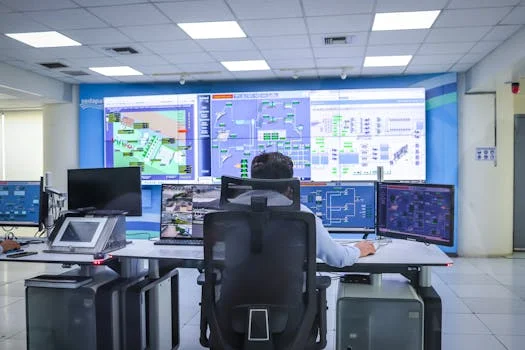
Designing effective wastewater treatment systems for the electronics industry requires tailored approaches based on the specific pollutant profiles of each sub-sector. HydropureWater engineers have developed robust treatment trains that consistently achieve GB 39731-2020 compliance. For semiconductor manufacturing, which often generates wastewater with high fluoride and moderate COD but lower organic loads, a common configuration involves chemical precipitation using calcium chloride (CaCl₂) followed by Dissolved Air Flotation (DAF systems for fluoride and heavy metal removal) and sand filtration. This combination can achieve over 95% fluoride removal and ensure COD levels are below 50 mg/L. PCB manufacturing wastewater, however, typically presents a more complex challenge with high concentrations of copper, nickel, and organic pollutants. An effective treatment train for PCB facilities includes advanced MBR (Membrane Bioreactor) technology, often coupled with chemical dosing systems using sodium sulfide (Na₂S) for heavy metal precipitation and pH adjustment. Such systems can achieve 99% heavy metal removal and consistently meet the ≤ 5 mg/L NH₃-N limit, as demonstrated in a 120 m³/h plant in Suzhou. Display panel production wastewater, characterized by high suspended solids and lower metal concentrations, can be effectively treated using a combination of a rotary drum screen (rotary mechanical bar screen), a lamella clarifier, and an MBR (MBR systems for GB 39731 compliance), ensuring over 99% TSS removal and turbidity below 3 NTU. In all cases, GB 39731 mandates online monitoring of key parameters like pH, COD, NH₃-N, and flow rate, with data transmitted to local environmental bureaus. This necessitates reliable sensors and robust data logging capabilities.
| Electronics Sub-Sector | Primary Pollutants | Recommended Treatment Train | Key Equipment | Typical Effluent Quality |
|---|---|---|---|---|
| Semiconductor Fabrication | Fluoride, COD, Heavy Metals (Trace) | Chemical Precipitation + DAF + Sand Filtration | DAF, Multi-media Filter | Fluoride ≤ 5 mg/L, COD ≤ 50 mg/L |
| PCB Manufacturing | Copper, Nickel, Fluoride, COD, NH₃-N | Chemical Precipitation (Sulfide) + DAF + MBR + Chemical Dosing | MBR, DAF, Automated Chemical Dosing System | Cu ≤ 0.3 mg/L, Ni ≤ 0.5 mg/L, NH₃-N ≤ 5 mg/L, COD ≤ 50 mg/L |
| Display Panel Production | Suspended Solids (TSS), COD (Low) | Rotary Screen + Lamella Clarifier + MBR | Rotary Drum Screen, Lamella Clarifier, MBR | TSS ≤ 20 mg/L, Turbidity ≤ 3 NTU |
Cost Breakdown: ZLD vs. Discharge Compliance for Electronics Wastewater
Procurement teams and plant managers face a critical decision: invest in systems for direct discharge compliance or pursue Zero Liquid Discharge (ZLD) for water reuse. While direct discharge compliance, typically involving MBR and chemical dosing, requires an estimated capital expenditure (CAPEX) of ¥5–8 million for a 100 m³/h plant, ZLD systems, which include MBR, Reverse Osmosis (RO systems for ZLD and water reuse), evaporators, and crystallizers, can range from ¥12–20 million. However, the operational expenditure (OPEX) presents a different economic picture. Discharge compliance systems incur annual OPEX of ¥1.2–1.8 million, primarily for chemicals, sludge disposal, and energy. In contrast, ZLD systems, despite higher initial investment, can have lower annual OPEX of ¥0.8–1.2 million due to significant water recovery (up to 90%). For facilities in water-scarce regions or those facing high water costs (≥ ¥8/m³) or stringent local discharge regulations, such as in Jiangsu and Guangdong provinces, ZLD systems can achieve a payback period of 3–5 years. It is vital to also account for hidden costs, such as hazardous waste sludge disposal (¥1,500–2,500/ton) and membrane replacement (¥500–800/m² for PVDF membranes).
| Treatment Objective | Typical CAPEX (100 m³/h plant) | Typical Annual OPEX (100 m³/h plant) | Water Recovery | Payback Period (Estimate) |
|---|---|---|---|---|
| Discharge Compliance (MBR + Chemical Dosing) | ¥5–8 Million | ¥1.2–1.8 Million | N/A (Discharge) | N/A (Compliance Focus) |
| Zero Liquid Discharge (ZLD) | ¥12–20 Million | ¥0.8–1.2 Million | ≥ 90% | 3–5 Years (with high water costs/strict limits) |
Common Compliance Failures and How to Fix Them

Even with advanced systems, operational issues can lead to GB 39731-2020 compliance failures. Fluoride exceedances, often in the 5.5–10 mg/L range, are frequently caused by insufficient calcium chloride dosing or pH fluctuations. Implementing automated pH/ORP sensors coupled with PID-controlled dosing pumps can reduce fluoride spikes by up to 40%. Copper carryover, typically ranging from 0.4–1.2 mg/L, can result from incomplete precipitation or short-circuiting in clarifiers; adding a polymer flocculant (0.5–1 mg/L) and extending settling time to over two hours can resolve this. COD spikes (60–120 mg/L), often linked to variable organic loads from photoresist stripping, can be managed with an equalization tank and an MBR operating at 10–15 g/L MLSS. NH₃-N exceedances (6–15 mg/L) indicate inadequate nitrification, which can be improved by increasing aeration to maintain 2–3 mg/L dissolved oxygen and introducing an anoxic zone for denitrification. A proactive prevention checklist is crucial: daily jar tests for chemical dosing optimization, weekly membrane integrity tests for MBRs, and quarterly third-party lab audits are essential to maintain consistent compliance and avoid costly disruptions.
For critical process control, consider integrating an automated chemical dosing system designed for precise pollutant management.
Frequently Asked Questions
What happens if my factory fails GB 39731 compliance?
Factories failing to meet GB 39731-2020 are subject to fines of up to ¥1 million, mandatory production halts, and required system upgrades under China’s Environmental Protection Law. Repeat offenders risk losing their business licenses entirely.
Can I use GB 8978-1996 instead of GB 39731 for electronics wastewater?
No. GB 39731-2020 supersedes GB 8978-1996 specifically for the electronics industry as of January 1, 2024. Local Ministry of Ecology and Environment (MEE) bureaus will exclusively enforce GB 39731-2020 for this sector.
What are the most cost-effective treatment systems for GB 39731 compliance?
For smaller plants (under 50 m³/h), chemical precipitation combined with DAF offers the most cost-effective solution with a CAPEX of ¥3–5 million. For larger facilities, MBR coupled with RO provides an optimal balance of compliance assurance and water reuse potential, with a CAPEX ranging from ¥8–15 million.
How do GB 39731 limits compare to EPA and EU standards?
GB 39731-2020 is generally 20–50% stricter than EPA 40 CFR Part 469 for key pollutants such as fluoride, copper, and nickel. For organic pollutants like COD and BOD, the GB standard’s limits align closely with those set by the EU Directive 2010/75/EU, though the EU allows for more variation based on Best Available Techniques (BAT).
What real-time monitoring is required under GB 39731?
GB 39731 mandates online sensors for continuous monitoring of pH, COD, NH₃-N, and flow rate. The data must be transmitted to local MEE bureaus via 4G/5G or fiber optic networks. The standard requires weekly calibration of these sensors, as specified in Section 5 of GB 39731.
Further Reading
Explore these in-depth articles on related wastewater treatment topics: