
Why the DAF-vs-Clarifier Question Hits Different in Ogden Transportation Equipment Plants
An Ogden transportation equipment factory in 2026 should choose a dissolved air flotation system when the wastewater carries cutting oils, drawing compounds, phosphate cleaners, and paint overspray; DAF units routinely deliver 85-98% TSS removal and around 95% oil-and-grease removal in commercial operation. A conventional gravity clarifier earns the slot when the stream is dominated by heavy, settleable grinding fines and the plant prioritizes lower CAPEX and simpler operation. Most Ogden plants on the I-15 / Hill AFB corridor fit the first profile and benefit from a DAF-first train, with an optional lamella clarifier as a polishing step before discharge.
"Transportation equipment manufacturing" in this guide means rail rolling stock, aerospace component fabrication, heavy-truck and trailer assembly, and the DOD contractor tier that supports Hill Air Force Base. Their wastewater signature is a four-family mix: petroleum oils and water-soluble cutting fluids, drawing and stamping compounds (graphite, phosphate soaps, sulfochlorinated lubricants), paint and primer overspray solids (often waterborne but loaded with TiO₂, carbon black, and pigment dispersions), and metal fines from machining and grinding. Oils and fine paint solids float rather than settle, which is why gravity clarification systematically underperforms on this stream.
Compliance is set federally by EPA's 40 CFR Part 433 metal finishing subcategories (oils-and-grease, TSS, and the priority metals — lead, cadmium, chromium, nickel, zinc, copper) and overlaid at the state level by Utah Division of Water Quality industrial pretreatment requirements administered through the local POTW. On an oily, paint-bearing stream, a clarifier alone rarely produces effluent that meets the 100 mg/L oils-and-grease ceiling that most Ogden-area POTWs enforce for metal finishers; that gap is the reason DAF is the default-first answer for 2026.
How a DAF and a Clarifier Actually Work in This Application
A dissolved air flotation system saturates a side stream of clarified effluent with air at 60-90 psig in a saturation tank, then releases that pressure through a Micro Bubble Generator producing 20-40 micron bubbles. The micro-bubbles attach to oil droplets and fine suspended solids, lifting them to the surface where a rotating scoop or chain-and-flight skimmer removes the float. Commercial DAF units run in a 4-300 m³/h range (roughly 18-1,320 GPM) in shallow tanks — typically 4-6 ft side-water depth — and are commonly delivered as skid packages in the 48-450 GPM range.
A conventional clarifier is a larger, deeper tank (10-14 ft side-water depth is common) where feed enters a center well, flocculates gently, and settles under gravity. Sludge rakes sweep settled solids to a central hopper for underflow discharge. Lamella plate clarifiers compress the footprint by adding inclined plates at 55-60° that increase the effective settling area; a 30 ft diameter conventional clarifier can often be replaced by a 12 ft x 18 ft lamella package for the same throughput, but the operating principle is still density-driven sedimentation.
The maintenance profile differs: a DAF needs a compressed-air supply, a saturation pump, an air-mixing tube, and a skimmer drive, while a clarifier needs a feed pump, a sludge pump, and a rake mechanism. DAF almost always requires coagulant (typically a cationic polymer or ferric chloride at 50-200 mg/L) plus sometimes a flocculant, while a clarifier can run chemistry-free on streams where settleable solids dominate. The two technologies are not mutually exclusive, and a hybrid train with DAF for oils and FOG followed by a lamella clarifier for polishing metal-hydroxide floc is a defensible 2026 configuration for plants that need both oil removal and metals precipitation in series. A good lamella reference is the lamella clarifier engineering and cost guide for cross-industry sizing context.
Head-to-Head: DAF vs Clarifier on the Six Criteria That Matter in 2026
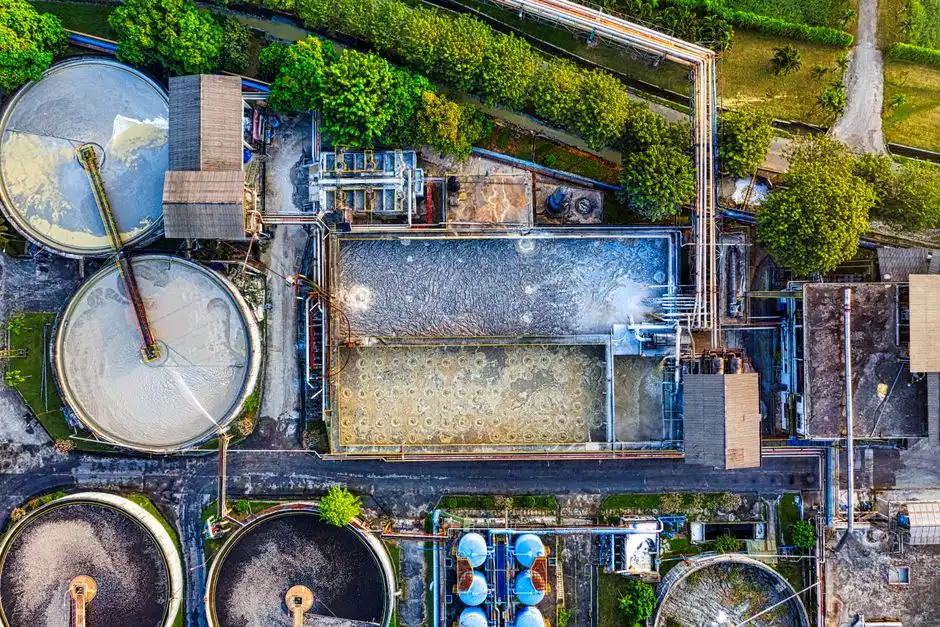
The DAF FC Maximizer publishes 92-98% TSS removal at 500 GPM with a 2,000 PPM influent loading, the RC UniMax rectangular unit publishes 85-90% TSS removal, and a conventional clarifier on the same oily stream typically lands at 50-80% removal. The Ecologix piece cites a food-plant benchmark of 95% oil removal for DAF versus 70% for a clarifier on the same stream; an Ogden oily wastewater stream with cutting fluids and drawing compounds behaves more like that food reference than a mining slurry. The table below provides the data an engineer hands to a plant manager.
| Parameter | DAF system | Conventional / lamella clarifier |
|---|---|---|
| TSS removal | 85-98% (FC Maximizer 92-98%, RC UniMax 85-90%) | 50-80%, depends on particle density |
| Oil & grease removal | ~95% on oily streams (Ecologix 2026-01 reference benchmark) | ~70% on the same stream |
| Footprint at 150 GPM | ~15 ft x 10 ft skid with 3-5 ft clearance (scaled from WesTech mobile DAF, 2025) | 25-40 ft diameter circular, or 12 ft x 18 ft lamella equivalent |
| Sludge consistency | 2-4% DS float (DAF Corp, 2025-08) | 1-2% DS underflow — needs thickening first |
| Chemical demand | Coagulant and/or flocculant almost always required | Often chemistry-free on settleable streams |
| CAPEX / OPEX profile | Higher CAPEX, compressed-air OPEX, tighter effluent | Lower CAPEX, larger civil works, weaker oil performance |
Frame the dollar comparison as a 5-7 year lifecycle trade, not a sticker price. A clarifier's lower CAPEX is real, but the civil works for a 30 ft diameter concrete tank routinely exceed the equipment cost of a packaged DAF skid, and the underflow thickening step before dewatering is a hidden CAPEX line item that disappears when a DAF float at 2-4% DS feeds a small plate-and-frame press directly.
A 4-Step Selection Flow for an Ogden Transportation Equipment Plant
Step 1 — Characterize. Pull a week's worth of composite samples and rank the four contaminant families (petroleum oils, drawing compounds, paint overspray solids, metal fines) as a percentage of total mass. On most Ogden aerospace and heavy-truck lines, oils plus FOG plus paint solids run 30-60% of the mass load; metal fines from grinding are real but rarely dominate. If the oil/FOG fraction is below ~20% and the stream is mostly grinding swarf, the calculation changes.
Step 2 — Screen contaminants. If oils + fine paint + FOG exceed ~30% of total mass, route to DAF-first; if metal fines dominate and oils are minor, a clarifier-first configuration is defensible. Most rail and aerospace shops with machine shops, paint lines, and parts washers sit firmly on the DAF side of that line.
Step 3 — Size for peak flow. DAF skid models run 48-450 GPM (DAF Corp, 2025-08), so most Ogden plants in the 50-300 GPM range fit a single skid. Peak-shaving matters: cutting-fluid dumps from a CNC cell are batchy, and a 3x peaking factor over the daily average is normal. A HydropureWater DAF system in the 100-300 GPM range covers the typical 2026 CAPEX scope for a single-line plant.
Step 4 — Match to discharge limits. 40 CFR Part 433 metal finishing limits and Utah DWQ pretreatment oil-and-grease limits typically force DAF on this wastewater signature, as a clarifier alone rarely meets them. If limits tighten further in 2026, DAF is the better hedge. A mobile/trailer-mounted DAF is the right 2026 answer for short production runs, pilot data collection, or temporary capacity during an equalization-tank rebuild; units can be brought online within a single day per WesTech mobile DAF specs (2025).
2026 Sizing, Footprint, and Operating Realities for an Ogden Installation
A 150 GPM DAF skid fits in roughly 15 ft x 10 ft with 3-5 ft clearance (scaled from the WesTech mobile DAF reference, 2025) versus a comparably rated clarifier at 25-40 ft diameter or an equivalent 12 ft x 18 ft lamella area. For a plant manager evaluating floor space, the DAF skid typically drops into a bay that already houses a parts washer, whereas the clarifier more often requires new concrete and a building permit cycle.
Utilities differ materially. DAF needs compressed air (a 5-10 HP rotary screw is typical at this flow), a small saturation pump, and a chemical dosing skid for coagulant and flocculant; pair the DAF with a HydropureWater automatic chemical dosing skid sized for the polymer feed rate. A clarifier needs only a feed pump and a sludge pump; on a settled-solids stream it can run chemistry-free.
Operator skill is the under-discussed 2026 labor decision. DAF requires jar testing when the stream changes (new paint line, different cutting fluid) and ongoing chemistry tuning, while a clarifier is largely "set and skim." Plants without a dedicated wastewater technician should weigh that labor reality against the tighter effluent. Sludge handling is the second hidden line item: a DAF float at 2-4% DS (per DAF Corp, 2025-08) feeds directly into a small HydropureWater plate and frame filter press, while a clarifier underflow at 1-2% DS needs a thickener first, which is a real capital and labor addition. For a related cross-industry comparison, see the DAF vs clarifier for fabricated metals wastewater guide, which applies the same framework to a sister industry.
Frequently Asked Questions
Does a DAF system meet 40 CFR Part 433 metal finishing discharge limits on its own?
On the oils-and-grease and TSS parameters, yes; a properly sized DAF delivering 85-98% TSS removal and ~95% oil-and-grease removal will typically bring an Ogden metal-finishing stream under the federal metal finishing ceilings and under most Utah DWQ local limits. For the priority metals (lead, cadmium, chromium, nickel, zinc, copper), DAF alone is not sufficient; hydroxide precipitation and often a DAF-as-sludge-thickener configuration are required, which is why the standard 2026 train is precipitation reactor → DAF.
What flow rate should an Ogden transportation equipment plant size a DAF for in 2026?
Size for peak hourly flow, not daily average, because cutting-fluid dumps and paint-booth washdowns are batchy. Most single-line plants in the 50-300 GPM range fit a single packaged DAF skid (DAF Corp skid range 48-450 GPM, 2025-08), and a 3x peaking factor over the daily average is normal for this industry. Undersizing is the most common 2026 commissioning mistake on Utah DAF installations.
When is a lamella clarifier a better choice than DAF for transportation equipment wastewater?
When the stream is dominated by heavy, settleable metal fines rather than oils and paint — for example, a standalone grinding cell with no parts washer and no paint line.