Why East St. Louis Inorganic Plants Face a Different Compliance Bar in 2026
Industrial inorganic chemicals plants near East St. Louis meet 2026 pretreatment limits by treating wastewater through an engineered train — equalization, pH adjustment (typically into a 5.0–10.0 band), hydroxide precipitation of heavy metals, suspended-solids removal via DAF or lamella clarifier, and flow/load equalization — before discharging under 40 CFR Part 414 categorical standards to the local POTW. Plants along the Sauget corridor face heightened EPA/DOJ scrutiny following the 2024 East St. Louis Clean Water Act consent agreement, so redundant monitoring, automatic pH control, and documented slug-load plans are now standard practice.
On 2024-04-13, the City of East St. Louis reached an interim agreement with the U.S. Department of Justice, the EPA, and the State of Illinois, taking responsibility for long-term violations of the Clean Water Act (per Fox2Now, 2024-04-13). That consent instrument reshapes the local regulatory environment: EPA Region 5 has publicly increased inspection cadence in the metro-East corridor, and POTWs downstream of Sauget now face direct federal pressure to tighten enforcement on categorical industrial users.
Sauget, IL sits adjacent to East St. Louis and has been a historic hub for chlor-alkali, acid, and specialty inorganic chemical manufacturing since the mid-20th century. Local testimony describes accelerated metal corrosion and aggressive industrial water — one commenter on the same Fox2Now thread wrote, "The water there eats holes in metal faster than any other water I've seen. We usually need our pumps rebuilt annually" (Fox2Now 2024-04-13). That field observation is why over-design of pH adjustment (more aggressive reagents, larger equalization volume) and corrosion-resistant materials is a recurring theme in Sauget-corridor pretreatment work — not a marketing talking point, but a maintenance reality.
Regulatory Frame: 40 CFR Part 414 and Local POTW Limits That Apply to SIC 281
Every SIC 281 inorganic chemicals facility discharging to a U.S. POTW in 2026 must satisfy two stacked layers: federal categorical pretreatment standards under 40 CFR Part 414, and site-specific local limits imposed by the receiving POTW (per EPA 40 CFR 414 and 40 CFR 403 general pretreatment regulations). Federal categorical standards set minimum national floors (daily maximum and monthly average for regulated pollutants); POTW local limits are typically more stringent and account for local receiving-water assimilation capacity, sludge-handling constraints, and biosolids quality.
SIC 281 covers four major subcategories per the EPA's 1995 Sector Notebook (EPA/310-R-95-004): SIC 2812 chlor-alkali, SIC 2813 industrial gases, SIC 2816 inorganic pigments, and SIC 2819 industrial inorganic chemicals not elsewhere classified. SIC 2819 represents roughly two-thirds of industry shipment value and over 200 different chemicals. 40 CFR Part 414 covers the chlor-alkali, hydrochloric acid, sodium sulfite, sodium hydrosulfite, and major SIC 2819 subcategories. Categorical standards under Part 414 are most detailed for chlor-alkali because it is the single largest sub-process — and chlor-alkali wastewater is what most East St. Louis plants still generate. The Bureau of the Census (1992 Census of Manufacturers) identified 1,429 SIC 281 facilities, of which 48% had 1–9 employees — meaning most plants run on very small compliance teams and cannot afford bespoke process engineering for every batch.
Local POTWs in the Sauget corridor — including the Metro-East Sanitary District, which receives discharge from East St. Louis and adjacent industrial users — impose site-specific local limits that are commonly stricter than federal categorical minimums for lead, mercury, chromium, zinc, and copper, because the receiving waters and biosolids-application sites cannot accept higher loadings. After the 2024 East St. Louis consent agreement, POTW operators in the corridor are under direct pressure from EPA Region 5 to enforce those local limits, which is why "borderline" numbers from a 2022 self-monitoring report are more likely to draw a Notice of Violation in 2026.
| Subcategory | SIC Code | Typical Wastewater Character | Primary 40 CFR Part 414 Regulated Pollutants |
|---|---|---|---|
| Chlor-alkali | 2812 | High pH / salt / trace Hg (legacy) or membrane-cell brine | pH, TSS, total metals, mercury (where applicable) |
| Industrial gases | 2813 | Low flow, occasional acidic condensate | pH, TSS, oil & grease |
| Inorganic pigments | 2816 | Colored, high TSS, metals-bearing wash water | pH, TSS, total metals (Cr, Pb, Cd, Zn) |
| Inorganic chemicals nec | 2819 | Spent acids, sulfate-bearing blowdown, FOG | pH, TSS, oil & grease, total metals, sulfate |
Federal categorical limits for specific parameters are defined in 40 CFR Part 414 subparts and vary by subcategory; site-specific local limits are set by the controlling POTW through its pretreatment program (per 40 CFR 403). Exact numeric thresholds should always be confirmed against the current version of Part 414 and the facility's individual control mechanism.
The Pretreatment Process Train a Compliant SIC 281 Plant Uses
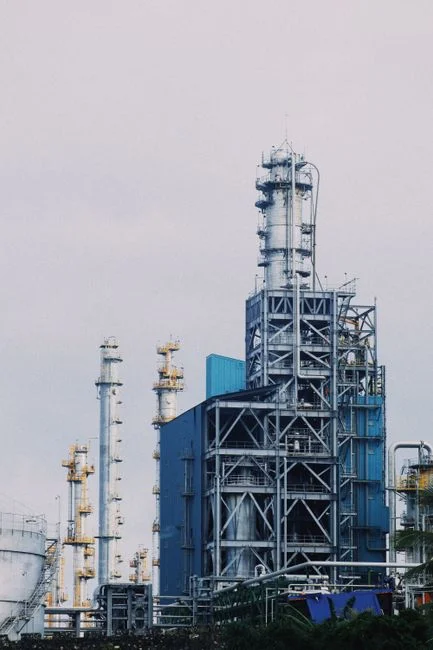
A compliant SIC 281 plant deploys a five-node treatment train in sequence: headworks screening, flow and load equalization, pH adjustment, heavy-metal precipitation, and TSS/FOG polishing with final pH trim before the discharge sampler. Each node must be sized for Sauget-corridor realities: aggressive water, batch dumps from chlorine cell rooms and acid reactors, and tightened POTW scrutiny.
- Headworks — rotary mechanical bar screen. A GX Series rotary mechanical bar screen at headworks protects downstream pumps, mixers, and DAF nozzles from rag, plastic, and debris that routinely enters plant drain systems from cell-room washdowns.
- Flow and load equalization. A surge/equalization basin with 8–24 hours of hydraulic retention time (HRT) dampens batch dumps from chlor-alkali cell blowdown, hydrochloric acid reactors, or pigment washing. Equalization is the single most under-sized node in legacy Sauget-corridor plants and the first place to add redundancy if a Notice of Violation is being driven by slug load.
- pH adjustment. SIC 281 wastewater is typically acidic — spent acid, chlor-alkali cell blowdown, pigment filtrate — and must be lifted into the 5.0–10.0 band before metals precipitation and POTW discharge. Caustic soda (NaOH) is the workhorse reagent, but 60% magnesium hydroxide slurry delivers roughly 40% lower chemical mass for equivalent neutralization (per IER Water, St. Louis MO, 2025) and is significantly less corrosive to handle, which matters when ambient industrial humidity is already attacking equipment finishes.
- Heavy-metal precipitation. pH is raised further to 8.5–10.0 to drive target metals (Cr, Cu, Ni, Zn, Pb) into insoluble hydroxide form. Hexavalent chromium is the exception: it must first be reduced to trivalent at low pH using ferrous sulfate or sodium metabisulfite under ORP control, then precipitated with the rest at pH ~8.5–9.0.
- TSS / FOG / colloidal-solids polishing. A HydropureWater DAF system (4–300 m³/h capacity range) or a HydropureWater lamella clarifier (20–40 m/h surface loading rate, ~30% polymer savings versus conventional clarifiers per HydropureWater field data, 2026) polishes precipitated sludge, oils, and pigment color bodies before the final pH trim and discharge sampler.
Final pH trim uses a redundant in-line pH probe with automatic trim dosing through a HydropureWater automatic chemical dosing system tied to the compliance sampling point. The dosing controller should log to the same historian as the discharge sampler so the compliance record is continuous, not a manual data entry.
| Process Node | Function | Typical Sizing | Recommended Equipment |
|---|---|---|---|
| Headworks screening | Debris removal | 2–6 mm bar spacing | Rotary mechanical bar screen |
| Equalization | Flow & load dampening | 8–24 h HRT | Equilization basin + mechanical mixer |
| pH adjustment | Lift to 5.0–10.0 | 10–20 min HRT in reactor | Automatic chemical dosing system |
| Metal precipitation | Cr, Cu, Ni, Zn, Pb removal | pH 8.5–10.0, 20–30 min HRT | Stirred reactor with pH/ORP probes |
| TSS / FOG polishing | Suspended solids & oil removal | 20–40 m/h surface loading | DAF or lamella clarifier |
| Final pH trim & sampling | Compliance point | Continuous monitoring | Auto dosing + flow-proportional sampler |
Heavy-Metal Removal Specifics: Chromium, Lead, Mercury, and Arsenic
Each penalty metal in a Sauget-corridor SIC 281 wastewater has its own chemistry, and a generic "raise pH and settle" approach will fail the categorical scan for at least one of them.
Chromium. Hexavalent Cr(VI) must be reduced to trivalent Cr(III) at pH 2.0–3.0 using ferrous sulfate or sodium metabisulfite under ORP control (typically +200 to +300 mV reduction range), then co-precipitated as Cr(OH)₃ at pH 8.5–9.0. Probe location matters: the ORP probe must sit downstream of the reducer with adequate mixing, and the pH probe that lifts the stream to 8.5–9.0 must sit downstream of the ORP probe. Plants that combine reduction and precipitation in a single vessel consistently under-perform on the monthly average. For polishing to single-digit ppb, an ion-exchange polish is the standard approach — see the hexavalent chromium ion-exchange guide for resin selection and regeneration cadence.
Lead and copper. Both respond to classic hydroxide precipitation at pH 9.0–10.0. DAF polishing downstream of the precipitation reactor consistently delivers the lowest residual solids (typically <1 mg/L total suspended lead after DAF, per HydropureWater field data, 2026) because the floated sludge carries less entrained water than settled sludge.
Mercury. Inorganic SIC 281 wastewater typically carries low mercury (legacy chlor-alkali mercury-cell plants are largely decommissioned in the U.S., but legacy sludge and equipment rinse-down can still generate spikes). Sulfide precipitation at pH 7–8 with NaHS or FeS is the workhorse chemistry; ion exchange follows for polishing. Treat HgS sludge as a hazardous waste under RCRA — do not blend it with general hydroxide sludge.
Arsenic. Ferric chloride coagulation at pH 7–8 forms ferric arsenate sludge with a molar Fe:As ratio of at least 3:1 to meet solubility targets. This is most common in pigment and acid subcategories where As is a trace contaminant in the ore or acid feedstock.
Local Pretreatment Limits and What a Typical Sauget-Corridor Permit Looks Like
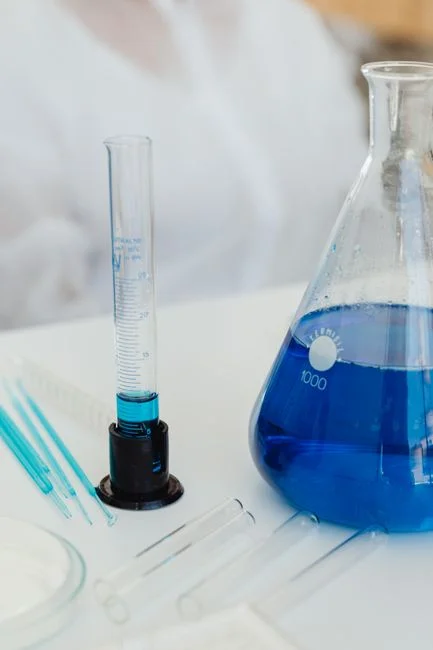
A 2026 site-specific local limit table for a Sauget-corridor SIC 281 facility typically structures monitoring around pH (instantaneous minimum and maximum), TSS, oil & grease, total recoverable metals (Cd, Cr, Cu, Pb, Ni, Zn, Hg), and ammonia — with both daily maximum and monthly average ceilings. Exact numeric thresholds vary by POTW and are not publicly standardized; the structure is what an EHS manager should map against their own control mechanism. Categorical industrial users are also subject to Total Toxic Organics (TTO) and priority-pollutant scan requirements under 40 CFR Part 414, with 24-hour composite sampling expected for the annual self-monitoring report.
The 2024 East St. Louis consent agreement (per Fox2Now, 2024-04-13) has had a measurable knock-on effect: POTW operators in the corridor are under direct federal pressure to tighten enforcement, and what would have been a verbal warning in 2022 is now a Notice of Violation with a hard clock. Plants that have not refreshed their slug-control plan and self-monitoring report template in the last 24 months are exposed.
2026 Monitoring, Self-Audit, and Slug-Control Plan Checklist
For an SIC 281 plant in the Sauget corridor, a 2026 monitoring stack should include the elements below. None of these are optional under 40 CFR Part 403 once a facility is a categorical industrial user.
| Element | Frequency | Documentation |
|---|---|---|
| In-line pH & conductivity at discharge sampler | Continuous | Electronic log, 24/7 |
| Flow-proportional composite sampler | Daily / per batch | Chain-of-custody per 40 CFR Part 403 |
| Slug-control plan | Reviewed annually | Written plan, operator training records |
| Mass-balance internal audit | Quarterly | Chemical inventory vs. wastewater loading |
| Third-party / POTW walk-through | Annual | Report filed with POTW pretreatment coordinator |
| Self-monitoring report (SMR) | Semi-annual (typical) | Submitted to POTW per control mechanism |
The slug-control plan should explicitly identify the worst-case batch dumps (chlor-alkali cell blowdown, acid neutralization overflow, pigment wash surge) and define containment volume, equalization routing, and operator response in under 15 minutes. Quarterly mass-balance audits — comparing NaOH, FeCl₃, and bisulfite deliveries against wastewater loading — catch unlabeled or fugitive streams before they show up as a missed monthly average in the self-monitoring report.
Frequently Asked Questions
What is the categorical pretreatment standard that applies to SIC 281 chlor-alkali plants in 2026?
SIC 281 chlor-alkali and other inorganic chemicals plants are governed by 40 CFR Part 414, with site-specific local limits layered on top by the receiving POTW. Always confirm the current subpart and your control mechanism before any compliance certification (per 40 CFR Part 414 and Part 403).
What pH range must SIC 281 wastewater meet before discharge to a Sauget-corridor POTW?
Most local limits in the metro-East corridor require instantaneous pH between 5.0 and 10.0; the exact band is set in your control mechanism. Hold the tighter of the two bounds with a redundant in-line probe and automatic trim dosing.
How is hexavalent chromium removed before POTW discharge?
Reduce Cr(VI) to Cr(III) at pH 2.0–3.0 with ferrous sulfate or sodium metabisulfite under ORP control, then raise pH to 8.5–9.0 to precipitate Cr(OH)₃. For sub-ppb polishing, follow with ion exchange — see the hexavalent chromium ion-exchange guide for resin specs and regeneration cadence.
Why does the 2024 East St. Louis consent agreement matter for inorganic chemical plant compliance?
It put the local POTW under direct federal consent order, which has tightened enforcement on categorical industrial users discharging into the metro-East sewer system. EPA Region 5 inspection frequency has increased, and borderline parameters are now more likely to trigger a Notice of Violation (per Fox2Now, 2024-04-13).
How does magnesium hydroxide compare to caustic soda for pH adjustment?
60% Mg(OH)₂ slurry delivers roughly 40% lower chemical mass for equivalent neutralization versus NaOH, is significantly less corrosive to handle, and reduces downstream sludge volume (per IER Water, St. Louis MO, 2025). For Sauget-corridor plants where pump rebuilds are already a known maintenance cost, the handling benefit is often the deciding factor.