
Why Dresden, TN Petroleum Factories Are Re-Evaluating Primary Oil-Water Separation in 2026
For Dresden, Tennessee petroleum factories in 2026, choose a Dissolved Air Flotation (DAF) unit—often operated as nitrogen-induced Dissolved Gas Flotation (DGF) in the oil industry due to explosion risk—over a gravity clarifier when free oil, emulsified oil, and TSS must be removed to meet 40 CFR Part 433 oil and grease limits. Clarifiers remain viable as polishing or equalization stages, not as primary oil-removal equipment.
Weakley County hosts a cluster of small refineries, bulk fuel terminals, and lubricant blenders that all discharge to the Dresden POTW under 40 CFR Part 433, the federal metal-finishing-and-petroleum category that caps oil and grease at 38 mg/L daily maximum and 17 mg/L monthly average for non-contact cooling and process streams. Three forces are driving a 2026 re-evaluation: (1) state pretreatment inspectors are issuing more consent orders on oil-and-grease excursions tied to sampling at the POTW headworks; (2) fuel logistics growth along the TN-22 corridor has lifted average daily flow at several tank farms by 15–25% over 2024 baselines; and (3) a meaningful slice of the installed API separators in the county are 25–30 years old and at the end of their designed service life.
The equipment choice in 2026 narrows to two options at the head of the train: a DAF/DGF unit, or a gravity clarifier (circular center-feed or lamella plate). DAF is widely used in oil refineries, petrochemical and chemical plants, and natural gas processing plants, which is why it has become the 2026 default for any stream carrying emulsified hydrocarbons. Clarifiers still have a role, but as a downstream polishing or equalization step, not as the primary oil-removal workhorse.
How DAF and Clarifiers Actually Remove Oil: Mechanism, Droplet Size, and Residence Time
DAF removes oil by attaching micro-bubbles to droplets and floating them; clarifiers rely on Stokes-law gravity rise and have no bubble-attachment step.
The DAF process works by dissolving air in a pressurized recycle stream, then releasing that pressure at the inlet of the float tank. The pressure drop nucleates tiny bubbles (typically 10–100 µm) on the surface of suspended oil droplets and floc particles. As bubble inventory grows, the lift force exceeds the droplet weight and the agglomerate rises to the surface, where a skimmer removes the float layer. The clarified underflow exits the bottom. Coagulants (ferric chloride, aluminum sulfate) and flocculants are routinely dosed upstream of the float tank to enlarge sub-micron colloidal oil into a particle the bubbles can attach to.
A clarifier does not generate bubbles. It is a quiescent vessel where oil rises under buoyancy and solids settle under gravity, each at a rate governed by Stokes' law. Two consequences follow. First, effectiveness is dominated by residence time and droplet size: any droplet below ~20 µm will not rise fast enough in a practical clarifier, so the bulk of the emulsified oil passes through. Second, residence times are an order of magnitude longer. A circular DAF needs only about 3 minutes of residence time, while a rectangular DAF needs 20–30 minutes. A conventional circular clarifier running on oily wastewater typically needs 1–4 hours. Parallel-plate (lamella) packing increases effective separation surface and therefore efficiency for both DAF and clarifier designs.
For petroleum service, the flotation gas is almost never air. In the oil industry, dissolved gas flotation (DGF) units do not use air as the flotation medium due to the explosion risk—nitrogen is used instead to create the bubbles. A plant engineer specifying equipment in 2026 needs to confirm that the vendor offers a nitrogen DGF option, because a standard air-DAF is not code-compliant on most refinery and terminal streams.
DAF vs. Clarifier for Petroleum: Head-to-Head Parameter Comparison
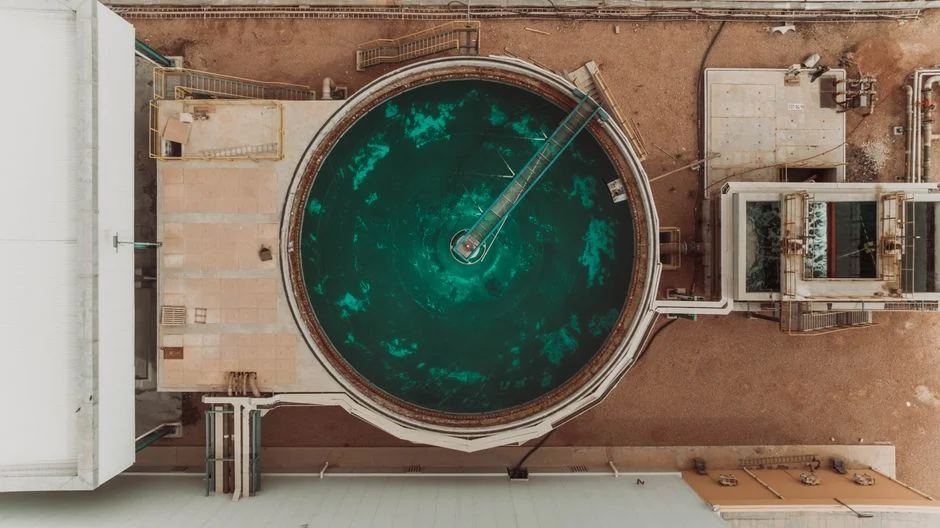
DAF/DGF removes free oil, emulsified oil, and TSS in a fraction of the residence time of a clarifier, at the cost of nitrogen supply and chemical dosing.
| Parameter | DAF / DGF (circular or rectangular) | Circular Gravity Clarifier | Lamella Plate Clarifier |
|---|---|---|---|
| Target contaminant | Free oil, emulsified oil, TSS, some BOD | Free oil >~150 µm, settleable TSS | Free oil, TSS; limited on emulsified oil |
| Free-oil removal band | High (vendor-typical 80–95% for free oil with chemical aid) | Medium (effective only on gross >150 µm droplets) | Medium (improved by plate surface; still poor on emulsified oil) |
| Effective droplet-size cutoff | Down to ~5–10 µm with coagulant/flocculant | ~150 µm and larger | ~50–80 µm |
| Typical residence time | 3 min (circular) / 20–30 min (rectangular) | 1–4 hours | 30–60 minutes effective (longer hydraulic) |
| Surface loading / footprint per m³/h | Compact; typically <0.3 m² per m³/h for circular DAF | ~1.0–1.5 m² per m³/h | 20–40 m/h surface loading (HydropureWater catalog spec) ⇒ compact footprint |
| Energy intensity | Moderate (recycle pump, saturator, compressor or N₂ supply) | Low (drive only on sludge rake / scraper) | Low–moderate |
| Explosion-safety requirement | Nitrogen DGF mandatory in oil service; air-DAF is a code problem | Not applicable | Not applicable |
| Chemical dosing | Routine — coagulant + flocculant | Often none, optional polymer aid | Optional polymer aid |
| Best-fit duty in petroleum service | Primary oil & TSS removal at refineries, terminals, blenders | Sludge thickening, equalization, free-oil-only polishing | TSS polishing downstream of DAF; low-FOG streams |
Removal-percentage numbers vary widely with influent characteristics, so the table is presented as a performance band to be confirmed with vendor data on your specific stream. The dissolved air flotation system from HydropureWater covers the rectangular DAF duty for most Dresden-area flows, and the high-efficiency lamella clarifier at /product/10-high-efficiency-sedimentation-tank.html is the conventional choice when a clarifier is justified.
Use-Case Decision Tree: Refinery, Tank Farm, and Lubricant Blender in Dresden
The 2026 default for any Dresden petroleum facility that must hit 40 CFR Part 433 oil and grease is DAF/DGF as primary, with a clarifier downstream only if there is a defined polishing duty.
Small refinery with desalter effluent. Desalter brine carries emulsified oil, TSS, and variable temperature (typically 50–80 °C). Default to DAF/DGF as primary because the emulsion is too stable for gravity separation alone. Stage a lamella clarifier downstream as a TSS polisher ahead of the outfall; this is a defensible 2026 configuration for the Dresden-area independent refineries.
Bulk fuel terminal with stormwater + tank bottoms. Flow is intermittent and slug-loaded; emulsified oil content is moderate but spikes during transfer events. A DAF handles slug loads in a 3-minute circular residence window and recovers quickly from a shut-down, while a clarifier will let emulsified oil pass through during a slug and recontaminate the downstream train. DAF is the right primary; a clarifier is justified only as a sludge thickener.
Lubricant blender with high emulsifier content. Finished-blend changeover and emulsifier drag-in make this the most demanding stream of the three. DAF with chemical dosing (coagulant plus flocculant) is the only viable primary. Plan a PLC-controlled coagulant and flocculant dosing skid integrated with the DAF—without it, removal collapses on the first batch of high-emulsifier wastewater.
Edge case where a clarifier still wins. If a site has an upstream API separator that already removes gross free oil down to ~50–100 µm, and the remaining duty is only sludge settling, a lamella clarifier is sufficient and avoids the N₂ / chemical cost of a DAF. Anything more demanding should be re-routed through DAF.
2026 Cost, Footprint, and Compliance Snapshot for Petroleum Sites
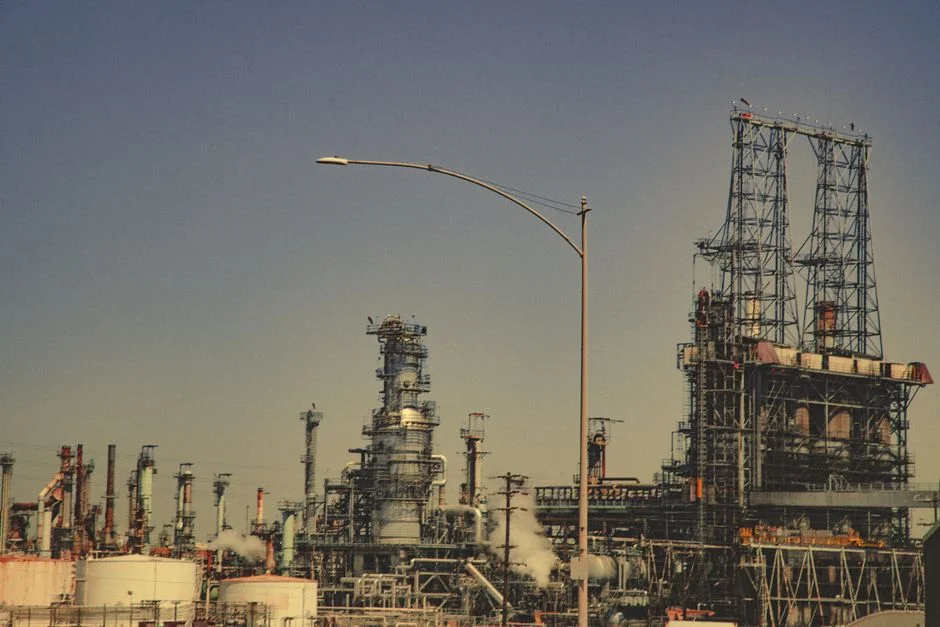
The 40 CFR Part 433 daily-maximum oil and grease limit of 38 mg/L is the regulatory driver that forces DAF/DGF into the primary slot at most Dresden petroleum sites; the clarifier's role is downstream, not primary.
| Option | Relative CAPEX (2026) | Footprint, m² per m³/h | Key OPEX drivers | Hits 40 CFR Part 433 O&G? |
|---|---|---|---|---|
| Rectangular DAF with N₂ skid + chemical dosing | High | 0.2–0.4 | Nitrogen supply, polymer/coagulant, saturator pump energy, skimmer maintenance | Yes — engineered for <38 mg/L |
| Circular DAF with N₂ skid + chemical dosing | High | ~0.2 (most compact) | Nitrogen supply, chemical, recycle pump | Yes |
| Conventional circular clarifier | Low–moderate | 1.0–1.5 | Sludge pumping, rake mechanism, periodic desludging | Only on free-oil streams; not on emulsified |
| Lamella clarifier (20–40 m/h surface loading per HydropureWater catalog) | Moderate | 0.3–0.5 | Plate fouling, occasional polymer aid | Rarely as primary; OK as TSS polisher |
The DAF residence-time advantage—3 minutes for circular designs, 20–30 minutes for rectangular designs—translates directly into smaller tankage, smaller civil pads, and lower concrete cost. A clarifier, by contrast, pays for itself in capital but consumes 3–10× the footprint for the same throughput. For more detail on how nearby petroleum plants are structuring their 40 CFR Part 433 compliance, see the petroleum 2026 pretreatment compliance guide for nearby facilities.
Procurement Checklist: Specifying a 2026 DAF or Clarifier for Dresden
Send this list to vendors before requesting a quote to eliminate common specification errors on petroleum DAF/DGF projects.
- Influent characterization: free oil (mg/L), emulsified oil (mg/L), TSS (mg/L), flow (m³/h, average and peak), temperature (°C), VOC content (ppm)—VOC drives the air-vs-nitrogen decision.
- Outfall target: 40 CFR Part 433 oil & grease daily maximum 38 mg/L, monthly average 17 mg/L, plus the local POTW's TSS daily maximum.
- Vendor confirmation (DAF): confirm the unit is offered as a nitrogen DGF—not air-DAF—for petroleum service, and confirm the saturator recycle ratio is sized for petroleum loadings (typically 20–50% recycle).
- Vendor confirmation (lamella clarifier): confirm parallel-plate surface loading of 20–40 m/h and confirm plate material compatibility with your hydrocarbon profile.
- Chemical dosing integration: confirm a PLC-controlled coagulant and flocculant dosing skid is included, with pacing tied to flow and influent TSS—the dissolved air flotation system can be ordered with this integrated. Refer to the PLC-controlled coagulant and flocculant dosing skid for dosing-pump options.
- Safety and code: confirm ATEX/NEC Class I Div 1 rating on all float-tank enclosures if any air-DAF is proposed; for N₂ DGF, confirm N₂ supply, vapor return, and O₂ monitoring.
Frequently Asked Questions
Should a Dresden, TN petroleum factory pick DAF or a gravity
Frequently Asked Questions
Should a petroleum plant in Dresden, TN use a DAF or a clarifier in 2026?
The selection depends primarily on the density and emulsification state of the contaminants in your process stream. For refineries in Dresden dealing with highly emulsified oils or low-density hydrocarbons that resist sedimentation, Dissolved Air Flotation (DAF) is typically superior in 2026 due to its ability to achieve 90-95% oil and grease removal efficiency. If the wastewater contains heavy solids or high-density particulates, a gravity clarifier is generally more cost-effective and operationally stable for primary bulk solids removal.
What is the difference between DAF and a gravity clarifier for oil refinery wastewater?
The primary difference lies in the buoyancy versus sedimentation mechanism. A gravity clarifier relies on Stokes' Law, allowing particles denser than water to settle to the bottom as sludge, which is effective for inorganic solids. Conversely, a DAF system utilizes micro-bubbles to attach to hydrophobic oil droplets and suspended solids, forcing them to the surface to be skimmed off, which is specifically engineered for contaminants that are neutrally buoyant or lighter than water.
Why do refineries use nitrogen instead of air in dissolved gas flotation?
Refineries often switch from air to nitrogen in DAF systems to mitigate the risk of creating a combustible or explosive atmosphere when handling volatile organic compounds (VOCs). By using nitrogen, the dissolved gas flotation process operates under an inert blanket, preventing the oxygen-rich environment that could otherwise lead to ignition within the flotation tank or downstream recovery units, ensuring compliance with strict NFPA and OSHA safety standards.
What oil and grease limit does 40 CFR Part 433 set for petroleum discharges?
While 40 CFR Part 433 specifically governs the Metal Finishing Point Source Category, petroleum-related discharges are typically regulated under 40 CFR Part 419 (Petroleum Refining Point Source Category). Under these standards, the daily maximum limit for oil and grease is generally set at 25 mg/L, with a monthly average limit of 15 mg/L. Facilities must ensure their DAF or clarifier systems are sized to consistently meet these NPDES permit requirements regardless of influent variability.
How long does wastewater stay in a DAF vs. a clarifier?
Hydraulic retention time (HRT) varies significantly between these two technologies based on the required separation efficiency. Gravity clarifiers typically require longer retention times, ranging from 2 to 4 hours, to allow for the slow settling of fine particles. In contrast, DAF units are designed for rapid separation, typically providing an HRT of only 20 to 45 minutes, making them much more compact and suitable for plants with limited footprint availability.