What a 2026 Notice of Violation Looks Like for a Woods Cross Operator
A single HEM composite at 187 mg/L against a 100 mg/L daily maximum, a 30-day cure window, and a footnote flagging the event as a candidate for Significant Noncompliance (SNC) under the National Pretreatment Program — that is the letter arriving in 2026 inboxes at petroleum terminals near Woods Cross, Utah. Three converging pressures drive the uptick: aging POTW infrastructure struggling with hydraulic and biosolids capacity, more aggressive EPA pretreatment audits under the 2024–2026 National Pretreatment Program review cycle, and intensifying water-reuse demand across the Great Salt Lake basin (per the ACS ES&T Engineering 2021 review on U.S. industrial water reuse). The dominant affected asset classes are the Chevron Salt Lake refinery, the Savage Services Woods Cross terminal, HollyFrontier logistics operations, and the regional ethanol-blending and crude-by-rail facilities that load and unload on the Union Pacific and Utah Railway spurs feeding the Wasatch Front. The receiving POTW is the South Davis Sewer District (SDSD), and its NPDES permit, biosolids program, and the Great Salt Lake mineral-loading context all flow directly into the Technically Based Local Limits (TBLL) printed on each industrial user's discharge permit. An operator who cannot connect those dots on paper is one missed DMR away from SNC status.
The Regulatory Chain from the CWA Down to the Printed Permit Limit
The hierarchy a Woods Cross operator should be able to recite in order: Clean Water Act § 1251 et seq. → EPA General Pretreatment Regulations at 40 CFR Part 403 → POTW-adopted Technically Based Local Limits (TBLL) derived using EPA's Maximum Allowable Headworks Loading (MAHL) method per the 2020 Streamlined Method. Industrial User (IU) status is triggered under 40 CFR 403.3 by discharge of process wastewater to a POTW or by contribution of ≥25,000 gpd of non-domestic waste — most Woods Cross blending and crude-by-rail sites cross the flow threshold long before they discharge a single barrel of process water. Two definitions to quote cold: pass-through (40 CFR 403.3(p)) is a discharge that exits the POTW in quantities or concentrations that, alone or with other sources, causes a violation of the POTW's NPDES permit; interference (40 CFR 403.3(k)) is a discharge that alone or with other sources inhibits or disrupts the POTW, its treatment processes, or its sludge use or disposal and therefore causes an NPDES or sewage-sludge violation. Four MAHL inputs drive every local limit a Woods Cross terminal sees, and they are summarized below.
| MAHL Input | Source | What It Constrains at a Woods Cross Site |
|---|---|---|
| POTW NPDES permit limits | SDSD discharge permit (Utah DWQ) | Daily max and monthly avg of BOD, TSS, O&G, ammonia, total residual chlorine |
| Utah water-quality standards | Utah Admin. Code R317-2 (Great Salt Lake mineral context) | Salinity, bromide, trace metals loadings to the Farmington Bay influence area |
| 40 CFR Part 503 biosolids limits | EPA biosolids rule | Metals and organics ceiling concentrations and cumulative loadings on the SDSD digestion train |
| Worker/ecosystem protection factors | NIOSH, aquatic toxicity data | BTEX, TPH, HEM cap below odor and explosion thresholds at the headworks |
The POTW converts MAHL into a Maximum Allowable Industrial Loading (MAIL), allocates mass against flow, and prints the daily maximum and monthly average on the discharge permit. No Woods Cross-specific pretreatment code overrides 40 CFR Part 403; the SDSD's current TBLL document — or, where one is not finalized, the most recent MAHL worksheets — is the controlling engineering reference.
The Eight 40 CFR 403.5(b) Categorical Prohibitions and What They Mean in Practice
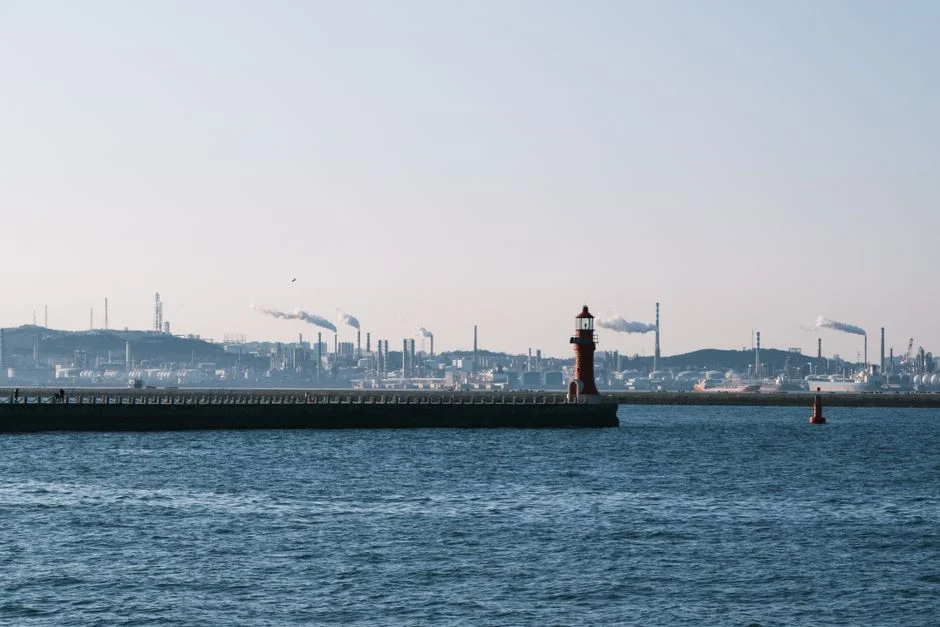
The eight specific prohibitions at 40 CFR 403.5(b) are categorical no-fail conditions that exist independently of any numeric TBLL. The table below lists each prohibition, the numeric threshold where one is defined, and the realistic Woods Cross failure mode.
| # | Prohibition | Numeric Threshold | Woods Cross Failure Mode |
|---|---|---|---|
| 1 | Fire/explosion hazard | Closed-cup flashpoint < 140 °F (60 °C) per 40 CFR 261.21 | Gasoline-blend pad wash water carrying free product to a below-grade sewer cleanout |
| 2 | Corrosive pH | pH < 5.0 | Acid-cleaning campaign on a heat exchanger routed to the process sewer instead of neutralization |
| 3 | Solid/viscous obstruction | No numeric — case-by-case | Waxy sludge from a lube-oil blender hitting a 4-inch lateral in cold weather |
| 4 | Slug oxygen demand | No numeric — slug definition | Slug load of ethanol or methanol from a blender rinse into a DAF feed sump |
| 5 | Heat | POTW > 40 °C (104 °F) | Summer hydrocarbon wash at 50–55 °C elevating headworks temperature above SDSD limit |
| 6 | Petroleum/mineral/cutting oil | Amounts causing pass-through or interference | Direct driver of the HEM/SGT-HEM measurement under EPA Method 1664A |
| 7 | Toxic gases/vapors/fumes | Worker-safety thresholds | Benzene vapor breakthrough from a poorly sealed coalescer dump |
| 8 | Trucked or hauled pollutants at non-designated point | Designated point required | Vactor-truck discharge at a manhole not on the SDSD liquid-waste manifest |
Prohibition #6 is the one every Woods Cross blending terminal can trip with a single off-spec HEM result. Prohibition #8 is the one most often cited after a vacuum-truck driver bypasses the manifest station and dumps a coalescer bottom to the nearest cleanout — and it ties directly to the SPCC sewer map required under 40 CFR Part 112.
Designing the Four-Stage Pretreatment Train for a Woods Cross Bulk Plant
A bulk-plant pretreatment train has four stages, and the order is non-negotiable. Skipping or reordering stages converts a designed safety margin into a single point of failure.
| Stage | Unit Operation | Function | Sizing Basis / Margin |
|---|---|---|---|
| 1 | CPI or API oil-water separator | Free oil and settleable solids removal | API 421 design; ≥20% hydraulic margin on peak blend-pad runoff |
| 2 | DAF (dissolved air flotation) | Emulsified oil and suspended solids polishing | HydropureWater dissolved air flotation system sized with 20–30% safety margin on hydraulic and air-to-solids loading |
| 3 | Biological (activated sludge or MBBR) | Dissolved organics, nitrification if ammonia is a driver | F:M 0.05–0.15 lb BOD/lb MLVSS-d; HRT 6–24 h |
| 4 | Polishing (multimedia filter or MBR) | TSS and trace TPH polishing for monthly-average compliance | MBR flux 10–15 LMH; multimedia filter 5–10 gpm/ft² |
Stage 1 is not optional; without primary oil removal the DAF is overloaded on both hydraulic and air-to-solids ratios, and emulsified oil breaks through into the biological stage where it coats the biomass and collapses the F:M. Stage 2 — the HydropureWater dissolved air flotation system — is the workhorse for emulsified oil at Woods Cross. The 20–30% margin is the difference between passing a monthly-average O&G test and missing it after a single slug. Stage 3 handles dissolved organics; an MBBR with nitrification is the right answer when ammonia is a permit driver. Stage 4 — frequently an MBR module such as the HydropureWater DF series — provides the TSS and trace TPH polish that holds monthly-average numbers on real permit cycles. End-of-pipe options at the SDSD headworks, per EPA 821-R-19-008, mirror this train: equalization, API separator, biological (activated sludge or aerated lagoon), and a polishing pond or multimedia filter (per 40 CFR Part 419 BPT/BAT in-plant and end-of-pipe technology basis).
Lead Parameters and the MAHL Math: Benzene, TPH, and HEM as Permit-Constraining Parameters

At a Woods Cross blending terminal, the parameter that caps permitted throughput is almost never O&G alone. It is benzene and TPH, sized to the local MAHL allocation — often < 0.1–1 mg/L daily max at the IU — and frequently tighter than the 100 mg/L PSES oil-and-grease daily max. The table below shows the worked numbers for a typical blending terminal.
| Parameter | PSES/PSNS Cap (40 CFR Part 419) | Typical TBLL Daily Max at IU | Worked Example (50,000 gpd, BTEX load) |
|---|---|---|---|
| O&G (HEM, EPA Method 1664A) | 100 mg/L daily max | 100 mg/L daily max; ~50 mg/L monthly avg | 187 mg/L = 1.87× → SNC single-day |
| Ammonia (as N) | 100 mg/L daily max | 20–50 mg/L daily max | Nitrification usually controls Stage 3 sizing |
| Total chromium | 1 mg/L (PSNS only) | 0.5–1 mg/L daily max | Rare driver for blending terminals; refinery-side concern |
| Benzene | No numeric PSES | 0.05–0.10 mg/L daily max (MAHL-derived) | 0.18 mg/L = 1.8× → SNC single-day |
| TPH (C6–C36, by MAHL-driven method) | No numeric PSES | 10–50 mg/L daily max | Often more binding than O&G when ethanol blending is on-site |
| BTEX (sum) | No numeric PSES | 0.1–1 mg/L daily max | MAHL often caps permitted flow below HEM-only design |
For the parallel 2026 petroleum pretreatment analysis in a similar regulatory regime, see the parallel 2026 petroleum pretreatment guide for the Lynchburg region. Treat benzene and TPH as the lead parameters for permit negotiation, because the MAHL they generate often constrains daily flow more than O&G does — Woods Cross terminals blending ethanol or handling gasoline should pre-negotiate BTEX mass limits before the TBLL is finalized. Per the 2019 EPA Detailed Study of the Petroleum Refining Category (EPA 821-R-19-008), the regulated ELG pollutants for refineries are BOD₅, TSS, COD, O&G, phenolic compounds, ammonia, sulfide, and total chromium — but the local TBLL will layer benzene, TPH, and HEM on top through the MAHL method, and those layered limits are what actually trip compliance.
Sampling Architecture, Chain of Custody, and the Monthly DMR Defense
A 24-hour flow-proportional composite is the standard for O&G, TPH, and most metals; BTEX is collected as a grab into a sealed vial with HCl preservation to pH < 2, no headspace, held at ≤ 6 °C and extracted within 14 days per 40 CFR Part 136. HEM by EPA Method 1664A is collected as a grab in glass, acidified to pH < 2, and extracted within 28 days. The SOP stack should document the sample port location, preservation, hold time, chain-of-custody seal, and the lab's accreditation under 40 CFR Part 136 — a missing line on the COC is the most common audit finding after a missed DMR. On a site visit a POTW pretreatment coordinator looks for spill containment around all aboveground storage tanks, drip pans under truck loading arms, covered and locked dump valves on coalescers, segregated sewer laterals that keep product-handling pads out of the clean stormwater system, and visible tagging of all sample points. A written Spill Prevention Control and Countermeasure Plan (SPCC, 40 CFR Part 112) tied to the sewer map eliminates roughly half of common audit findings (HydropureWater field data, 2025). The HydropureWater automatic chemical dosing system is the simplest way to lock in consistent coagulant and polymer dose on the DAF feed — automatic dosing removes a manual-step error that an auditor will otherwise flag when a monthly-average number drifts high.
Significant Noncompliance Triggers and the Compliance Calendar
Under EPA's National Pretreatment Program, SNC is triggered by any of: violation of a numerical limit by ≥ 1.5× for any single day; violation of a numerical limit on more than 5% of measurement days in a six-month period; or failure to provide a required report within 30 days of the due date. In plain numbers: a single benzene reading of 0.18 mg/L against a 0.10 mg/L daily max is 1.8× → SNC automatic. Two HEM exceedances out of 30 daily measurements in a six-month window is 6.7% → SNC automatic. A DMR filed on the 16th of the month when the 15th is the due date is 1 day late; filed 31 days late → SNC automatic. The 12-month compliance calendar is the artifact that keeps all three triggers under control.
| Day of Month / Frequency | Action | Trigger It Defends |
|---|---|---|
| 1st | Flow and pH meter calibration, DAF air pressure check | 5% / six-month exceedance |
| 15th | Monthly DMR filed without exception (use "estimated pending lab" if needed) | 30-day reporting SNC |
| Quarterly | Self-audit against the EPA National Pretreatment Program audit checklist | 5% / six-month exceedance |
| Semi-annual | POTW site inspection; resolve findings within 30 days | NOV → SNC escalation |
| Annual | SPCC review and sewer map re-walk under 40 CFR Part 112 | Prohibition #8 (#8 SPCC findings) |
| Every 2 years | TBLL re-review; renegotiate BTEX mass limits before finalization | Throughput cap from MAHL |
Defensive practice is to file on the 15th of every month without exception, even if the result is "estimated pending lab"; keep a pre-audit file using the EPA National Pretreatment Program audit checklist categories; and treat the calendar as a permit condition. For an analogous regional implementation, the 2026 pretreatment guide for petroleum plants near Kalispell, MT walks a similar compliance calendar against a smaller receiving POTW.
Frequently Asked Questions
What are the three triggers for Significant Noncompliance under 40 CFR Part 403?
SNC is triggered by any of: a numerical limit exceeded by ≥ 1.5× on any single day; a numerical limit exceeded on more than 5% of measurement days in a six-month period; or failure to provide a required report within 30 days of the due date (per 40 CFR Part 403, as implemented through the EPA National Pretreatment Program).
Why does benzene or TPH usually cap throughput at a Woods Cross blending terminal before HEM does?
Because the South Davis Sewer District TBLL is derived via EPA's MAHL method, and the MAHL for benzene and total petroleum hydrocarbons is sized to biosolids Part 503 limits and the receiving-water quality targets tied to the Great Salt Lake watershed. Those MAHL values typically constrain permitted daily flow more tightly than the 100 mg/L O&G PSES daily max in 40 CFR Part 419.
What sample preservation and hold times apply to BTEX and HEM at a petroleum terminal?
BTEX is collected as a grab in a sealed vial with HCl to pH < 2, no headspace, held at ≤ 6 °C, and extracted within 14 days. HEM/SGT-HEM by EPA Method 1664A is collected as a grab in glass, acidified to pH < 2, and extracted within 28 days. Both are listed methods under 40 CFR Part 136.
Where can I find the source-of-record document for petroleum refinery wastewater profiles?
EPA 821-R-19-008, the 2019 Detailed Study of the Petroleum Refining Category, is the current source of record for refinery wastewater characteristics, treatment-in-place, and DMR distributions. For a different regional implementation, see the Cincinnati 2026 petroleum pretreatment engineering guide.
Related Equipment
- HydropureWater DF series MBR membrane module — specifications, capacity range, and technical data