Why Wynnewood Petroleum Plants Are Getting NOV Letters in 2026
A Notice of Violation citing a single HEM composite at 187 mg/L against a 100 mg/L daily maximum, a 30-day cure window, and a footnote that escalates the event to Significant Noncompliance (SNC) under the EPA's National Pretreatment Program if the next two monthly reports miss the mark — that is the letter showing up at petroleum terminals near Wynnewood, Oklahoma with unusual frequency in 2026. Three converging pressures are driving the uptick: aging POTW infrastructure struggling with hydraulic and biosolids capacity, more aggressive EPA pretreatment audits under the 2024–2026 National Pretreatment Program review cycle, and intensifying water-reuse demand in water-stressed basins (per the ACS ES&T Engineering 2021 review on U.S. industrial water scarcity and reuse).
Wynnewood sits inside that envelope. The community's petroleum terminals and bulk plants discharge to a small municipal POTW whose own Oklahoma DEQ-issued NPDES permit, biosolids program, and Canadian River water-quality standards drive the local limits printed on the industrial user's discharge permit. There is no Wynnewood-specific pretreatment code that overrides 40 CFR Part 403; the receiving POTW's current Technically Based Local Limits (TBLL) document — or, where the POTW has not finalized one, the most recent Maximum Allowable Headworks Loading (MAHL) worksheets — is the controlling engineering reference. The first move for any engineer sizing a retrofit in this region is to request that TBLL document before any equipment is specified.
The 2026 Regulatory Chain a Wynnewood Engineer Must Quote
The citation ladder a terminal engineer can hand to a regulator during an audit runs Clean Water Act of 1972 (33 U.S.C. § 1251 et seq.) → EPA General Pretreatment Regulations at 40 CFR Part 403 → POTW-adopted Technically Based Local Limits (TBLL) derived using the EPA's Maximum Allowable Headworks Loading (MAHL) method (per the 2020 St. Joseph, MO TBLL evaluation by Black & Veatch, final report adopted 2020-12). Industrial User (IU) status is triggered under 40 CFR Part 403.3 by discharge of process wastewater to a POTW, or by contribution of ≥25,000 gpd of non-domestic waste. Most Wynnewood-area bulk plants fall under noncategorical Significant Industrial User (SIU) status; a dedicated refinery or fuel-blending operation may be categorical under 40 CFR Part 419.
Two definitions an engineer should be able to quote cold: pass-through (40 CFR 403.3(p)) is a discharge that exits the POTW into waters of the United States in quantities or concentrations that, alone or with other sources, causes a violation of the POTW's NPDES permit; interference (40 CFR 403.3(k)) is a discharge that, alone or with other sources, inhibits or disrupts the POTW, its treatment processes, or its sludge use or disposal, and therefore causes an NPDES or sewage-sludge violation. Both are the legal hooks behind every local limit number.
The eight 40 CFR 403.5(b) specific prohibitions forbid: (1) pollutants creating a fire or explosion hazard, including any wastestream with a closed-cup flashpoint below 140 °F (60 °C) per 40 CFR Part 261.21; (2) corrosive discharges with pH lower than 5.0; (3) solid or viscous pollutants causing obstruction; (4) oxygen-demanding pollutants at slug concentrations; (5) heat that pushes the POTW above 40 °C (104 °F); (6) petroleum oil, nonbiodegradable cutting oil, or products of mineral oil origin in amounts that cause pass-through or interference; (7) toxic gases, vapors, or fumes threatening worker safety; and (8) trucked or hauled pollutants discharged at a non-designated point. Wynnewood terminals routinely trip flashpoint on wash-rack solvent streams — that is a 40 CFR 403.5(b)(1) violation before HEM is even measured.
Four MAHL inputs drive every local limit a Wynnewood terminal sees: the receiving POTW's NPDES permit limits, Oklahoma water-quality standards for the Canadian River, 40 CFR Part 503 numerical limits on metals and organics in biosolids, and local worker/ecosystem protection factors (NIOSH thresholds, toxicity data). The POTW converts MAHL into a Maximum Allowable Industrial Loading (MAIL), allocates mass against flow, and prints the daily maximum and monthly average on the discharge permit. When the POTW's NPDES permit is renewed, those numbers move.
What the Local Limit Actually Looks Like on a Wynnewood Permit

Hexane Extractable Material (HEM) is the federally used surrogate for fats, oils, and grease in U.S. pretreatment — defined in 40 CFR § 401.16 and measured by EPA Method 1664A (n-hexane extraction, silica-gel cleanup for SGT-HEM). HEM is the parameter most Wynnewood-area POTW permits cite as "O&G." Most 2026 permits set HEM at 100–200 mg/L daily maximum and approximately 250 mg/L TSS as a daily maximum, derived using the EPA's MAHL method under 40 CFR Part 403 (per St. Joseph, 2020 TBLL). Stricter POTWs in water-reuse basins push daily maximum HEM toward 50 mg/L, so design for that band unless the local TBLL confirms a higher ceiling.
BTEX (benzene, toluene, ethylbenzene, xylene) and total petroleum hydrocarbons (TPH) are sized to the local MAHL allocation — often <0.1–1 mg/L daily max at the IU. pH at the POTW headworks is held inside 5.0–12.0 by the specific prohibitions at 40 CFR 403.5(b); any reading outside that window is a self-reported violation regardless of the oil and grease number. Treat benzene and TPH as the lead parameters for permit negotiation, because the MAHL they generate often constrains daily flow more than O&G does — Wynnewood terminals blending ethanol or handling gasoline should pre-negotiate BTEX mass limits before the TBLL is finalized.
| Parameter | Typical 2026 Wynnewood limit | Method / citation | Notes |
|---|---|---|---|
| HEM (O&G) | 100–200 mg/L daily max; 50 mg/L in reuse basins | EPA Method 1664A; 40 CFR § 401.16 | Strict POTWs in water-stressed basins push toward 50 mg/L |
| TSS | ~250 mg/L daily max | Standard Methods 2540D | Weekly grab minimum |
| BTEX (benzene lead) | Local MAHL allocation, often <0.1–1 mg/L | EPA 624 / 8260 | 24-hr flow-proportional composite |
| TPH | Local MAHL allocation | EPA Method 1664A or TPH fraction-specific | Drives daily flow cap on gasoline terminals |
| pH | 5.0–12.0 (instantaneous) | 40 CFR 403.5(b)(2) | Self-reporting violation if exceeded |
| Flashpoint | ≥140 °F (60 °C) closed-cup | 40 CFR 403.5(b)(1); 40 CFR 261.21 | Wash-rack solvent streams frequently trip this |
The Four-Stage Pretreatment Train in Physical Order
A bulk plant pretreatment train has four stages, and the order is non-negotiable. Stage 1 — source segregation: segregated laterals for product-handling pads, covered and locked dump valves, and dedicated oil/water sewering on truck-loading islands cut the volume hitting the train by 40–70% in field retrofits (HydropureWater field data, 2025–2026) and convert most of the remaining flow from "design problem" to "design choice." Stage 2 — primary oil/water separation with an API gravity separator, a CPI corrugated plate interceptor, or a plate/media coalescer handles the free-oil fraction (droplets ≥60–150 µm); a well-operated API unit typically leaves 100–200 mg/L O&G, and a CPI hits a similar band in a much smaller footprint. Stage 3 — emulsified-oil polishing with a dissolved air flotation system: micro-bubbles generated at 60–90 psig float oil droplets down to ~10–25 µm, leaving an outlet typically 15–30 mg/L O&G. Stage 4 — biological or adsorption polishing, applied only where the local limit demands ammonia, sulfide, or dissolved hydrocarbon reductions a physical train cannot deliver — see the reference on MBR polishing for tight water-reuse permits for the basis-of-design math.
The principal waste streams a Wynnewood terminal must feed into this train each carry a different droplet-size distribution: tank-bottom water is free oil plus sludge (primary), wash-rack water is emulsified with droplet sizes below 50 µm from surfactant detergents (DAF), loading-arm drip is mostly free oil (primary), and hydrostatic test water is low-strength but high-volume (equalization). A side-by-side analog for a similar basin is documented in the case study on DAF vs clarifier selection for petroleum bulk wastewater in Brazoria. The robust path for a Wynnewood-area petroleum bulk plant is CPI or API primary, then DAF as the emulsified-oil polisher, sized with a 20–30% safety margin on hydraulic and air-to-solids loading. For a worked example of the regional analog, see the engineering playbook for petroleum pretreatment near Demopolis.
| Wynnewood waste stream | Characteristic | Droplet / load profile | Stage assigned | Slug factor vs daily mean |
|---|---|---|---|---|
| Tank-bottom water | Free oil + sludge | ≥150 µm, intermittent | Stage 2 (API / CPI) | 2–4× during drop |
| Coalescer / API dump | Concentrated free oil | ≥60 µm, batch | Stage 2 (equalized into API) | 3–5× at dump event |
| Truck-loading drip | Free oil, low flow | ≥150 µm, near-continuous | Stage 1 segregation → Stage 2 | 1.5–2× |
| Wash-rack water | Emulsified (surfactant) | <50 µm, steady | Stage 3 (DAF) after primary | 1.2–1.5× |
| Hydrostatic test water | Low strength, high volume | Trace TPH, large slug | Equalization → Stage 2 | 3–10× hydraulic, low load |
| Stormwater (product areas) | Episodic free oil | Variable, weather-driven | Stage 1 segregation + Stage 2 | Spill-driven, unbounded |
Picking the Right Primary Separator for a Wynnewood Terminal
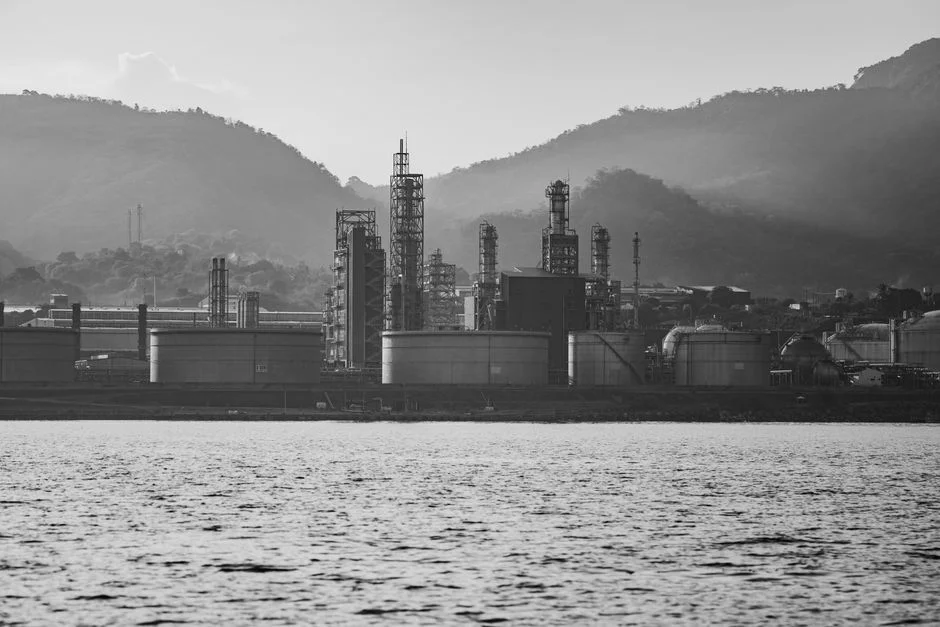
The primary-separator decision is the highest-leverage call in the entire train, because the unit operation selected there sets the floor for the DAF polishing stage that follows. The four technologies are not interchangeable. An API gravity separator removes droplets ≥150 µm, requires ≥30 minutes residence at peak flow, runs at a very large footprint and long residence time, and is the lowest unit cost per gallon — outlet 100–200 mg/L O&G. A CPI corrugated plate interceptor cuts droplets around 60 µm in 1–2 inch plate spacing at a corrugation angle near 45°, in a much smaller footprint than API, and is the workhorse of inland terminals — but it is sensitive to turbulence and cannot break emulsions. A plate or multimedia coalescer cuts 10–25 µm at 2–5 gpm/ft² surface loading and ASR ~0.02–0.05, in a compact footprint, but carries higher O&M and media replacement every 1–3 years. A DAF used as a primary stage reaches 10–25 µm at 5–10 gpm/ft² hydraulic loading — but it needs an air-saturation system and is slug-sensitive without an upstream primary.
Field guidance (HydropureWater field data, 2026): a DAF alone without a primary gravity stage fails under slug loads from coalescer dumps because free oil blankets the bubble surface and crashes the air-to-solids ratio. A CPI alone rarely meets a 100 mg/L HEM limit on emulsified wash-rack water — it removes free oil efficiently but does not address sub-60 µm droplets. For a Wynnewood-area bulk plant with mixed free-oil and emulsified wash-rack flow, specify CPI or API primary, then DAF as the emulsified-oil polisher, sized with a 20–30% safety margin on hydraulic and ASR loading.
| Technology | Droplet cut | Hydraulic loading | Footprint | Outlet O&G | Best fit | Limitation |
|---|---|---|---|---|---|---|
| API gravity separator | ≥150 µm | Residence ≥30 min at peak | Very large | 100–200 mg/L | High-throughput, large flow swings | Footprint, cannot break emulsions |
| CPI (corrugated plate) | ~60 µm | Vendor-specific | Compact | 100–200 mg/L | Small-to-mid terminal; retrofit into existing vault | Sensitive to turbulence; no emulsion break |
| Coalescer (plate / multimedia) | 10–25 µm | 2–5 gpm/ft²; ASR ~0.02–0.05 | Compact; vertical available | <100 mg/L on pre-strained | Loading rack; pre-strained free oil | Higher O&M; media replacement 1–3 yr |
| DAF as primary | 10–25 µm | 5–10 gpm/ft² | Compact | 15–30 mg/L with chemistry | Polishing or strict <50 mg/L sites | Slug-sensitive without upstream primary |
Sizing the DAF Stage for Wynnewood Slug Loads
Three numbers drive a defensible DAF design: peak instantaneous flow (gpm or m³/h, not the daily average — a coalescer dump or a tank drop spikes 3–5× the daily mean), daily O&G load (lb/day or kg/day calculated from tank turnover, wash-rack volume, and drip rates), and target residual O&G (mg/L, ideally set 20–30% below the local permit ceiling). The DAF design band: ASR 0.02–0.06, saturator recycle 20–50% of forward flow, surface hydraulic loading 2–5 gpm/ft², and hydraulic retention 15–30 minutes. A 20–30% safety margin on ASR and hydraulic loading is the design margin that absorbs a coalescer-dump slug without carryover.
Chemistry closes the gap: pH adjustment to 6.5–7.5 ahead of the DAF and a demulsifier or coagulant dose of 50–200 mg/L delivered through the HydropureWater automatic chemical dosing system is what unlocks the residual <50 mg/L HEM a strict POTW will demand. Where the train has to swing from a 50 mg/L HEM permit to <20 mg/L in a water-reuse loop, the polishing step moves from biological (MBR with PVDF flat sheet membranes at <1 µm pore size) to adsorption (GAC, change-out per breakthrough). The exact Reynolds-number cap and Froude-number floor depend on the vendor's plate pack, so the design report should reference the manufacturer's confirmed droplet-size curve rather than a generic number.
Self-Monitoring, BMPs, and the Wynnewood Compliance Calendar
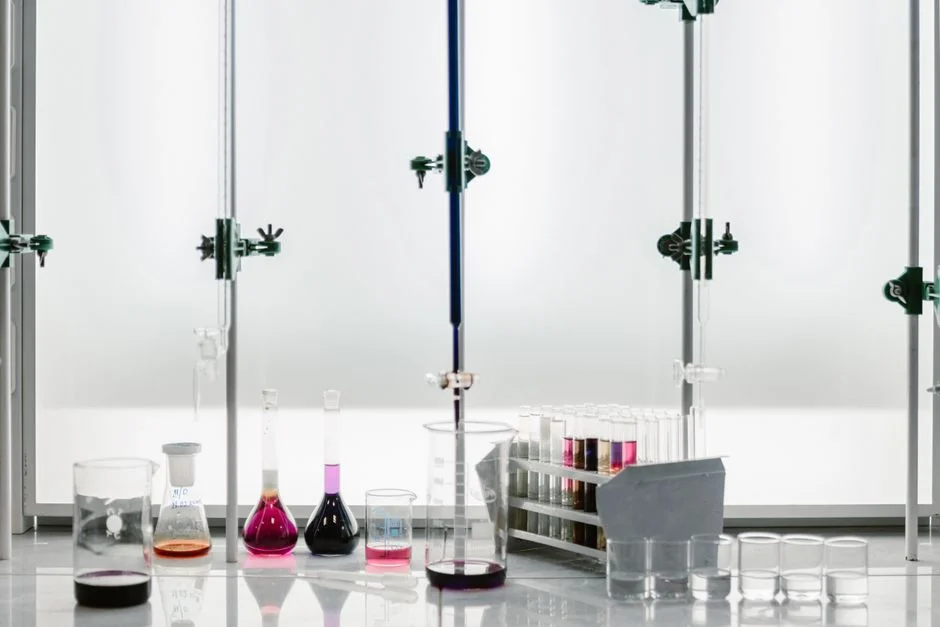
Minimum 2026 self-monitoring cadence: daily visual free-oil inspection at the outlet weir (dated and initialed), weekly TSS grab, monthly HEM composite (EPA Method 1664A, 24-hour flow-proportional where the permit specifies), and 24-hour flow-proportional BTEX/TPH composite where the local limit is non-zero. Sampling taps must be accessible, the flow meter calibrated annually, and the chain of custody defensible — most SNC findings originate from sampling-procedure deficiencies, not from underlying treatment performance. Online analyzers earn their keep: a fluorescence-based oil-in-water probe on the final effluent line with a 10–20 mg/L alarm setpoint gives the operator a same-day read on a coalescer dump before the composite hits the lab; online pH/conductivity probes back the slug-control plan required by 40 CFR 403.8(b)(4).
Best Management Practices are the cheapest compliance insurance a Wynnewood terminal can buy. POTW pretreatment coordinators look for spill containment around all aboveground storage tanks, drip pans under truck loading arms, covered and locked dump valves on coalescers, segregated sewer laterals that keep product-handling pads out of the clean stormwater system, and visible tagging of all sample points. A written Spill Prevention and Countermeasure Plan (SPCC, 40 CFR Part 112) tied to the sewer map eliminates roughly half of common audit findings (HydropureWater field data, 2025).
The consequence chain is linear and avoidable: one late monthly report triggers a Notice of Violation; two in twelve months escalate to SNC; SNC triggers a Show Cause hearing and potential permit action. Defensive practice: file on the 15th of every month without exception, even if the result is "estimated pending lab"; keep a pre-audit file using the EPA National Pretreatment Program audit checklist categories; treat the calendar as a permit condition. Slug plans that exist on paper but were not followed are the most common root cause in consent decrees; the slug plan must be written, current, trained out, and exercised at least annually against a credible scenario (tank drop, coalescer dump, spent-caustic release).
| Date / cadence | Action | Owner | Audit file location |
|---|---|---|---|
| Daily | Visual free-oil inspection at outlet weir (dated, initialed) | Shift operator | Daily log binder / DMS |
| Weekly | TSS grab; online probe calibration check | Shift operator | Weekly log + calibration file |
| Monthly (by the 15th) | File HEM composite (Method 1664A) and BTEX/TPH; chain-of-custody attached | EHS manager | POTW submission + audit folder |
| Quarterly | Flow meter calibration verification; SPCC review | Maintenance lead | Calibration log + SPCC binder |
| Annually | Slug-plan tabletop exercise; SPCC plan re-cert (40 CFR Part 112) | EHS manager + terminal engineer | Training records + signed SPCC |
| Audit cycle | Pre-audit file rebuild against EPA NPP checklist categories | EHS manager | Audit-ready binder + DMS index |
Frequently Asked Questions
What are the typical 2026 HEM and TSS limits a Wynnewood-area petroleum terminal has to meet before sewer discharge?
Most 2026 permits set HEM at 100–200 mg/L daily maximum and TSS at approximately 250 mg/L daily maximum, derived using the EPA's MAHL method under 40 CFR Part 403 (per the 2020 St. Joseph, MO TBLL evaluation by Black & Veatch). Stricter POTWs in water-reuse basins push daily maximum HEM toward 50 mg/L, so design for that band unless the local TBLL confirms a higher ceiling.
Can a dissolved air flotation (DAF) unit serve as the sole treatment stage for a Wynnewood petroleum bulk plant?
Yes in some cases, but not as a stand-alone primary. Free oil from coalescer dumps and tank drops blankets DAF micro-bubbles and crashes the air-to-solids ratio; a DAF alone fails under slug loads (HydropureWater field data, 2026). A CPI or API primary stage ahead of the DAF is standard practice, with a 20–30% safety margin on ASR and hydraulic loading to absorb peak events.
What triggers a Significant Noncompliance (SNC) finding at a Wynnewood petroleum terminal?
Under EPA's National Pretreatment Program, SNC is triggered by any of: violation of a numerical limit by ≥1.5× for any single day; violation of a numerical limit on more than 5% of measurement days in a six-month period; or failure to provide a required report within 30 days of the due date. A single HEM composite of 187 mg/L against a 100 mg/L ceiling is a 1.87× exceedance — already past the 1.5× single-day trigger on its own.
Why is benzene the lead parameter for permit negotiation at a Wynnewood gasoline or ethanol-blending terminal?
Benzene and TPH mass limits are sized to the local MAHL allocation and often constrain daily flow more than O&G does. A Wynnewood terminal blending ethanol or handling gasoline should pre-negotiate BTEX mass limits before the TBLL is finalized, because the MAHL those numbers generate frequently caps permitted throughput below the HEM-only design.
What is the single most common SNC entry point at a small petroleum terminal, and how do you prevent it?
The 30-day reporting rule is the single most common SNC entry point at small terminals, because the field operator who pulls the monthly composite is the same person who has to file the report. Defensive practice: file on the 15th of every month without exception, even if the result is "estimated pending lab"; keep a pre-audit file using the EPA National Pretreatment Program audit checklist categories; treat the calendar as a permit condition.