Why Randlett mining and metals plants are asking this question in 2026
For Randlett, US mining and metals factories in 2026, the right answer is rarely DAF alone or a clarifier alone: run DAF as primary when FOG, emulsified oil, or colloidal fines are present, and a lamella clarifier as primary only on FOG-free, dense Fe(OH)₃/Al(OH)₃ streams. Both must be paired with chemical precipitation to meet 40 CFR 437 daily-maximum limits on TSS, lead, zinc, copper, and iron, and with a 10–15% sizing margin for sub-10°C winters (HydropureWater field data, 2026).
Three pressures converge on the Uinta Basin capital cycle right now. The first is regulatory: 40 CFR 437 (Ore Mining and Dressing) sets daily-maximum and monthly-average effluent limits for TSS, total recoverable lead, zinc, copper, and iron, and a pH band of 6.0–9.0 for any discharge to waters of the United States (per 40 CFR 437.30–437.32). The second is capital-cycle age: many in-service clarifiers in Uintah and Duchesne counties date to the 1970s, and ESG-driven closed-loop water-reuse targets now make replacement a board-level decision rather than a maintenance line item. The third is climate: Randlett regularly sees sub-zero winter temperatures, which means freeze risk in unheated sludge hoppers and 20–30% slower micro-bubble nucleation kinetics at 5°C versus 20°C (HydropureWater field data, 2026). None of those three pressures is handled by a copy-paste answer built for a warm-climate site like Conroe, TX, which is why a localized Randlett brief earns its place on the desk.
The stream profile is also specific. Randlett plants see dense metal-hydroxide floc — Fe, Mn, and Al hydroxides, silica fines, magnetite — with intermittent tramp oil from maintenance shops and oil-and-gas-adjacent truck wash. That is the opposite of the FOG-heavy food-processing stream most DAF articles assume, and it is the reason the same three-rule framework that works in the Conroe piece (floc density, FOG, cold weather) needs a different emphasis here. For a pretreatment lens on a comparable metals stream, the North Little Rock mining pretreatment compliance guide walks through similar chemistry in a different basin.
How a DAF system actually separates metals wastewater
A DAF system floats solids using micro-bubbles generated from a pressurized recycle stream. Clarified effluent is drawn off the DAF outlet, pressurized to approximately 6 bar (87 psi), and saturated with air in a packed saturation vessel. When the saturated recycle is depressurized back into the flotation tank at atmospheric pressure, dissolved air comes out of solution as 30–50 µm bubbles (per S1, S4, S5). Those bubbles attach to chemically conditioned floc and lift it to the surface, where a skimmer sweeps the float into a sludge trough; clarified water exits below the float blanket and heavy settleable solids drop to a bottom sediment compartment.
Removal performance for DAF in this service class is >90% for TSS, FOG, COD, and BOD (per S5), and the unit can also capture particulate metals and colloidal silica when upstream chemistry is right (per S4). Coagulants are typically polyaluminum chloride (PAC), ferric chloride, or alum, paired with an anionic polymer flocculant dosed at 1–5 mg/L. Without that conditioning, micro-bubbles pass right past colloidal fines and the DAF underperforms (per S1, S4). On the energy side, the air compressor and recycle pump run 8–15 kWh per m³ treated — a known, scalable cost that belongs in the OPEX line, not in a contingency reserve.
How a clarifier — conventional vs lamella — handles metals wastewater
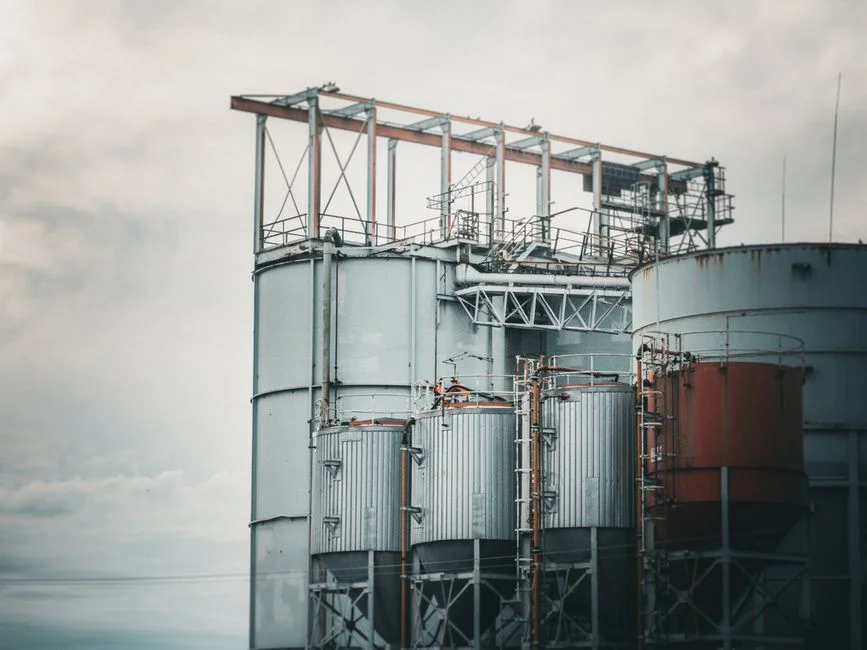
A HydropureWater high-efficiency lamella clarifier (also called an inclined-plate settler) stacks inclined plates inside a compact tank. The plates multiply effective settling area, so surface loading climbs to 20–40 m/h and footprint drops by roughly an order of magnitude versus a conventional clarifier at the same flow. A conventional gravity clarifier is a large rectangular or circular tank operating at just 1–2 m/h surface loading, which is why its footprint runs 5–8 m² per m³/h and its civil/building cost dominates any 2026 retrofit.
Many lamella designs include a sludge-recirculation loop that re-injects settled sludge to contact fresh influent, cutting coagulant consumption by up to 30% (HydropureWater P10). The trade-off is the underflow: lamella sludge typically lands at 2–5% dry solids, which means a larger downstream filter press than the DAF equivalent. For dense Fe(OH)₃ or Al(OH)₃ floc that has been properly conditioned, design the plate pack at 20–30 m/h on the projected area; for fine silica or low-density floc, drop to 10–15 m/h. The published 20–40 m/h band is for clean, well-conditioned hydroxide floc only — a nuance that often gets lost when lamella is sold on a single spec sheet.
The three rules that decide DAF vs lamella on a Randlett mining stream
Three rules govern which mechanism wins on a Randlett stream. First, the floc-density rule: chemically conditioned floc with specific gravity >1.05 settles readily and favors a clarifier, but the same floc, once polymer-conditioned, also binds tightly to 30–50 µm micro-bubbles, so either technology works when chemistry is right (per S2, S4). Second, the FOG rule: free oil and grease do not settle in a clarifier's residence time — they exit in the overflow — so any FOG load has to be handled upstream or in a polish step. Third, the cold-weather rule: micro-bubble nucleation kinetics slow 20–30% at 5°C versus 20°C (HydropureWater field data, 2026), so a 10–15% sizing margin on the recycle pump and saturation vessel is prudent for plants that run through a Uinta Basin winter.
The combined implication is straightforward. If the stream carries any FOG, intermittent cutting oil, or colloidal fines, the DAF must come first; the lamella is then the polish, not the primary. If the stream is FOG-free, dense, and well-conditioned — a taconite concentrator on a clean hydroxide feed is the textbook case — the lamella can stand alone as primary, with a DAF held in reserve for the day a maintenance shop starts discharging oil. The same decision logic carries across basins and is the basis of the DAF vs clarifier for mining wastewater in Conroe, TX 2026 guide, though Randlett's climate and oil-and-gas adjacency shift the weighting toward freeze protection and FOG capture.
DAF vs lamella vs conventional clarifier: head-to-head for mining streams
The table below reorganizes dense metal-hydroxide stream parameters — not food-processing FOG defaults — into the rows procurement actually asks about. The DAF wins on FOG, colloidal fines, footprint, and float dryness; the lamella wins on CAPEX for FOG-free streams at very high flow; the conventional clarifier loses on footprint and is rarely the 2026 answer.
| Parameter | DAF | Lamella clarifier | Conventional gravity clarifier |
|---|---|---|---|
| TSS removal (dense Fe(OH)₃ / Al(OH)₃ floc) | 90–95% (per S5: 95% reference) | 85–92% on well-conditioned floc | 70–85% |
| CAPEX multiplier (lamella = 1.0x) | 1.5–2.5x (HydropureWater field data, 2026) | 1.0x | 0.7–0.9x equipment, huge civil/building cost |
| Footprint per m³/h | 0.2–0.4 m² | 0.3–0.6 m² | 5–8 m² |
| Energy use | 8–15 kWh/m³ (compressor + recycle) + chemistry | Scraper drive + chemistry (up to 30% savings via sludge recycle) | Scraper drive only (~0.1–0.3 kWh/m³) |
| Cold-weather performance (<10°C) | Moderate (slower bubble nucleation; size 10–15% margin) | Low (freezing risk in unheated sludge hopper) | Low (same freeze risk; larger vault) |
| Sludge dryness downstream | Float 4–8% DS — easier dewatering | Underflow 2–5% DS | Underflow 1–3% DS |
| Best-fit stream | FOG, emulsified oil, colloidal fines, light floc | Dense settleable hydroxide floc, high flow, no oil | Legacy installations, very large settling basins |
Three Randlett-shaped scenarios: which unit goes first
Translate the framework into three concrete cases a Uinta Basin reader can pattern-match against their own plant.
| Scenario | Flow & stream | Recommended configuration | Expected effluent |
|---|---|---|---|
| 1. Iron / taconite concentrator | 250 m³/h, 1,500–3,000 mg/L TSS as Fe(OH)₃ + magnetite, no tramp oil | Lamella primary at 30 m/h (~8–9 m² plate area); DAF polish only if maintenance shop adds FOG | TSS <30 mg/L with lamella alone; metals controlled at upstream precipitation (per 40 CFR 437 daily-maximum Pb, Zn, Cu, Fe) |
| 2. Mixed-metals refinery with cutting-oil emulsions | 80 m³/h, 100–300 mg/L TSS, Cu/Zn precipitates, 50–200 mg/L emulsified oil | DAF primary is non-negotiable; small lamella follows as polish for residual TSS margin against daily-maximum metals limits; 80 m³/h sits mid-band on a standard DAF with no custom-engineering cost | TSS <20 mg/L, oil <10 mg/L after DAF; metals under daily-max with precipitation |
| 3. Cold-weather, low-flow copper-mine dewatering | 15 m³/h sump discharge, intermittent through winter | Compact DAF skid starts/stops in minutes and handles variable influent; lamella in unheated Uinta Basin vault risks hopper freeze and is harder to insulate; DAF's higher unit CAPEX pays back in operational uptime | TSS <30 mg/L, intermittent flow handled without idle-loss risk |
Across all three scenarios, the automatic chemical dosing skid is the unglamorous piece of kit that holds the design window together. Variable sump flows and intermittent oil hits will push either system out of spec if the dose drifts; a dosing skid with flow-paced PAC and polymer pumps keeps the floc conditioned to the band the DAF or lamella was sized against.
CAPEX, OPEX, and sludge handling: closing the 1.5–2.5x gap
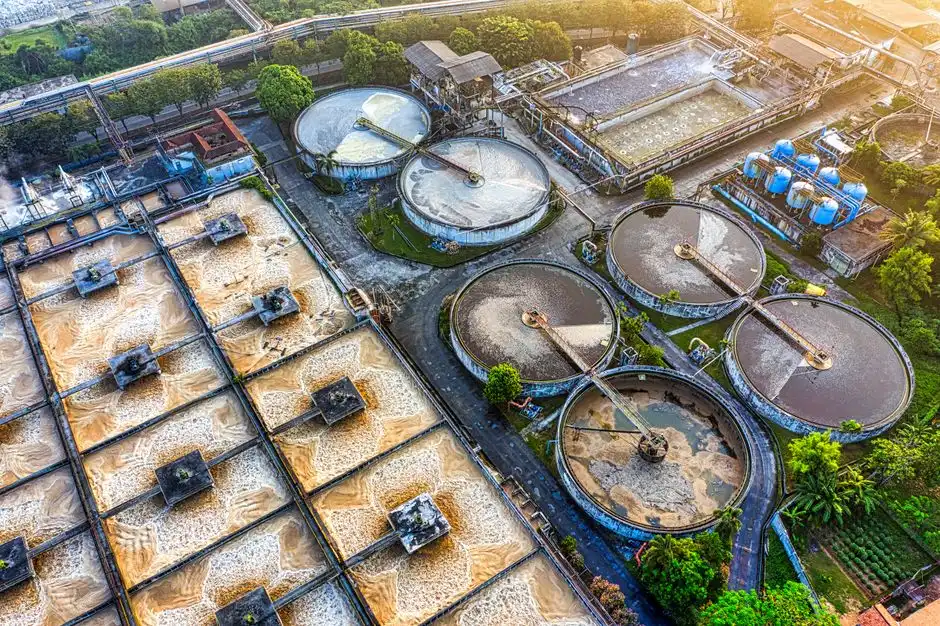
The headline ratio for 2026: DAF CAPEX runs 1.5–2.5x a comparable lamella at equal flow (HydropureWater field data, 2026). That ratio narrows quickly once civil work, excavation, and footprint-driven building costs are added, because a lamella at 0.3–0.6 m² per m³/h is far cheaper to house than a conventional gravity clarifier at 5–8 m² per m³/h, and a DAF at 0.2–0.4 m² per m³/h is smaller still. For a 100 m³/h stream, the difference is roughly 30 m² of DAF footprint versus 60 m² of lamella versus 600 m² of conventional clarifier. The DAF CAPEX premium therefore looks largest in cold, space-rich sites — exactly the Randlett profile — and smallest in dense urban industrial corridors where every square meter of building is expensive.
| Cost lever | DAF | Lamella clarifier | Conventional gravity clarifier |
|---|---|---|---|
| Equipment CAPEX (lamella = 1.0x) | 1.5–2.5x | 1.0x | 0.7–0.9x |
| Civil / building cost | Low (compact skid) | Low–moderate | High (excavation, large vault) |
| Energy (kWh/m³) | 8–15 (compressor + recycle) | Scraper drive + chemistry | Scraper drive only (~0.1–0.3) |
| Coagulant demand | Baseline | Up to 30% less (sludge recycle, HydropureWater P10) | Baseline |
| Sludge dryness to filter press | Float 4–8% DS — easier dewatering | Underflow 2–5% DS | Underflow 1–3% DS |
| Filter press sizing impact | Smaller press per m³ feed | Larger press per m³ feed | Largest press per m³ feed |
OPEX narrows the gap further. Both technologies use coagulant and polymer; the lamella saves up to 30% on coagulant via sludge recycle (HydropureWater P10), but the DAF produces a thicker float (4–8% DS) that dewaters more easily in a downstream plate-and-frame filter press. The DAF's air compressor and recirculation pump are real line items — 8–15 kWh per m³ treated — but they are a known, scalable cost, not a contingency. For broader sludge-handling strategy across the 2026 cycle, the engineering note on chemical sludge reduction pairs directly with this cost band. Bottom line: at Randlett, the lamella wins the equipment bid on paper, but the DAF wins the total-installed-cost argument once the building, freeze protection, and sludge haul-off are priced in.
Frequently Asked Questions
Does 40 CFR 437 require a DAF or a lamella specifically?
No. Neither technology is explicitly required by 40 CFR 437, but the rule sets daily-maximum and monthly-average limits for TSS, total recoverable lead, zinc, copper, and iron, plus pH 6.0–9.0. A well-sized DAF or lamella, paired with chemical precipitation, can meet those limits; many US plants run DAF primary plus lamella polish for margin against daily-maximum excursions.
What surface-loading rate should I use to size a lamella for a mining stream?
For dense Fe(OH)₃ or Al(OH)₃ floc, design at 20–30 m/h on the plate-pack projected area; for fine silica or low-density floc, drop to 10–15 m/h. The published 20–40 m/h range (HydropureWater P10) is for clean, well-conditioned hydroxide floc only, and assuming the upper end on a dirty stream is a common procurement mistake.
Can a DAF run reliably through a Uinta Basin winter?
Yes, but the saturation vessel and recycle line should be insulated or heat-traced. Micro-bubble nucleation kinetics slow by roughly 20–30% at 5°C versus 20°C (HydropureWater field data, 2026), so a 10–15% sizing margin on the recycle pump and saturation volume is prudent for plants that run through winter. The cold-weather penalty is real but manageable; the same penalty on an unheated lamella vault is structural (frozen sludge hopper) rather than kinetic.
Can a lamella run as the only primary clarifier on a taconite-style stream?
Yes — many taconite concentrators run lamella-only as primary clarification on FOG-free streams. Add a DAF polish step only if colloidal fines start bleeding through the effluent or if a maintenance shop discharge adds intermittent oil that the lamella cannot capture. The same three-rule framework is re-tested in the DAF or clarifier for mining wastewater in Metcalfe County 2026 factory guide for a different basin.
How much smaller is a DAF than a conventional clarifier in real square meters?
A DAF at 0.2–0.4 m² per m³/h is roughly one-twentieth the footprint of a conventional gravity clarifier at 5–8 m² per m³/h, and about half the footprint of a lamella at the same flow. For a 100 m³/h stream, that is the difference between 30 m² and 600 m² of clarifier footprint (HydropureWater field data, 2026) — and that ratio is what usually tips a Randlett retrofit from a building-expansion project into a skid-replacement project.