Why EV and Auto Plants Near Grand Ledge Face Stricter Pretreatment Scrutiny in 2026
Federal, state, and local regulators can all enforce industrial pretreatment against a single discharge. The National Pretreatment Program is a cooperative framework under 40 CFR Part 403 in which EPA, the State of Michigan (EGLE), and the local POTW control authority each hold independent enforcement authority over the same discharge (S4, EPA). For an EV or auto plant in the Lansing–Delta Township corridor, that means three agencies can write you at once — and they do not have to coordinate first.
The local control authority here is under unusual pressure. The Grand Ledge wastewater treatment plant at 109 Fitzgerald Park Drive is in active construction on a $52.4 million state-mandated capacity expansion (per cityofgrandledge.com, 2025–2026 project updates). Until the new tanks and headworks come online, the plant has direct financial interest in stopping pass-through and interference at the collection system — pass-through being a discharge that exits the POTW in concentrations toxic enough to cause an NPDES permit violation (40 CFR 403.3(p)), and interference being a discharge that disrupts the POTW's biological or sludge processes enough to cause the same kind of violation (40 CFR 403.3(k)) (S2, EPA). Three standard types apply simultaneously: general prohibitions, specific prohibitions, and categorical standards — plus site-specific local limits and BMPs, with the most stringent controlling (S3, EPA). If you are planning a new line or a permit renewal in 2026, the working assumption is that end-of-pipe enforcement will be tighter than it was three years ago, not looser. The same compliance playbook that worked for a chemical plant near Columbus, summarized in this chemical-plant pretreatment compliance guide for the Columbus area, applies here — the rule stack is federal, the pinch point is local.
Which 40 CFR Categories Apply to an EV or Auto Plant
Auto body stamping, e-coat, and paint shops typically fall under 40 CFR Part 433 (Metal Finishing) when the line includes any plating, phosphatizing, or anodizing step. Cathode coating, electrolyte mixing, and formation cycling lines also meet Part 433 thresholds once Ni or Co from cathode material shows up in rinsewater, and the same line commonly triggers Part 405 (battery manufacturing) on the cell side. The first compliance decision is whether you are a non-categorical IU, an SIU, or a CIU — because the standards stack differently for each.
Under 40 CFR 403.3(v), a Significant Industrial User is any industrial user that (1) is subject to categorical pretreatment standards, (2) discharges an average of 25,000 gpd or more of process wastewater to the POTW (excluding sanitary, noncontact cooling, and boiler blowdown), (3) contributes a process wastestream that makes up 5% or more of the average dry-weather hydraulic or organic capacity of the POTW, or (4) is designated as SIU by the POTW on a reasonable-potential basis (S3, EPA). A single auto paint line or a formation cycle loop in the Lansing–Delta corridor will hit 25,000 gpd on most operating days — count on being an SIU.
Categorical Industrial Users (CIUs) are subject to categorical pretreatment standards "generally" applied regardless of POTW ordinance, but local limits still overlay on top, and the most stringent controls the discharge (S3, EPA). A CIU cannot fall back to local limits as a defense when a categorical number is tighter; conversely, a non-categorical SIU is bound by local limits and the general and specific prohibitions of 40 CFR 403.5. The table below summarizes how each user type is treated.
| User Type | General Prohibitions (40 CFR 403.5) | Specific Prohibitions (40 CFR 403.5) | Categorical Standards (e.g., 40 CFR Part 433) | Local Limits (40 CFR 403.5(c)) |
|---|---|---|---|---|
| Non-categorical IU | Yes | Yes | No | Yes |
| SIU (non-categorical) | Yes | Yes | No | Yes |
| CIU | Yes | Yes | Yes — generally applied | Yes — most stringent controls |
If you are sizing capital for a new line, run the SIU threshold math first and assume CIU status for any stream that touches a metal — the same logic used in this petroleum plant pretreatment compliance guide for the Lynchburg area applies to refinery-side CIU designation and translates cleanly to battery-side CIU designation.
The Waste Streams a Grand Ledge-Area EV/Auto Plant Actually Generates
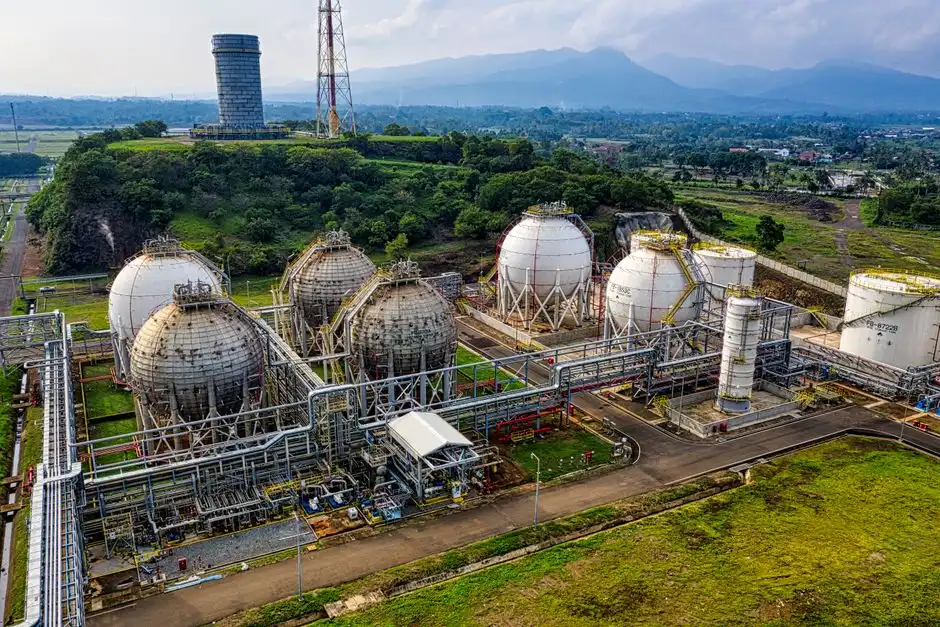
Translating 40 CFR categories into real streams: a stamping/coating/battery plant in this corridor typically generates five distinct waste streams, and the way you segregate them at the P&ID determines what your treatment train has to do.
Stamping and machining produce emulsified oils, total suspended solids, tramp oils, and low-level metals from coolant additives. Body-in-white and e-coat lines produce phosphate drag-out (high phosphorus), nickel pre-treatment rinses, surfactant-bearing cleaners, and pH excursions from dump-rinse cycles. Paint shop wastewater carries solvent-bearing washwater, COD, suspended paint solids, and occasional hexavalent chromium from primer systems. Battery cathode and cell assembly lines are the new addition on the EV side: fluoride from electrolyte salts (LiPF₆ breakdown), lithium and cobalt rinsewater, NMP or PVDF binder residues, ammonia from formation cycling, and sulfate from electrolyte breakdown products. The fifth stream category is utility area — boiler blowdown (typically exempt from the SIU process-wastewater tally under 40 CFR 403.3(v)), cooling-tower bleed, and metal-finishing rinsewater, which is what the control authority scrutinizes first during a baseline monitoring inspection.
Stamping emulsions, e-coat phosphate drag-out, battery rinsewater, and sanitary flow must be physically separated in the sewer layout. Mixing them guarantees the entire combined stream must be treated to the worst pollutant, which usually means zinc or fluoride ends up driving the whole CAPEX. Common sewer laterals are the single most expensive mistake a greenfield line can make, and a permit reviewer will ask about segregation on the first pre-application call.
Typical Local Limits and What an Auto/EV Influent Looks Like in 2026
Local limits are site-specific, can be numeric or narrative, and are imposed at the end-of-pipe connection to the POTW collection system (S2, EPA). EPA's Local Limits Development Guidance instructs POTWs to compute maximum allowable headworks loadings and then back-calculate IU limits — meaning the most stringent enforceable number is what a plant must hit at the sampling manhole, not at the headworks. Local limits are reviewed annually with periodic reevaluation (S2, EPA), so the number you negotiate this year is not the number you negotiate in 2027.
The table below is a working parameter panel for a pre-application meeting. Typical EV/auto influent numbers are drawn from publicly reported auto paint-shop and battery cell sampling programs; mid-Michigan POTW local limit values are typical published values from comparable Michigan POTWs as of 2025–2026, and the 40 CFR Part 433 categorical daily maximums are the regulatory floor where one applies. Use the table as a starting point for your own sampling contractor — your control authority's letter is what controls.
| Parameter | Typical EV/Auto Influent (mg/L except pH) | Typical Mid-Michigan POTW Local Limit | 40 CFR Part 433 Daily Maximum |
|---|---|---|---|
| pH | 5.5–9.5 (s.d.) | 6.0–10.0 s.u. | — |
| TSS | 200–1,500 | 200–400 | 60 |
| O&G | 100–800 | 50–100 | 52 |
| COD | 400–2,500 | — (often narrative) | — |
| Ammonia (as N) | 20–120 | 20–50 (seasonal) | — |
| Total Cd | 0.05–0.5 | 0.05–0.1 | 0.11 |
| Total Cr | 0.2–2.0 | 1.0–2.0 | 2.77 |
| Hexavalent Cr | 0.05–0.4 | 0.05–0.1 | 0.77 |
| Total Cu | 0.5–5.0 | 1.0–3.0 | 3.38 |
| Total Ni | 0.5–10 | 0.5–2.0 | 3.98 |
| Total Pb | 0.2–1.0 | 0.2–0.6 | 0.69 |
| Total Zn | 1.0–20 | 1.0–3.0 | 2.61 |
| Fluoride (F) | 5–60 (battery lines) | 10–30 | — |
| Total P | 5–40 | 5–10 | — |
The four pollutants most likely to fail a Grand Ledge-area POTW on a first sampling round: zinc from galvanneal lines, nickel from e-coat and cathode-coating rinses, ammonia from formation cycling and sealer curing, and oil & grease from stamping. If your baseline monitoring report comes back with any of those four near or above the local limit column, you have a treatment train sizing problem before you have a permit problem. The same end-of-pipe logic is documented for petroleum refineries in this petroleum plant pretreatment compliance guide for Kalispell — the parameter panel shifts by industry, but the headworks-loading math does not.
The 2026 Treatment Train That Gets You Under Those Limits
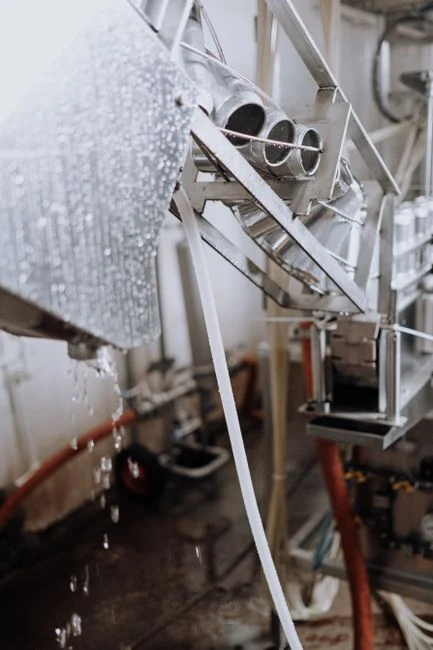
The unit operations below, in order, are what reliably lands a mixed EV/auto plant effluent under the local limits shown above. Walk the train once, then walk it again with your CAPEX estimator.
Step 1 — Source segregation. Stamping emulsions, e-coat phosphate drag-out, battery rinsewater, and sanitary flow in separate sewers. Mixing guarantees the whole stream is treated to the worst pollutant. Step 2 — Flow and load equalization. A 24-hour EQ basin dampens pH spikes from batch e-coat dumps and concentration swings from formation cycling. Step 3 — DAF for oils and TSS. A HydropureWater DAF system (4–300 m³/h) strips free and emulsified oils, TSS, and a portion of the surfactant load ahead of metals precipitation. Step 4 — Chemical precipitation and lamella clarification. Dose NaOH or lime for pH adjustment, sulfide or hydroxide for Ni/Zn/Cu polishing, paired with a HydropureWater lamella clarifier and a HydropureWater automatic chemical dosing skid, to drop total metals and TSS reliably to single-digit ppm range. Step 5 — MBR polish. A HydropureWater MBR Membrane Bioreactor (10–2,000 m³/day, <1 μm PVDF membrane) takes COD, BOD, and ammonia down to the levels a local POTW will accept; PVDF flat-sheet modules (DF series) are a strong fit for the smaller flow ranges typical of a single auto plant. Step 6 — Optional RO for reuse. If the plant wants to recycle rinsewater or hit tighter internal reuse targets, add RO on a side stream; not required for sewer compliance but lowers freshwater draw.
For a single auto-body plant in the 200–600 m³/day range, the realistic capex envelope sits in the low-single-digit millions USD for DAF + lamella + MBR, with RO reuse as a separate line item. HydropureWater field data from 2025–2026 EV Tier-1 installations shows the MBR effluent typically lands at TSS <5 mg/L, COD <30 mg/L, and NH₃-N <1 mg/L — comfortably below the local limit column in the table above.
Choosing the Right Primary Clarifier: DAF vs Lamella for an EV Plant
The most common engineering decision at the front of the train is whether to start with DAF or go straight to a lamella clarifier. The answer is driven by what is actually in the water, not by what is fashionable.
Pick DAF when the dominant load is free or emulsified oil, FOG, or low-density suspended paint solids — typical of stamping, machining, and paint overspray washwater. Pick a lamella clarifier when the dominant load is heavy metals precipitate, phosphate floc, or high-TSS drag-out from e-coat — chemical precipitation followed by inclined-plate settling is the workhorse. Most Grand Ledge-area EV and auto plants run both, in series: DAF first to strip oil so it does not blind the lamella, then lamella after metals precipitation. The same DAF-then-lamella sequencing is documented for fabricated metals plants in this DAF vs clarifier selection guide for fabricated metals.
| Decision Factor | DAF Wins | Lamella Clarifier Wins |
|---|---|---|
| Dominant pollutant | Free/emulsified oil, FOG, low-density paint solids | Heavy metals precipitate, phosphate floc, high TSS |
| Influent oil & grease | >50 mg/L | <50 mg/L (after DAF polish) |
| Required TSS out | 20–50 mg/L | 5–20 mg/L with chemical precipitation |
| Footprint pressure | Higher (skimmer, saturator) | Lower (inclined plates, smaller footprint) |
| Polymer demand | Moderate | Higher, but tunable |
| Best position in train | Upstream of metals precipitation | After pH adjustment and coagulant dosing |
If your influent oil & grease is above 50 mg/L — typical of any line that runs a stamping press — start with DAF. If you go straight to lamella, oil will coat the plates, ride the sludge blanket out the overflow, and the control authority's next sampling event will show it.
Your 90-Day Compliance Plan Before the Grand Ledge POTW Knocks
Regulatory framework translated into a to-do list a plant manager can hand to the EHS team on Monday.
Days 0–30. Confirm your SIU/CIU status against the 40 CFR 403.3(v) thresholds — 25,000 gpd process flow, 5% of POTW dry-weather capacity, or POTW reasonable-potential designation. Pull your local control authority's most recent local limits letter and the most recent annual review.
Days 30–60. Pull 24-hour composite samples on each segregated stream and run the parameter panel from the table above. Build a baseline monitoring report. This is also when you size the treatment train against the worst parameter on the worst day, not the average.
Days 60–90. Issue an SIU permit application (or modification), file a Sludge Management Plan if the MBR waste activates that trigger, and schedule the POTW compliance inspection. The EPA Local Limits Development Guidance — pollutants of concern, maximum allowable loadings, annual review — is the same framework the POTW is using (S2, EPA), and pre-empting their methodology in your submission shortens the review cycle. The same 90-day cadence is documented for mining and metals plants in this pretreatment compliance guide for North Little Rock.
Frequently Asked Questions
Does an EV gigafactory near Grand Ledge qualify as a Significant Industrial User?
Yes, in nearly every operating case. Any industrial user discharging 25,000 gpd or more of process wastewater, contributing 5% or more of the POTW's average dry-weather capacity, or designated by the POTW on a reasonable-potential basis qualifies as an SIU under 40 CFR 403.3(v). A single cathode-coating or formation line in the Lansing–Delta corridor will hit 25,000 gpd on most operating days, which is the simplest trigger to clear.
What 40 CFR category covers an EV battery cell assembly line?
Battery cell lines typically fall under 40 CFR Part 433 (Metal Finishing) once nickel or cobalt shows up in rinsewater, and may also trigger Part 405 (Battery Manufacturing) on the cell side. As a Categorical Industrial User, the plant is subject to categorical standards "generally" applied regardless of local ordinance, but local limits still overlay on top and the most stringent controls the discharge per EPA applicability guidance.
Why is the Grand Ledge POTW enforcing so tightly in 2026?
The Grand Ledge WWTP at 109 Fitzgerald Park Drive is mid-upgrade on a $52.4 million state-mandated capacity expansion (per cityofgrandledge.com, 2025–2026). Until the new tanks and headworks come online, the POTW has direct interest in preventing pass-through and interference discharges — which is why end-of-pipe local limits are the binding constraint right now, not the categorical numbers.
Is RO required to discharge to the Grand Ledge sewer, or only for reuse?
RO is not required for sewer compliance — DAF, chemical precipitation, lamella clarification, and MBR polish are typically sufficient to land effluent under local limits. RO is added on a side stream only when the plant wants to recycle rinsewater for internal reuse, lower freshwater draw, or hit a tighter internal spec than the POTW requires.