What "pretreatment" actually means for a Santa Fe Springs transportation equipment plant
An industrial user discharges "indirectly" whenever process wastewater leaves the facility and enters a POTW collection system rather than a surface water of the United States; that legal hook is defined at 40 CFR 403.3(j) and is the entry point for every local limit the Sanitation Districts of Los Angeles County (LACSD) enforce. The Sanitation Districts operate a regional POTW serving the Santa Fe Springs basin and are required by 40 CFR 403.5(c) to develop site-specific local limits that protect the treatment plant, its sludge, and the receiving water from pass-through (40 CFR 403.3(p)) and interference (40 CFR 403.3(k)). Those two regulatory theories — pass-through and interference — are the legal basis for any Notice of Violation a transportation equipment plant receives for zinc, hexavalent chrome, copper, nickel, oil and grease, or pH excursions at the end-of-pipe monitoring point. Federal categorical standards set the floor, but local LACSD limits set the actual numeric ceiling a plant must design against (per EPA pretreatment local-limits guidance, https://epa.gov/npdes/pretreatment-standards-and-requirements-local-limits). For a truck body, trailer, or rail car manufacturer, that means designing to whichever limit is tighter — the categorical ceiling from 40 CFR Part 433 or Part 461, or the LACSD local limit at the point of connection to the collection system. The pretreatment compliance playbook for industrial plants walking through this same federal-state layering is laid out in our pretreatment compliance playbook for industrial plants, which covers the same regulatory stack from a different vertical.
Which 40 CFR subparts apply to transportation equipment manufacturing
Most transportation equipment plants in the Santa Fe Springs basin trigger at least two EPA industrial categories, and the cross-applicability is where compliance engineers get burned. Machining, grinding, parts washing, and any metal finishing operation falls under 40 CFR Part 433 (Metal Products & Machinery), which sets categorical limits on Cd, Cr, Cu, Pb, Ni, Ag, Zn, total cyanide, and Total Toxic Organics (TTO). Parts painting, primer application, and any on-site paint formulating triggers 40 CFR Part 461 (Paint Formulating & Paint Applying), with separate limits on TSS, COD, and paint-line-specific parameters. A plant that also runs an electroplating line — chrome plating on bumpers, zinc plating on fasteners, anodizing on rail car fittings — crosses directly into 40 CFR Part 413 (Electroplating) on top of Part 433, and the more stringent of the two subparts controls per the federal cross-applicability rule. The table below is a self-classification tool a plant engineer can run in under sixty seconds: identify the operation, read the subpart, then read the primary pollutants of concern that have to be in the design basis.
| Plant operation | Applicable 40 CFR subpart | Primary pollutants of concern |
|---|---|---|
| Machining, grinding, parts washing, metal finishing | Part 433 — Metal Products & Machinery | Cd, Cr, Cu, Pb, Ni, Ag, Zn, cyanide, TTO |
| Parts painting, primer, topcoat, paint formulating | Part 461 — Paint Formulating & Applying | TSS, COD, BOD₅, color, VOCs in wastewater |
| Electroplating, anodizing, chromate conversion coating | Part 413 — Electroplating (cross-applicable with Part 433) | Cr(VI), Cd, Cu, Ni, Zn, cyanide, TTO |
| Boiler blowdown, cooling tower bleed, contact stormwater | Part 403 — General Pretreatment (narrative + local limits) | pH, TSS, O&G, metals, temperature |
| Truck wash, fleet rinse, vehicle assembly wash water | Part 433 + Part 403 (BMP-driven local limits) | O&G, TSS, Zn from road film, detergents |
The one mistake that drives most NOVs in this vertical is assuming the paint line is the only regulated operation. It is not. The metal-prep side of the shop — especially any hexavalent chrome passivation or zinc-rich primer application — is where 40 CFR Part 413-style limits show up in a Part 433 facility, and the categorical maximums for Cr(VI) at 0.1 mg/L daily max and Zn at 1.0 mg/L daily max under Part 433/413 are the numbers that drive equipment sizing (per 40 CFR Part 433 categorical standards). For a deeper look at how the metal-finishing chemistry drives equipment selection, see the heavy metal precipitation engineering guide.
LACSD local limits and the Santa Fe Springs discharge permit framework
LACSD's Industrial Waste Ordinance — published in the 400-series and enforceable through the SIU permit — sets the binding numeric limits for pH (typically 5.5–11.0 narrative range, with site-specific excursions triggering NOV), TSS, oil and grease, total metals (Cd, Cr, Cu, Pb, Ni, Zn), total cyanide, and specific toxic organics. Local limits are site-specific, can be numeric or narrative, and frequently include Best Management Practices (BMPs) per the EPA local-limits framework at 40 CFR 403.5(c). The critical point for the engineer: POTWs impose local limits at the end-of-pipe discharge from an industrial user — the sample point is fixed at the last accessible manhole before the LACSD collection system, and that manhole is what every design parameter has to hit (per EPA local-limits guidance). The self-monitoring and reporting (SMR) frequency is set by the SIU permit; conventionals are typically sampled weekly to monthly, metals quarterly, with immediate (often 24-hour) reporting on any excursion. Failure to report an exceedance inside the permit's notification window is itself a separate violation — the reporting failure carries the same enforcement weight as the underlying numeric excursion.
| Parameter | LACSD typical local limit (representative range) | Sample type | Reporting frequency (typical SIU) |
|---|---|---|---|
| pH | 5.5 – 11.0 (narrative; site-specific) | Grab | Continuous / weekly |
| Total Suspended Solids (TSS) | 50 – 200 mg/L (site-specific) | Composite (24-hr) | Weekly – monthly |
| Oil & Grease (O&G) | 50 – 100 mg/L | Grab | Weekly – monthly |
| Cadmium (Cd) | 0.05 – 0.1 mg/L | Composite (24-hr) | Quarterly |
| Chromium, total (Cr) | 0.5 – 1.0 mg/L | Composite (24-hr) | Quarterly |
| Hexavalent Chrome (Cr(VI)) | 0.05 – 0.1 mg/L | Grab | Quarterly |
| Copper (Cu) | 0.5 – 1.0 mg/L | Composite (24-hr) | Quarterly |
| Lead (Pb) | 0.2 – 0.5 mg/L | Composite (24-hr) | Quarterly |
| Nickel (Ni) | 0.5 – 1.0 mg/L | Composite (24-hr) | Quarterly |
| Zinc (Zn) | 1.0 – 2.0 mg/L | Composite (24-hr) | Quarterly |
| Total Cyanide | 0.1 – 0.2 mg/L | Grab | Quarterly |
The exact numbers above are representative ranges drawn from LACSD's published local limits for the Santa Fe Springs industrial user category; verify against your current permit, because LACSD re-evaluates local limits annually under 40 CFR 403.5(c)(4) and the specific ceilings can shift. The industrial wastewater treatment engineering specs in our Tucson 2026 reference cover the same ordinance-stack mechanics for a different basin.
A 2026 treatment train for meeting the local limits
Source control comes first. Dedicated, labeled piping must segregate oily waste (parts-washer skimmings, machine coolant bleed), cyanide-bearing waste (any plating line rinse), and acid/alkaline cleaners — never combine them upstream of treatment. Combining a cyanide stream with an acid stream liberates hydrogen cyanide gas, which is both an acute worker-safety hazard and a federal Clean Air Act violation. After segregation, the wastewater moves through a four-stage train: equalization, oil/water separation + dissolved air flotation, chemical precipitation for metals, and multimedia filtration polish. The equalization basin is sized at 1.5× the average daily flow with a 24–48 hour detention time to dampen the concentration spikes that come from batch dumping a parts washer or a plating rinse (HydropureWater field data, 2026). The DAF stage handles the bulk of O&G and TSS — a Dissolved Air Flotation system rated for 4–300 m³/h typically removes 70–90% of free and emulsified oils and drops TSS by 50–80% in metalworking applications.
Chemical precipitation is where the metals come out. PLC-controlled caustic (NaOH) dosing lifts the pH into the 9.0–9.5 window where amphoteric metals like zinc, copper, and nickel precipitate as hydroxides; iron-bearing coagulants and anionic flocculants follow to build a settleable/filterable floc. pH control to ±0.2 SU is the difference between hitting the local limit and missing it by 30%. Multimedia filtration — sand, anthracite, and a GAC cap — polishes residual TSS to below 30 mg/L and adsorbs trace organics that slip past precipitation, which is the difference between a tight SMR and a chronic TSS excursion. The full process flow looks like this:
- Source segregation — dedicated piping for oily, cyanide-bearing, and acid/alkaline streams.
- Equalization — 24–48 hr buffer tank, 1.5× average daily flow, with mixing and aeration.
- Oil/water separation + DAF — corrugated plate interceptor upstream, then a Dissolved Air Flotation system for O&G and TSS.
- Chemical precipitation — PLC-controlled NaOH dosing to pH 9.0–9.5, coagulant and flocculant addition, slow mix then lamella settling.
- Multimedia filtration — sand/anthracite/GAC polish, automated backwash on differential pressure.
- pH adjustment — final trim to permit range (typically 6.0–9.0) before the LACSD sample point.
- Monitoring manhole — flow totalizer, pH/conductivity probes, and the 24-hour composite sampler take.
| Stage | Equipment | Key operating parameter | Typical removal |
|---|---|---|---|
| Equalization | Buffer tank, mixers, aeration | 24–48 hr HRT, 1.5× ADF | Dampens spikes (no removal) |
| DAF | DAF, 4–300 m³/h | ASU pressure 5–7 bar, recycle 20–30% | O&G 70–90%, TSS 50–80% |
| Precipitation | NaOH dosing, pH probe, flash mixer, flocculator | pH 9.0–9.5, ORP monitoring if Cr(VI) reduction | Zn/Cu/Ni 90–99%, Cr(VI) with reduction step |
| Multimedia filtration | Sand/anthracite/GAC, auto backwash | 10–20 µm nominal, 2× peak flow sizing | TSS polish to <30 mg/L |
| pH trim | CO₂ or H₂SO₄ dosing | Final pH 6.0–9.0 (permit-driven) | Compliance with narrative pH limit |
Equipment sizing, controls, and instrumentation
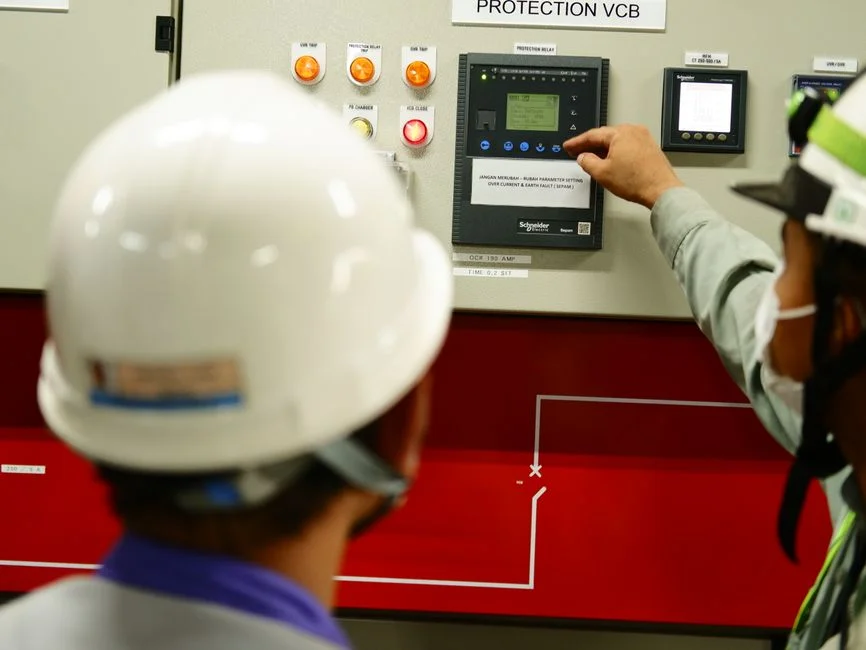
DAF sizing for oily metalworking wastewater runs at a surface loading rate of 10–20 m²·m³/h and an air-to-solids ratio (A/S) of 0.02–0.05; under-sized units are the most common root cause of chronic O&G excursions in the SMR. The chemical dosing system on the precipitation stage should be a PLC-controlled skid with redundant pH probes for closed-loop control — single-probe systems are a documented single-point failure mode that drives acid/caustic over-dosing events. Multimedia filters are sized for 2× peak instantaneous flow, with automated backwash triggered on differential pressure (typically 10–15 psi) and a final TSS target of less than 30 mg/L to keep the SMR TSS column clean. Inline instrumentation on the outlet — pH, conductivity, TSS, and (where required) online metals analyzers for Zn or Cr(VI) — ties into the plant SCADA for continuous compliance visibility. The Dissolved Air Flotation system, the automatic chemical dosing skid, and the multimedia filter specified together form a buildable P&ID package a procurement team can quote; design notes for each unit are on the product detail pages.
Sampling, self-monitoring, and avoiding a Notice of Violation
Sample at the monitoring point defined in the SIU permit — the last accessible manhole before the LACSD collection system — and nowhere else. Internal samples taken upstream of the treatment train are useful for process control but they are not compliance samples and will not be accepted as a defense during an NOV response. Maintain chain of custody for every sample, keep records for at least three years (LACSD's standard retention window), and notify the district inside the permit's reporting window — typically 24 hours from the time the excursion is confirmed by repeat sampling. Run internal compliance sampling at higher frequency than the permit minimum: weekly internal versus monthly external is a common safety margin that catches drift before the quarterly external sample does. Use a 24-hour flow-weighted composite sampler for metals; a single grab will not capture the batch variability from a parts-washer dump or a plating rinse, and that variability is the most common way a plant misses the limit between two compliant quarterly samples.
Capex/opex benchmark and common pitfalls

Capital cost for a 10–50 m³/h treatment train at a transportation equipment plant in the Santa Fe Springs basin typically runs $350K–$1.2M installed, with the DAF unit and the chemical dosing skid together making up roughly 40–50% of that total (HydropureWater field data, 2026). Operating cost is dominated by chemical consumption — NaOH and polymer — plus sludge hauling to a licensed disposal facility; budget $0.08–$0.18 per liter treated for the full train, with metals precipitation and sludge dewatering as the largest line items. The single most expensive pitfall is combining cyanide and acid waste streams upstream of treatment; in addition to the HCN gas hazard, the resulting NOV and Clean Air Act exposure routinely lands six-figure penalties. The second most expensive pitfall is using a single grab sample for metals compliance — high batch-to-batch variability hides exceedances between quarterly samples, and the resulting pass-through excursion is what triggers an LACSD enforcement action. The chemical dosing system selection guide walks through the dosing skid sizing and probe-redundancy choices that prevent the second pitfall. The table below summarizes the capex/opex envelope and the most common NOV triggers for this vertical.
| Cost / pitfall category | Typical value or trigger | Notes |
|---|---|---|
| Capex envelope (10–50 m³/h train) | $350K – $1.2M installed | DAF + dosing skid = 40–50% of total |
| Opex envelope (full train) | $0.08 – $0.18 per liter treated | NaOH, polymer, sludge hauling |
| Common pitfall #1 | Mixing cyanide + acid waste upstream | HCN gas release, Clean Air Act exposure, federal NOV |
| Common pitfall #2 | Single grab for metals compliance | Hides batch variability; quarterly sample misses exceedance |
| Common pitfall #3 | Equalization undersized | Spikes propagate to DAF and precipitation, breaking removal |
| Common pitfall #4 | Single pH probe on dosing skid | Probe failure = over/under-dosing = pH excursion in SMR |
Frequently Asked Questions
What 40 CFR subpart applies to a transportation equipment plant?
Machining, grinding, parts washing, and metal finishing fall under 40 CFR Part 433 (Metal Products & Machinery); parts painting triggers 40 CFR Part 461 (Paint Formulating); and any on-site electroplating or chromate conversion coating crosses into 40 CFR Part 413 (Electroplating). The more stringent of the cross-applicable subparts controls.
What are the LACSD local limits for heavy metals?
Representative LACSD local limits for industrial users in the Santa Fe Springs basin run 0.05–0.1 mg/L for cadmium and hexavalent chrome, 0.5–1.0 mg/L for total chromium, copper, and nickel, 0.2–0.5 mg/L for lead, and 1.0–2.0 mg/L for zinc. Always confirm against the current permit, since LACSD re-evaluates local limits annually under 40 CFR 403.5(c)(4).
How much does a pretreatment system cost for a 20 m³/h flow?
For a 20 m³/h train in the Santa Fe Springs basin, budget roughly $500K–$800K installed for an equalization/DAF/precipitation/filtration system. The DAF and the chemical dosing skid typically represent 40–50% of that total, with opex around $0.08–$0.18 per liter treated.
What triggers a Notice of Violation in Santa Fe Springs?
An NOV is triggered by any exceedance of a local limit, categorical standard, or SIU permit condition at the end-of-pipe monitoring point — including a missed reporting window, a failed sample, a pass-through event, or an interference event at the LACSD POTW.
Do I need an SIU permit if I discharge to the LACSD collection system?
Yes, if your discharge falls within LACSD's Significant Industrial User (SIU) definition under the Industrial Waste Ordinance — generally any user discharging process wastewater, any user subject to categorical standards under 40 CFR Parts 405–471, or any user the Districts designate as SIU. The SIU permit sets your local limits, sample point, SMR frequency, and reporting obligations.
Related Equipment
- Dissolved Air Flotation system — specifications, capacity range, and technical data
- PLC-controlled chemical dosing skid — specifications, capacity range, and technical data