

Why Citric Acid Wastewater Is a Special Case for Belt Filter Presses
Citric acid fermentation liquor is not a generic food-plant sludge. It carries three distinct solids fractions that behave differently under mechanical dewatering: residual mycelium biomass from Aspergillus niger fermentation, finely divided calcium citrate precipitate formed during lime neutralization of the clarified broth, and entrained residual sugars, proteins, and intracellular organics. Raw fermenter discharge typically runs at pH 2–4 with high Ca²⁺ (1,000s of mg/L after lime addition), BOD/COD in the 10,000–30,000 mg/L range, and total suspended solids commonly between 5,000 and 20,000 mg/L. Those numbers are characteristic of the stream, not universal constants — they shift with feedstock (molasses vs glucose hydrolysate) and recovery yield — but they frame why the downstream press cannot be sized like a dairy or brewery sludge unit.
Calcium citrate is the operational headache. The precipitate is gelatinous, fines-dominated, and reactive: if pH drifts below ~5.0 inside the press, residual citric acid re-dissolves bound calcium and releases fine citrate that blinds filter cloth within hours. If pH overshoots above ~7.5, free Ca²⁺ combines with sulfate and carbonate carryover to form gypsum and calcite scale on rollers and belts. The narrow pH 5.5–7.0 window is the single biggest reason citric acid plants need chemistry-aware dewatering design rather than off-the-shelf municipal biosolids settings.
The business case remains strong. Per the EPA biosolids fact sheet, "dewatering wastewater solids reduces the volume of residuals, improves operation, and reduces costs for subsequent storage, processing, transfer, end use, or disposal" (EPA 832-F-00-057). For citric acid producers, that translates into a 5–10× volume reduction from raw fermenter sludge (~2% solids) to press cake (22–28% dry matter), which directly cuts hauling and landfill surcharges — usually the dominant disposal cost line.
Process Flow: From Fermenter Discharge to Dry Cake
A working belt-press train for citric acid wastewater follows a specific four-stage sequence to ensure operational efficiency. Skipping pH correction or thickening will push the press outside its operating envelope regardless of how well it is sized.
- pH correction. Lime (Ca(OH)₂) or NaOH lifts the stream from pH 2–4 to a target of 5.5–7.0. Lime is cheaper and adds nucleation sites that help downstream flocculation, but it raises Ca²⁺ loading — operators using lime must hold the upper pH below ~7.0 to avoid gypsum scaling on the belt.
- Primary clarification or DAF. A DAF system for citric acid wastewater pre-clarification removes free oils, floated mycelium, and coarse suspended solids before the sludge reaches the press. DAF typically lifts TSS removal to 80–95% and protects the belt cloth from grease blinding.
- Gravity and polymer pre-thickening. The underflow is routed to a thickener or directly into the belt press's gravity drainage zone, targeting 3–6% DM feed (per Sigma DAF Clarifiers feed-concentration guidance for filter presses). An automatic polymer dosing skid for belt-press conditioning injects cationic or anionic polyacrylamide at 2–10 kg per ton of dry solids, with the actual dose landed by jar testing — well-run citric acid plants typically settle in the 3–5 kg/t DM range.
- Belt filter press dewatering and cake handling. Conditioned sludge moves through the three press zones, drops to 22–28% DM cake, discharges onto a chute or conveyor, and goes to landfill, soil amendment, or incineration depending on whether the line is food-grade or industrial-grade.
These process choices integrate with wider industrial wastewater standards, where the 2026 comparison of belt, screw, and plate presses for industrial sludge provides a useful cross-reference, and the micro-bubble DAF engineering guide for industrial wastewater covers the upstream clarification step in more depth.
Belt Filter Press Sizing Parameters for Citric Acid Streams
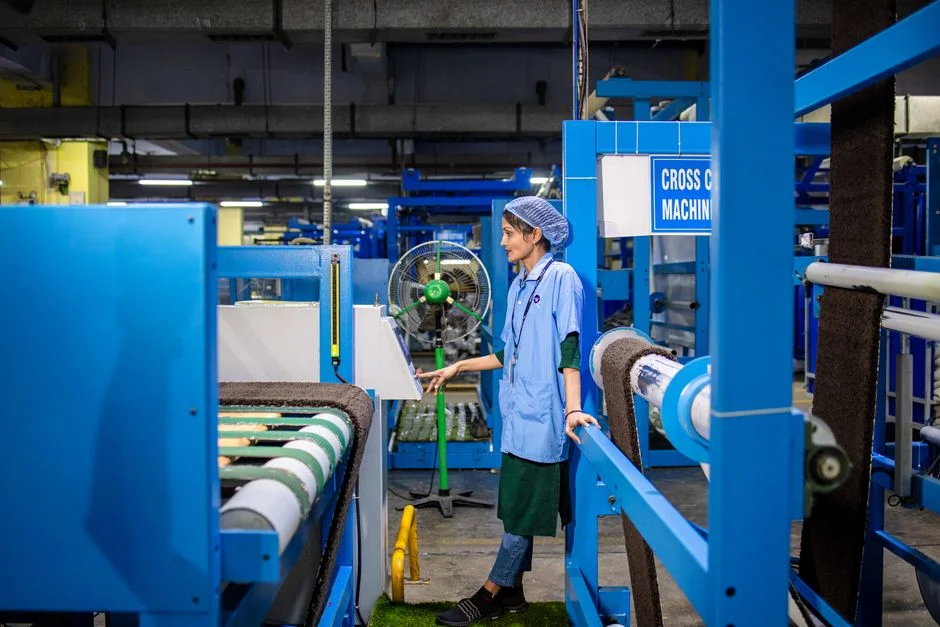
Belt filter presses for industrial sludge are sold in standardized size ranges. Per FRC Systems' published 2026 specifications, effective belt width runs 0.5–3.0 m (24–120 in), effective dewatering area spans 35–388 sq ft (3.3–36 m²), and flow capacity reaches 350+ GPM (79.5 m³/h). For a small citric acid fermentation plant producing 5–10 m³/h of conditioned sludge, a 1.0 m belt width is the typical starting point; for installations above 20 m³/h, 2.0–3.0 m belts are standard to keep belt loading in the 150–250 kg DM/m·h range that preserves cake dryness and cloth life.
Three operating zones do the work, in sequence:
- Gravity drainage zone. Free water releases from flocculated sludge before any pressure is applied. On a viscous, calcium-rich citric acid sludge, this zone typically drops feed from 3–6% DM to 6–9% DM and is where most polymer demand is paid back — under-dosed sludge here will not form a firm mat and the press will fail to build pressure downstream.
- Wedge zone. The two belts converge and begin gentle compression, squeezing out additional water without crushing floc.
- High-pressure roller zone. A series of progressively tighter rollers — typically 4–8 stages — drives final dewatering. On citric acid streams, peak linear belt pressures of 0.4–0.6 MPa are typical; pushing beyond that risks re-dissolving calcium citrate if pH drifts low, and risks gypsum scaling if pH drifts high.
Expected cake dryness for properly conditioned citric acid sludge is 22–28% DM, with 30% DM achievable on well-optimized polymer dosing and consistent feed chemistry. Anything below 20% DM usually signals a polymer dose, pH, or thickening-stage problem — not a press capacity problem.
| Parameter | Typical range for citric acid streams | Notes |
|---|---|---|
| Belt width | 1.0–3.0 m | 1.0 m for <10 m³/h; 2.0–3.0 m for >20 m³/h |
| Feed concentration | 3–6% DM | Per Sigma DAF Clarifiers guidance |
| Polymer dose | 2–10 kg/t DM (3–5 typical) | Cationic or anionic polyacrylamide; jar-tested |
| Cake dryness | 22–28% DM (30% upper bound) | Below 20% indicates conditioning issue |
| Energy use | 5–15 kWh/t DM | Per Sigma DAF Clarifiers benchmark |
| Filter cloth life | 6 months – 2 years | Per Sigma DAF Clarifiers; pH-dependent |
Belt Filter Press vs Plate-and-Frame for Citric Acid Plants
The two dominant mechanical dewatering choices for citric acid sludge diverge on five axes that matter for both CAPEX and OPEX. Selection depends on which plant constraints are most significant.
| Selection criterion | Belt filter press | Plate-and-frame filter press |
|---|---|---|
| Cake dryness | 22–28% DM (30% upper bound) | ≥30% DM, up to 35–40% with membrane squeeze |
| Operation | Continuous, 24/7 capable | Batch, 60–120 min cycles |
| CAPEX | Moderate | Highest among mechanical dewatering options |
| OPEX drivers | Polymer, belt/cloth replacement, wash water | Lower polymer; cloth replacement 6 months–2 years |
| Footprint and labor | Compact, low labor, PLC-automated | Larger, higher labor, plate handling |
| Best fit | Continuous food-grade plants >~5 m³/h | Batch or specialty-grade producers needing drier cake |
Per the Sigma DAF Clarifiers comparative framework, the plate filter press has the highest acquisition cost among mechanical dewatering options but is often the most economical long-term when disposal cost dominates — drier cake means fewer truckloads, lower tonnage surcharges, and reduced landfill levies. A belt press wins on continuous operation, lower labor, smaller footprint, and tighter integration with a 24/7 food-grade fermentation line. For plants that need both continuous throughput and the driest possible cake, a plate-and-frame filter press alternative for batch operation can be paired with a smaller belt unit for base load.
Operating Costs and 2026 ROI for Belt Press Installation
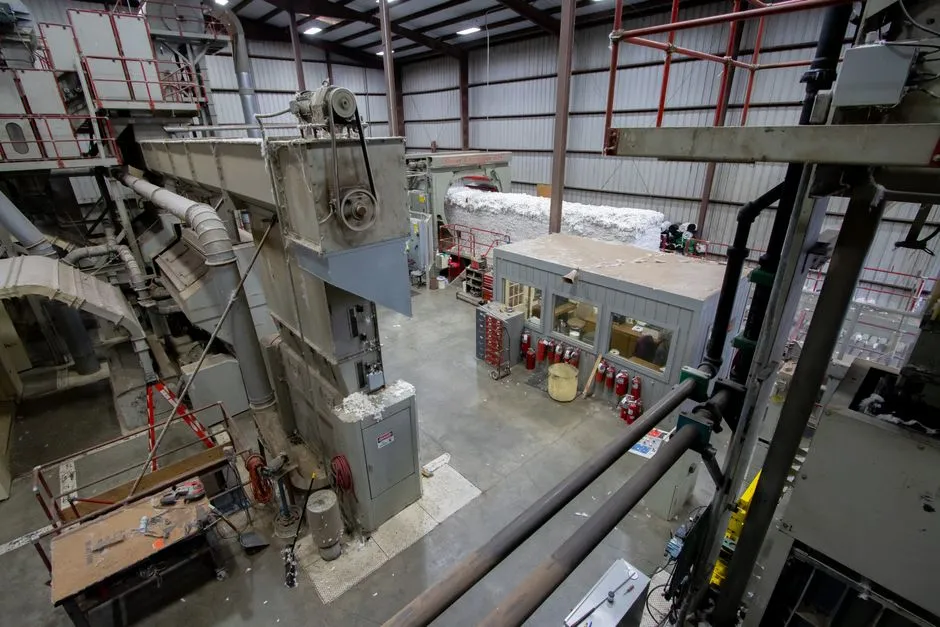
Procurement and finance require three primary numbers: kWh, polymer, and payback. The first two are well-defined benchmarks; the third depends on local disposal tariffs, but the order of magnitude is consistent across citric acid plants.
- Energy: 5–15 kWh per ton of dry matter (Sigma DAF Clarifiers benchmark). On a 10 m³/h line running at 4% DM feed and 25% DM cake, that translates to roughly 40–120 kW of continuous press demand — a small line item relative to fermenter aeration and agitation loads.
- Polymer: 2–10 kg per ton DM conditioning dose, with on-site jar testing the right path to a stable 3–5 kg/t operating point. At 2026 polyacrylamide prices in the $2.50–4.00/kg range, polymer typically runs $8–20 per ton of dry solids processed — usually the largest variable opex line on a belt press.
- Filter cloth replacement: 6 months to 2 years depending on pH control, cake abrasiveness, and wash-water quality (per Sigma DAF Clarifiers). Cloth cost is a recurring opex item that should be budgeted.
The 2026 payback drivers stack up predictably. Reducing cake volume by 5–10× versus raw sludge cuts hauling frequency and tonnage surcharges directly. Recovered filtrate, often clear enough to reuse as belt wash water or cooling-tower makeup, offsets fresh-water draw. Avoided landfill surcharges — particularly relevant in EU and OECD jurisdictions where biosolids disposal fees have risen sharply through 2024–2025 — close the gap. For a mid-scale citric acid plant processing 50–100 t DM/day, published industry experience points to a 12–30 month payback on a properly sized belt press installation, dominated by disposal-cost avoidance rather than energy or polymer savings.
| Cost line | 2026 typical value | Notes |
|---|---|---|
| Energy | 5–15 kWh/t DM | Sigma DAF Clarifiers benchmark |
| Polymer | 2–10 kg/t DM (3–5 typical) | $8–20/t DM at 2026 prices |
| Filter cloth life | 6 months – 2 years | pH-dependent; recurring opex |
| Cake volume reduction | 5–10× vs raw sludge | From ~2% to 22–28% DM |
| Typical payback | 12–30 months | Driven by disposal-cost avoidance |
Frequently Asked Questions
What cake dryness can a belt filter press realistically achieve on citric acid wastewater?
Properly conditioned citric acid sludge — neutralized to pH 5.5–7.0, thickened to 3–6% DM, and dosed with 3–5 kg/t DM of polyacrylamide — typically reaches 22–28% cake dryness, with 30% DM as the upper bound for well-optimized polymer dosing. Anything below 20% DM usually signals an upstream conditioning problem (pH drift, under-dosing, or inadequate thickening) rather than a press capacity issue.
Why does citric acid sludge foul belt filter cloth so quickly?
Calcium citrate precipitate is the main culprit
Frequently Asked Questions
What cake dryness can a belt filter press achieve on citric acid wastewater?
On citric acid wastewater, a belt filter press typically achieves a sludge cake dryness ranging from 25% to 35% total solids. This performance is highly dependent on the initial solids concentration of the biological sludge and the efficiency of the upstream conditioning process.
How much polymer is needed to condition citric acid sludge for belt pressing?
Polymer consumption for citric acid sludge generally falls between 3 to 8 kilograms of active polymer per dry metric ton of solids processed. Because citric acid sludge is often organic and gelatinous, high-molecular-weight cationic polyacrylamides are required to achieve effective flocculation and water release.
Can a belt filter press handle low-pH (2–4) citric acid wastewater directly?
Standard carbon steel belt filter presses cannot withstand low-pH environments, as the acidic conditions cause rapid corrosion of the frame and rollers. To process wastewater in the 2–4 pH range, the equipment must be constructed using 316L stainless steel or acid-resistant coated components, and pH neutralization is strongly recommended prior to dewatering to protect the filter media.
Belt filter press vs plate and frame press for citric acid plants — which is better?
A belt filter press is superior for plants requiring continuous operation and lower labor intensity, offering higher throughput for dilute sludges. Conversely, a plate and frame filter press is preferred when the goal is maximum cake dryness (often 40%+) or if the sludge characteristics vary significantly, as the plate and frame system provides higher pressure filtration cycles that are more forgiving to variations in sludge composition.
What is the typical payback period for a belt filter press in a food-grade citric acid plant?
The typical payback period for a belt filter press installation in a citric acid facility ranges from 18 to 30 months. This calculation is based on the significant reduction in sludge hauling and disposal costs achieved by increasing cake solids, which offsets the initial capital expenditure and annual operational costs for polymers and electricity.