

Why Dewatering POME Sludge Is Now a Climate and Revenue Decision
A filter press for palm oil mill wastewater (POME) dewaters anaerobic pond sludge or digestate into a dry cake — typically 25–40% solids with a plate-and-frame press and 18–25% with a belt press — while reducing methane emissions from open lagoons and producing a cake that can be recycled as plantation fertilizer. Plate-frame units deliver the driest cake; belt presses win on throughput and energy. In 2026, CAPEX ranges roughly $80K–$350K for a 10–80 m³/h POME line.
POME held in open anaerobic lagoons decomposes rapidly to methane and CO₂; left in place, most of the organic load is vented to atmosphere as CH₄, a gas with roughly 28× the 100-year warming potential of CO₂ (IPCC AR6, 2021). Dewatering organic solids out of the pond and into a sealed cake is now documented as a methane-avoidance measure in the palm oil sector (Environment Development and Sustainability, 2018-06). The same study confirms that belt press cake recovered from POME can be applied as organic fertilizer back into the plantation, closing the nutrient loop instead of exporting the mill's nitrogen, phosphorus, and potassium into a landfill.
The scale of the resource is hard to overstate: 1 m³ of raw POME at ~25,000 mg/L COD holds roughly 20–25 kg of recoverable suspended and dissolved solids, depending on the mill's upstream oil recovery. For a 45 t FFB/h mill generating 500–700 m³ POME per day, that translates to 10–17 tonnes of dry solids per day sitting in the pond — both a methane liability and a fertilizer asset. Two competing technologies dominate the dewatering step: the plate-and-frame filter press (batch, very dry cake) and the belt filter press (continuous, high throughput). The rest of this article is the engineering case for choosing between them in 2026.
POME Sludge Characteristics That Drive Filter Press Selection
POME digestate drawn from a covered anaerobic lagoon typically arrives at the dewatering step at 2–6% dry solids, with a volatile solids fraction of 70–85% and a fibrous fraction — empty fruit bunch fibre, shell grit, and cell-wall material — that gives the sludge a non-Newtonian, thixotropic rheology. That high organic loading is exactly why the sludge fouls gravity drainage so quickly and why pressure-driven separation dominates the design space.
pH of the digestate is generally 6.8–7.6, and temperature sits at 35–55°C coming off the pond — both favourable for anionic or cationic polyacrylamide flocculation but hostile to a press cloth left dry between cycles. Polymer conditioning is non-negotiable for either technology: without it, cake release collapses, filtrate solids exceed 1,000 mg/L, and cloth life halves.
Particle size in POME digestate is highly heterogeneous, ranging from sub-100 µm colloids to millimetre-scale fibre bundles. That spread is precisely what favours recessed-chamber and membrane plate designs over simple gravity drainage or vacuum belt units — the chamber geometry traps the long fibre, while the membrane squeeze drives out the colloidal water that a belt press cannot reach. Cloth selection is a first-order design variable, not a procurement afterthought: BRIN field testing of a plate-frame unit on activated-sludge simulant (1–4% w/w CaCO₃) showed that cotton cloth delivered 56.00% solute removal at 4% w/w feed, while drill cloth underperformed at every concentration tested (BRIN, 2024). POME contains similar fine colloids, so the cloth finding transfers directly to the design pilot.
Plate-and-Frame vs Belt Filter Press vs Decanter: How Each Handles POME
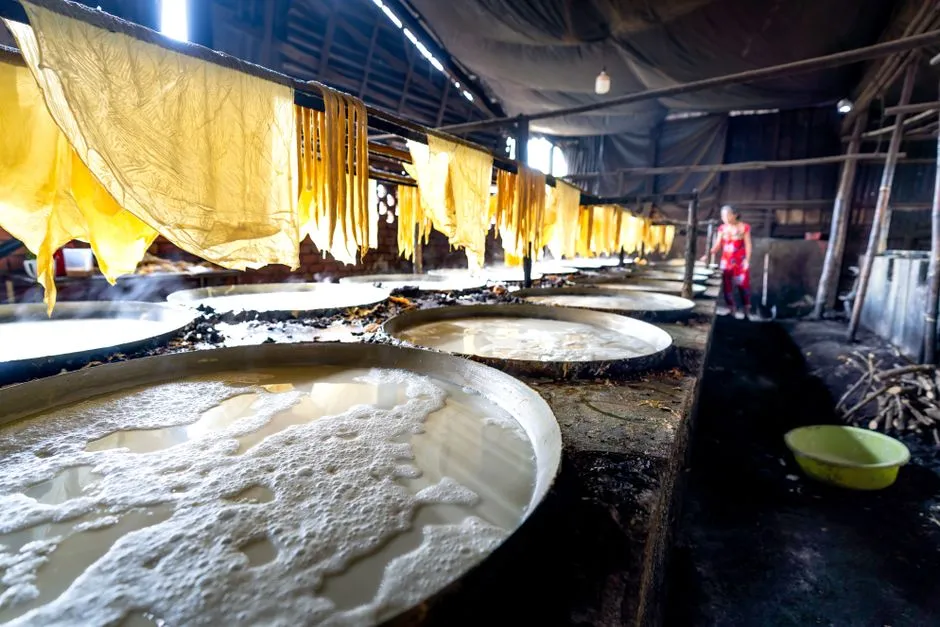
Each technology solves a different point on the dryness–throughput–energy curve, and the right choice depends on which constraint binds the mill first.
Plate-and-frame / recessed-chamber presses run in batches, feeding slurry at 5–15 bar through a pack of polypropylene plates. Cake dryness at the end of the filtration cycle typically lands at 25–40% DS — the upper end of any mechanical dewatering option short of thermal drying. Manual units suit mills under 10 m³/h; fully automatic PLC units with plate-shifting, cloth-washing, and cake discharge handle 20–80 m³/h with one operator per shift. Plate-and-frame units for POME digestate dewatering are available in 1–500 m² filtration area footprints, and the technology scales linearly by adding plates.
Belt filter presses run continuously. Polymer-conditioned sludge is gravity-drained on the upper belt, then sandwiched between two belts running through a series of progressively narrower rollers. Cake exits at 18–25% DS — wetter than a plate press — but throughput is 2–4× higher per unit footprint, and energy draw is typically 2–5 kWh/t DS. Belt presses are the technology explicitly studied for POME methane mitigation in the academic literature (Environment Development and Sustainability, 2018-06) because they match the continuous flow profile of an anaerobic pond discharge.
Membrane filter presses are plate-and-frame units with an elastomeric membrane fixed behind each filter cloth. After the fill cycle, the membrane is inflated with compressed air, water, or oil at 15–30 bar to mechanically squeeze the cake, pushing dryness above 40% DS — the same principle used in palm olein dry-fractionation refining (ANDRITZ separation, 2025). The trade-off is cycle time, capital cost, and membrane life (~8,000–12,000 cycles before replacement).
Decanter centrifuges are the high-throughput alternative for very large mills. The scroll rotates inside a rotating bowl at 2,500–4,000 G, producing a cake at 20–28% DS and a clarified centrate. The open-flight conveyor design and torque-controlled VFD make them maintenance-friendly for POME and biogas applications, with very competitive maintenance cost per dry tonne, though the energy draw (8–15 kWh/t DS) and polymer consumption run higher than either press (ANDRITZ separation, 2025).
The standard process train feeding any of these units: raw POME pond → screening / grit removal → polymer conditioning (inline static mixer) → thickening via a DAF unit or lamella settler → plate and frame filter press for POME digestate dewatering (or belt/decanter) → cake to field application or composting → filtrate to a polishing stage before discharge or reuse. Adding an upstream DAF thickener for the POME filter press train typically lifts feed solids from 2–4% to 4–6% and cuts press cycle time by 20–30%.
| Parameter | Plate-and-frame (recessed chamber) | Membrane filter press | Belt filter press | Decanter centrifuge |
|---|---|---|---|---|
| Operation | Batch | Batch with squeeze | Continuous | Continuous |
| Cake dryness (% DS) | 25–40 | 35–45 | 18–25 | 20–28 |
| Throughput (m³/h, POME) | 1–80 | 1–40 | 10–60 | 15–100 |
| Energy (kWh/t DS) | 5–10 | 8–15 | 2–5 | 8–15 |
| Polymer dose (kg PE/t DS) | 3–6 | 3–5 | 4–8 | 5–10 |
| Filtrate quality (mg/L TSS) | 200–800 | 150–500 | 500–1,500 | 300–1,200 |
| Best fit | Mid-size mills, digestate polishing | Dryness-bound applications, fertilizer sale | Large continuous operations, methane-avoidance focus | Very high throughput, low maintenance priority |
2026 Performance and Cost Benchmarks for a POME Filter Press Line
Procurement needs a single page of numbers for the board paper. The table below consolidates 2026 field-data ranges for each technology applied to POME digestate, drawn from supplier specifications and HydropureWater project data, 2026.
| Benchmark | Plate-and-frame | Membrane filter press | Belt filter press | Decanter centrifuge |
|---|---|---|---|---|
| Cake dryness (% DS) | 25–40 | 35–45 | 18–25 | 20–28 |
| Throughput range | 1–80 m³/h | 1–40 m³/h | 10–60 m³/h | 15–100 m³/h |
| Polymer dose (kg PE/t DS) | 3–6 | 3–5 | 4–8 | 5–10 |
| Energy (kWh/t DS) | 5–10 | 8–15 | 2–5 | 8–15 |
| 2026 CAPEX (USD, installed) | $80K–$250K (1–20 m³/h); up to $350K (80 m³/h, 100–500 m², full PLC) | $200K–$500K | $120K–$300K (10–50 m³/h) | $300K–$800K |
| Footprint (m²) | 8–60 | 10–70 | 6–25 | 10–30 |
| Operator hours/shift | 1–2 | 1–2 | 0.5–1 | 0.5–1 |
Polymer consumption is the single largest OPEX line for any of these systems — typically 3–8 kg of polyelectrolyte per tonne of dry solids for POME, depending on the cationic charge density of the polyacrylamide chosen and the volatile solids content of the digestate. Charge density trades against dose: high-charge cationic flocculants (50–80% cationicity) work at 3–4 kg/t DS but cost 30–40% more per kilogram than mid-charge alternatives. Pilot jar tests on actual pond sludge, not lab simulant, are the only reliable way to lock the dose before procurement.
The 56% solute removal figure reported by BRIN (BRIN, 2024) is a useful floor, not a target — it was measured on a CaCO₃ simulant at 4% w/w with no polymer conditioning. Properly conditioned POME digestate on a plate-frame press routinely exceeds 90% solids capture and returns filtrate at 200–800 mg/L TSS. The 56% number is the reminder that cloth choice alone can move system performance by 10+ percentage points; the ceiling is set by polymer chemistry and feed characterization. For belt press OPEX benchmarking on oily wastewater, see the belt filter press OPEX benchmark for oily wastewater analysis, and for a side-by-side with recessed-chamber technology, the Chamber Filter Press vs Alternatives: Engineering Comparison & Cost-Benchmarked Decision Guide walks through the selection logic in more detail.
How to Select the Right Filter Press for a Palm Oil Mill in 2026
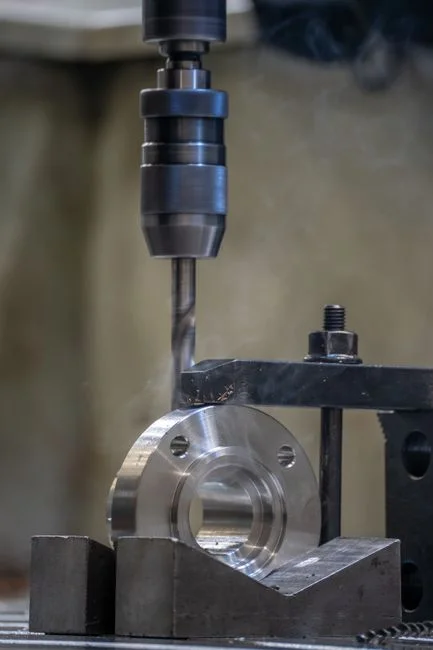
A four-step workflow turns the numbers above into a defensible CAPEX decision.
Step 1 — Define the primary goal. Methane reduction for carbon-credit revenue weights dryness higher (drier cake means less residual biodegradable material left in the pond). Water-reuse for boiler feed or land irrigation weights filtrate quality higher. Fertilizer sale or compliance-driven land application weights both, plus cake appearance. Each goal shifts the optimal point on the matrix in the previous section.
Step 2 — Match throughput to pond layout. Mills under 30 t FFB/h, or mills with batch pond discharge, typically pair a plate-and-frame press — the batch cycle is not a constraint. Mills running 24/7 with continuous pond overflow, or mills over 60 t FFB/h, usually choose belt or decanter to avoid the buffer-tank capital that batch units require.
Step 3 — Pilot cloth and polymer on site before procurement. The BRIN study (BRIN, 2024) confirmed that cotton outperformed drill cloth in plate-frame testing — but POME digestate behaves differently from a CaCO₃ simulant, and the optimal cloth for a fibre-rich sludge is often a mono/multifilament polypropylene weave with a 5–15 µm micron rating. Rent a 1 m² pilot plate or a mobile belt rig for two to four weeks and run a 2³ factorial on cloth, polymer dose, and feed pressure before signing the PO.
Step 4 — Integrate the press with upstream thickening and downstream polishing. A high-efficiency sedimentation tank or DAF unit upstream raises feed solids and cuts press CAPEX by 15–25%. Downstream, route filtrate through a polishing stage (sand filter + activated carbon, or a membrane bioreactor) to meet Malaysian DOE limits (≤100 mg/L BOD₃ for discharge) or Indonesian PERMENLH No. 5/2014 thresholds before irrigation reuse.
ROI sketch for a mid-sized mill: a $200K plate-and-frame line, displacing roughly 1,200 t CO₂e/yr of methane through faster pond drawdown and producing ~3,000 t/yr of cake at $8–15/t fertilizer offset, returns the capital in 2–4 years before any carbon-credit revenue. For larger mills, the same logic on a $300K belt line runs 3–5 years, with the lower OPEX (energy 2–5 kWh/t DS, one operator per shift) closing the gap once throughput is fully utilized.
Frequently Asked Questions
What cake dryness can a filter press realistically achieve on POME digestate?
A recessed-chamber plate-and-frame press typically delivers 25–40% dry solids on POME digestate, while a membrane filter press reaches 35–45% DS by mechanically squeezing the cake after the fill cycle. A belt filter press tops out at 18–25% DS because it relies on roller pressure rather than hydraulic squeeze (HydropureWater field data, 2026).
How much polymer does a POME filter press consume per tonne of dry solids?
Cationic polyacrylamide dose for POME digestate typically runs 3–6 kg PE/t DS on a plate-and-frame press and 4–8 kg PE/t DS on a belt press, with high-charge cationic grades working at the lower end of the range. The exact number is set by jar testing on actual pond sludge rather than by supplier catalogue values (HydropureWater field data, 2026).
What is the 2026 CAPEX range for a POME filter press line?
A 1–20 m³/h plate-and-frame line with manual to semi-automatic controls lands at $80K–$250K installed, with a fully automatic PLC unit at 80 m³/h and 100–500 m² filter area reaching $350K. A 10–50 m³/h belt press line runs $120K–$300K, while a decanter centrifuge at comparable throughput starts around $300K and scales to $800K for the largest POME applications (HydropureWater field data, 2026).
Why is filter cloth selection treated as a first-order design variable?
BRIN plate-frame testing on 1–4% w/w activated-sludge simulant showed cotton cloth delivering 56.00% solute removal at 4% feed versus measurably lower performance from drill cloth at the same concentration (BRIN, 2024). Cloth weave, micron rating, and material directly control cake release, filtrate clarity, and cloth life on POME — piloting on site is non-optional.