What Makes an Organic Compound 'Refractory' in Industrial Wastewater
Refractory organics represent the 10-30% of influent COD that survives a well-operated biological stage and remains stable regardless of sludge retention time. The diagnostic test is the BOD₅/COD ratio: a stream with a BOD₅/COD below ~0.3 is dominated by slowly- or non-biodegradable carbon, and increasing aeration tank intensity yields diminishing returns. The complementary check is a 24-48 hour bench-scale respirometry or BOD₅-long-term test — if the long-term BOD is within 10-20% of the 5-day BOD, the carbon is essentially locked up and adsorption is the realistic next step. About 10-20% of the DOC will remain non-adsorbable even on fresh GAC; plant engineers must budget for this residual when sizing discharge limits (per Calgon Carbon/WWD data).
The industrial source classes that produce these loads include pharmaceutical actives and their transformation products, dye intermediates (azo, anthraquinone, reactive dyes), non-ionic and amphoteric surfactants, phenolic compounds from resin manufacture, chlorinated solvents from cleaning operations, and petroleum residuals from refinery desalter effluent. The published antibiotic-sorbate work on tetracycline, thiamphenicol, and sulfamethoxazole (Molecules, 2022) serves as a useful proxy for any pharmaceutical API stream. The common thread is structural: halogenation, aromatic rings, sulfonamide groups, and nitro substituents block the oxidase enzymes that drive conventional activated-sludge metabolism. Once a stream is diagnosed as refractory, the question shifts from "can biology do more?" to "which adsorption format fits this variability and target?"
How Activated Carbon Adsorption Works at the Pore Scale
Coal-based GAC typically carries a BET surface area of 1,059.011 m²/g, a total pore volume of 0.625 cm³/g, and a micropore volume of 0.488 cm³/g (per Molecules 2022, doi:10.3390/molecules27227980) — roughly 78% of the total pore volume sits in micropores below 2 nm, where dissolved organics below ~1,000 Da adsorb. Mesopores (2-50 nm) act as transport arteries that move those molecules from bulk solution to the micropore mouths; macropores (>50 nm) host the biofilm in BAC operation. If a vendor's datasheet reports only total surface area without a pore-size distribution, the engineer cannot determine whether the carbon is optimized for color/TOC removal (micropore-heavy) or for larger surfactant micelles (mesopore-heavy).
| Pore class | Diameter | Primary function | Industrial relevance |
|---|---|---|---|
| Micropores | < 2 nm | Adsorb small dissolved organics (API residues, phenols, color bodies) | Drive the bulk of DOC and color removal in GAC contactors |
| Mesopores | 2-50 nm | Transport organics to micropores; adsorb larger molecules and surfactant monomers | Critical for surfactant-laden textile effluent |
| Macropores | > 50 nm | Biofilm habitat in BAC; refuge from shear | Support 1.0×10⁸-1.0×10⁹ bacteria/g of GAC vs 1.0×10⁶-1.0×10⁷ on sand/anthracite (WWD/Calgon) |
Surface chemistry provides the second mechanism for adsorption. Oxygen-containing functional groups (carboxyl, lactone, phenolic hydroxyl) on the carbon surface provide the polar and ion-exchange sites that retain phenolic and nitrogen-containing refractory compounds. Bituminous-coal GAC tends to be more microporous and higher in adsorption capacity per gram; lignite carbons are more macroporous and better biofilm carriers. Procurement should request iodine number, molasses number, apparent density, and abrasion number — rather than just mesh size — before approving a media change-out.
GAC, PAC, and BAC: Which Configuration Fits the Stream
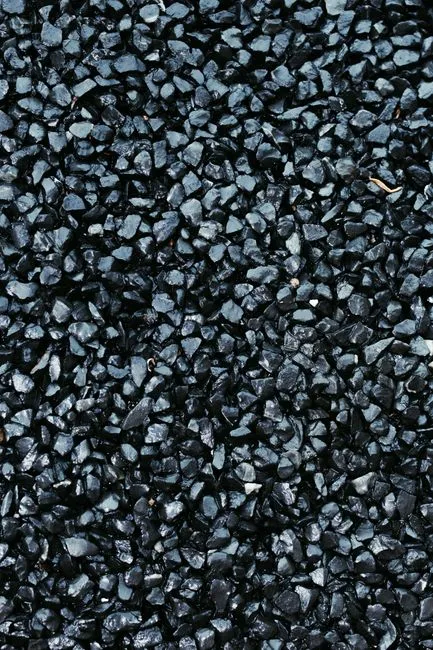
GAC is a fixed bed of 0.5-2.5 mm granules operated as a downflow polishing contactor with periodic backwash; PAC is a 10-150 µm powder dosed into a contact basin and removed downstream by sedimentation or filtration; BAC is GAC operated as a fixed-film bioreactor, usually preceded by pre-ozonation to break recalcitrant molecules into biodegradable fragments and load the carbon surface with biomass (per WWD/Calgon Carbon). Selecting the correct format prevents wasted CAPEX and OPEX.
| Parameter | GAC (fixed bed) | PAC (dosed) | BAC (biologically active GAC) |
|---|---|---|---|
| Typical EBCT / contact time | 20-40 min synthetic organics; 10-15 min DOC | 1-4 hr in contact basin | 10-15 min (DOC, French plants); <5 min for AOC-only polish |
| Service life | 1-2 yr (micropollutants) to 2-5 yr (taste/odor, low load) | Single-use; no in-situ regeneration | 2-5 yr; limited by metals/refractory buildup, not adsorption |
| Regeneration | On-site thermal reactivation at 5-10% loss/cycle, or off-site | Disposal or filter-cake send-out | Thermal reactivation, same as GAC |
| Footprint per m³/h | Medium (1.5-6 m bed depth) | Small contact basin + solids separation | Similar to GAC; may add 6-9 in. sand cap for fines |
| Best-fit influent variability | Steady, characterised refractory load | Highly variable; dye batches, spill events, seasonal swings | Partially biodegradable refractory after ozone |
| CAPEX signal | Higher (vessels, piping, backwash) | Lowest (skid + dosing pumps) | Highest (ozone + GAC + polishing sand) |
Choose PAC when the influent swings day to day (textile dye batches, pharmaceutical campaign changes) and a 24-72 hr response is acceptable. Choose GAC for steady-state polishing of a known refractory load where predictable breakthrough and in-situ regeneration offer long-term value. Choose BAC when the plant already runs ozone and the refractory load has a biodegradable fraction, provided the engineer can accommodate the 6-9 in. sand cap used to retain carbon fines (per WWD/Calgon Carbon). The same adsorption vessel will not serve all three duties, so sizing requires choosing a format first.
Upstream protection remains vital to system performance. A DAF system ahead of the carbon stage strips emulsified oil and floatable solids that would blind a GAC bed within days, while a multi-media filter catches the carryover suspended solids that survive clarification.
Designing the Carbon Contact Stage: EBCT, Bed Depth, and Hydraulics
Empty bed contact time (EBCT) dictates vessel volume and serves as the primary design lever. Duty-specific bands are well documented: 10-15 min for biodegradable DOC removal in major French BAC plants (per WWD/Calgon), under 5 min when the target is AOC-only polishing, and 20-40 min when synthetic organics or pesticides are the breakthrough concern. Below 5 min on a refractory COD stream, the carbon lacks sufficient contact with the molecules; above 40 min, the engineer pays for excess contactor volume that provides no kinetic benefit.
Bed depth is derived from the EBCT and hydraulic loading rate. A backwash-tolerant GAC contactor typically runs at 5-15 m/h, which at a 10-15 min EBCT results in a 0.83-3.75 m bed — most operating plants fall between 1.5 m and 3 m. Vessel diameter follows the design flow: for 50 m³/h at 10 m/h loading and a 2.5 m bed depth, the contactor is roughly 2.5 m in diameter by 3.5 m straight side, plus 50% freeboard for backwash expansion. These calculations should be performed on paper before requesting vendor quotes, as suppliers often size to standard diameters and the engineer must ensure the proposed equipment meets the required EBCT.
Backwash frequency is a critical operational parameter for BAC systems. GAC supports 10-100× denser fixed biomass than sand or anthracite (1.0×10⁸-1.0×10⁹ bacteria/g vs 1.0×10⁶-1.0×10⁷/g, per WWD/Calgon), which drives BAC performance but causes faster head loss, especially above 20 °C. Plan for more frequent and aggressive backwash than a standard multimedia filter, and avoid chlorinated backwash water, which strips the biomass essential to the BAC process.
Integrating Carbon Filtration with Upstream and Downstream Unit Operations

Carbon filtration functions as a polishing step rather than a primary treatment workhorse. The upstream biological stage and preceding solids-removal units determine whether the carbon contactor runs for two years or two months. A chemical or pharmaceutical plant feeding the carbon contactor from a settled activated-sludge clarifier should route effluent through a DAF system to strip residual oil and floatables, followed by a multi-media filter to drop TSS below ~10 mg/L, the threshold above which GAC beds blind measurably. Ignoring this step often results in media change-outs at 4-6 months instead of 18-24.
Downstream, carbon-filtered water typically feeds an MBR system or an RO stage for water reuse. The carbon step protects the RO membrane from residual TOC and color that would otherwise foul it within weeks; the MBR, in turn, catches any carbon fines or biomass sloughed off the GAC bed. A side-stream BAC contactor treating 20-40% of the biologically polished flow often provides the optimal CAPEX/OPEX balance for chemical plants where treating full flow would oversize the carbon stage.
Service Life, Regeneration, and Operating Cost in 2026
Service life is driven by the most demanding breakthrough on the bed, following established documentation (per WWD/Calgon Carbon): 6-12 months when DOC breakthrough is the change-out trigger, 1-2 years when synthetic organics or pesticides are the target, and 2-5 years for taste/odor or low-strength polishing. Industrial refractory streams typically fall in the 6-12 month band on the first cycle, extending to 12-24 months once the bioregeneration effect takes hold.
Three regeneration paths exist. On-site thermal reactivation makes economic sense above ~50 tonnes of GAC inventory, with 5-10% media loss per cycle factored into make-up. Off-site reactivation is the standard for 10-50 t inventories. Single-use disposal with virgin carbon make-up is the most expensive option per cubic metre treated, but it is necessary when the carbon is loaded with metals or refractory polymers that would poison a reactivation kiln. Engineers should compare reactivation cost per kg (typically 30-50% of virgin GAC cost per kg in 2026, HydropureWater field data) against logistics and lost service days.
Bioregeneration remains an important operational consideration. Bacteria colonising the GAC can biodegrade adsorbed organics and partially free up adsorption sites, extending service life by 20-50% in BAC duty (per WWD/Calgon). Schedule media change-out on TOC breakthrough rather than a calendar interval to maximize this effect. For a deeper look at how carbon stages fit alongside other metal-removal unit operations, the How to Remove Chromium from Wastewater: 2026 Process Guide covers a complementary polishing train. The broader DAF or Clarifier for Chemicals Wastewater in Kalamazoo, US: 2026 Factory Buyer's Guide walks through the upstream-solids decisions that influence carbon-stage economics.
Frequently Asked Questions
What counts as a refractory organic in wastewater?
A refractory organic is any dissolved carbon compound that survives a well-operated
Frequently Asked Questions
What is the best activated carbon configuration for refractory organic wastewater?
For refractory organic wastewater, a multi-stage configuration utilizing Biological Activated Carbon (BAC) followed by a polishing GAC contactor is the industry standard. This setup leverages the high surface area of bituminous coal-based GAC to provide both adsorption sites and a biofilm carrier, which facilitates the biodegradation of recalcitrant compounds that are otherwise resistant to standard chemical treatment.
What empty bed contact time is needed for GAC in a BAC system?
In a Biological Activated Carbon (BAC) system, an Empty Bed Contact Time (EBCT) of 15 to 30 minutes is typically required to ensure sufficient interaction between the microbial population and the target organic pollutants. While standard physical adsorption might function at lower ranges, the extended EBCT is necessary to support the metabolic processes of the biofilm that degrades persistent refractory organics.
How long does granular activated carbon last in industrial wastewater treatment?
The operational lifespan of GAC in industrial applications generally ranges from 3 to 12 months, depending heavily on the influent Chemical Oxygen Demand (COD) loading and the specific adsorption isotherm of the refractory compounds. Operators must monitor the breakthrough curve, typically replacing or regenerating media once the effluent concentration exceeds 10% to 20% of the influent concentration, or when the target discharge limit is reached.
When should I use powdered activated carbon instead of granular?
Powdered Activated Carbon (PAC) is preferred when dealing with intermittent high-load organic shocks or when implementing a retrofit into existing activated sludge processes (the PACT process). Because PAC is dosed directly into aeration tanks, it provides immediate, flexible adsorption capacity without the capital expenditure of fixed-bed contactors, making it ideal for systems where the refractory organic concentration fluctuates significantly.
Can activated carbon remove non-biodegradable COD completely?
Activated carbon is highly effective at reducing non-biodegradable COD, but it rarely achieves complete removal in a single pass due to the competitive adsorption between various organic fractions. While GAC can typically remove 70% to 90% of recalcitrant organics, complete elimination is usually limited by the pore size distribution of the carbon and the molecular weight of the specific pollutants, often necessitating a tertiary treatment step like advanced oxidation or membrane filtration to reach near-zero discharge levels.