Why Pharmaceutical Plants Need FGD Scrubbers in 2026
An FGD scrubber for pharmaceutical applications is a wet flue gas desulfurization system — typically a limestone or lime spray tower absorber — installed on a utility boiler, thermal oxidizer, or API co-incinerator exhaust stream. The capital case in 2026 is not driven by coal-fired SO2 compliance; it is driven by API manufacturing off-gas, sulfonation reagent carryover, and tightening emission limits under EPA NSPS Subpart Eb (40 CFR 60 Subpart Eb, 2024 revision) and EU Industrial Emissions Directive 2010/75/EU BAT-AELs for API production. Pharmaceutical flue gas differs from coal-derived flue gas in three load-bearing ways: SO2 concentration is lower but more variable (200-1,500 mg/Nm³ versus 1,500-4,000 mg/Nm³ for coal), chloride load from HCl-bearing API steps can swing by an order of magnitude between campaigns, and particulate matter is dominated by submicron API residue rather than fly ash. A wet FGD system addresses all of these simultaneously: Babcock & Wilcox operating data shows current absorber designs achieve 99% SO2 removal with system availability greater than 99.5%, while also controlling filterable particulate, acid mist, and mercury in a single vessel (B&W, 2025 product bulletin). For a pharmaceutical plant, that one-device multi-pollutant profile is what justifies the absorber over a dry sorbent injection retrofit, which struggles on the chloride and Hg axes typical of API synthesis off-gas.
Pharmaceutical vs Coal-Fired Flue Gas: What Changes the Scrubber Design
Vendor proposals built on coal-fired reference plants systematically over-size reagent handling and under-size wastewater treatment for pharmaceutical service. The table below summarizes the parameter ranges a 2026 FGD specification should be built on, not the 3,000 mg/Nm³ SO2 baseline most utility references assume.
| Parameter | Pharmaceutical boiler / co-incinerator | Coal-fired utility boiler (reference) | Design implication |
|---|---|---|---|
| SO2 inlet concentration | 200-1,500 mg/Nm³ (batch-variable) | 1,500-4,000 mg/Nm³ | Lower L/G ratio; turndown range matters more than peak removal |
| Flue gas temperature | 120-180°C (post-thermal oxidizer) | 120-160°C (post-ESP) | Similar — standard alloy selection applies |
| Chloride load (as HCl) | Up to 200-800 mg/Nm³, campaign-dependent | <100 mg/Nm³ typically | Forces more frequent slurry purge; mandates higher-grade absorber alloys in the inlet zone |
| Particulate loading | 5-30 mg/Nm³, submicron-dominant (API residue) | 10-30 g/Nm³ pre-ESP (fly ash) | Eliminates the need for pre-abatement ESP; favors integrated absorber with mist eliminator |
| SO2 variability (campaign-to-campaign) | ±40-60% of nominal | ±5-15% of nominal | Limestone forced oxidation (LSFO) preferred over inhibited-oxidation systems — better turndown without scaling |
Pharmaceutical plants should specify LSFO as the default. LSFO handles variable inlet load by oxidizing calcium sulfite to gypsum in an integral reactor at the absorber base, suppressing the calcium sulfite scaling that shuts down inhibited-oxidation units during low-load periods (per the Power Magazine FGD wastewater primer, 2024-11). It also produces saleable gypsum rather than a calcium sulfite waste, which simplifies the wastewater train and reduces landfill liability. The chloride-control purging problem is the single biggest deviation from coal practice: an LSFO loop that runs for six months on a power plant may need blowdown every 4-8 weeks in a pharmaceutical service with high HCl carryover, because chloride accumulation in the slurry accelerates corrosion of C-steel components and degrades gypsum dewatering. A 2026 specification should require the vendor to state the maximum chloride concentration in the recirculating slurry (typically ≤8,000-10,000 mg/L for standard alloys) and the corresponding blowdown rate at design HCl loading.
For plants integrating SO2 control with existing effluent infrastructure, an FGD scrubber system sized for pharmaceutical-scale flows should be evaluated against these inlet parameters, not against utility reference plants.
Scrubber Configuration: Lime, Limestone, or Dual-Alkali
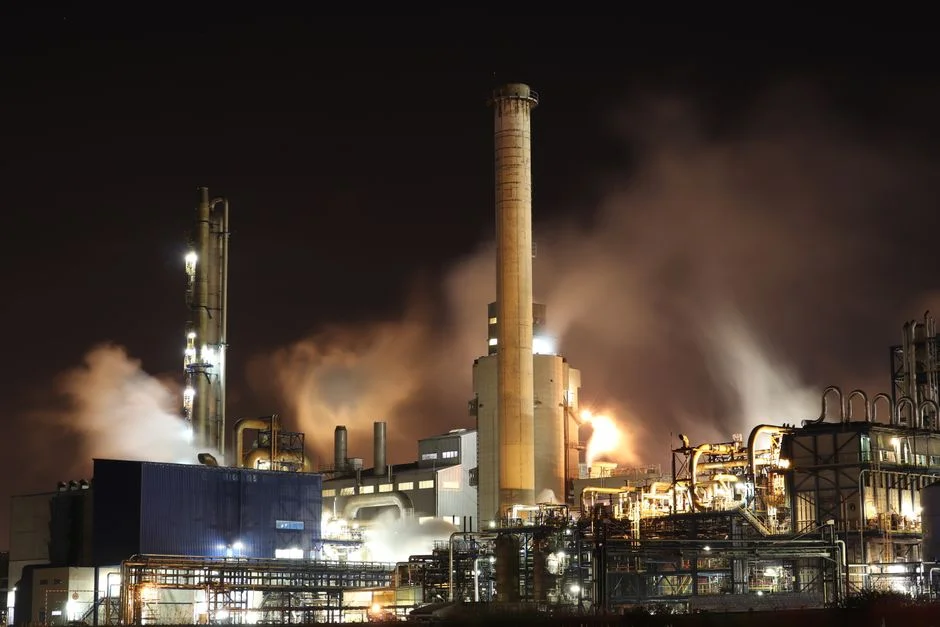
The reagent choice drives both operating cost and wastewater volume, and the answer depends on the API portfolio rather than on flue gas SO2 alone. Three configurations dominate pharmaceutical service in 2026.
Limestone forced oxidation (LSFO) is the default for continuous pharmaceutical boilers with steady SO2 (≤1,000 mg/Nm³) and slurry chloride below 5,000 mg/L. Reagent cost runs 30-50% below lime slurry at typical Asian and European limestone prices, and the gypsum byproduct is marketable to cement and wallboard manufacturers. The trade-off is chloride sensitivity: LSFO cannot tolerate the swings seen in multi-product API plants, and a chloride excursion can force a 24-48 hour controlled shutdown to drain and refill the absorber loop.
Lime slurry scrubbing tolerates chloride better and reacts faster at low L/G ratios, which matters when the API off-gas stream is dilute but variable. Reagent cost is higher (roughly 2-2.5x limestone on a per-ton-SO2 basis), and the byproduct — unless paired with a separate oxidation step — is calcium sulfite, not gypsum. Lime is the right call when HCl exceeds 500 mg/Nm³ in the flue gas or when the plant does not have a gypsum offtake route.
Dual-alkali uses a soluble sodium-based scrubbing loop with external lime regeneration. It is the most expensive configuration but the only one that absorbs both SO2 and HCl swings without slurry chemistry excursions, which is exactly the profile of a batch API plant running 4-6 different sulfonation or chlorination campaigns per month. As a rule of thumb: if SO2 is steady and slurry chloride stays below 5,000 mg/L, specify LSFO. If the plant runs batch operations or has high-HCl API steps, the dual-alkali premium is defensible on availability, not on reagent cost. For pH control and precipitation reagent dosing in any of the three configurations, an automatic chemical dosing system tied to online pH and ORP measurement is now standard practice — manual lime slaker control cannot hold the turndown required for batch pharma service.
FGD Wastewater: The Hidden Pharma Compliance Problem
FGD purge water is the stream most pharmaceutical underestimates when sizing a scrubber, because vendor proposals default to power-plant discharge limits and ignore the pharmaceutical overlay. The base composition is harsh: 20,000-30,000 mg/L soluble sulfate, up to 7% suspended solids when hydroclone overflow is the source, plus calcium, magnesium, and trace heavy metals (iron, aluminum, manganese) contributed by the limestone reagent (per the Power Magazine FGD wastewater primer, 2024-11). The pharmaceutical-specific overlay adds two complications: trace API residues and solvent metabolites from the upstream co-incinerator that survive the thermal oxidizer and partition into the scrubber slurry, and elevated chloride that forces higher blowdown rates than a coal unit of equivalent SO2 throughput. Both streams converge at the FGD wastewater treatment train, which for a pharmaceutical plant should run: equalization → pH adjustment (target 8.5-9.0) → chemical precipitation of heavy metals with organosulfide and lime → clarification (typically a lamella clarifier for FGD wastewater clarification or DAF) → biological polishing in an MBR system for FGD wastewater biological polishing to break down residual API and solvent organics → reverse osmosis for chloride and sulfate recycle where water scarcity is a constraint. The MBR step is the differentiator versus a power-plant FGD train: conventional activated sludge cannot reliably meet the effluent COD and toxicity limits a pharma plant's existing discharge permit already requires, and MBR effluent is consistent enough to feed an RO unit for ≥70% water recovery. For a broader view of how FGD wastewater integrates with the rest of a pharmaceutical effluent train, see our pharma water treatment engineering guide and the chromium removal from industrial wastewater process guide, which cover the upstream and parallel heavy-metal treatment paths.
2026 Compliance Framework: EPA NSPS, EU IED, and WHO
Multinational pharmaceutical plants must reconcile three overlapping regulatory regimes, and the FGD design has to satisfy the strictest applicable limit, not the most convenient one. The table below maps each regime to the FGD design parameter it actually controls.
| Regulation | Applicability to pharmaceutical FGD | Key FGD design parameter |
|---|---|---|
| EPA NSPS Subpart Eb (40 CFR 60) | All hazardous-waste-burning incinerators (including API co-incinerators) | SO2 limit tied to废物 feed rate; typically 80-95% reduction or <50-200 mg/Nm³ outlet |
| EU IED 2010/75/EU, BAT-AELs for common waste gas treatment | API manufacturing installations in the EU | SO2 1-10 mg/Nm³, HCl 0.1-3 mg/Nm³, HF 0.1-1 mg/Nm³ daily average (BAT-AEL ranges, 2024 update) |
| WHO Guidelines for Wastewater, Heavy Metals (2022, under 2026 revision) | Global benchmark for plants discharging to surface water or POTW | Total Hg <0.001 mg/L, Cd <0.01 mg/L, Pb <0.1 mg/L in treated effluent |
One clarification that most vendor literature gets wrong: the U.S. power-plant Effluent Limitations Guidelines (40 CFR 423) cited in nearly every FGD wastewater datasheet do not apply to pharmaceutical boilers or API co-incinerators. NSPS Subpart Eb is the correct U.S. reference, and the EU IED BAT-AELs are tighter on HCl and HF than anything in the Subpart Eb framework. The 2026 design trend to watch: WHO is finalizing updated heavy-metal discharge guidelines expected by Q4 2026, with tighter Hg and Pb limits. A defensible 2026 specification should be designed to at least 20% tighter than current local discharge limits, to avoid a forced retrofit when the new WHO values propagate into national regulations.
How to Select an FGD Scrubber Supplier in 2026
The vendor evaluation framework below converts the technical case into a defensible internal pitch for the compliance committee. Five criteria separate pharmaceutical-experienced suppliers from those recycling coal-fired proposals.
- SO2 removal guarantee at your inlet conditions. Insist on a performance guarantee stated at your specific SO2 range (200-1,500 mg/Nm³), not at a generic 2,500 mg/Nm³ coal reference. The reagent consumption and wastewater volume scale with actual inlet load.
- System availability ≥99.5%. This is the current B&W benchmark and should be the floor. Pharma batch campaigns cannot tolerate a 5% absorber downtime rate.
- Gypsum dewatering design. Confirm whether the proposal includes hydroclones and a vacuum belt, and what chloride concentration the vendor is designing the slurry loop around. A proposal that does not state a chloride limit is a coal design.
- Wastewater integration experience. Ask for reference installs where the FGD purge stream feeds into an existing high-purity water or effluent treatment plant, not just a power-plant discharge line. This is where pharmaceutical and fine-chemical sites differ from utility customers.
- Pilot testing commitment. Pharmaceutical flue gas variability makes paper guarantees unreliable. Insist on a 2-4 week slipstream pilot at your site, with the vendor absorbing the cost of a failed performance test.
Red flag: vendors who quote FGD specifications from coal-fired references without asking about chloride load, API residue carryover, or batch variability. They are selling a power plant. The integrated FGD scrubber system approach — combining SO2 and particulate control in a single absorber with no moving parts in the reaction zone — is the configuration that maps most cleanly onto pharmaceutical-scale flows and the multi-pollutant profile of API co-incinerator exhaust.
Frequently Asked Questions
What is the actual SO2 removal efficiency a pharmaceutical FGD scrubber should guarantee?
99% removal at design inlet load, with demonstrated turndown to 50% of nominal inlet without scaling — based on current wet FGD designs achieving 99% SO2 removal with system availability greater than 99.5% (B&W operating data, 2025). Pharmaceutical plants should require the guarantee stated at their specific inlet concentration range, not at a coal-fired reference.
How is pharmaceutical FGD wastewater different from power-plant FGD wastewater?
It carries the same baseline load — 20,000-30,000 mg/L soluble sulfate, up to 7% suspended solids, plus heavy metals from limestone — but adds trace API residues, solvent metabolites, and higher chloride from HCl-bearing API steps (per the Power Magazine FGD wastewater primer, 2024-11). The pharmaceutical plant needs an MBR step and tighter heavy-metal limits than a power-plant discharge permit requires.
Does the U.S. power-plant ELG apply to a pharmaceutical boiler FGD?
No. The EPA Effluent Limitations Guidelines at 40 CFR 423 apply to steam electric power generators. Pharmaceutical boilers and API co-incinerators are regulated under EPA NSPS Subpart Eb (40 CFR 60) for emissions and under local POTW permits for wastewater. Vendor literature that cites the power-plant ELG for a pharmaceutical FGD is misapplying the standard.
When is dual-alkali justified over limestone forced oxidation for a pharmaceutical plant?
When slurry chloride exceeds 5,000 mg/L consistently, or when the plant runs batch API campaigns with high SO2/HCl variability exceeding ±40% of nominal. The dual-alkali premium is paid for availability and chloride tolerance, not for reagent cost.