

Lime Dosing Design Criteria That Drive 2026 Specs
Lime dosing design criteria for industrial plants cover four duties: hold effluent pH at 6.5–9.0, reduce hardness, precipitate metals as hydroxides, and stabilize biosolids toward USEPA Class B. Field packages often cite lime doses above 5,000 mg/L for greater than 99.99% fecal coliform reduction on residuals trains.
Wet/slurry skids with 5–15% w/w slurry and PID pH control remain the dominant mid-to-large ETP and FGD layout. According to MU Extension summarizing 40 CFR Part 503, Class B alkali lime stabilization as a PSRP requires pH above 12 for two hours. Vector-attraction control commonly holds pH above 12 for two hours, then above 11.5 for at least 22 hours. Reagent quality remains non-negotiable: lime should meet ASTM C911-19 with ≤3% insolubles on grades that list that limit, and particle-size acceptance follows ASTM C110-20. Dry feeders and slakers stay available when the RFQ demands them.
What Does Lime Dosing Do in Water Treatment?
Lime dosing in water treatment corrects pH, softens hardness, drives metal precipitation, and can stabilize residuals when the permit requires Class B pathogen control. Engineers finalize the influent package before sizing tanks or pumps: flow (m³/h), pH range and diurnal swing, alkalinity, total hardness, target contaminants (F⁻, Cu, Zn, SO₂ for FGD; TSS), and water temperature. Incomplete data is the single most common reason an RFQ returns for rework.
Stoichiometric lime demand follows contaminant load. Hardness reduction consumes roughly 1.6 mg/L of Ca(OH)₂ per mg/L of hardness as CaCO₃; verify that figure with jar tests on the actual stream. Metal precipitation windows differ—zinc near pH 9, copper near pH 8—so the loop must hold within ±0.2 of setpoint. For FGD service, the same pH discipline applies at shorter residence time, and the same tank-geometry rules still apply. Teams comparing clarification hardware can treat clarifier selection as a separate RFQ track; this article stays on the lime train that feeds those units.
Slurry Concentration and Tank Sizing Criteria
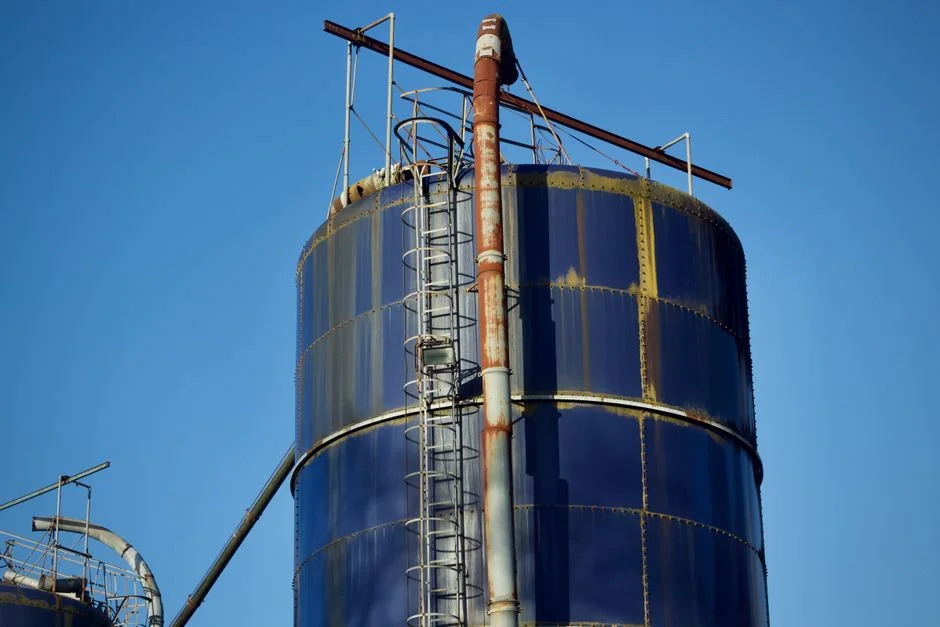
The accepted slurry window is 8–15% w/w Ca(OH)₂, with 10% as a common operating point. Concentrations above 15% recreate the Premix Technologies failure mode: undissolved lime sits in suspension, then dissolves over minutes, and the probe registers the change after the pump has already over-injected. That delay produces a pH overshoot. Raising concentration only to shrink tank volume is a false economy on abrasive slurry duty.
Mixing is mandatory. Lime settles in roughly 2 minutes when agitation stops, so the preparation tank needs a pitched-blade impeller at 30–60 RPM on continuous duty. Tank volume usually falls in the 5–50 m³ range, sized from daily consumption × autonomy (commonly 7–30 days), with radar level sensing to avoid probe fouling. Carbon steel with epoxy coating suits the storage shell; 304/316 stainless steel is required for wetted internals exposed to active slurry. When justifying materials to a regulator, the same separation logic appears in the related RO system design criteria for 2026.
Silo, Feeder and Powder-Handling Design Criteria
The most common field failure on a lime dosing system is a bridged silo. Lime has a cohesive strength of 2–5 kPa and a specific gravity of 2.24, so it arches over its own discharge cone. Two rules cut most bridging incidents: hopper angle must exceed 60°, and any applied vibration must stay below 10 Hz. Frequencies above 10 Hz compact the powder further and worsen the arch, per Haibar Machinery field data.
Dry-handling risk rates High. A silo dust collector (Filquip FS4J39-class units are typical) is mandatory at the loading point, with enclosed transfer and proper PPE during maintenance. Skipping the dust-collector sizing line in an RFQ is a common omission that only surfaces at commissioning. For process-physics context beyond this datasheet, see lime dosing process in water treatment explained.
How Should a Lime Dosing Pipe Loop Be Designed?
A lime dosing pipe loop must keep slurry above 1.5 m/s, place a 100-mesh strainer upstream of the pump, and include 3–5 static mixing elements with under 0.5 bar pressure drop. Standard centrifugals fail quickly on abrasive lime slurry from impeller erosion and seal wear. Selection therefore narrows to diaphragm, peristaltic, or progressive cavity pumps. On a 10% w/w slurry, diaphragm pump valves typically need replacement every 3–6 months—that line item belongs on the OPEX sheet from day one. Dose range is typically 0.1–50 L/h with high-viscosity capability, using Hastelloy or 316 SS wetted parts.
Material choice is PVC for short, low-pressure runs and stainless steel for long or abrasive lines. Engineers who already run polymer feeds will recognize the same injection discipline described in the sludge dewatering design criteria guide. For metering architecture detail that sits beside this loop design, review lime metering + lime dosing on the companion page.
Control Logic and PID Tuning Criteria
Ca(OH)₂ dosing is slow and non-linear because of the logarithmic pH scale and the finite dissolution rate of slurry. The PID loop must be tuned for dead time—the gap between pump injection and probe response. EPA 2024 baseline parameters (proportional gain Kc, integral time Ti, derivative time Td) are a starting point for most industrial wastewater streams; refine them with a real step-change test on the actual effluent.
Instrumentation is half the loop. The online pH probe should carry ±0.02 pH accuracy and an auto acid-wash every 24 hours to defeat fouling. The acceptance test is simple: induce a manual step change in influent pH and require restabilization within 5 minutes. Failure of that test triggers retuning, not a hardware swap. Upstream flow and downstream turbidity give feed-forward trim on variable-load streams. The same PLC architecture is shared with a skid-mounted PLC-controlled chemical dosing skid for pH or coagulant service.
Consolidated Parameter Table for Lime Packages
The table below consolidates the design criteria for inclusion in a datasheet. Every row carries a value and a source label so the number survives a design review.
| Parameter | Design Value | Source |
|---|---|---|
| Slurry concentration (w/w) | 8–15% (target 10%) | S5 |
| Slurry tank material (wetted) | 304/316 SS | S5 |
| Slurry tank capacity | 5–50 m³ | S2, S5 |
| Agitator speed / type | 30–60 RPM, pitched-blade | S5 |
| Silo hopper angle | > 60° | S5 |
| Silo vibration frequency | < 10 Hz | S5 |
| Lime specific gravity | 2.24 | S5 |
| Lime cohesive strength | 2–5 kPa | S5 |
| Pipeline velocity | > 1.5 m/s | S5 |
| Static mixers / pressure drop | 3–5 elements, < 0.5 bar | S5 |
| Strainer | 100-mesh upstream of pump | S2 |
| Pump type | Diaphragm / peristaltic / progressive cavity | S5 |
| Dose range | 0.1–50 L/h | S5 |
| Valve / diaphragm replacement | Every 3–6 months on 10% slurry | S5 |
| pH probe accuracy | ±0.02 pH | S5 |
| Probe auto-clean interval | 24 h (acid wash) | S5 |
| PID stabilization target | < 5 minutes after step change | S5 |
| Lime purity standard | ASTM C911-19, ≤ 3% insolubles | S2 |
| Particle test standard | ASTM C110-20 | S5 |
CAPEX, OPEX and Lifecycle Cost Benchmarks
For a complete package—20 m³ silo, slurry preparation tank, and redundant dosing pumps—the 2026 CAPEX range sits at $30,000–$80,000. OPEX is dominated by maintenance cadence rather than reagent cost: weekly pump calibration, monthly sensor cleaning with citric acid, valve/diaphragm replacement every 3–6 months, and silo dust-collector filter changes on a documented interval.
Two cost levers belong on the datasheet. Moving from 5% to 10% w/w slurry roughly doubles active Ca(OH)₂ delivered per litre dosed, which cuts pump runtime and energy by a comparable factor. Energy per m³ treated tracks the chosen concentration window, not a fixed supplier claim. When the RFQ is specifically about post-treatment layout, compare this package against how to design a lime system for post treatment before freezing the P&ID.
Supplier Selection Checklist for 2026 RFQs
A defensible 2026 RFQ should require four written items. Demand documented PID tuning with on-site step-change acceptance. Require an ASTM C911-19 certificate of analysis per lime lot. Attach FAT data showing slurry concentration step response. Confirm 24/7 spares for valves and diaphragms. Two gaps appear often: most suppliers omit dust-collector sizing, and most omit silo unloader vibration frequency—require both in the technical query.
Selection checklist for the buyer:
- Influent flow (m³/h), pH range, alkalinity, hardness, and contaminant list locked
- Target slurry window stated as 8–15% w/w (target 10%)
- Hopper angle >60° and vibrator frequency <10 Hz written into the silo spec
- Positive-displacement pump type named with 3–6 month valve OPEX
- Pipeline velocity >1.5 m/s, 100-mesh strainer, and 3–5 static mixers
- pH probe ±0.02 with 24 h acid wash and <5 minute step-change recovery
- ASTM C911-19 CoA and FAT concentration-response curves attached
Who this is for: plant engineers and EPC teams sizing wet/slurry lime trains for ETP, FGD, or Class B residuals duty. Who should look elsewhere: buyers seeking only a dry-feeder brochure or a clarifier-only selection note. Next step: lock flow, setpoint, contaminants, footprint, and permit limits. Then request an Automatic Chemical Dosing System—or, for SO₂-laden streams, a lime/limestone wet FGD scrubber for SO₂ removal—and request a comparable engineered quote against one shared datasheet.
Frequently Asked Questions
What is the ideal lime slurry concentration for wastewater treatment?
The industry standard is 8–15% by weight, with 10% w/w as a common operating point on continuous slurry skids. Above 15%, undissolved lime drives delayed pH overshoot because the probe registers the chemistry change minutes after the pump has injected. Most plants we size for mid-range ETPs run near the lower half of that window when grit load is high.
How often should lime dosing pump valves be replaced?
For diaphragm pumps handling abrasive 10% slurry, valves are typically replaced every 3–6 months. The interval depends on slurry concentration, particle hardness, and cycle count. Track it on the maintenance log from day one so OPEX forecasts stay honest through the first year of operation.
What is the minimum pipeline velocity to prevent lime settling?
A minimum of 1.5 m/s is required to keep Ca(OH)₂ particles in suspension in the transfer line. Combined with a 100-mesh strainer and 3–5 static mixing elements under 0.5 bar drop, this prevents settled deposits and reduces probe fouling on the dosing header.
Can lime dosing systems be fully automated?
Yes. A PLC with PID control, an online pH analyzer at ±0.02 accuracy with 24-hour auto acid-wash, and ultrasonic or radar silo level sensing form the standard automation stack. Step-change stabilization under 5 minutes is the usual acceptance criterion before handover to operations.
What is the typical CAPEX for an industrial lime dosing system?
A complete system—20 m³ silo, slurry preparation tank, and redundant dosing pumps—typically costs $30,000–$80,000 in 2026. OPEX is driven by valve replacement, weekly calibration, monthly citric-acid sensor cleaning, and documented dust-collector filter changes rather than reagent price alone on most industrial packages.