A lime dosing system injects hydrated lime or quicklime into industrial wastewater to control pH, neutralize acids, or precipitate heavy metals. The lime dosing process in water treatment explained here covers dry storage, slurry mixing at 5-10% by weight, and metering pumps rated from 10 L/h to 50 m³/h. In mining applications, lime dosing holds pH at 9 for cyanidation leaching and cut reagent costs by up to 30% versus manual dosing (per Bulawayo Mining Company case study, 2023).
Why Industrial Plants Struggle with Manual Lime Dosing
A lime dosing system stores dry lime, mixes a 5-10% slurry, and meters that slurry into wastewater for pH control or metal precipitation. Packages typically include 5-50 ton silos, geared mixers, and peristaltic or progressive cavity pumps. Rated flows span 10 L/h to 50 m³/h, with PLC pH loops holding discharge within ±0.2 pH units.
Manual lime dosing often drives labor costs 40-60% higher than automated alternatives because plants need 24/7 staffing and bag handling. Many legacy mining and textile sites still tip 25kg lime bags onto conveyors or into open tanks. That practice creates slug dosing, so pH spikes and crashes and weakens cyanide leaching or flocculation downstream.
Safety is a strong reason to leave bag feeding behind. Lime dust is a respiratory hazard, and OSHA sets a Permissible Exposure Limit (PEL) of 5 mg/m³ for the respirable fraction of hydrated lime. Manual handling raises airborne exposure and burn risk, so sites add PPE and ventilation that erase much of the CAPEX gap. Uneven dosing can also trigger EPA 40 CFR Part 434 violations in coal mining effluent or breach local metal discharge limits.
The cost of that inefficiency shows up in reagent use. A mining plant in Zimbabwe reported a 22% drop in total lime consumption after moving from manual bag-feeding to an automated package. Operators no longer over-dosed to stay above minimum pH, and wind-blown loading losses fell as well.
Lime Dosing Process in Water Treatment Explained
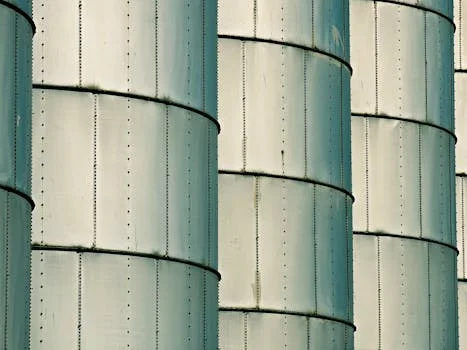
A standard industrial package converts dry lime into a 5-10% slurry in a dedicated mixing tank, then meters that milk of lime into the process stream. Storage usually starts in silos or hoppers of 5 to 50 tons. Those vessels carry level sensors, bin activators to limit bridging, and dust collectors for air quality control.
A variable speed screw feeder then moves dry lime into the slurry tank. A geared mixer, typically 60-100 RPM, blends lime with water for 5-10 minutes of retention while holding impeller tip speed high enough to keep solids suspended. For tight control loops, an Automatic Chemical Dosing System uses pH sensor feedback to trim screw speed and water inflow in real time. Broader process layouts are also covered in how a lime dosing system works across industrial flowsheets.
Delivery to the injection point relies on pumps built for abrasive slurry. Peristaltic units suit lower flows, while progressive cavity pumps serve high-volume discharge. The flow path is Dry Lime Storage (Silo) → Volumetric Feeding → Slurry Mixing (with Agitation) → Transfer/Dosing Pump → Process Injection Point.
| Component | Technical Specification | Primary Function |
|---|---|---|
| Storage Silo | 5 - 50 Ton Capacity; Carbon Steel/SS304 | Bulk storage and moisture protection |
| Screw Feeder | Variable Frequency Drive (VFD) | Volumetric control of dry lime flow |
| Mixing Tank | 5-10% Slurry Concentration; Geared Mixer | Hydration and suspension of lime particles |
| Dosing Pump | Peristaltic or Progressive Cavity | Precise delivery to neutralization reactor |
| Control Unit | PLC with HMI & pH Feedback Loop | System automation and data logging |
What Is Lime Dosing in Water Treatment for pH and Metals?
Quicklime (CaO) costs less per ton than hydrated lime (Ca(OH)₂), yet it needs a capital-heavy slaking step to manage heat during slurry make-up. Quicklime purity is typically 90-95%, and higher reactivity means less mass for the same pH shift. Slaking releases substantial heat, so tanks need temperature monitoring and steam ventilation.
Hydrated lime is already slaked and does not react exothermically with water, which simplifies handling. It runs 20-30% more expensive per ton than quicklime, but the plant skips a dedicated slaker. Hydrated slurries settle more slowly, which helps intermittent flow and long pipe runs. Dosing accuracy is typically ±1% with hydrated lime versus ±3% with quicklime because particle size is more uniform.
| Parameter | Hydrated Lime (Ca(OH)₂) | Quicklime (CaO) |
|---|---|---|
| Material Purity | 90 - 95% | 90 - 95% |
| Reaction with Water | Stable (No heat generated) | Exothermic (High heat release) |
| Handling Difficulty | Low (Dust control only) | High (Requires slaker/temp control) |
| Material Cost | Higher ($150-$250/ton) | Lower ($100-$180/ton) |
| System CAPEX | Lower (Standard mixing tank) | Higher (Requires slaker & safety gear) |
| Typical Application | Low to medium volume pH control | High volume industrial/municipal use |
How Do Lime Metering and Lime Dosing Differ in Plant Design?
Lime metering sets the volumetric dry feed or slurry pump rate. Lime dosing is the full control loop that ties that rate to online pH and process demand. Engineers must balance slurry strength and pipe velocity so solids stay suspended without scaling the line. The practical window is 5-10% by weight. Above 15%, scaling risk rises sharply. Below 3%, water use and tank volume climb without need. Pipeline velocity should stay between 0.8 and 1.5 m/s.
Pump choice is the most common failure point. Lime slurry is abrasive and chemically active, so standard centrifugal seals wear out quickly. Peristaltic hose pumps fit flows under 1 m³/h because only the hose contacts slurry and is easy to replace. Diaphragm pumps cover 1-10 m³/h when ball valves are rated for solids. High-volume duty on integrated FGD scrubbers with lime dosing for SO₂ removal and particulate control usually favors progressive cavity pumps for durability and steady flow.
Meeting rules such as the EU Industrial Emissions Directive or EPA 40 CFR Part 434 depends on holding pH in a narrow band, typically 6.0 to 9.0. Downstream sensors feed 4-20mA signals into the PLC for fast correction. In sectors covered by lime dosing for heavy metal precipitation in semiconductor wastewater, setpoints also track metal chemistry, such as copper near pH 9.0 or nickel near pH 10.5. Teams comparing post-treatment layouts can review how to design a lime system for post treatment without duplicating that design brief here.
| Design Parameter | Recommended Range/Value | Engineering Rationale |
|---|---|---|
| Slurry Concentration | 5% - 10% (by weight) | Prevents pipe clogging and scaling |
| Pipe Velocity | 0.8 - 1.5 m/s | Maintains solids in suspension |
| Mixer Retention Time | 5 - 10 Minutes | Ensures complete hydration/blending |
| pH Control Accuracy | ± 0.2 pH units | Ensures discharge compliance |
| Safety Standard | OSHA PEL 5 mg/m³ | Dust collection system requirement |
Automated vs. Manual Lime Dosing: Cost-Benefit Analysis and ROI
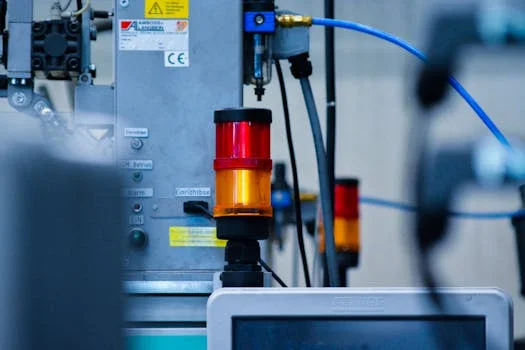
Automated packages often pay back in 12 to 24 months when flow exceeds 5 m³/h, mainly through lower reagent waste and labor. CAPEX for automation commonly runs $50,000 to $200,000. Manual skids cost less at $10,000 to $30,000, yet OPEX stays high. Automation typically cuts lime use by 20-30% by removing the over-dosing margin manual crews apply for safety.
Labor savings appear first. Manual dosing needs at least one operator per shift for bags and checks, or roughly 2,000 to 6,000 man-hours per year by plant size. Automation trims that load to periodic maintenance and silo refill, cutting labor needs by over 50%. pH excursion risk falls by about 90% with sensor-driven control, which lowers fine exposure.
ROI Calculator Formula:
ROI (Years) = [Total CAPEX] / [(Annual Labor Savings + Annual Reagent Savings) - Annual Maintenance Cost]
| Feature | Manual Dosing | Automated Dosing |
|---|---|---|
| Initial CAPEX | $10k - $30k | $50k - $200k |
| Annual Labor Cost | High (3+ Shifts) | Low (Periodic Maintenance) |
| Reagent Waste | 15% - 30% | < 2% |
| Compliance Risk | High (Human Error) | Low (Sensor-Driven) |
| Payback Period | N/A | 12 - 24 Months |
How to Select the Right Lime Dosing System for Your Application
Selection starts with peak wastewater flow and the chemical demand needed to hit target pH. Clarify whether the duty is neutralization, metal precipitation, or flue gas treatment. For SO₂ duty, how FGD scrubbers use lime dosing to achieve 95%+ SO₂ removal needs different slurry consistency and pump pressure than a small textile pH loop. The same lime dosing process in water treatment explained for metals will not map one-to-one onto scrubber slurry circuits.
Use this decision frame before you lock CAPEX:
- Determine Flow and Demand: Calculate peak flow (m³/h) and required lime dosage (mg/L). This sets silo size and pump capacity.
- Choose Lime Type: If annual use exceeds 1,000 tons, quicklime OPEX savings often justify a slaker. Lower volumes usually favor hydrated lime.
- Identify Automation Level: Strict permits, such as a ±0.5 pH window, call for a PLC loop to limit fine risk.
- Select Pump Technology: Prefer peristaltic units for precise low flow; use progressive cavity pumps for continuous high-volume duty.
- Verify Compliance: Confirm pH and flow data logging for EPA or local reporting.
Before purchase, confirm dust collection on the silo, at least 5 minutes of mixer retention at peak flow, and flushable dosing lines for shutdowns. Settling those points early keeps the package stable over long runs.
Who This Is For / Who Should Look Elsewhere / Next Step
This guide suits plant engineers and buyers sizing lime packages for industrial wastewater neutralization, metal precipitation, or FGD slurry feed. Teams that only need post-treatment hydraulics or pipe materials should use the linked design page instead of stretching this overview. If your flow, lime type, and permit window are already defined, share those figures with an equipment specialist and request a matched silo, mixer, and pump package.
Frequently Asked Questions
How do I prevent lime slurry from clogging the dosing lines?
Keep pipeline velocity between 0.8 and 1.5 m/s and avoid 90-degree elbows. Add an automated fresh-water flush that clears the lines whenever dosing pumps stop, so solids do not settle and harden.
What is the typical maintenance schedule for a lime dosing system?
Check pump hoses or diaphragms and calibrate pH sensors each week. Inspect the silo bin activator and screw feeder monthly for wear. Inspect the mixing tank and delivery lines annually for scale, then clean mechanically if needed.
Is a lime dosing system suitable for heavy metal removal?
Yes. Raising pH to setpoints such as pH 9.5 for zinc or pH 10.5 for nickel forms insoluble hydroxides that clarification or filtration can remove (HydropureWater field data, 2025).
Can I use the same system for both hydrated lime and quicklime?
Usually no. A hydrated-lime package lacks the slaker and temperature controls that quicklime needs. A quicklime plant can often run hydrated lime, but that layout is overbuilt for the duty.