Wet Limestone FGD Scrubber Design Parameters
Wet limestone FGD scrubber design parameters set SO₂ removal before steel is ordered: L/G ratio 8–15 L/m³, slurry pH 5.5–6.5, gas velocity 3–5 m/s, and calcium-to-sulfur ratio 1.02–1.05. Those bands hold removal near 95–98% on a large coal unit.
An absorber still removes over 95% of SO₂ only when the gas meets an alkaline slurry long enough for mass transfer. Wet limestone units then oxidize that absorbed gas to gypsum. Regulatory limits keep tightening worldwide, so the design band has to clear a permit number, not only a textbook curve.
Under EPA NSPS, coal-fired plants are often held to 0.04 lb/MMBtu in older specifications. 40 CFR 60.43Da does not list that rate. One solid-fuel option for units built on or before 28 February 2005 is 1.20 lb/MMBtu heat input with a 90% reduction, and another option in that section is 0.15 lb/MMBtu.
The EU Industrial Emissions Directive 2010/75/EU can require limits as low as 200 mg/Nm³. World Bank project guidance often sits between 50–200 mg/Nm³ by thermal capacity. U.S. Clean Air Act violations can exceed $37,500 per day, which is why the penalty-avoidance line in the cost table exists.
SO₂ is the main precursor to acid rain when precipitation pH falls below 5.6. According to the World Health Organization, ambient air pollution is estimated to have caused 4.2 million premature deaths worldwide in 2019, and combined ambient and household air pollution is associated with 6.7 million premature deaths annually. Some 89% of those premature deaths occurred in low- and middle-income countries. WHO lists sulfates among the major components of fine particulate matter and names SO₂ as a gas produced from the burning of fossil fuels such as coal and oil.
A 500 MW coal plant without controls can emit about 10,000 tons of SO₂ per year. A modern wet FGD unit cuts that output to less than 500 tons per year (EPA 2023 data). Plants also use these systems to limit emission-tax exposure under schemes such as the EU ETS. Selling high-purity gypsum shifts the plant from waste disposal toward resource recovery for construction and agriculture markets.
What Chemical Steps Turn SO₂ into Gypsum?
SO₂ removal in a wet absorber is mass transfer into an alkaline slurry, then neutralization and oxidation. Flue gas leaves the boiler at 150–200°C and must cool to adiabatic saturation, typically 50–60°C. That temperature protects linings and speeds reaction kinetics. On units we commission, the gas is already near adiabatic saturation before the first spray level.
During pre-treatment, high-efficiency particulate removal for FGD pre-treatment with baghouses or electrostatic precipitators keeps fly ash out of the slurry. Ash left in the loop wastes reagent and dirties the gypsum cake.
Most absorbers are counter-current spray towers. Gas rises from the bottom through spray levels of limestone (CaCO₃) or lime (CaO) slurry. Operators hold the liquid-to-gas ratio between 8 and 15 L/m³ for contact area. The reaction path is:
- Absorption: SO₂ (gas) → SO₂ (aqueous)
- Hydrolysis: SO₂ + H₂O → H⁺ + HSO₃⁻
- Neutralization: CaCO₃ + 2H⁺ → Ca²⁺ + H₂O + CO₂
- Precipitation: Ca²⁺ + HSO₃⁻ + ½H₂O → CaSO₃·½H₂O (Calcium Sulfite)
- Oxidation: CaSO₃·½H₂O + ½O₂ + 1½H₂O → CaSO₄·2H₂O (Gypsum)
Kinetics track slurry pH closely. Between pH 5.5 and 6.5, limestone dissolution and SO₂ absorption stay balanced. Too low a pH cuts removal. Too high a pH raises carbonate scaling on nozzles and mist eliminators.
Forced-air oxidation in the sump converts over 99% of calcium sulfite to stable gypsum. Oxidation air stoichiometry above 2.0 is the design-table floor that keeps sulfite from lingering. Plants that starve the blowers make a sulfite cake that will not dewater cleanly.
Gypsum-rich slurry then goes to dewatering. Hydrocyclones plus a vacuum belt filter or centrifuge cut cake moisture to 10–15%. That moisture band is what wallboard buyers usually check first.
Bleed wastewater still needs control, and chlorine dioxide for FGD wastewater treatment can limit biological growth and COD before discharge. For a full component walkthrough, see FGD Scrubber Working Principle: 2026 Engineering Specs, SO₂ Removal Ef.
| Process Stage | Engineering Objective | Key Design Parameter |
|---|---|---|
| Quenching | Adiabatic cooling of flue gas | Saturation temperature (50–60°C) |
| Absorption | SO₂ mass transfer to liquid phase | L/G Ratio (8–15 L/m³) |
| Neutralization | Chemical reaction with CaCO₃ | Slurry pH (5.5–6.5) |
| Oxidation | Conversion of sulfite to sulfate | Oxidation Air Stoichiometry (>2.0) |
| Dewatering | Production of commercial gypsum | Final Cake Moisture (<15%) |
What does a seawater fgd scrubber vs limestone comparison show?
Seawater FGD uses bicarbonate already dissolved in seawater and usually removes 90–95% of SO₂, while wet limestone removes 95–98% and makes solid gypsum. Limestone often costs $10–20/ton, and wet limestone units make up about 80% of installations on large coal plants. Coastal plants we review pick seawater only when a discharge permit is already in hand.
That installed base is why most reference designs, spare-part stocks, and operator training programs assume wet limestone chemistry first.
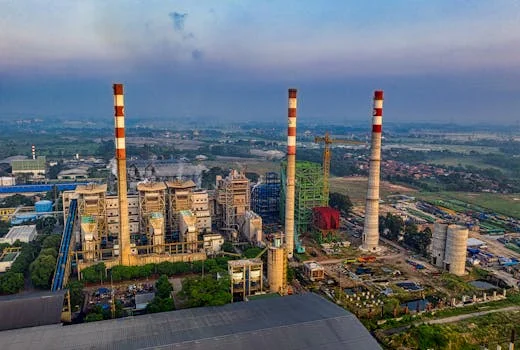
Seawater systems use natural bicarbonate alkalinity and need no purchased reagent, so OPEX stays low. They fit coastal sites and usually deliver 90–95% removal. Acidic effluent must be aerated to restore pH and dissolved oxygen before ocean return. The approach is common on marine units and coastal stations in Southeast Asia and the Middle East.
Magnesium hydroxide or oxide reagents react faster than limestone and can exceed 98% removal on high-sulfur fuels. Reagent cost is higher at $100–200/ton, yet the footprint is smaller. Soluble magnesium sulfate suits incinerators that prefer a liquid byproduct over solids handling. A shop-versus-field comparison is in FGD Scrubber Manufacturer: High-Efficiency Wet Limestone Systems.
Dry sorbent injection sits at 80–90% removal with moderate reagent cost and a dry spent sorbent. It is the usual retrofit when plot space or water is short. The table below is the four-way split used when a bid has more than one reagent on the table.
| Technology | SO₂ Removal Efficiency | Reagent Cost | Primary Byproduct | Best Use Case |
|---|---|---|---|---|
| Wet Limestone | 95–98% | Low ($10–20/t) | Gypsum (Solid) | Large-scale Power Plants |
| Seawater | 90–95% | Zero | Sulfate (Liquid) | Coastal Plants / Marine |
| Magnesium-Based | >98% | High ($100–200/t) | Mg-Sulfate (Soluble) | Waste Incinerators |
| Dry Sorbent Injection | 80–90% | Moderate | Dry Spent Sorbent | Retrofits / Small Boilers |
What is the wet limestone gypsum scrubber operating ph range?
A wet limestone-gypsum absorber is normally held at pH 5.5–6.5 so limestone dissolution and SO₂ absorption stay balanced. Below that band, removal falls because carbonate dissolves too slowly to match the incoming SO₂. Above pH 6.5, carbonate scaling shows up on nozzles and mist eliminators. Operators we support spend more of the run in the lower half of pH 5.5–6.5 than against the 6.5 ceiling.
The absorber pH row in the design table is that same 5.5–6.5 band. It is an operating setpoint on the recycle line, not a lab titration checked once per shift. Online pH should drive the limestone feed so the band does not drift during a sulfur spike.
How L/G, Stoichiometry, and Velocity Set Power Draw
The L/G ratio sets slurry volume per cubic meter of flue gas. Higher L/G raises mass-transfer area and SO₂ removal, but slurry-pump power rises with it. High-sulfur coal often needs 12–15 L/m³. Low-sulfur duty can run at 8–10 L/m³.
Calcium-to-sulfur stoichiometry usually targets 1.02 to 1.05 for about 95% removal. Excess reagent raises cost and can blind limestone particles with a gypsum shell. An automatic chemical dosing system for slurry feed optimization trims feed rate from inlet SO₂ readings in real time. Pump power is where most plants we size for feel an oversized L/G ratio.
Absorber gas velocity should stay between 3 and 5 m/s. Lower velocity oversizes the tower and raises steel cost without helping removal. Higher velocity drives droplet carryover into downstream ducts and the stack. Mist eliminators handle that band when vane spacing and wash cycles stay in spec.
Plants comparing packaged options often review an integrated flue-gas desulfurization system for SO₂ and particulate removal against site water and space limits. Slurry solids at 10–30% by weight sit beside velocity in that same review. The solids band changes pump wear and the water balance more than it changes the SO₂ equilibrium.
| Parameter | Typical Range | Engineering Impact |
|---|---|---|
| L/G Ratio | 8–15 L/m³ | Directly correlates with SO₂ removal; impacts pump power. |
| Absorber pH | 5.5–6.5 | Balances SO₂ absorption rate vs. limestone dissolution. |
| Gas Velocity | 3–5 m/s | Determines tower diameter and risk of droplet carryover. |
| Stoichiometry | 1.02–1.05 | Controls reagent consumption and byproduct purity. |
| Slurry Solids | 10–30% | Impacts pump wear and water balance. |
Industrial Selection by Fuel, Water, and Site
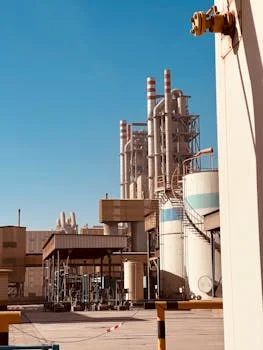
Fuel sulfur and water supply pick the flowsheet before steel is ordered. A coal unit at up to 5,000 ppm SO₂ usually needs wet limestone to keep reagent cost manageable. A waste-to-energy plant at 200–1,000 ppm may favor magnesium or dry systems to avoid heavy wastewater trains. Coastal sites can configure seawater duty and drop reagent logistics.
Inland plants with scarce water often lean dry or semi-dry despite lower removal. Wet trains need acreage for reagent storage and gypsum dewatering, while dry packages retrofit into tighter plots. When wallboard buyers sit nearby, limestone-to-gypsum economics improve through byproduct sales. Inland bids we see fail when the water balance is left until after the tower diameter is frozen.
Lifecycle cost must weigh CAPEX against multi-year OPEX. Seawater hardware may use titanium or high-grade stainless and cost more up front, yet near-zero reagent spend can cut 20-year TCO. For equipment scope aligned to SO₂ and particulates, the Flue Gas Desulfurization (FGD) Scrubber System is one reference configuration used in coastal and inland layouts.
Selection Checklist Before You Freeze the Flowsheet
Seven checks below stop a flowsheet from being frozen on reagent price alone.
- Measure inlet SO₂: up to 5,000 ppm on coal, or 200–1,000 ppm on waste-to-energy.
- Match fuel sulfur above 2.5% to wet limestone unless water is unavailable.
- Set L/G at 12–15 L/m³ for high-sulfur coal and 8–10 L/m³ for low-sulfur duty.
- Hold slurry pH at 5.5–6.5 and gas velocity at 3–5 m/s.
- Keep calcium-to-sulfur stoichiometry near 1.02 to 1.05 at the design sulfur load.
- Confirm a gypsum buyer before counting $5 to $15 per ton as revenue.
- If the site is coastal with a discharge permit, price seawater against limestone; if water is scarce, price dry or magnesium first.
| Decision Factor | Condition | Recommended FGD Technology |
|---|---|---|
| Location | Coastal / Marine | Seawater FGD |
| Fuel Sulfur Content | High (>2.5%) | Wet Limestone FGD |
| Water Availability | Scarcity / Zero Discharge | Dry or Semi-Dry FGD |
| Space Constraints | Limited / Retrofit | Magnesium-Based or Dry FGD |
| Byproduct Market | Wallboard/Cement Nearby | Wet Limestone (Gypsum) FGD |
Scaling, Corrosion, and Byproduct Quality
Scaling rises when slurry pH exceeds 6.5 or oxidation air is short, forming calcium sulfite hemihydrate. Soft scale plugs nozzles and mist eliminators and lifts pressure drop fast. Keep pH in band and run high-pressure mist-eliminator washes. The scale we find most often is soft sulfite on the mist eliminator, not a hard cake in the sump.
Dibasic acid can boost SO₂ uptake while slowing scale in some circuits. It is an adjunct, not a license to run the slurry alkaline. Chlorides from fuel and makeup water can exceed 30,000 ppm in recirculating slurry and attack carbon steel. Rubber lining, glass-flake reinforced polyester, or duplex stainless steel are common defenses.
Purge rate control limits localized pitting and stress corrosion cracking. Limestone should reach about 90% passing 325 mesh, because a coarser grind slows reaction and wastes reagent. If oxidation falls below 90%, sulfite cakes dewater poorly. That grind and oxidation pair decides whether the dewatering train can hit its moisture spec.
Plants facing that bottleneck often add gypsum dewatering for FGD byproduct handling with high-torque agitation and tuned air sparging. A concise fgd scrubber explainer covers failure modes that sit outside this process deep-dive.
CAPEX, OPEX, and Payback Drivers
Wet limestone CAPEX often runs $100 to $300 per kW of plant capacity. On a 500 MW unit that is about $50 million to $150 million for the absorber island, reagent prep, dewatering, pumps, piping, and controls. OPEX is dominated by limestone, slurry-pump power at 1–3% of plant output, and rotating-equipment maintenance. The fgd system equipment list inside that island is what the $100–300/kW figure is buying.
Avoiding Clean Air Act fines can save millions per year in the U.S. on this mini-case. Gypsum sold at $5 to $15 per ton from a 200,000 ton/year stream yields up to $3 million annually and can offset 20–30% of OPEX. Water recovery with RO systems for FGD wastewater reuse further cuts intake and discharge fees. The payback we calculate moves more with gypsum price than with a small change in absorber steel.
| Cost Category | Benchmark (Wet Limestone) | Impact on ROI |
|---|---|---|
| CAPEX | $100–300/kW | Primary upfront investment; depreciated over 20 years. |
| Reagent (OPEX) | $10–20/ton Limestone | Variable cost; optimized via dosing control. |
| Power (OPEX) | 1–3% of Plant Output | Significant parasitic load; minimized via VFDs on pumps. |
| Byproduct Revenue | $5–15/ton Gypsum | Directly offsets OPEX; depends on local market. |
| Penalty Avoidance | Up to $37,500/day | Primary driver for system justification. |
Who This Is For / Who Should Look Elsewhere / Next Step
Who this is for: process engineers, plant managers, and EPC teams specifying SO₂ control on coal, waste-to-energy, or coastal utility boilers. Who should look elsewhere: buyers seeking only particulate baghouses or unrelated water-treatment packages without an SO₂ duty. Next step: match fuel sulfur, water availability, and byproduct outlets to a wet, seawater, magnesium, or dry flowsheet, then request a duty-specific design review.
Bring inlet SO₂, gas volume, water source, and the local gypsum price to that review. A vendor quote without those four inputs is a catalog number, not a tower design.
Frequently Asked Questions
What SO₂ removal rates do wet, seawater, and magnesium systems reach?
Modern wet limestone trains typically achieve 95–98% SO₂ removal at an L/G ratio of 8–15 L/m³ and slurry pH 5.5–6.5. Seawater units range from 90–95% where bicarbonate alkalinity is available. Magnesium-based or advanced wet designs can exceed 98% on high-sulfur fuels (source: EPA and Mitsubishi Power). Results track the L/G ratio and slurry pH more than the reagent label on the datasheet.
How much water does a wet limestone train consume?
Consumption is about 0.1 to 0.3 m³/MWh on a wet limestone train. Losses come from absorber evaporation and from gypsum cake moisture, which dewatering cuts to 10–15%. Seawater duty has no net freshwater use because it draws ambient seawater and returns it after aeration. Inland plants should not copy a coastal specific consumption when makeup water is scarce.
Which byproducts can be reused?
Synthetic gypsum (CaSO₄·2H₂O) feeds wallboard plants and agricultural soil amendment when purity and moisture meet the buyer spec. Cake moisture after a vacuum belt filter or centrifuge is held at 10–15%, and the design table target is final cake moisture below 15%. Magnesium systems yield magnesium sulfate for fertilizers or industrial uses. A site with no wallboard buyer should not book the $5 to $15 per ton credit in the base case.
How do plants handle variable inlet SO₂?
Designs size for worst-case sulfur, not the annual average on the fuel contract. Control loops then change slurry circulation and reagent feed from continuous emissions monitors at the inlet and the outlet. High-sulfur coal often needs 12–15 L/m³, while low-sulfur duty can run at 8–10 L/m³. The dosing loop should hold calcium-to-sulfur stoichiometry near 1.02 to 1.05 so removal stays near 95% without blinding the limestone.
How do once-through and regenerable flowsheets differ?
Once-through limestone-gypsum routes make a byproduct that is sold or landfilled. Regenerable routes such as Wellman-Lord recover reagent and produce concentrated SO₂ or elemental sulfur, with lower waste and much higher CAPEX. Most coal units we size still pick once-through wet limestone because reagent is $10–20/ton and gypsum can be sold. Regenerable chemistry is a special case, not the default for a 500 MW boiler.
Further Reading
Explore these in-depth articles on related wastewater treatment topics: