
What an Anaerobic Digester Does in a Mall Context
An anaerobic digester for shopping mall wastewater is a sealed, oxygen-free reactor that breaks down the high organic load from food court grease interceptors, restroom sewage, and tenant discharges into biogas (60–90% methane) and a stabilized digestate. Mall-scale systems are typically designed around 50–500 m³/day with hydraulic retention times of 18–22 days, organic loading rates of 2–6 kg COD/m³·day, and target COD removals above 80–85% when food court streams are properly FOG-pretrained.
The process is straightforward in concept but unforgiving in execution. A consortium of hydrolytic, acidogenic, and methanogenic bacteria converts dissolved and particulate organics into a methane-rich gas stream, leaving a nutrient-rich liquor and a dewaterable solids fraction (per the Ohio EPA anaerobic digester overview, 2025-08). Under sensor-controlled operation with the right additive dosing, methane content in the biogas can climb to ~90%, as documented in a 50 L up-scaled AD study on industrial wastewater (DUT thesis, 2024). That same study pinned the operating optimum at HRT 21 days, pH 7.01, and magnetite 0.42 g/L, with >85% COD removal on industrial-sewage-strength feed and a desirability function of 0.99 — a defensible anchor for any 2026 mall design.
The mall context breaks the steady-state assumption baked into most municipal AD guidance. A 50,000–200,000 m² development produces wastewater from at least four distinct streams: food court grease interceptor discharge, restaurant tenant sewage, restroom and janitorial greywater, parking runoff (low-load but oily), and HVAC condensate (clean enough to bypass). Blending those streams into one digester feed after FOG pre-removal is the actual engineering problem. The intermittent, 12–14 hr/day operating window, with peak-to-average flow ratios of 2.5–4.0, forces a reactor and equalization choice that municipal AD textbooks do not address.
Mall Wastewater Characteristics: What You're Actually Designing For
Defending the design influent to a permitting authority starts with a defensible influent matrix. The S1 thesis recorded COD of 18,770 mg/L on a sugar refinery stream and 4,320 mg/L on industrial sewage; a blended mall feed sits between those bounds once FOG is partially removed upstream. Food court effluent runs 5,000–18,000 mg/L COD, restroom sewage 250–500 mg/L, and parking runoff 50–200 mg/L — yielding a typical blended mall COD of 800–4,500 mg/L depending on tenant mix and interceptor bypass risk.
Two ratios govern whether anaerobic is the right primary step. The BOD₅/COD ratio of 0.45–0.60 for blended mall feed indicates a readily biodegradable substrate; values drop when car park runoff dilutes the stream with stormwater. FOG concentration of 100–600 mg/L blended is workable, but spikes above 2,000 mg/L if a grease interceptor is bypassed — and the S1 thesis confirmed that long-chain fatty acids inhibit microbial groups at high organic load, with COD removal declining by over 40% when feed strength rose from 4,320 to 18,770 mg/L. The operational rule: hold inlet oil & grease below 300 mg/L via a dissolved air flotation (DAF) system for FOG pre-removal before the digester.
Temperature and pH are non-negotiable. Mall influent arrives at 18–28°C; mesophilic reactors must be heated to 35–38°C (the S4 UAPB study on milk wastewater operated at 37–45°C), which adds 8–15% to the digester energy budget. pH should hold between 6.8 and 7.4 for methanogens — outside that band, volatile fatty acid accumulation kills the process. The S1 study observed exactly this failure mode: a pH drop at high load coincided with 40% COD removal decline.
| Parameter | Food court effluent | Restroom sewage | Parking runoff | Blended mall feed (design) |
|---|---|---|---|---|
| COD (mg/L) | 5,000–18,000 | 250–500 | 50–200 | 800–4,500 |
| BOD₅/COD | 0.50–0.65 | 0.50–0.60 | 0.30–0.45 | 0.45–0.60 |
| Oil & Grease (mg/L) | 500–2,000+ | 20–50 | 10–30 | 100–600 (post-DAF: <300) |
| Temperature (°C) | 25–40 | 18–25 | ambient | 18–28 |
| pH | 5.5–7.0 | 6.5–8.0 | 6.5–8.0 | 6.5–8.0 |
| Flow pattern | Peaked (meal hours) | Peaked (mall hours) | Storm-driven | 12–14 hr/day, P/A 2.5–4.0 |
Reactor Selection: UASB vs EGSB vs CSTR for Mall Flows
Choosing a reactor for a mall comes down to how the digester absorbs diurnal peaks and FOG swings, not steady-state textbook conditions. Three configurations cover the realistic design space, and each maps to a different mall profile.
UASB (Upflow Anaerobic Sludge Blanket) reactors are compact, have no mechanical mixing, and tolerate short HRTs of 6–12 hr at OLR 8–15 kg COD/m³·day. They suit smaller malls (50–200 m³/day) and FOG-pretrained feed where footprint is constrained. EGSB (Expanded Granular Sludge Bed) units push higher upflow velocity, handle 10–20 kg COD/m³·day, and tolerate influent temperature drops to 25–30°C — a practical advantage for malls whose interceptor effluent often runs cooler than municipal sewage. CSTR (Continuous Stirred-Tank Reactor) systems need HRT 18–25 days, mechanical mixing, and a larger footprint, but reward steady, FOG-controlled feed with predictable gas production; the S1 50 L up-scaled AD hit its optimum at 21-day HRT in a CSTR-style configuration.
A niche option is the upflow anaerobic packed bed (UAPB) reactor, which the S4 study showed performing on milk wastewater at HRT 1–3 days under mesophilic conditions. It is worth flagging for food-court-only concentrated streams where pre-segregation is feasible, but not for blended mall flow with high SS and FOG variability. The decision rule that survives scrutiny: peak-to-average ratio above 3.0 with high FOG variability → EGSB; steady 24-hr-equivalent feed from a large food court and lower variability → CSTR; smaller mall or retrofit into a tight plant room → UASB.
| Reactor | HRT | OLR (kg COD/m³·d) | Footprint | Best-fit mall profile |
|---|---|---|---|---|
| UASB | 6–12 hr | 8–15 | Small | 50–200 m³/d, retrofit, FOG-pretrained |
| EGSB | 6–10 hr | 10–20 | Small–medium | High P/A ratio, cooler feed, FOG swings |
| CSTR | 18–25 d | 2–6 | Large | >300 m³/d, steady, FOG-controlled feed |
| UAPB (niche) | 1–3 d | 5–12 | Small | Food-court-only segregated stream |
2026 Design Parameters and Performance Benchmarks
A defensible 2026 design basis for a mall-scale AD collapses to seven parameters. The numbers below reconcile the S1 thesis optimum (HRT 21 d, pH 7.01, magnetite 0.42 g/L, >85% COD removal, 90% CH₄) with the S4 UAPB mesophilic range and the S2 Ohio EPA commercial AD permitting framework. Where the academic data does not cover a parameter, the range reflects typical engineering practice for mixed commercial wastewater at 50–500 m³/d.
CSTR systems target HRT 18–22 days, while UASB and EGSB units run 6–12 hours on FOG-pretrained feed — the S4 UAPB reached 1–3 days for soluble dairy wastewater, but that is a food-court-only niche, not blended mall flow. OLR runs 2–6 kg COD/m³·day for a CSTR-style blended-mall digester and 8–15 kg COD/m³·day for UASB/EGSB with good FOG control. COD removal hits 80–88% on blended feed when DAF/grease-trap pretreatment holds inlet oil & grease below 300 mg/L — matching the >85% removal the S1 thesis recorded on industrial sewage at optimum.
Biogas composition is the most sensitive variable. Baseline methane content sits at 60–70%; with sensor-controlled feeding and 0.4–0.6 g/L magnetite dosing for interspecies electron transfer enhancement, it climbs to ~90% (S1). Mesophilic operation at 35–38°C is the default; thermophilic 50–55°C is only justified if pathogen Class A digestate land-application is a project requirement — and the S2 Ohio EPA guidance notes a Land Application Management Plan (LAMP) is required for that pathway. Biogas yield runs 0.25–0.45 m³/kg COD added for blended mall feed, with food-court-only streams reaching 0.50–0.70 m³/kg COD added (compare S1 sugar refinery at 148 mL/g TDS ≈ 0.35 m³/kg proxy).
| Parameter | 2026 design value | Source / basis |
|---|---|---|
| HRT (CSTR) | 18–22 days | S1 optimum 21 d |
| HRT (UASB/EGSB) | 6–12 hours | Engineering practice; S4 niche 1–3 d |
| OLR (CSTR) | 2–6 kg COD/m³·d | Engineering practice; S1 4,320 mg/L feed |
| OLR (UASB/EGSB) | 8–15 kg COD/m³·d | Engineering practice |
| COD removal | 80–88% | S1 >85% on industrial sewage |
| Methane content | 60–70% baseline; up to 90% | S1 sensor-controlled 50 L AD |
| Temperature (mesophilic) | 35–38°C | S4 37–45°C range |
| Biogas yield (blended) | 0.25–0.45 m³/kg COD | S1 sugar refinery ~0.35 m³/kg proxy |
Worked Sizing Example: 300 m³/day Mall Development
Assume a 300 m³/day blended flow at 2,500 mg/L COD, 18-hr/day operational window, equalized to 1,800 mg/L in a 4,000 m³ equalization tank (24-hr retention to absorb the P/A swing). COD load is 300 m³/d × 2.5 kg/m³ = 750 kg COD/day. At 3 kg COD/m³·day OLR, the CSTR working volume is roughly 250 m³ — which, at 21-day HRT, translates to 1,500 m³ of reactor volume, matching the S1 optimum.
For a 300 m³/d development with a steady base load and a tenant mix dominated by food court, a hybrid train earns its complexity: a 200 m³ EGSB front-end at 8 kg COD/m³·day OLR absorbs the diurnal peaks and converts the readily biodegradable fraction, followed by a 300 m³ polishing CSTR at 21-day HRT that lifts methane content and stabilizes digestate. Expected gas output: 750 kg COD × 0.35 m³/kg × 90% CH₄ ≈ 236 m³ CH₄/day ≈ 8.4 MMBtu/day. On 330 operating days that is ~2,770 MMBtu/year — two orders of magnitude below the 260,000 MMBtu/year target at the proposed Vanguard Renewables Mansfield AD1 (S2), which is appropriate scale context for a single mall.
CAPEX for 2026 sits in the $1.8–3.5M installed band for a 300 m³/d digester train (reactor + gas handling cover + plate and frame filter press for digestate dewatering + headworks including a rotary mechanical bar screen for headworks + controls); OPEX runs 8–14% of CAPEX per year. CHP or boiler payback lands in the 7–10 year range at displaced mall gas-tariff rates. The S1 thesis reported a benefit-cost ratio of 0.4 at 50 L scale and NPV of -R121,016, which improves as scale rises; a 300 m³/d mall digester sits at or just past the break-even inflection.
Magnetite Enhancement and Biogas Upgrade Options
Magnetite (Fe₃O₄) dosing is the single 2023–2024 academic finding that no mall-focused article has yet translated into a design band. The S1 DUT thesis showed that 0.4–0.6 g/L magnetite cut the microbial lag phase from ~9 days to ~3 days by improving interspecies electron transfer between syntrophic bacteria and methanogens, raising methane content to ~90% under sensor-controlled operation. The same study documented a real failure mode: above 0.8 g/L, catalyst overloading inhibited microbial activity and biogas collapsed to 2 mL/d. The design lesson is to specify a dosing range, not a single set point, and to instrument for off-gas composition.
Biogas use options for a mall rank by capex and value. A boiler for hot water is the simplest path at 80–85% thermal utilization. A CHP unit adds electricity at 35–40% electrical efficiency, useful for baseload mall loads and digestate heating. Upgraded biomethane feeding HVAC absorption chillers is the highest-value route but carries the highest capex and is rarely justified below ~500 m³/d. The S1 cost-benefit caveat still applies: 50 L AD was not yet economically viable, and payback improves with scale. The benefit-cost ratio of 0.4 at 50 L is a signal that commercial-scale installations (50–500 m³/d) sit at the break-even inflection where operational discipline, not novel chemistry, decides the outcome.
Permitting, Compliance, and 2026 Pitfalls to Avoid
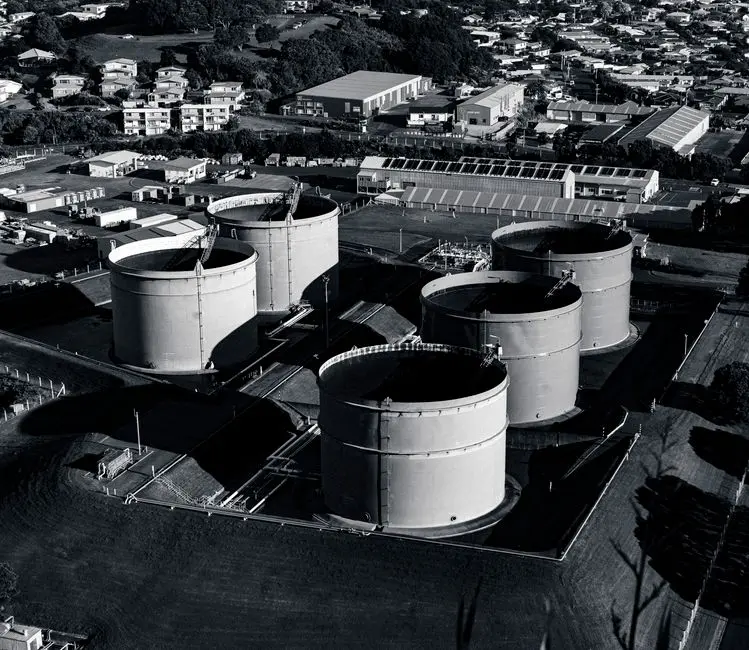
In the U.S., anaerobic digesters at commercial sites typically require an NPDES permit plus local POTW pretreatment approval; a Permit-to-Install precedes construction (per S2 Ohio EPA guidance, 2025-08). If digestate is to be land-applied, a Land Application Management Plan is required — and for a mall, that pathway is often impractical, so plan for off-site digestate hauling to a municipal WWTP. Local zoning, noise, and truck traffic are explicitly outside Ohio EPA's jurisdiction, and malls are typically in dense retail zones where neighbor opposition to truck trips is the single biggest non-technical risk to a permit.
The two failure modes that kill mall AD retrofits are both operational. First, FOG pretreatment: skip the DAF or grease trap and the digester scums and suds within weeks, killing methanogens and dropping COD removal from 85%+ to 60% — the S1 thesis confirmed that long-chain fatty acids are inhibitory at high organic load. Second, diurnal peak management: the equalization tank must be sized for the full 14-hr operational window plus a safety factor, not the daily average. An automatic chemical dosing for pH and micronutrient control package is a small line item that prevents the third common failure — pH drift into the 6.0–6.5 band where VFA accumulation stalls methanogenesis.
Frequently Asked Questions
What hydraulic retention time (HRT) should a 2026 mall-scale anaerobic digester be designed for?
For a CSTR handling blended mall wastewater, design for 18–22 days; the S1 DUT thesis optimum was 21 days at 50 L scale with >85% COD removal. UASB and EGSB units run 6–12 hours on FOG-pretrained feed, while niche UAPB reactors (S4) can hit 1–3 days on soluble dairy wastewater — but that is a food-court-only stream, not blended mall flow.
What organic loading rate (OLR) and COD removal should a mall digester target?
CSTR systems should target 2–6 kg COD/m³·day; UASB/EGSB 8–15 kg COD/m³·day with good FOG control. COD removal lands at 80–88% when inlet oil & grease stays under 300 mg/L via DAF pretreatment — matching the >85% removal the S1 thesis recorded on industrial sewage at optimum conditions.
Is anaerobic digestion economically viable for a single shopping mall?
At 300 m³/d the CAPEX band is $1.8–3.5M installed, with OPEX at 8–14% of CAPEX per year and CHP/boiler payback in the 7–10 year range. The S1 cost-benefit showed NPV of -R121,016 and benefit-cost ratio of 0.4 at 50 L, improving with scale; a 300 m³/d mall digester sits at the break-even inflection where operational discipline, not novel chemistry, decides the outcome.
How much biogas does a mall digester actually produce?
A 300 m³/d mall at 2,500 mg/L COD yields roughly 750 kg COD/day. At 0.35 m³ biogas/kg COD and 90% CH₄ (achievable with sensor control and 0.4–0.6 g/L magnetite dosing per S1), that is ~236 m³ CH₄/day or ~8.4 MMBtu/day — about 2,770 MMBtu/year on 330 operating days, two orders of magnitude below the 260,000 MMBtu/year proposed for the Vanguard Renewables Mansfield AD1 (S2).
What FOG pretreatment is required before the digester?
Hold inlet oil & grease below 300 mg/L. Above that threshold, long-chain fatty acids inhibit methanogens and COD removal drops by 40%+ (S1). A DAF unit or properly sized grease trap is non-negotiable; the screw press for shopping mall wastewater engineering guide covers downstream solids handling for the resulting sludge.