
Why Data Center Acquirers Face Unique Wastewater Risk
NPDES permit modification is required for 68% of industrial facilities undergoing ownership changes, frequently triggering anti-backsliding reviews that force stricter effluent limits (EPA 2024). When a data center operator acquires a manufacturing asset, the mismatch between legacy industrial wastewater profiles and cooling-dominated discharge creates significant regulatory friction. Legacy facilities typically discharge process wastewater containing heavy metals, volatile organic compounds (VOCs), and complex organics regulated under 40 CFR 403, whereas data center operations generate high-volume cooling tower blowdown characterized by high total dissolved solids (TDS), thermal loading, and residual biocides like bromine or isothiazolinones.
Permit reclassification risk is the primary hidden liability. Transitioning from a process-based discharge permit to one governed by 40 CFR 423 (Steam Electric Power Generating) or site-specific cooling water intake structures (316a/316b) often exposes the facility to more stringent thermal and chemical monitoring requirements. Standard environmental due diligence often fails to account for the toxicity of cooling tower additives. These biocides, which are necessary for 24/7 cooling reliability, often fall outside the legacy ETP’s original design basis, potentially causing biological process inhibition or permit exceedances immediately upon operational handover.
Phase 1: Regulatory & Compliance History Deep Dive
The average administrative penalty per Notice of Violation (NOV) for industrial wastewater non-compliance ranges from $12,000 to $45,000 (EPA ECHO 2023), with consent orders frequently mandating supplemental environmental projects exceeding $500,000. Due diligence must prioritize a 5-year longitudinal review of Discharge Monitoring Reports (DMRs) to identify systemic parameter instability, specifically regarding BOD, TSS, heavy metals, and temperature. Because enforcement actions and consent orders generally attach to the asset rather than the operator, the acquiring entity assumes full responsibility for legacy non-compliance upon closing.
| Regulatory Risk Factor | Data Request / Action | M&A Impact |
|---|---|---|
| NPDES Transferability | Form 1/2C verification + State-specific transfer app | Permit re-opener risk |
| Enforcement History | 5-year NOV/Consent Order log | Indemnity/Escrow trigger |
| TMDL Allocation | Watershed-based load limit review | Potential capacity restriction |
| Pretreatment Compliance | Local limits vs. 40 CFR 469 standards | Pre-close upgrade requirement |
For operations involving indirect discharge, review the POTW pretreatment agreement against current categorical standards. If the facility is transitioning to a data center, local limits for parameters like TDS or specific cooling-related chemicals may require pretreatment compliance when operations change to avoid immediate sewer surcharges or discharge bans.
Phase 2: Physical ETP Audit Against 40-Point Technical Checklist
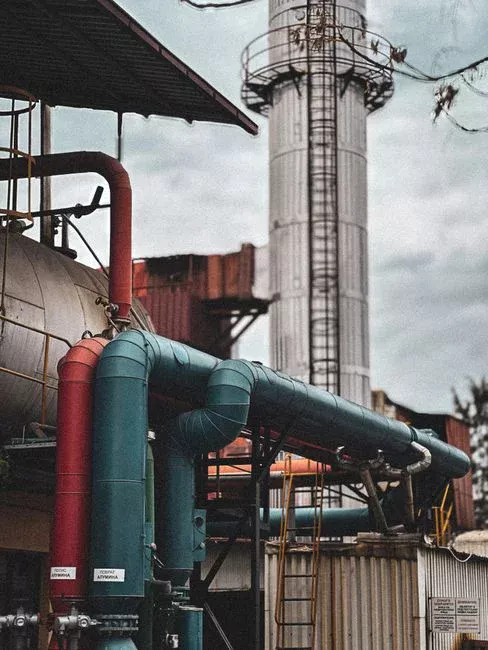
ETP performance degradation is often masked by hydraulic retention time (HRT) buffers, but systems operating at >85% of design capacity are high-risk assets for data center integration. A technical audit must verify the physical integrity of primary clarifiers, biological reactors, and secondary sedimentation units against the manufacturer’s original design specifications. Any legacy biological treatment system—typically conventional activated sludge—will likely require an MBR system for ZLD retrofit to meet the high effluent quality standards required for cooling tower makeup water.
| Audit Component | Performance Metric | M&A Decision Gate |
|---|---|---|
| Biological Reactor | MLSS, SVI, DO profiles (last 12 mos) | Upgrade required if SVI > 150 |
| Sludge Dewatering | Cake dryness % vs. landfill criteria | Replace if < 20% solids |
| Instrumentation | 12-month calibration records | Mandatory pre-close fix |
| Emergency Systems | Equalization volume vs. peak flow | Fail if < 24-hr buffer |
Instrumentation and SCADA historian completeness are critical for uptime SLAs. If the facility lacks 12-month calibration certificates or reliable online analyzer data, the acquisition must account for the immediate cost of installing an automated sludge dewatering upgrade to ensure the ETP can handle the increased solids loading from consistent cooling tower blowdown cycles.
Phase 3: Legacy Contamination Investigation — Lagoons, Ponds & Subsurface
Historical industrial sites frequently harbor subsurface liabilities in unlined lagoons or spray irrigation fields, with remediation costs for groundwater plumes typically ranging from $1.2M to $3.8M for a 2-acre site (ITRC 2023). Due diligence must include a Phase II Environmental Site Assessment (ESA) utilizing a multi-compound panel for heavy metals, VOCs, and PFAS, particularly if the site previously utilized aqueous film-forming foams (AFFF) for fire suppression. The EPA’s 2024 drinking water standards for PFOA/PFOS have significantly lowered the threshold for groundwater cleanup, turning previously "inactive" lagoons into high-priority financial liabilities.
| Contaminant Source | Investigation Protocol | Liability Projection |
|---|---|---|
| Unlined Lagoons | Berm borings + TCLP characterization | $1.2M - $3.8M remediation |
| Groundwater Plume | Up/Down gradient monitoring wells | $150K - $400K/yr OPEX |
| Soil/Sediment | 28-compound PFAS panel | Regulatory closure delay |
If dredging is required for on-site ponds, TCLP testing is mandatory to characterize sediment as hazardous waste. For sites with complex chemical profiles, refer to specific pretreatment compliance when operations change protocols to ensure legacy process contaminants are isolated from new data center cooling streams.
Phase 4: CAPEX/OPEX Modeling for Post-Acquisition Upgrades
Achieving zero liquid discharge (ZLD) in a legacy facility retrofit requires a significant CAPEX commitment, with complete MBR/RO/Crystallizer integration costs ranging from $7M to $12M. For data center acquisitions, the model must differentiate between simple compliance remediation and the advanced water recovery infrastructure needed to offset the high water usage of cooling towers. Using an RO for cooling tower blowdown recycle can reduce freshwater make-up rates by 75%, though this adds $1.50–$2.50/m³ in operational costs.
| Upgrade Scenario | CAPEX Range | OPEX Range |
|---|---|---|
| Minimal Compliance | $150K - $400K | Baseline |
| Cooling Blowdown Recycle | $3.5M - $6.5M | $0.85 - $1.20/m³ |
| Full ZLD (MBR+RO) | $7M - $12M | $1.50 - $2.50/m³ |
Acquirers must include a 25% contingency on all CAPEX figures to account for subsurface site conditions discovered during construction. Staffing requirements for 24/7 ETP operations under new SLAs should be modeled at 4–5 FTEs, representing a significant increase over the 1–2 operators typically found in legacy manufacturing ETPs.
Phase 5: Integration Risk Scoring & Negotiation Levers
Environmental indemnification caps are typically negotiated between 15% and 25% of the total purchase price, with a survival period of 5–7 years to cover long-tail groundwater liability (ABA M&A Study 2023). The due diligence team should utilize a weighted risk matrix where findings scoring >12 (Likelihood x Impact) are moved to a mandatory pre-close resolution or dedicated escrow account. This parallel due diligence framework for pulp/paper assets provides a template for quantifying these risks in high-stakes industrial acquisitions.
| Negotiation Lever | Structure | Purpose |
|---|---|---|
| Environmental Escrow | 1.5x Estimated Remediation | Direct fund for known issues |
| Indemnity Cap | 15% - 25% of Purchase Price | Limits post-close financial risk |
| Earn-back Clause | Seller funds upgrade CAPEX | Risk-sharing on ZLD efficiency |
| Transition Services | 6-12 month seller operation | Prevents handover permit spikes |
Frequently Asked Questions
What is the most common reason for ETP permit failure during an ownership change?
The most frequent failure point is the "anti-backsliding" provision in the Clean Water Act. When a facility changes ownership, regulators often re-evaluate the permit based on current, tighter standards, forcing the new owner to meet more stringent limits than the previous operator.
How does data center cooling blowdown affect legacy ETP biological treatment?
Cooling tower blowdown often contains high TDS and residual biocides (e.g., isothiazolinones). These can inhibit the nitrifying bacteria in a legacy activated sludge system, leading to ammonia spikes and permit violations if the ETP is not upgraded with MBR or RO pretreatment.
What is the typical escrow size for legacy wastewater remediation?
Industry standards suggest an escrow of 1.5x the estimated remediation CAPEX. This ensures that if unforeseen subsurface contamination is discovered during the Phase II investigation or early site construction, the funds are immediately available for remediation without impacting the buyer’s cash flow.