
Why Freeport's Existing EPA Permit Doesn't Cover Texas Land Assets
The EPA Region 6 permit GM0000002 is strictly limited to offshore Gulf of Mexico outfalls, including deck drainage, sanitary waste, drilling fluids, and salt cavern brine. Because this permit carries no jurisdiction over Texas land-based facilities, any acquisition of a terrestrial mining or processing site requires an entirely new TPDES (Texas Pollutant Discharge Elimination System) permitting sequence. Under 40 CFR §122.61, the new owner must submit EPA Form 1 and Form 2C within 30 days of the transaction; however, if the facility lacks an existing TPDES permit or if the acquisition involves a material change in discharge character, the operator must secure a new individual permit, which typically follows an 180-360 day administrative and public notice timeline (source: TCEQ permitting guidance).
Compliance obligations are constrained by anti-backsliding provisions under CWA §402(o) and 40 CFR §122.44(l). Any new permit issued to the acquired facility must remain at least as stringent as the previous permit’s numeric limits, regardless of whether current federal ELGs have relaxed. Due diligence teams must confirm if the target facility operates under an individual TPDES permit or a general permit (such as TXG920000 for mining); an administrative transfer is possible only for individual permits where no physical or operational changes are planned. If the facility is unpermitted or currently discharges under a general permit that does not cover the new owner's specific industrial profile, the regulatory baseline effectively resets to current state and federal standards.
Federal ELGs for Mining/Metals: 40 CFR Part 440 Applied to Freeport's Wastewater Profile
Federal effluent limitation guidelines (ELGs) for copper, lead, zinc, gold, silver, and molybdenum processing are codified under 40 CFR Part 440 Subpart J, which mandates technology-based effluent limits (TBELs) for all point source discharges. For standard process wastewater, the BAT (Best Available Technology) limits require pH maintenance between 6.0 and 9.0 s.u., with Total Suspended Solids (TSS) capped at 30 mg/L (monthly average) and 45 mg/L (daily maximum) (source: 40 CFR Part 440). Acid rock drainage (ARD) streams—common in copper mining—require additional treatment for iron, manganese, and aluminum to meet EPA's 2023 Hardrock Mining Framework guidance, which sets specific thresholds for dissolved metals.
TCEQ implements these federal guidelines through the TPDES program but frequently imposes stricter water quality-based effluent limits (WQBELs) derived from Texas Surface Water Quality Standards (30 TAC §307). These standards are segment-specific and often target dissolved metals that exceed criteria for aquatic life protection in the receiving stream. When evaluating process water recycle loops, operators should recognize that while zero-discharge systems using industrial RO for TDS reduction and process water recycle are technically viable, they may trigger RCRA Subtitle C hazardous waste classifications if the concentrated brine contains high levels of heavy metals. Deep well injection (Class I) remains a common alternative, though it necessitates long-term monitoring and site-specific geological characterization.
| Parameter | 40 CFR Part 440 (Monthly Avg) | 40 CFR Part 440 (Daily Max) |
|---|---|---|
| TSS | 30 mg/L | 45 mg/L |
| Copper (Cu) | 0.3 mg/L | 0.45 mg/L |
| Zinc (Zn) | 0.5 mg/L | 0.75 mg/L |
| Lead (Pb) | 0.3 mg/L | 0.45 mg/L |
| Mercury (Hg) | 0.002 mg/L | 0.003 mg/L |
| Iron (Fe) - ARD | 3.0 mg/L | 4.5 mg/L |
TCEQ's Emerging Produced Water Rules: New Risk and Reuse Pathway for Mining Dewatering

The 2025 Texas legislative session transferred the permitting authority for produced water land application from the Railroad Commission to the TCEQ, creating a new, integrated regulatory pathway for large-volume industrial water management (source: Inside Climate News, 2026-08). This shift is critical for mining operations, as mine dewatering water may be reclassified under these rules if the water is associated with mineral extraction. The Texas Produced Water Consortium (Texas Tech) has established a testing baseline for these permits, requiring comprehensive non-targeted analysis (NTA) and whole effluent toxicity (WET) testing to screen for over 300 constituents per EPA 1694 and 1698 analytical methods.
Facilities managing dewatering volumes exceeding 50,000 GPD may use the Texas Pacific Water Resources Orla facility as a technical benchmark for CapEx and OPEX modeling. This plant utilizes freeze-thaw technology to process 420,000 GPD, requiring a 5.5 MW power load and incurring an estimated operational cost of $0.75 to $1.25 per barrel (source: Texas Produced Water Consortium pilot data). If Freeport-McMoRan intends to leverage this regulatory pathway for dust control or irrigation, the due diligence process must include a feasibility study comparing this discharge-based approach against traditional evaporation ponds or onsite recycle. The primary risk remains the lack of long-term operational reliability data for these treatment technologies under real-world mining conditions, necessitating a conservative contingency in any CapEx budget.
Acquisition Due Diligence Checklist: Wastewater Liability Quantification
A rigorous audit of legacy wastewater liabilities is mandatory during the acquisition of any Texas industrial facility to avoid inheriting significant enforcement risks or hidden upgrade costs. Following the UPM acquisition ETP due diligence framework, the process must begin with a review of five years of Discharge Monitoring Reports (DMRs), notices of violation (NOVs), and consent orders to identify recurring non-compliance. Any parameter exceedance exceeding 120% of the permit limit is a high-priority flag for potential TCEQ enforcement action.
Engineers must conduct a treatability gap analysis by comparing the facility's current effluent quality against the stricter of 40 CFR Part 440 or site-specific 30 TAC §307 WQBELs. This analysis should include jar testing for metals precipitation—evaluating lime versus sulfide chemistries—and an assessment of ARD neutralization capacity. CapEx forecasts should be categorized by treatment objective: TSS/oil removal via DAF system for stormwater and contact water pretreatment, chemical precipitation for metals, or membrane-based TDS management. Finally, estimate remediation costs for unlined impoundments or legacy seepage plumes using the Texas Risk Reduction Program (TRRP) standards under 30 TAC §350, adjusting for residential versus commercial cleanup levels based on the site's future land use.
| Technology Category | Typical CapEx Range (per 100 GPM) | Primary Application |
|---|---|---|
| DAF System | $150,000 – $300,000 | TSS, Oil & Grease removal |
| Chemical Precipitation | $200,000 – $500,000 | Dissolved metals removal |
| Reverse Osmosis | $500,000 – $1,200,000 | TDS, multivalent ion reduction |
| Evaporation Ponds | $50,000 – $100,000 per acre | Brine management/zero discharge |
Treatment Technology Selection Matrix for Freeport Texas Acquisition Scenarios
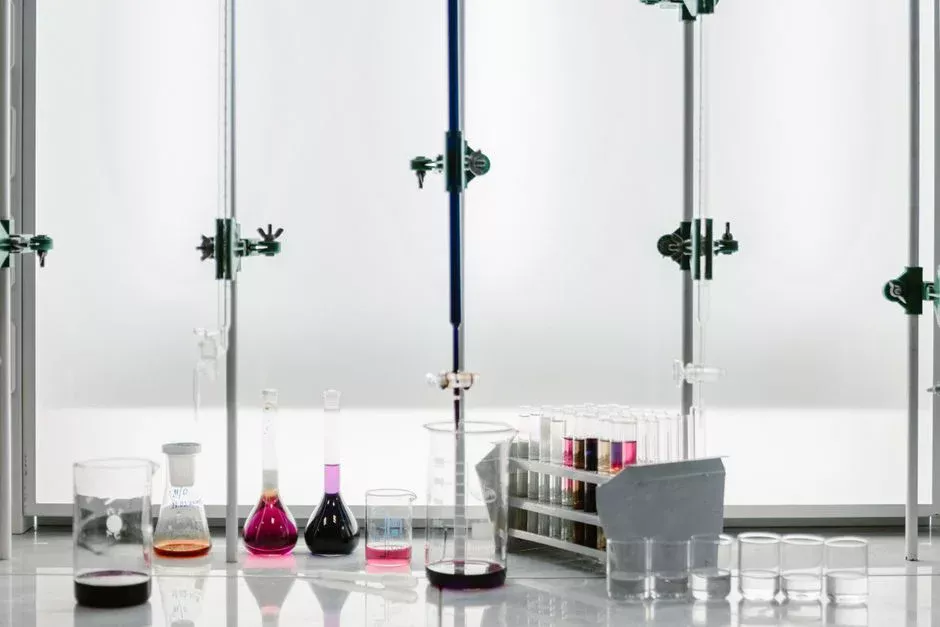
Selecting the appropriate technology requires matching the specific influent profile—characterized by pH, metals load, and TDS concentration—to proven modular treatment skids. For acid rock drainage (pH 2-4, high iron and aluminum), a high-density sludge (HDS) process using a lamella clarifier for high-density sludge metals precipitation typically achieves 95% metals removal with a surface loading rate of 20-40 m/h. This approach offers a 30% reduction in chemical consumption compared to conventional lime treatment.
For process water recycling where TDS levels range from 5,000 to 20,000 mg/L, a two-pass RO system with aggressive antiscalant dosing is required to achieve 95% recovery and 99% TDS rejection. Pretreatment via multimedia filtration is necessary to maintain a Silt Density Index (SDI) below 3. For sanitary and camp wastewater, an MBR membrane bioreactor for sanitary and process water reuse using 0.1 μm PVDF membranes provides a reliable effluent of <5 mg/L BOD and <1 mg/L TSS, effectively reducing the necessary footprint by 60% compared to traditional activated sludge processes.
Frequently Asked Questions
Does Freeport-McMoRan's offshore NPDES permit GM0000002 transfer to a Texas land facility?
No. Permit GM0000002 is exclusively for offshore Gulf of Mexico outfalls. Any Texas land-based asset requires a separate TPDES permit governed by state-delegated authority and federal ELGs.
What is the timeline for TPDES permit transfer versus a new permit application?
An administrative transfer of an existing individual TPDES permit typically takes 30-60 days. A new individual permit application, including technical review and public notice, requires 180-360 days.
How do Texas produced water rules affect mining dewatering?
If mine dewatering is classified as 'produced water' under new TCEQ rules, operators must perform NTA and WET testing per Texas Produced Water Consortium protocols, potentially opening new discharge or land application pathways.
What are the anti-backsliding implications for an acquisition?
Per CWA §402(o), a new permit cannot contain limits less stringent than the prior permit's limits, even if federal ELGs have been updated to allow higher concentrations. The previous numeric limits function as the floor.
What is the estimated CapEx for a 200 GPM copper mine water treatment plant?
Budget $4-12M for a fully integrated system. Costs vary based on ARD severity, the need for RO/crystallization for TDS management, and reuse requirements. Pilot testing for site-specific water chemistry typically adds $150k-300k to the pre-construction phase.