Industrial Wastewater Treatment in Kandy: Systems, Costs & JICA Projects 2025
Industrial wastewater treatment in Kandy is undergoing significant evolution, driven by JICA-backed upgrades to the Kandy City Wastewater Management Project and recent enhancements at the Kandy Industrial Park WWTP. While these municipal and industrial park initiatives aim to improve regional wastewater management, private industrial facilities across Kandy, including service stations, slaughterhouses, and small manufacturers, critically require tailored on-site solutions, such as Dissolved Air Flotation (DAF) or Membrane Bioreactor (MBR) systems, to meet stringent effluent compliance standards before direct discharge.Current State of Industrial Wastewater Management in Kandy
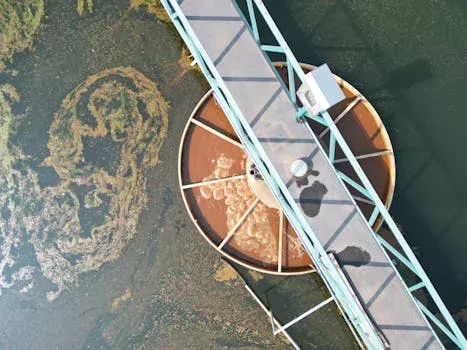
The Kandy City Wastewater Management Project is actively progressing with significant investment from the Japan International Cooperation Agency (JICA), focusing on the construction of a new Wastewater Treatment Plant (WWTP), a main pumping station, and an expanded sewage collection system. This infrastructure development primarily targets municipal wastewater, aiming to mitigate pollution from urban sources. Concurrently, the existing wastewater treatment plant at the Kandy Industrial Park has undergone recent upgrades by CETEC, enhancing its capacity and operational efficiency to better manage industrial effluent (CETEC, Kandy Industrial Park Report). While specific capacity figures for the upgraded industrial park WWTP are not publicly disclosed, the improvements are designed to accommodate the growing demands of industries within the park. Beyond these centralized systems, numerous small-scale industries in Kandy, such as service stations, slaughterhouses, and poultry farms, continue to contribute to localized water pollution through direct discharge of untreated or inadequately treated effluent and septic tank outflows. Reports related to the Kandy South Water Treatment Plant, a drinking water facility with a capacity of 35,000 m³/day (Kandy South WTP Report, 2015), have identified these small industrial discharges as significant contributors to the overall surface water contamination in the region. The fragmented nature of these discharges necessitates a focus on decentralized, on-site treatment solutions for private industrial facilities.Key Industries Driving Wastewater Challenges
Relevant Wastewater Treatment Technologies for Kandy Factories
Industrial operators in Kandy have access to several technically appropriate wastewater treatment systems designed to address diverse influent characteristics and space constraints. Dissolved Air Flotation (DAF) systems, such as HydropureWater's, are highly effective in removing 90–95% of fats, oils, grease (FOG), and suspended solids from oily wastewater, making them ideal for service stations, food processing plants, and slaughterhouses. These high-efficiency DAF systems for oil and grease removal can handle flow rates ranging from 4 to 300 m³/h. For facilities requiring superior effluent quality and operating with limited space, MBR membrane bioreactors offer a compact solution, achieving near-reuse quality effluent with filtration down to <1 μm. HydropureWater’s compact MBR system for high-quality effluent has capacities from 10 to 2,000 m³/day, integrating biological treatment with membrane separation, resulting in a significantly smaller footprint compared to conventional activated sludge systems. integrated sewage treatment plants, exemplified by the WSZ series, provide fully automated, pre-engineered solutions that utilize A/O (Anaerobic-Anoxic-Oxic) biological contact oxidation. These package plants are capable of treating 1–80 m³/h of mixed industrial and residential wastewater, making them suitable for small factories or industrial sites with co-located administrative or residential facilities. Finally, chemical dosing systems are indispensable for industrial applications, ensuring precise pH stabilization, coagulation, and flocculation, which are critical pre-treatment steps for variable industrial effluents before physical or biological processes.Table 1: Key Industrial Wastewater Treatment Technologies
| Technology | Key Application | Typical Removal Efficiency (FOG/SS) | Footprint | Capacity Range (HydropureWater Series) |
|---|---|---|---|---|
| Dissolved Air Flotation (DAF) | Oily wastewater, food processing, slaughterhouses | 90-95% | Medium | 4–300 m³/h |
| Membrane Bioreactor (MBR) | High-quality effluent, space-limited factories | >99% (SS), High BOD/COD removal | Compact (60% smaller than CAS) | 10–2,000 m³/day (HydropureWater MBR) |
| Integrated Sewage Treatment Plant (WSZ) | Mixed industrial-residential, small-scale industries | 85-95% (BOD/COD/SS) | Compact (often underground) | 1–80 m³/h (WSZ series) |
| Chemical Dosing Systems | pH adjustment, coagulation, flocculation | Varies (enhances other processes) | Small to Medium | Customizable (5–15 m³/h typical for single feed) |
Comparison of Industrial Treatment Systems for Sri Lankan Factories
Table 2: Industrial Wastewater Treatment System Comparison
| Feature | DAF System | MBR System (HydropureWater MBR) | Integrated Package Plant (WSZ Series) | Lamella Clarifier |
|---|---|---|---|---|
| Primary Function | FOG, TSS removal | BOD, COD, TSS, Nutrient removal; high-quality effluent | BOD, COD, TSS removal; general sewage/industrial | Suspended solids sedimentation |
| Effluent Quality | Good (pre-treatment) | Excellent (near-reuse) | Good (discharge compliant) | Good (pre-treatment/secondary) |
| Footprint | Medium | Compact (60% smaller than CAS) | Compact (often underground) | Compact (for sedimentation) |
| O&M Complexity | Moderate (chemical dosing, sludge handling) | Moderate to High (membrane cleaning, biology management) | Low (automated) | Low (sludge removal) |
| Key Advantage | Efficient oil and grease removal | High effluent quality, small footprint | Automated, cost-effective for smaller flows | High loading rates, chemical reduction |
| Ideal for | Service stations, food processing, slaughterhouses | Space-limited factories, strict discharge limits, water reuse | Small factories, mixed industrial-residential sites | Pre-treatment, primary/secondary clarification |
Cost Considerations for Industrial Wastewater Treatment in Kandy
Addressing the critical need for pricing data, the initial capital expenditure for industrial wastewater treatment systems in Kandy varies significantly based on technology, capacity, and level of automation. Small DAF systems, with capacities ranging from 4 to 10 m³/h, typically start at approximately $18,000–$25,000 FOB China. It is crucial to factor in additional costs for shipping, customs duties, local installation, and civil works, which can collectively add 30–40% to the FOB price. For more advanced treatment, MBR systems represent a higher initial investment, with costs ranging from $50,000 for a 10 m³/day unit to over $400,000 for a 2,000 m³/day system, depending on the degree of automation, membrane type, and overall system configuration. These systems offer a cost-benefit in the form of superior effluent quality and reduced land requirements. Fully automated package plants from the WSZ series, designed for capacities of 1–80 m³/h, are available at price points between $12,000 and $65,000. These systems offer a lower-cost entry point for small industries and can achieve a return on investment (ROI) within 5–7 years in regulated sectors due to compliance avoidance costs and potential water reuse benefits. automatic chemical dosing systems, essential for pH adjustment, coagulation, and flocculation, typically add an estimated $5,000–$15,000 to the total project cost, depending on the number of dosing points and integration with PLC controls. When considering industrial effluent treatment cost in Sri Lanka, it is vital to account for ongoing operational expenses, including chemical consumption, power usage, and maintenance. For further insights into cost and specification guides for installations in the Indian subcontinent, refer to our blog on package wastewater treatment plants in Telangana, India.Frequently Asked Questions
What is the capacity of the Kandy Industrial Park WWTP?
While exact operational capacity figures for the Kandy Industrial Park WWTP are not publicly released, recent upgrades by CETEC have expanded its capabilities to support the growing industrial demand within the park.
How much does industrial wastewater treatment cost in Sri Lanka?
The cost of industrial wastewater treatment in Sri Lanka varies widely. Small-scale systems, such as a 10 m³/day package plant, typically start at $15,000–$25,000 for equipment, while larger, more complex installations can exceed $100,000, including civil works, shipping, and installation.
Is Kandy polluted due to industrial discharge?
Yes, untreated or inadequately treated effluent from various sources, including slaughterhouses, service stations, and septic tanks, contributes to surface water contamination in Kandy, particularly in areas where municipal sewer networks are incomplete or non-existent.
What is the difference between DAF and MBR systems?
DAF (Dissolved Air Flotation) systems primarily remove suspended solids, fats, oils, and grease (FOG) from wastewater by using micro-bubbles to float contaminants to the surface. MBR (Membrane Bioreactor) systems, conversely, combine biological treatment with advanced membrane filtration to produce high-purity effluent, often suitable for reuse, with a significantly smaller footprint.
Can package plants be installed underground in Kandy?
Yes, HydropureWater's WSZ series integrated package wastewater treatment units are specifically designed for buried installation. This allows for the efficient use of land, as landscaping or light construction can be placed above the hidden treatment facility.
Related Equipment
- high-efficiency DAF system for oil and grease removal — view specifications, capacity range, and technical data
- compact MBR system for high-quality effluent — view specifications, capacity range, and technical data
Need a customized solution? Request a free quote with your specific flow rate and pollutant parameters.