Why Wroclaw Needs a Modern Effluent Treatment Plant in 2026
An effluent treatment plant in Wroclaw in 2026 must meet the EU Urban Waste Water Directive 91/271/EEC discharge limits (BOD ≤25 mg/L, COD ≤125 mg/L, TSS ≤35 mg/L for >10,000 PE) plus Polish Water Law permit conditions set by the Regional Water Management Authority in Wrocław. Typical flows range from 1 m³/h for packaged underground units to 2,000 m³/day MBR systems, with MBR preferred where reuse quality is required. Wroclaw, the largest city in Lower Silesia with a metropolitan population exceeding 640,000, sits at the centre of three industrial clusters that all generate distinct effluent streams: electronics assembly tied to the LG, Toshiba, and Whirlpool supply chain in Kobierzyce and Biskupice Podgórne special economic zones; food and beverage processing (dairy, brewery, confectionery) along the Oława corridor; and the chemical sector in the broader Lower Silesia voivodeship. Each cluster pushes different loadings — high-COD photoresist solvents, biodegradable FOG, or recalcitrant organics — but all three converge on the same regulatory gate. Polish agglomerations above 10,000 PE are bound by EU Urban Waste Water Directive 91/271/EEC, transposed through Polish Water Law (Prawo wodne, Journal of Laws 2017 item 1566 consolidated) and enforced via water permits issued by PGW Wody Polskie / the Regional Water Management Authority (RZGW) in Wrocław. The S3-cited finding that ~40% of wastewater plants globally face challenges meeting regulatory requirements is a useful framing for the local pressure on Lower Silesian operators, who must design against those same compliance headwinds. The 2026 cost driver behind most retrofits in the region is reuse: nanofiltration and membrane polishing now allow treated effluent to meet EU Water Framework Directive (2000/60/EC) reuse targets, turning what was once a discharge liability into a process-water input for industry.
Polish and EU Discharge Standards for Wroclaw Effluent Treatment Plants
The regulatory envelope for any Wroclaw ETP in 2026 is built on two layered instruments: the EU Urban Waste Water Directive 91/271/EEC, which sets the effluent quality ceiling for agglomerations above 10,000 PE, and Polish Water Law, which transposes that ceiling into enforceable permit conditions issued by the Wrocław RZGW. The UWWTD limits the engineer must design against are BOD₅ ≤25 mg/L, COD ≤125 mg/L, TSS ≤35 mg/L (95th-percentile compliance), total nitrogen ≤15 mg/L, and total phosphorus ≤2 mg/L. Polish Water Law (Prawo wodne) and the 2019 update package layer additional conditions on top: monitoring frequency, self-reporting cadence, and site-specific mixing-zone limits in the Odra river basin. For industrial ETPs in sectors listed under Annex I of the EU Industrial Emissions Directive 2010/75/EU — food processing, chemicals, waste treatment — permit conditions tighten further, with BAT-AEL ranges (Best Available Techniques Associated Emission Levels) controlling whole-effluent toxicity, micropollutants, and AOX. Because Wroclaw drains to the Odra, the WFD 'good ecological status' objective adds nutrient and micropollutant pressure; thesis work at Wageningen (Lei, WU thesis 8189, 2024) confirms constructed wetland polishing can deliver meaningful micropollutant removal from WWTP effluent, which is a defensible polishing step when BAT-AEL compliance is marginal. Compliance is monitored through 24-hour composite sampling, with non-compliance triggering Wrocław RZGW escalation under Article 9 of Polish Water Law.
| Parameter | UWWTD 91/271/EEC limit (>10,000 PE) | Typical Polish permit condition | Reference |
|---|---|---|---|
| BOD₅ | ≤25 mg/L | ≤25 mg/L (95th percentile) | UWWTD Annex I |
| COD | ≤125 mg/L | ≤125 mg/L | UWWTD Annex I |
| TSS | ≤35 mg/L | ≤35 mg/L | UWWTD Annex I |
| Total nitrogen | ≤15 mg/L | ≤15 mg/L (or 70–80% removal) | UWWTD Annex I |
| Total phosphorus | ≤2 mg/L | ≤2 mg/L (or 80% removal) | UWWTD Annex I |
| Whole-effluent toxicity / micropollutants | BAT-AEL by sector | IED 2010/75/EU | IED BAT conclusions |
Core Treatment Technologies Used in Wroclaw ETPs
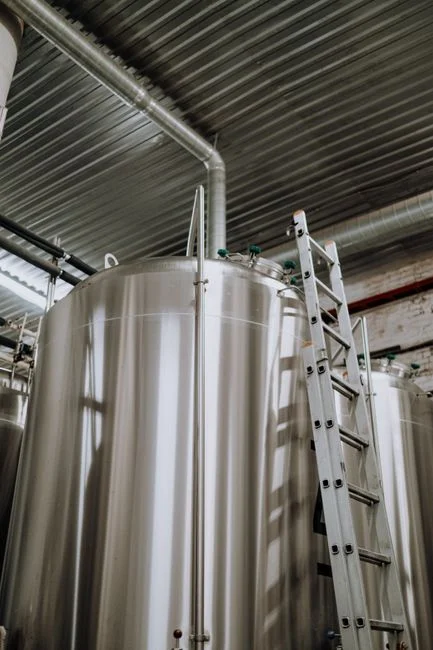
Process trains in Lower Silesian ETPs follow a consistent five-stage logic: preliminary screening, primary/biological treatment, MBR or conventional clarification intensification, tertiary polishing, and disinfection. The equipment menu maps cleanly onto each stage. Mechanical preliminary treatment starts with rotary bar screens (GX series) handling screenings, grit, and rag loads of 2–10 m³/h per unit — a non-negotiable protection step for downstream membranes and pumps. Primary and biological treatment defaults to A/O (anoxic/aerobic) activated sludge with a typical MLSS of 3,500–5,000 mg/L; for decentralized sites, the WSZ underground packaged sewage treatment plant folds A/O, sedimentation, and disinfection into a single buried unit covering 1–80 m³/h. Membrane Bioreactor (MBR) intensification is the design choice where footprint, reuse, or strict effluent quality matters: submerged PVDF hollow-fibre or flat-sheet membranes at 0.1 μm pore size deliver 10–2,000 m³/day per train, with an integrated integrated MBR membrane bioreactor system cutting footprint by 60% versus a conventional activated-sludge train (HydropureWater field data, 2026). The DF-series flat-sheet MBR module delivers 32–135 m³/day per cassette, well-matched to the typical Kobierzyce electronics line. Tertiary polishing for FOG, colloids, and residual TSS relies on a dissolved air flotation system (4–300 m³/h across 13 standard models) or lamella clarifiers running at 20–40 m/h surface loading with 30% lower chemical consumption than conventional clarifiers. Disinfection for reuse or sensitive discharge points uses a chlorine dioxide generator at 50 g/h to 20,000 g/h output, compliant with WHO Guidelines and the EU Drinking Water Directive 98/83/EC where indirect potable reuse is intended.
| Technology | Typical capacity range | Effluent TSS (mg/L) | Footprint vs. CAS | Energy (kWh/m³) |
|---|---|---|---|---|
| Conventional A/O activated sludge | 50–10,000 m³/day | ≤30 | Baseline (1.0x) | 0.25–0.40 |
| SBR (sequencing batch reactor) | 20–5,000 m³/day | ≤30 | 0.70x | 0.30–0.45 |
| MBR (PVDF, 0.1 μm) | 10–2,000 m³/day per train | ≤5 | 0.40x | 0.40–0.65 |
| DAF as tertiary | 4–300 m³/h | ≤10 (post-DAF) | 0.20x (add-on) | 0.05–0.10 |
| Constructed wetland (polishing) | 0.5–50 m³/day·module | ≤15 | 3.0–5.0x (land-intensive) | 0.02–0.05 |
Matching the Right ETP Configuration to Your Wroclaw Industry
Industry-specific influent character drives the process train selection. For electronics and semiconductor facilities in the Kobierzyce and Biskupice Podgórne zones, the dominant loadings are high-COD organics from photoresist, NMP solvents, and copper-bearing rinse waters; the defensible train is DAF pre-treatment to strip emulsified solvents, followed by an MBR for COD and TSS reduction, then RO polishing where direct process-water reuse is the project driver — brackish-water RO units can deliver 95% recovery (HydropureWater product spec, 2026). Food and beverage plants around Wroclaw — dairy at Piątnica-area supply chains, breweries, and confectionery — run high BOD (1,500–4,000 mg/L) and FOG (200–800 mg/L); the proven configuration is a DAF as primary FOG removal, MBBR or MBR for organics, with anaerobic digestion upstream as a cost offset (bigas recovery typically offsets 20–35% of plant electricity). Pharmaceutical and chemical sites in the Lower Silesia chemical cluster face complex organics, variable pH (1–11 excursions), and solvent shock loads; these need automatic chemical dosing for pH/coagulation feeding a robust MBR, with downstream activated carbon for trace organics. Municipal and residential developments under 80 m³/h use the packaged underground WSZ plant with built-in disinfection; larger agglomerations route to a centralized MBR or SBR with UV or ClO₂ finishing. For a deeper dive on decentralized residential design, the residential wastewater treatment in Poland engineering guide covers packaged-plant selection in detail, and the constructed wetland engineering guide is worth reading if polishing-stage land area is available in the Lower Silesian site footprint.
Wroclaw ETP Cost Benchmarks and 2026 Budget Ranges
For the procurement manager building a feasibility envelope, indicative 2026 European market ranges (HydropureWater field data and supplier market scan, 2026 — Poland-specific 2026 unit prices are not publicly published, so site-specific quotation is recommended) are: packaged underground units (WSZ class) at EUR 5,000–15,000 per m³/h of installed capacity; skid-mounted MBR systems around EUR 250,800 per m³/day; and a full industrial ETP — pre-treatment, biological, tertiary, sludge handling — typically EUR 400–1,200 per m³/day. At a 4.30 PLN/EUR reference rate, the equivalent packaged range is roughly 21,500–64,500 PLN per m³/h. OPEX drivers follow a consistent pattern: energy (MBR aeration at 0.3–0.6 kWh/m³ typically dominates at EUR 0.10–0.18 per kWh in Poland), chemical dosing (coagulant, flocculant, NaOCl or ClO₂), sludge hauling (EUR 50–120 per wet tonne in Lower Silesia), and operator labor (typically 0.5–1.5 FTE per shift depending on automation). The S3-cited finding that Integrated Water Resource Management strategies can reduce operational costs by up to 30% through resource efficiency and stakeholder collaboration is directly relevant — energy recovery, sludge-to-soil reuse, and process-water reclaiming are the three levers that consistently deliver double-digit OPEX reductions. Polish NFOŚiGW 'Environmental Protection' priority programs can co-finance ETP upgrades for SME manufacturers in 2026, particularly where the project demonstrably reduces Odra basin loadings or enables reuse; eligibility typically covers 30–70% of CAPEX for qualifying SMEs, with intake windows announced periodically on the NFOŚiGW portal. For deeper cost modelling on tertiary equipment, the lamella clarifier cost and ROI analysis provides a worked example of high-rate clarification economics.
| Configuration | Indicative 2026 CAPEX (EUR) | Indicative OPEX (EUR/m³) | Best-fit application |
|---|---|---|---|
| Packaged underground (WSZ) | 5,000–15,000 per m³/h | 0.10–0.25 | Residential, small commercial |
| Industrial MBR skid | ~250,800 per m³/day | 0.25–0.45 | Electronics, pharma reuse |
| Full industrial ETP | 400–1,200 per m³/day | 0.30–0.60 | Chemical, food, large industrial |
Selecting an ETP Supplier in Wroclaw: 2026 Evaluation Checklist
The supplier scorecard should convert the technical and regulatory framing above into procurement criteria the EPC lead can apply at the bid table. First, verify CE marking and compliance with the EU Machinery Directive 2006/42/EC and the Pressure Equipment Directive 2014/68/EU for any skid-mounted equipment — both are non-negotiable for a Polish installation. Second, require process guarantees backed by pilot testing on the actual client influent: on-site jar testing for coagulation/flocculation is the minimum, and a pilot MBR for 4–8 weeks is the standard for industrial clients. Third, demand documented reference installations in Poland or the CEE region; cross-check the supplier's claimed references against publicly available directories such as Kompass-style supplier registries (per S2) and PGW Wody Polskie permit-holder listings to confirm they have actually delivered operating plants, not just designed them. Fourth, assess lifecycle support: spare parts lead time (target ≤5 business days to Wrocław), Polish-speaking service team, remote monitoring capability with Modbus/OPC-UA, and consumable supply continuity (membrane replacement cycle, chemical logistics). Finally, confirm financial standing and warranty terms — a 24-month mechanical warranty and 12-month process performance warranty with liquidated-damages clauses is the 2026 European market norm.
Frequently Asked Questions
What discharge limits apply to a Wroclaw ETP in 2026?
For agglomerations above 10,000 PE, the EU Urban Waste Water Directive 91/271/EEC requires BOD₅ ≤25 mg/L, COD ≤125 mg/L, TSS ≤35 mg/L, total nitrogen ≤15 mg/L, and total phosphorus ≤2 mg/L, transposed into permit conditions by the Wrocław RZGW under Polish Water Law. Industrial sites face additional BAT-AEL limits under the EU Industrial Emissions Directive 2010/75/EU.
What MBR capacity is typical for an industrial Wroclaw plant?
An integrated MBR membrane bioreactor system typically delivers 10–2,000 m³/day per train, with the DF-series flat-sheet module rated at 32–135 m³/day per cassette. For a typical Kobierzyce electronics line of 200–500 m³/day, two parallel trains with 50% redundancy is the standard configuration.
How much does a packaged Wroclaw ETP cost in 2026?
Indicative 2026 European market ranges are EUR 5,000–15,000 per m³/h for packaged underground units (roughly 21,500–64,500 PLN per m³/h at 4.30 PLN/EUR) and EUR 400–1,200 per m³/day for a full industrial ETP. Site-specific quotation is recommended because the source data does not provide a 2026 Poland-specific unit price.
Can a Wroclaw ETP produce reuse-quality water?
Yes. An MBR followed by RO polishing and ClO₂ or UV disinfection can deliver reuse-quality water meeting the EU Water Framework Directive (2000/60/EC) and EU Drinking Water Directive 98/83/EC requirements for industrial process water or indirect potable reuse, with RO recovery up to 95% (HydropureWater product spec, 2026).