Why wastewater is a balance-sheet item in pharma M&A
For a Novartis-style pharma acquisition, ETP due diligence requires a Phase II Environmental Site Assessment covering consent-to-operate (CTO) transferability, a 12-month influent/effluent data review against CPCB limits (pH 5.5–9.0 for general discharge), legacy sludge classification under hazardous-waste rules, and a structured indemnity covering remediation cost, permit re-issue, and shut-down liability. The output is a quantified liability, a documentation-gap severity rating, and a 90-day post-close remediation plan.
Wastewater non-compliance is a strict-liability exposure under the Water (Prevention and Control of Pollution) Act, 1974 and the Environment (Protection) Act, 1986, and the liability attaches to the new occupier on CTO transfer — not to the seller. CPCB classifies pharma as a high-priority sector, which means consent conditions are sector-specific, not generic. In a mid-sized pharma acquisition, an ETP upgrade commonly falls in the ₹1–8 crore CAPEX range, and remediation of a 5,000 m² legacy lagoon typically runs ₹3–15 crore depending on hazardous classification (typical industry bands, per HydropureWater field data, 2026). The deal team therefore needs to structure three separate indemnity tranches — permit, performance, and pollution — because each one has a different probability, time horizon, and remediation cost curve.
Phase I Environmental Site Assessment for the ETP
Phase I is the desktop and site-walk stage. Its job is to triage documents before anyone pays for sampling. Use the ETP Assessment Audit Checklist (Scribd, S3) as the documentation baseline. It is divided into seven sections: General Documents, ETP Design Documents, Water Consumption and Wastewater Volume Records, ETP Operations Documents, External Documents, ETP Organization, and Emergency Response.
Immediate red flags on the Phase I review include a missing CTO, an expired CTO, the absence of a sludge-disposal contractor agreement, missing instrument calibration certificates, and no documented ETP emergency response plan (S3 Section VII). M&A-specific items to layer on top: prior SPCB show-cause notices, closure directions, historical non-compliance correspondence, pending environmental insurance claims, and the depth of the target's EHS staffing. The seller's willingness to produce records is itself a leading indicator — a hostile data room usually correlates with deeper hidden risk.
| Phase I Document Cluster | S3 Section | Why It Matters for the Deal |
|---|---|---|
| Wastewater discharge permit (CTO) | I.6 | Determines whether the permit is transferable, renewable, or requires fresh application — drives 6–18 months of regulatory tail risk |
| ETP flow process chart submitted to authority | II.2 | If not submitted, the as-built ETP may not match the consented design — a re-permit trigger |
| ETP inlet and outlet record (12 months) | III.4 | The single best predictor of chronic overloading and undisclosed effluent excursions |
| Instrument calibration certificates | IV.5–IV.8 | Missing certificates invalidate the compliance record and may force fresh monitoring |
| Sludge contractor agreement and authorization | V.1–V.3 | Establishes chain of custody; gaps here convert into legacy hazardous-waste liability |
| ETP emergency response plan and drill records | VII.1–VII.4 | Absence is a direct EP Act, 1986 Section 15 violation and a board-level disclosure item |
Phase II: Technical audit of the existing ETP
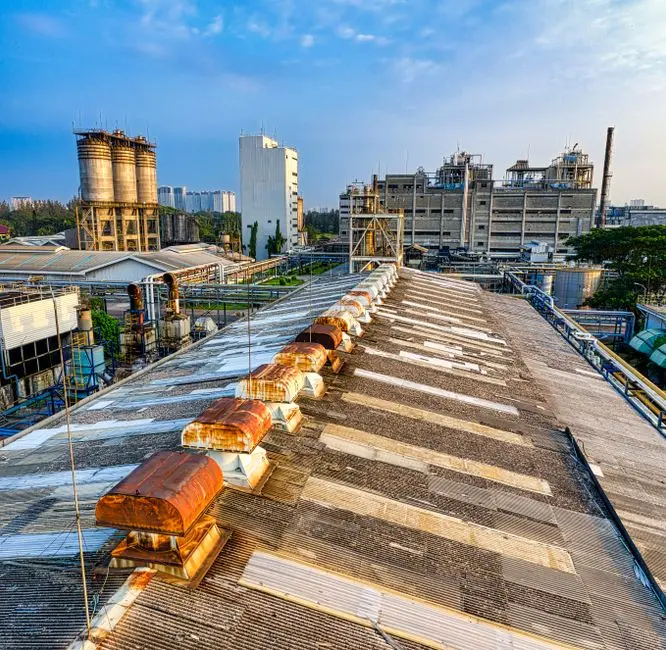
Phase II converts the Phase I paperwork into a number. The first deliverable is a 12-month inlet and outlet record reviewed against CPCB general discharge norms — pH 5.5–9.0, plus BOD, COD, TSS, and sector-specific parameters (S3, S4). The second deliverable is a fresh sampling campaign: a 7-day composite programme covering COD, BOD, TSS, TDS, oil and grease, total nitrogen, total phosphorus, residual chlorine, and active pharmaceutical ingredient (API) markers. The standard pharma analyte list (per S4's pharma wastewater profile) includes antibiotic residues, solvents, salts from batch operations, and heavy metals used as catalysts — all of which trigger sector-specific consent limits rather than the general CPCB schedule.
The third deliverable is a physical asset-condition walkdown. Inspect bar screens, equalization tank mixers, clarifier mechanisms, MBBR/ASP diffusers, and any installed MBR membrane bioreactor system for remaining useful life — membrane integrity, aeration uniformity, and CIP history matter more than nameplate age. Inspect filter media, any industrial RO system, and the sludge dewatering line — a plate and frame filter press should be reviewed for plate condition, cloth wear, hydraulic system integrity, and cake moisture history. Cross-check the ETP's designed flow rate against the actual inlet flow from the last 12 months of records; chronic overloading above 110–120% of design hydraulic capacity is the most common undisclosed finding on Indian pharma deals (HydropureWater field data, 2026).
| Phase II Audit Activity | Method | Acceptance Threshold |
|---|---|---|
| Influent/effluent record review | 12-month operating log | pH 5.5–9.0; COD/BOD within consent |
| Composite sampling | 7-day composite, 24-hour flow-weighted | All parameters within CPCB schedule |
| API marker screen | LC-MS on influent and effluent | Below pharma-sector consent limit |
| MBR membrane integrity | Clean-water permeability test | Within 15% of OEM baseline |
| Filter press dewatering performance | Cake moisture test across 5 cycles | ≤65% moisture for non-hazardous, ≤60% for hazardous |
| Designed vs. actual inlet flow | 12-month flow record | Actual ≤110% of design |
Pharma-specific effluent parameters the acquirer must re-permit
Pharma wastewater is not generic industrial wastewater. Per S4's pharma wastewater profile, it carries high COD, solvents, active residues, variable batch wastewater, salts, and occasional antibiotics or cytotoxics. Antibiotic residues and heavy-metal catalysts are the two parameters that trigger pharma-sector-specific consent limits — they are not covered by the general CPCB schedule and they force advanced treatment rather than conventional biological treatment alone. If the existing ETP relies on ASP or MBBR only, antibiotic residue breakthrough into the receiving environment is a near-certainty, and the consent re-issue will demand a membrane or oxidation step.
The API-specific concern is the strongest single technical argument for retrofitting an industrial RO system or MBR stage during the consent re-issue window. ZLD converts the liquid compliance problem into a concentrated sludge and salt stream that still needs disposal planning (S4) — the acquirer must value the downstream, not just the discharge. Salt-stream disposal typically routes to a TSDF, and the per-tonne cost is a material line item in the 90-day post-close plan.
| Pharma-Specific Parameter | Source Stream | Why It Forces Re-Permit |
|---|---|---|
| Antibiotic residues | Fermentation, formulation cleaning | Drives advanced treatment (RO, oxidation, MBR) requirement; not removed by ASP alone |
| Heavy metals (Pd, Pt, Ni, Cu catalysts) | API synthesis | Triggers pharma-sector-specific consent limits; conventional biological treatment does not remove |
| Cytotoxics | Oncology API manufacture | Zero-tolerance in effluent; segregates stream and demands dedicated inactivation |
| High TDS / process salts | Reaction, crystallization mother liquor | Drives ZLD requirement and downstream salt-stream disposal cost |
| Variable batch load | Multi-product plant | Requires equalization tank sizing review; chronic shock loads indicate undersized ETP |
Documentation-gap severity matrix
The S3 audit checklist (Scribd) lists documents but does not tell a buyer which gaps are deal-killers. The matrix below converts the checklist into a negotiation tool by mapping each item to one of three tiers: Deal-killer, Negotiate, or Acceptable. A missing CTO is a Deal-killer because the ETP cannot legally operate without it; a missing internal calibration procedure is Negotiate because it is a process gap the buyer can close in 90 days; a missing future production plan is Acceptable because, as S3 explicitly notes, this item is often "NOT AVAILABLE" even on well-run sites.
The most consistently undervalued cluster on real deals is Section V — External Documents covering the sludge contractor agreement, contractor authorization, disposal method, and laboratory certification. Treat this cluster as Negotiate-to-Deal-killer depending on the hazardous classification of the legacy sludge. The matrix output is a one-page disclosure schedule the seller signs as a contractual schedule, with each line item either delivered, replaced with a representation and warranty, or priced into the escrow.
| S3 Section | Item | Severity Tier | Buyer Action |
|---|---|---|---|
| I.6 | Wastewater discharge permit (CTO) | Deal-killer | Withhold signing until validity and transferability confirmed by SPCB |
| II.2 | ETP flow chart submitted to authority | Deal-killer | Commission as-built gap analysis; budget re-permit time |
| IV.5–IV.8 | Instrument calibration certificates and procedures | Negotiate | Price re-calibration into 90-day plan; rely on rep & warranty |
| V.1–V.5 | Sludge contractor agreement, authorization, disposal, lab cert | Negotiate-to-Deal-killer | Driven by hazardous classification; commission sludge characterization |
| VI.3–VI.5 | Operator training certificates (internal and external) | Negotiate | Schedule retraining; lock operations team via retention bonus |
| VII.1–VII.4 | Emergency response plan and drill records | Deal-killer | Direct EP Act, 1986 violation; cannot be papered over |
| I.11 | Future production plan | Acceptable | Develop independently post-close |
Structuring the environmental indemnity and escrow
The environmental side-letter should be built as three tranches, each with its own escrow percentage, duration, and step-down trigger. Tranche A covers remediation cost for legacy sludge and lagoon sediment — the highest-uncertainty item and the one most likely to be discovered after closing. Tranche B covers permit re-issue and upgrade capex if the existing CTO cannot be transferred and a fresh consent is required under the prevailing SPCB direction. Tranche C covers shut-down and business-interruption loss during the consent re-issue window, which on Indian SPCB timelines commonly runs 6–18 months (typical industry band, per HydropureWater field data, 2026).
Escrow sizing should be set at 100–150% of the worst-case remediation estimate and held for a 3–5 year tail period, consistent with typical pharma-side environmental indemnity durations. Backstop the unknown unknowns with a Pollution Legal Liability (PLL) policy covering on-site cleanup, third-party bodily injury, and off-site contamination — the policy sits above the seller's indemnity and below the buyer's balance sheet. Tie each tranche's step-down to a demonstrated compliance milestone: CTO re-issue, 12 consecutive compliant effluent reports, and reconciled sludge disposal manifests.
| Tranche | Scope | Escrow % of Worst-Case | Tail (Years) | Step-Down Trigger |
|---|---|---|---|---|
| A — Remediation | Legacy sludge, lagoon sediment, soil | 100–150% | 3–5 | Sludge manifests reconciled; final remediation report accepted by SPCB |
| B — Permit re-issue | CTO transfer failure, upgrade capex | 75–100% | 2–4 | New CTO issued in buyer's name; 12 compliant monthly reports |
| C — Shut-down / BI | Business interruption during re-issue | 50–75% | 1–3 | Production restart at ≥90% of pre-deal throughput |
90-day post-close remediation roadmap
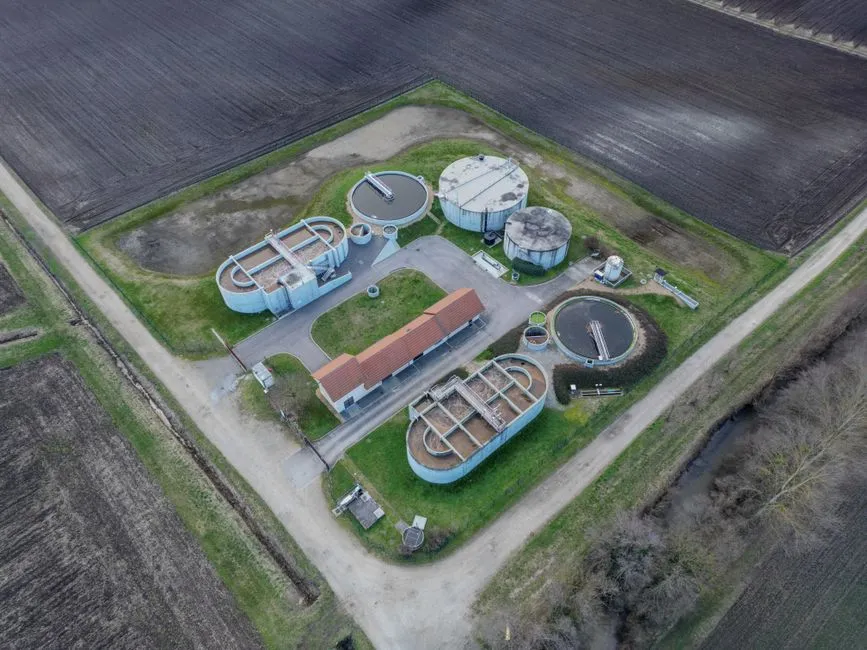
Day 1 after signing is the start of execution, not the end of due diligence. Days 0–30 are the permit-protection window: file the CTO transfer application with the relevant SPCB, secure existing operations under a bridging consent if the transfer is contested, and lock the ETP operations team through retention bonuses — replacing the plant's wastewater crew mid-permit is a controllable risk that is frequently overlooked. Days 31–60 are the data and contract window: commission upgraded online monitoring (pH, COD, flow) on the discharge line, close the critical Phase II findings flagged in the gap matrix, and procure sludge-disposal contracts with a TSDF-registered hauler per S3 Section V.
Days 61–90 are the compliance-demonstration window: implement upgraded dosing controls using an automatic chemical dosing system tied to inline flow and load measurement, run a full ETP drill per S3 Section VII, and produce the first integrated compliance report for the board. For a biological-treatment capacity upgrade, an MBR membrane bioreactor system retrofit is the standard 90-to-180-day path. For longer-horizon planning, see this predictive maintenance for pharmaceutical wastewater plants guide and the broader pharmaceutical wastewater engineering guide.
Frequently Asked Questions
How long does a CTO transfer typically take after a pharma acquisition closes?
CTO transfer timelines in India typically run 3–6 months for a clean file and 6–18 months where re-permit or upgrade conditions are imposed. The acquirer should plan for a bridging consent during this window — production cannot legally discharge without an active CTO in the new occupier's name.
What is the typical environmental indemnity duration for a pharma-side deal?
Pharma-side environmental indemnities commonly run 3–5 years for legacy remediation and 2–4 years for permit re-issue, with step-downs tied to compliance milestones rather than calendar dates. Escrow sizing is usually set at 100–150% of the worst-case remediation estimate.
Which documentation gap is the most common deal-killer on pharma ETP acquisitions?
A missing or expired CTO is the most common deal-killer, followed by absent ETP emergency response plans and drill records. Sludge-disposal documentation is the most frequently undervalued cluster and frequently escalates from a Negotiate item to a Deal-killer once the legacy sludge is characterized as hazardous.
Do we need Pollution Legal Liability insurance if we already have an environmental indemnity?
Yes. The seller's indemnity caps at the escrow balance and the seller's solvency, while PLL insurance backstops unknown unknowns — third-party bodily injury, off-site contamination, and discovery costs that emerge after the escrow is exhausted. Most pharma acquirers run both in parallel.
Related Equipment
- plate and frame filter press — specifications, capacity range, and technical data
- industrial RO system — specifications, capacity range, and technical data