Why Huntsville EV and Auto Plants Are Asking This Question in 2026
Huntsville's industrial load in 2026 is no longer dominated by textiles and aerospace machine shops; it is increasingly driven by the Mazda-Toyota MTMUS assembly plant in north Alabama and the LG Energy Solution / PowerCo Alabama battery cell cluster taking shape nearby, with a ring of Tier-1 stamping, e-coat, and cathodic electrodeposition suppliers feeding both. Typical cell influent for those operations runs 200-1,500 mg/L TSS, 50-500 mg/L oil & grease from stamping and machining coolants, plus phosphate, surfactant, and trace metals from e-coat and cathode-coating rinses. The streams are not generic "industrial wastewater" — they are characteristically high in emulsified oil, low in free oil, and intermittent by shift, which is exactly the profile that defeats a plain clarifier.
Discharge routing shapes every equipment decision. The dominant industrial POTW for the corridor is the Huntsville Utilities Westside WWTF, and the parallel path is the Madison County industrial pretreatment program; both enforce the federal categorical standards — 40 CFR 433 (Metal Finishing) and 40 CFR 467 (Transportation Equipment Cleaning / Aluminum, Copper, and Nonferrous Forming subgroups — applied to auto suppliers) — through local sewer-use ordinances, surcharges, and slug-load control. A single O&G excursion on a Monday-morning coolant dump can trigger a 40 CFR 433 violation in the first 24 hours.
So the 2026 question for a Huntsville engineer is not "DAF or clarifier as a brand preference" — it is an influent-character question. Droplet size, emulsion stability, and flow variability pick the technology, not manufacturer reputation. A plant that picks wrong pays twice: once in CAPEX, and again in surcharges, consent-order negotiations, and EHS escalations to corporate.
How a DAF System Actually Treats EV/Auto Wastewater
A packaged DAF runs a fixed sequence: coagulation (pH adjust plus a coagulant such as PAC or ferric chloride), flocculation (a long-chain polymer to build a 0.5-3 mm floe), saturator pressurization (typically 4-6 bar with 20-30% air-saturated recycle), micro-bubble contact in the cell, and float scum removal by a chain-and-flight skimmer or a beach plate. The micro-bubble cloud is the differentiator: bubbles in the 10-50 µm range attach to oil droplets and to oil-laden floe, lifting the contaminant to the surface in a 15-30 minute hydraulic residence time, far faster than the equivalent settling step.
The 2021 ASABE / industry reference work on coagulation and flotation (LIT2141) covers DAF as the unit operation of choice for suspended solids, FOG, and colloidal matter, with the food-processing DAF schematic in Figure 36; the same hydraulics translate directly to oily industrial wastewater. The DUT 2021 mineral-oil optimization study reinforces that picture: industrial mineral-oil wastewater carries high COD, soap oil & grease, turbidity, and TSS, and DAF with engineered chemistry is the unit operation designed to address that exact load. For oily streams, the published performance envelope is 60-95% O&G removal, 70-90% TSS, and 40-70% COD on a single pass, with the high end achieved when the upstream chemistry is on a PLC-controlled chemical dosing skid rather than hand-tipped. For the unit operation, the engineering details are worked through in a 2026 DAF process flow walkthrough that any P&ID reviewer can follow.
How a Lamella or Conventional Clarifier Treats the Same Stream
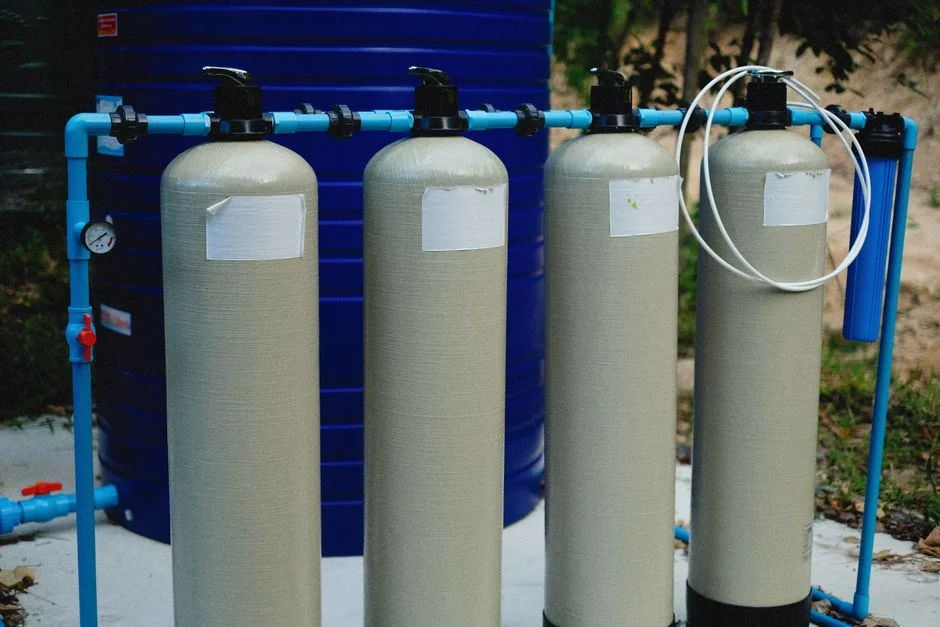
A clarifier relies on gravity. A conventional rectangular or circular basin gives suspended particles roughly 2-4 hours of hydraulic residence time to settle under quiescent conditions; a lamella (inclined-plate) design multiplies the effective settling area by stacking 50-80 plates at 55-60° inside a compact tank, pushing the surface loading rate to 20-40 m/h and shrinking the footprint by 3-5× over an equivalent conventional basin. The trade-off is that inclined plates handle settleable solids very well and very cheaply, but they do one thing: they settle.
A high-efficiency lamella clarifier is the right tool when the contaminant is settleable, free, and buoyant only briefly. Catalog data for the inclined-plate design show up to 30% reduction in polymer consumption versus a conventional basin of equal flow, because the plate stack short-circuits the settling path and lets a smaller, tighter floe do the work. The underflow is also characteristically thicker than DAF float — typically 1-3% DS — which is helpful when the downstream dewatering stage is a plate press.
The hard limit is emulsion chemistry. A clarifier does not break stable oil-water emulsions; free-oil capture drops sharply when the influent oil droplet size falls below 20 µm, which is exactly the droplet range for synthetic metalworking fluids, e-coat drag-out, and cathode-coating bath carryover. If the upstream operation generates a true emulsion, a clarifier-only train will simply push the oil through to the POTW and the 40 CFR 433 O&G limit of 52 mg/L daily max / 26 mg/L monthly average.
Side-by-Side: DAF vs Clarifier for EV/Auto Wastewater
The table below is the artifact an engineer can paste into a CAPEX justification memo. Numbers are drawn from published DAF oily-stream performance and the lamella clarifier envelope described above, with compliance lines from 40 CFR 433 (Metal Finishing) and 40 CFR 467 (auto/aerospace relevant subgroups). The dissolved air flotation system is the equipment class the performance figures are anchored to.
| Parameter | DAF (with chemistry) | Lamella Clarifier |
|---|---|---|
| Influent TSS range | 200-3,000 mg/L | 200-1,500 mg/L |
| Influent oil & grease | 50-500+ mg/L (free + emulsified) | <100 mg/L free oil only |
| Hydraulic loading | 5-25 m/h on contact-zone area | 20-40 m/h on plate area |
| Footprint per 10 m³/h | ~2-4 m² (compact packaged unit) | ~6-12 m² (inclined-plate stack) |
| Micro-bubble size | 10-50 µm | N/A — gravity only |
| Oil & grease removal | 60-95% | 40-70% (free oil only) |
| TSS removal | 70-90% | 60-85% |
| Polymer demand | 2-10 mg/L typical (engineered floc) | 1-5 mg/L (lower mass, weaker floe) |
| Energy use | 0.5-2.0 kWh/m³ (saturator + recycle pumps) | <0.1 kWh/m³ (pumping only) |
| Sludge consistency | 3-6% DS (float) | 1-3% DS (underflow) |
| Capex class (30-80 m³/h) | Mid-5 to low-6 figures USD | ~30-50% lower installed cost |
| 40 CFR 433 O&G (52 / 26 mg/L) compliance from 200 mg/L feed | Yes, on a single pass | Borderline; usually needs emulsion break upstream |
| 40 CFR 467 metals (Cr, Pb, Ni, Zn) | Removes particulate-bound fraction only | Removes particulate-bound fraction only |
The 40 CFR 467 line is worth flagging explicitly: DAF and clarifier both address oil & grease and TSS, but the categorical metals limits (total chromium, lead, nickel, zinc) need chemical precipitation or ion exchange downstream. Treating metals with a clarifier alone is the most common compliance miss on first-time submissions.
Decision Framework: Which One Does a Huntsville Factory Choose?
The matrix above only earns its keep when it maps onto a specific cell. The four rules below cover stamping, machining, e-coat, and cathode-coating lines at a Mazda-Toyota, LG/PowerCo, or Tier-1 supplier.
- Rule 1 — Default to DAF when free or emulsified oil exceeds 50 mg/L. That covers virtually every stamping coolant line and every water-soluble machining coolant cell. The chemistry is either a coagulant + anionic polymer for free oil, or a coagulant + cationic polymer plus a demulsifier for the stable emulsion case. Trying to push a 200 mg/L O&G feed through a clarifier and meet 40 CFR 433's 52 mg/L daily max is a fool's errand.
- Rule 2 — Default to a lamella clarifier when oil is below 50 mg/L and TSS is above 500 mg/L. That covers glass-bead dust from a wheel-and-tire cell, cathode-coating overspray slurry (before it joins the metal-bearing stream), and general parts-wash solids. Plates are cheaper, simpler, and produce a thicker underflow for the dewatering press.
- Rule 3 — When the line produces both, run DAF first, then a lamella polishing step. This is the typical 2026 EV/auto cell: emulsified coolant plus particulate from a machining or stamping cell, with the Westside WWTF's local sewer-use ordinance setting the floor on oil & grease. The same logic is laid out in the 2026 EV/auto plant pretreatment compliance guide for parallel Midwestern gigafactory sites.
- Rule 4 — For cathode-coating, electrolyte-mixing, or black-mass lines, DAF alone is not enough. Extend the train to DAF plus chemical precipitation (pH adjust to 8.5-9.5 for Ni and Zn; sulfide or hydroxide for the harder metals) plus a lamella clarifier, and add an ion-exchange or carbon polish step if the local program has a tight Cu or Co limit.
Rule 1 is the one that should override everything else. In any cell above 50 mg/L emulsified oil, DAF pays for itself; below that line, the question is really about TSS settleability and footprint, and the lamella is usually the right call.
2026 Cost and ROI Snapshot for a 50 m³/h Line
Order-of-magnitude installed cost for a packaged DAF in the 30-80 m³/h range sits in the mid-five-figures to low-six-figures USD band; an equivalent-flow lamella clarifier is typically 30-50% lower on installed cost, with the gap driven mainly by the saturator, recycle pump, and skimmer assembly on the DAF side. OPEX is shaped by energy on the DAF (0.5-2.0 kWh/m³ across the saturator and recycle pumps, dominated by the recycle pump at peak flow) and by polymer and sludge hauling on the clarifier. A DAF float typically comes off at 3-6% DS, a clarifier underflow at 1-3% DS; both usually need a plate-and-frame sludge filter press downstream to reach the 18-25% DS cake that hauling or landfill typically requires.
The ROI argument is straightforward even without a vendor quote. A 40 CFR 433 O&G excursion on a Monday morning coolant dump can trigger a single-day surcharge and a triggered POTW inspection, plus production downtime on the line. A DAF that prevents one such event in its first 12-24 months has effectively paid back its incremental capex over the cheaper clarifier. The savings are not in energy — they are in avoided shutdowns, surcharges, and consent-order legal hours. Tie all dosing to a PLC-controlled chemical dosing skid and the audit trail is also defensible.
Integrating DAF or Clarifier Into a Huntsville Pretreatment Train
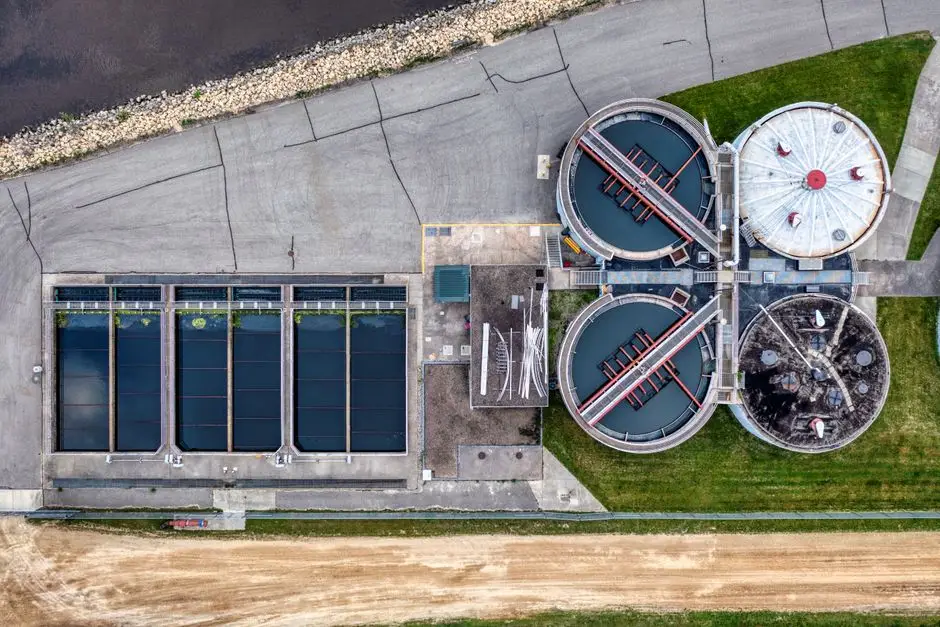
The primary separation unit only matters in the context of the train around it. A standard oily auto-parts train in 2026 runs: bar screen → equalization (with aeration if the influent is septic) → DAF or clarifier → biological or chemical precipitation → polishing filtration → discharge. A battery-cell train is heavier: DAF first to strip emulsified oil and floating cathode-coating fines, then pH adjust plus heavy-metal precipitation, then a high-efficiency lamella clarifier for the metal-bearing floe, then a multi-media filter, and finally carbon or ion exchange for trace Cu, Co, or Ni that the categorical limits will not tolerate.
The EPA Water Engineering Research Laboratory survey of POTW upsets (the work behind the S3 case studies) repeatedly found that engineered polymer addition at the clarifier influent is one of the most common and most effective mitigations for industrial upsets, including at small POTWs under 5 mgd — which describes much of the Madison County collection system. That finding is the engineering case for putting flocculation upstream of any clarifier, not downstream, and for instrumenting it. The same logic applies whether the upstream cell is a stamping line or a cathode-coating line: chemistry first, separation second, polish third.
Frequently Asked Questions
Can a clarifier alone meet 40 CFR 433 oil & grease limits for an EV/auto plant?
Only when the raw O&G is consistently well below 100 mg/L and the oil is free, not emulsified. A typical stamping or water-soluble coolant feed at 200-500 mg/L emulsified O&G will not meet the 40 CFR 433 daily max of 52 mg/L through a clarifier alone; DAF or a chemical emulsion break upstream is required.
Is DAF worth the higher capex for a stamping cell with water-based coolant?
Yes, for any cell where the coolant forms a stable emulsion. Water-soluble synthetic coolants typically produce droplets well below 20 µm once surfactants are active, and a clarifier will simply transmit the oil to the POTW. DAF with engineered chemistry is the unit operation built for that exact droplet range.
What flow rate should a DAF be sized for in a 50 m³/h stamping line?
Size for the peak hourly flow plus the 20-30% saturated recycle, and verify that the contact-zone hydraulic residence time sits in the 15-30 minute band. On a 50 m³/h feed, a contact volume on the order of 15-25 m³ is the typical engineered range.
Does Huntsville Utilities Westside WWTF accept DAF float sludge?
That is a question for the local sewer-use ordinance and the POTW's pretreatment coordinator, not a default assumption. Many POTWs require dewatering to a minimum DS% before acceptance, which is why a downstream plate-and-frame press is standard practice on a DAF float stream.
Can a lamella clarifier replace DAF for a battery cathode-coating line?
No. Cathode coatings create stable colloidal slurries with metal-bearing fines (Li, Ni, Co, Mn) and binder residues that need flotation or precipitation, not just settling. A lamella can be the second stage after DAF and chemical precipitation, but it is not a substitute for the primary separation step.