What Janesville Fabricated Metals Plants Are Putting Down the Drain in 2026
Walk into a Janesville stamping or machining cell on a Tuesday morning and the floor drain sees a stream that no two batches of the same day will look like. Cutting fluids from the CNC lathes carry 1-5% emulsified oil and soap surfactants. Stamping presses drip drawing compound and tramp oil from hydraulic leaks. Parts washers push alkaline cleaner and floating sheen down the trench. Mixed in: aluminum and zinc fines from blanking, iron swarf from grinding, occasional chrome-bearing passivates, and slug loads when a coolant sump dumps or a chip conveyor flushes. Influent oil and grease routinely runs 100-500 mg/L; total suspended solids (TSS) can swing from 200 mg/L on a normal shift to over 2,000 mg/L during a slug event.
Janesville's industrial base is anchored in metal forming, machining, and finishing, with a deep tier-1 supplier network that historically supported GM and Stellantis assembly. That base generates exactly the kind of intermittent, batchy flow that defeats a single-pass primary unit. Most plants discharge to the City of Janesville sanitary sewer under WPDES, with Wisconsin administrative code NR 211 and the federal 40 CFR Part 433 metal finishing categorical pretreatment standards sitting on top of the local limits. The categorical standards set daily maximum limits for lead (0.69 mg/L), copper (4.5 mg/L), nickel (4.1 mg/L), zinc (2.6 mg/L), total chromium (2.77 mg/L), TSS (52 mg/L daily max / 31 mg/L monthly avg), and oil & grease (104 mg/L daily max per 40 CFR 433.102) — numbers that have to be hit under peak load, not just on a good day.
How Dissolved Air Flotation Actually Works
Dissolved air flotation is a three-stage physical separation. Stage one is chemical conditioning: coagulant (typically ferric chloride, alum, or a cationic polymer) neutralizes the surface charge on emulsified oil droplets and colloidal metal fines, then a flocculant polymer bridges them into a pin-floc the bubbles can actually lift. Stage two is the saturator: a side stream of clarified effluent is pressurized to 60-90 psig with dissolved air, holding roughly 40-90 mL of air per liter of water in solution. Stage three is release: the saturated recycle passes through needle valves or a release header at the bottom of the flotation cell, and the pressure drop generates a cloud of 30-50 micron microbubbles (per SigmaDAF/Clearwater, 2026) that attach to the floc and lift it to the surface in under five minutes.
Those 30-50 micron bubbles are the whole reason DAF wins on metalworking streams. They give a high surface-area-to-volume ratio and low rise velocity, so they capture emulsified oil droplets in the 5-50 micron range and low-density metal fines that a 1-2 mm bubble from an induced-air flotation (IAF) unit simply pushes aside. Once the float blanket forms, a paddle skimmer scrapes it to a hopper; heavier settleable grit drops past the bubble curtain and is augured from the bottom of the cell (per SigmaDAF/Clearwater, 2026). Standard builds are 304SS; 316SS or polypropylene upgrades are available for chloride-bearing cutting fluids and low-pH excursions (per SigmaDAF/Clearwater, 2026) — common in machining cells where passivate rinse waters mix with coolant drip. For a step-by-step look at the hydraulics, the DAF process flow diagram walkthrough covers the same stages with piping detail.
How a Conventional or Lamella Clarifier Handles the Same Stream
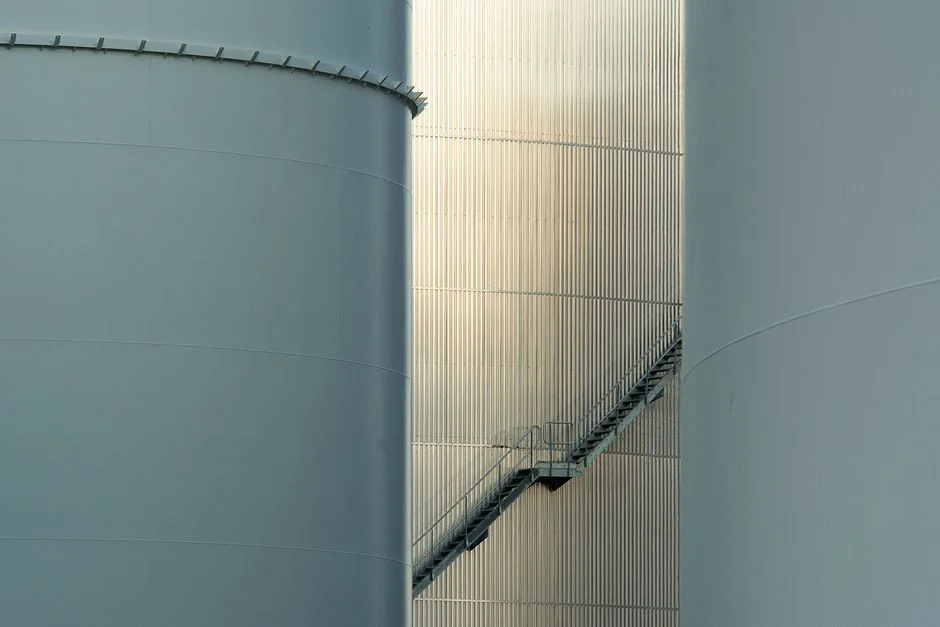
A conventional gravity clarifier is a large rectangular or circular basin operating at a low surface loading rate of roughly 1-2 m/h. Solids settle under Stokes' Law to a sloped floor and are raked to a central hopper; floating scum is caught by a baffle and skimmed. The whole device depends on residence time and quiescent flow — it only removes particles dense and large enough to settle before they reach the overflow weir. For an emulsified oil or sub-50 micron metal-fines stream, that means most of the pollutant load simply rides the overflow to the next unit.
A lamella clarifier, or high-rate sedimentation tank, compresses the same physics into a much smaller footprint by stacking inclined plates at 55-60°. Solids settle onto the underside of the plates, slide down into a sludge hopper, and clarified water moves countercurrent through the plate pack. Surface loading jumps to 20-40 m/h per the HydropureWater high-efficiency lamella clarifier catalog, and sludge recirculation builds a dense floc blanket that improves fine-particle capture versus an empty basin. Chemical demand can drop up to 30% versus a conventional clarifier of equal solids removal (per HydropureWater catalog) because the inclined plates act as a built-in thickening stage.
The honest limitation is the same on both clarifier types: they only remove what settles. Emulsified oil droplets and colloidal metal fines largely pass through. That is why many Janesville plants end up running a hybrid — a lamella clarifier as primary, followed by a smaller DAF as a polish step on the clarifier overflow. The combination lets the lamella do the cheap settleable-solids work and the DAF do the emulsified-oil and fine-fines work without oversizing either unit.
DAF vs Clarifier: Head-to-Head Comparison for Fabricated Metals
This is the decision artifact most engineers came here for. The table below is sized for a fabricated metals stream under 40 CFR 433 categorical limits and assumes properly flocculated feed. CAPEX and OPEX bands are directionally correct for engineered packaged skids shipped to the upper Midwest in 2026; specific pricing belongs in a vendor quote, not this table.
| Parameter | Dissolved Air Flotation (DAF) | Lamella / High-Rate Clarifier |
|---|---|---|
| Typical TSS removal (properly flocculated) | 80-95% (per SigmaDAF/Clearwater, 2026) | 50-75% on settleable solids; lower on colloidal fines |
| Oil & grease / FOG removal | 85-95% (emulsified and free oil both captured) | 30-50% on free oil only; poor on emulsified oil |
| Surface loading rate | ~5-15 m/h hydraulic; recycle ratio 20-50% of forward flow | 20-40 m/h (per HydropureWater catalog) |
| Footprint per m³/h | Larger cell; SigmaDAF COMPACT skid handles ≤66 GPM single skid, modular two-skid above 66 GPM (per SigmaDAF/Clearwater, 2026) | Smallest of the three; inclined plates cut basin area 5-10x vs. conventional |
| CAPEX band (packaged skid, 2026 Midwest) | Moderate to high (saturator, recycle pump, controls) | Low to moderate (no pressurized aeration) |
| OPEX band | Higher (recycle pump energy, polymer, saturator maintenance) | Lower (gravity-driven; minimal polymer; see DAF maintenance cost 2026 OPEX breakdown) |
| Best-fit stream | Emulsified oil, lubricants, FOG, low-density metal fines, slug-loaded flows | High-flow, settleable swarf, low oil & grease (<50 mg/L), minimum chemical demand |
| WPDES / 40 CFR 433 compliance fit | Strong — hits 40 CFR 433.102 oil & grease (104 mg/L daily max) and TSS (52 mg/L daily max) under peak load (per EPA 40 CFR 433) | Adequate for TSS; usually needs a DAF or media filter polish to meet oil & grease limit on metalworking streams |
If the project is a clarifier retrofit or a peak-shaving bridge during a plant shutdown, mobile DAF is the 2026 option. WesTech's mobile dissolved air flotation clarifier ships on a 47'-6" or 51'-7" trailer and can typically be brought online in a single day (per WesTech, 2026) — useful for Janesville plants that need temporary capacity without committing to a permanent install. For a permanent install, the HydropureWater dissolved air flotation system covers 4-300 m³/h across 13 models, and the matching HydropureWater high-efficiency lamella clarifier is the parallel clarifier line for hybrid designs.
Decision Framework: Which One Should Your Janesville Plant Pick in 2026?
Run these four questions against your current influent data — most plants have a reasonable answer after the first two:
- Is influent oil & grease typically >50 mg/L? If yes, DAF. If consistently below 50 mg/L and the oil is free rather than emulsified, a lamella clarifier can carry the load.
- Are emulsified synthetic or semi-synthetic coolants present in the waste stream? If yes, DAF. Emulsified coolants do not break in a gravity clarifier — they simply overflow.
- Is available floor space under 30 m²? If yes, lead with a lamella clarifier (smallest footprint at high flow) and add a small DAF as a polish step.
- Does slug loading exceed 2x design flow on a weekly basis? If yes, a DAF front-end is more forgiving because the hydraulic retention time in the flotation cell is short (3-5 minutes) and the float blanket buffers shock loads better than a quiescent clarifier.
The default for most Janesville fabricated metals lines — stamping, machining, parts washing — is a DAF as the primary, because emulsified oil dominates the stream. The HydropureWater dissolved air flotation system at 4-300 m³/h (13 models) covers everything from a single machining cell to a multi-line plant, paired with an automatic chemical dosing skid sized to the saturator recycle. The exception is a greenfield high-flow line above ~300 m³/h with predominantly settleable swarf and minimal FOG — that case can justify a lamella-first design with no DAF at all, and the capital savings on aeration equipment are real.
Pretreatment, Chemical Dosing, and Sludge Handling Around the Primary
Neither a DAF nor a lamella clarifier operates as a standalone unit. Both must be preceded by pH adjustment (metal finishing streams often need 7-9 to keep metals precipitated and to keep the floc polymer working) and a coagulation/flocculation stage with proper residence time. SigmaDAF and Clearwater note explicitly that chemical conditioning is essential to DAF performance (per SigmaDAF/Clearwater, 2026) — without the right polymer dose, the microbubbles pass through pin-floc and TSS removal collapses.
Pair the chosen primary with an automatic chemical dosing skid for consistent polymer feed under variable flow, and a plate-and-frame sludge filter press downstream — typical fabricated metals float or clarifier sludge runs 2-4% solids and dewateres cleanly to 25-35% cake. When free oil is present (separate from emulsified), an oil-water separator or API interceptor upstream is still required regardless of whether the downstream unit is a DAF or a clarifier; both units assume most free oil has been knocked out upstream. A Midwest transportation equipment pretreatment compliance guide walks through the same pretreatment stack as applied to a related industry.
Sizing Checklist for a 2026 Janesville Project
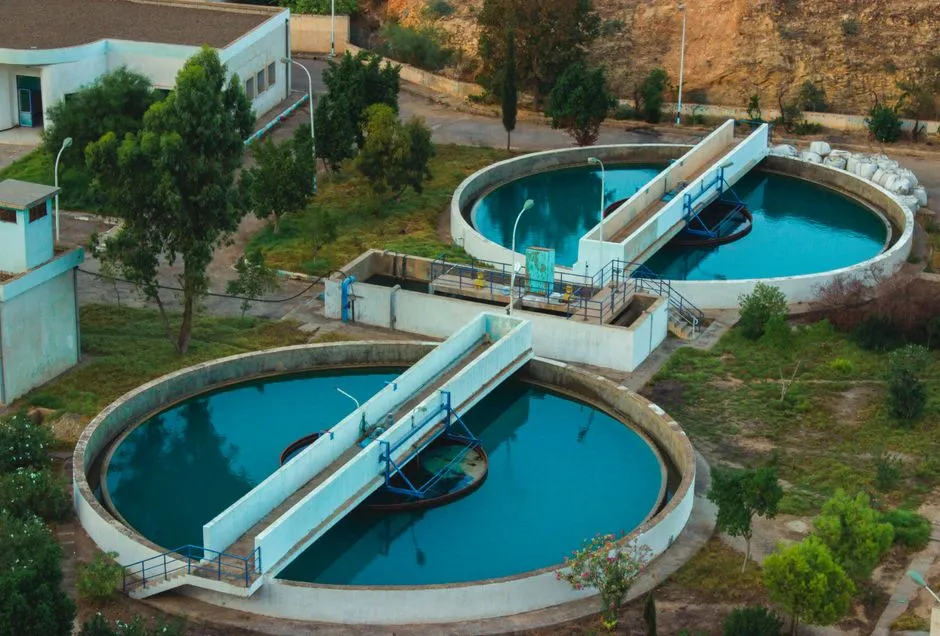
Before talking to a vendor, collect the inputs below and document them in the project file. Engineers who arrive at the first vendor meeting with this list typically cut weeks off the engineering schedule.
| Category | Item | Target / Range |
|---|---|---|
| Inputs (influent characterization) | Average flow | m³/h, weekday production hours |
| Peak / slug flow | m³/h, 95th percentile and max instantaneous | |
| TSS | mg/L, range across shift | |
| Oil & grease | mg/L, range across shift | |
| pH | range, including slug events | |
| Temperature | °F (winter low for outdoor equipment) | |
| Metals profile (40 CFR 433) | Pb, Cu, Ni, Zn, total Cr in mg/L | |
| Outputs (sizing targets) | DAF saturator recycle | 20-50% of forward flow (per SigmaDAF/Clearwater, 2026) |
| DAF surface loading | ~5-15 m/h | |
| Lamella surface loading | 20-40 m/h (per HydropureWater catalog) | |
| Skid selection | SigmaDAF COMPACT ≤66 GPM single skid, modular two-skid above 66 GPM (per SigmaDAF/Clearwater, 2026); HydropureWater DAF covers 4-300 m³/h across 13 models (per HydropureWater catalog) | |
| Procurement (2026 Midwest) | Vendor lead time | Engineered skids remain tight — engage early with engineering submittals and jar testing to protect schedule |
One practical note: the single biggest schedule saver in 2026 is the jar test. Run coagulant and flocculant screens on real plant water before locking in a model, not after. Vendors that offer in-house jar testing (SigmaDAF/Clearwater, WesTech, HydropureWater) can often pre-size the saturator and plate pack accurately from those results, and that cuts a full round of submittal revisions downstream.
Frequently Asked Questions
What is the typical TSS removal efficiency of a DAF in metalworking?
On a properly flocculated fabricated metals stream, DAF routinely delivers 80-95% TSS removal (per SigmaDAF/Clearwater, 2026), driven by the 30-50 micron microbubble cloud and effective coagulant/flocculant conditioning. A well-designed conventional or lamella clarifier on the same feed typically lands at 50-75% on settleable solids and less on colloidal fines, which is the main reason DAF dominates metalworking primary applications.
Can a lamella clarifier replace a DAF for fabricated metals?
Only when oil and grease is consistently below ~50 mg/L, the oil is free rather than emulsified, and the TSS is settleable in the residence time. On most stamping and machining streams those conditions don't hold, so the lower-risk path is a hybrid: lamella clarifier as primary, small DAF as a polish step on the clarifier overflow.
How do Wisconsin / WPDES pretreatment limits affect equipment selection?
40 CFR Part 433 metal finishing categorical standards set daily maximum limits for lead, copper, nickel, zinc, total chromium, TSS, and oil and grease that the primary unit must hit under peak load, not just average. In practice, the oil and grease limit (104 mg/L daily max per 40 CFR 433.102) and the TSS limit (52 mg/L daily max per 40 CFR 433.102) are the two parameters that drive most Janesville plants toward DAF rather than a clarifier-only train.
What footprint should a Janesville plant expect for a 50 m³/h DAF?
A rough envelope for a 50 m³/h DAF is 3-4 m wide by 6-8 m long, plus room for the chemical dosing skids and the float/sludge hopper. Above 66 GPM (about 15 m³/h), the SigmaDAF COMPACT design goes modular two-skid (per SigmaDAF/Clearwater, 2026). The HydropureWater DAF range of 4-300 m³/h across 13 models (per HydropureWater catalog) covers the same envelope for permanent installs.
Is a mobile DAF viable for short-term Janesville projects?
Yes. WesTech's mobile DAF ships on a 47'-6" or 51'-7" trailer and can be brought online in roughly a day (per WesTech, 2026), making it viable for emergency response, peak-shaving during a clarifier retrofit, or temporary capacity while a permanent skid is being built. Permanent equipment still wins on OPEX and integration for steady-state operation.