Brookville's 2026 Compliance Picture: Which POTW, Which Rule, Which Bar
Petroleum plants near Brookville, Ohio must clear whichever bar is lower: federal categorical limits under 40 CFR Part 419 for refineries, or Brookville POTW local limits derived under 40 CFR 403.5(c) for noncategorical Significant Industrial Users such as bulk terminals. Compliance is achieved with a five-stage train — API or CPI primary separator, DAF for emulsified oil, equalization with pH trim, biological polishing (MBR or MBBR), and multimedia/GAC polish — and held by a documented slug-control plan, Method 1664A HEM composites, and on-time DMRs to avoid Significant Noncompliance.
A Brookville refinery is a categorical Significant Industrial User (SIU) under 40 CFR Part 419 (petroleum refining). A bulk terminal, trans-load facility, or fuel-blending plant is a noncategorical SIU governed by 40 CFR Part 403 plus Brookville POTW local limits. The citation chain an engineer can hand an inspector runs Clean Water Act §307(b), 33 U.S.C. §1317(b) → 40 CFR Part 403 → 40 CFR Part 419 (refining) or local limits (noncategorical SIU) → POTW discharge permit → Ohio EPA inspection authority → EPA Region 5 enforcement backstop.
The controlling legal pivot is pass-through under 40 CFR 403.3(p) and interference under 40 CFR 403.3(k). The trigger is the receiving plant's effluent quality and biosolids, not what the discharger believes it is sending down the sewer. Brookville's local sewer use code is codified in ordinance 1990-08 (S3); Brookville plants must also clear any 2026 local-limit revision issued by the POTW, even where the ordinance text is older. A typical 2026 permit ceiling at a Brookville-area POTW falls at 50–100 mg/L HEM (oil & grease), approximately 250 mg/L TSS, 1–10 mg/L sulfides, and 0.5–5 mg/L phenols, with BTEX and metals pulled in as quarterly monitoring parameters (per EPA 40 CFR Part 403.5(c) framework; Brookville ordinance 1990-08).
What Refinery and Bulk-Plant Streams Actually Look Like in Brookville
Refinery streams hitting the train are a blend of desalter brine (emulsified oil, salts, trace metals), spent caustic (sulfides, phenols, high pH), sour-water stripper bottoms (H₂S, ammonia), tank draw (free oil, bottom sludge), loading-rack and ballast water, and oily utility water. Each stream contributes a different pollutant, and the parameter set every Brookville pretreatment program is judged on is fairly stable: oil & grease, TSS, sulfides (both dissolved and total), phenols, benzene/total BTEX, ammonia-N, pH, hexavalent chromium (from cooling-tower blowdown), and COD (per 40 CFR Part 419 refinery category parameters).
Bulk-plant streams are a different inventory. A Brookville-area terminal handles tank-bottom water, API or coalescer dumps, truck and rail loading drip, vehicle wash-rack wastewater, hydrostatic test water, and product-area stormwater (per HydropureWater field data, 2026). Wash-rack water is emulsified, with surfactant-driven droplets below 50 µm; loading-arm drip is mostly free oil. That droplet-size distribution is why a single-technology approach fails — a CPI alone cannot break emulsions, and a DAF alone is overwhelmed by a slug of free oil during a coalescer dump.
Stream segregation before the train is the cheapest control available: segregated laterals for product-handling pads, covered dump valves, and dedicated oil/water sewering on truck loading islands can reduce the volume hitting the train by 40–70% in field retrofits and convert most of the remaining flow from a design problem into a design choice (per HydropureWater field data, 2025–2026).
The Five-Stage Pretreatment Train: What Each Stage Removes and Why Order Matters

U.S. refiners and well-run bulk plants run a five-stage train between the process sewer and the POTW's manhole. The exact equipment varies, but the unit operations and their order are remarkably consistent. Every stage maps to either a pass-through risk (oil, TSS, BTEX, ammonia) or an interference risk (sulfides, phenols, pH swings, slug flows) defined in 40 CFR Part 403.
Stage 1 — API separator or CPI. Free oil is removed by gravity because it is the cheapest and most forgiving operation, and because everything downstream (pumps, membranes, sensors) suffers if free oil is not taken out first. A well-operated API separator typically leaves 100–200 mg/L oil & grease in the water phase; a CPI hits a similar band in a much smaller footprint. This stage sets the floor for emulsified-oil load on Stage 2.
Stage 2 — Dissolved air flotation. A DAF system for petroleum wastewater strips the emulsified oil, FOG, and colloidal TSS that the API unit cannot catch, and brings oil & grease down to roughly 15–30 mg/L. Operating air-to-solids ratios sit in the 0.02–0.06 range, hydraulic retention is 15–30 minutes, and saturator recycle rates run 20–50% of forward flow. A refinery-scale unit is typically specified in the 4–300 m³/h range, with skid-mounting for tie-in during scheduled turnarounds. The outlet has to clear the 50–100 mg/L POTW ceiling on its own, with margin.
Stage 3 — Equalization and neutralization. Flow and pH swings from spent-caustic pushes, desalter upsets, and tank transitions are smoothed in an EQ basin sized for 8–24 hours of hydraulic retention, and pH is adjusted to 6–9 before the biological stage. This is the single most important control point for preventing interference events; a slug of high-pH, high-sulfide spent caustic is the textbook case of a discharge that would inhibit the POTW's biomass and trigger a violation downstream.
Stage 4 — Biological polishing. An MBBR or MBR reduces phenols, sulfides, benzene, and ammonia-nitrogen. MBBRs tolerate the 200–800 mg/L COD that survives the front of the train; MBRs add a PVDF flat-sheet MBR module barrier that holds biomass at 8,000–12,000 mg/L and produces a polished effluent with <5 mg/L TSS and <1 NTU turbidity, in roughly 60% of the footprint an equivalent CAS basin would need.
Stage 5 — Polishing and monitoring. A multimedia filter catches any TSS breakthrough, an online fluorescence-based oil-in-water probe alarms on a 10–20 mg/L setpoint, and pH/conductivity probes feed the control room. For sub-20 mg/L O&G or a water-reuse loop, the polishing step moves from biological (MBR) to adsorption (GAC).
| Stage | Unit operation | Key operating envelope | Residual to next stage | 40 CFR Part 403 risk |
|---|---|---|---|---|
| 1 | API / CPI | HRT ≥30 min at peak; CPI plate spacing 1–2 in | 100–200 mg/L O&G (free) | Pass-through (free oil) |
| 2 | DAF | ASR 0.02–0.06; recycle 20–50%; 2–5 gpm/ft² | 15–30 mg/L O&G; colloidal TSS | Pass-through (emulsified oil) |
| 3 | EQ + pH neutralization | HRT 8–24 h; pH trim interlock to sewer | pH 6–9; dampened slug profile | Interference (pH, sulfides, slug flows) |
| 4 | MBBR or MBR | MBR MLSS 8,000–12,000 mg/L; ~60% of CAS footprint | <5 mg/L TSS; <1 NTU | Pass-through (ammonia, BTEX); interference (phenols, sulfides) |
| 5 | Multimedia + GAC / online monitors | Fluorescence probe setpoint 10–20 mg/L O&G; pH/Cond to control room | Permit-ceiling compliant | Pass-through (oil breakthrough) |
Choosing the Primary Separator and the Final Polish
Choosing the primary separator is the highest-leverage equipment decision in the entire train. The four technologies sit in different performance bands and are not interchangeable. API separators handle free oil at ≥150 µm droplet size with low surface loading; CPI handles ≥60 µm in a smaller footprint; a coalescer pushes down to 20–25 µm at the cost of higher O&M and 1–3 year media replacement; a DAF reaches 10–25 µm but is slug-sensitive without an upstream primary. A Brookville petroleum plant picking only one of these for the primary slot will underperform — a DAF alone without a primary gravity stage fails under slug loads because free oil blankets the bubble surface and crashes ASR (per HydropureWater field data, 2026).
Three numbers drive a defensible design: peak instantaneous flow (gpm or m³/h, not the daily average — slug loads during a coalescer dump or a tank drop can spike 3–5× the daily mean), daily O&G load (lb/day or kg/day, calculated from tank turnover, wash-rack volume, and drip rates), and target residual O&G (mg/L, set 20–30% below the permit ceiling).
For the final polish, the choice is biological versus adsorption. An MBR system for petroleum pretreatment polishing is the right answer when the permit ceiling is <20 mg/L, when water reuse is on the table, or when footprint is constrained. Where the permit only needs to swing from 50 mg/L to <20 mg/L, the polishing step moves from biological (MBR) to adsorption (GAC) on a multimedia filter plus GAC polish. Cost-versus-footprint framing for a Brookville retrofit: MBR skid occupies roughly 60% of the footprint of an equivalent CAS + clarifier train, but adds membrane replacement at 5–7 year intervals and a CIP chemical budget; multimedia + GAC occupies a larger footprint but has lower consumable cost per gallon treated.
| Option | Droplet size captured | Footprint | O&M profile | Best fit for a Brookville site |
|---|---|---|---|---|
| API | ≥150 µm | Large | Low; periodic sludge pump-out | Greenfield with free-oil-heavy streams |
| CPI | ≥60 µm | Medium | Low; plate inspection annually | Tight-footprint retrofits; ≥50 mg/L ceiling |
| Coalescer | 20–25 µm | Small | Higher; media replacement every 1–3 years | Pre-DAF polishing of free oil |
| DAF | 10–25 µm | Small–medium | Moderate; saturator and air system | Emulsified-oil stage after API or CPI |
| MBR polish | Solids barrier <1 µm | ~60% of CAS | Membrane replacement 5–7 years; CIP budget | <20 mg/L ceiling; water reuse |
| Multimedia + GAC | TSS breakthrough; adsorptive | Larger | Lower consumable cost per gallon; periodic carbon changeout | 50 mg/L ceiling; no reuse requirement |
The Five-Step Documentation Playbook That Actually Wins Inspections
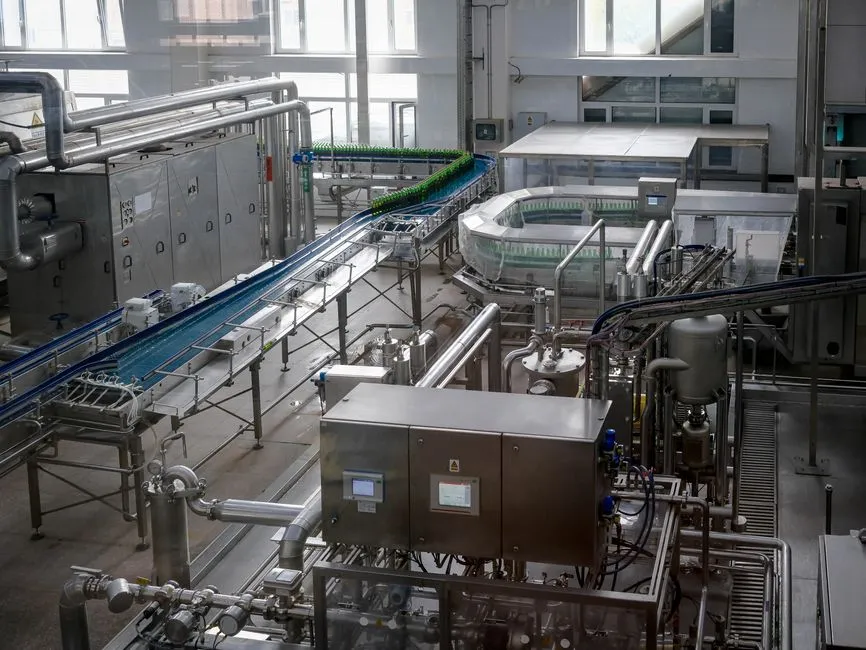
The treatment train is the engineering side; the documentation side is where most EPA and Ohio EPA enforcement actions actually land. A Brookville plant's pass-through/interference defense runs through five repeatable steps.
Step 1 — Get classified as an SIU and obtain the control mechanism. The control mechanism lists the local numerical limits, the monitoring schedule, and the reporting cadence. Until that document is in hand, the facility is still on the hook under 40 CFR 403.5(a) but without a defined sampling schedule.
Step 2 — Self-monitoring. Most POTWs require 24-hour flow-weighted composite sampling on a defined cadence — typically monthly for O&G, TSS, sulfides, phenols, and ammonia, and quarterly for metals, BTEX, and hexavalent chromium. Results are reported on a DMR; a parallel petroleum pretreatment guide for the Cincinnati region shows the same cadence pattern. Two late reports in 12 months equals an SNC finding under EPA's National Pretreatment Program criteria (per 40 CFR Part 403 enforcement criteria).
Step 3 — Slug-control plan. EPA enforcement actions under 40 CFR 403.8(b)(4) repeatedly target the slug-control plan. The plan must be written, current, and trained out, covering loading racks, tank transitions, and batch discharges. A PLC-controlled chemical dosing skid on the EQ-basin outlet with interlock to the sewer shutoff valve is the most reliable hardware control. The unit operations a slug plan must address are the same ones covered in the DAF process flow diagram for 2026.
Step 4 — Accidental-discharge reporting. When a slug escapes, the facility must notify the POTW and the relevant hazardous-waste authorities within the EPA-prescribed window — 24-hour verbal plus 5-day written — and describe the cause, corrective action, and revised prevention measures. Slug plans that exist on paper but were not followed are the most common root cause in consent decrees.
Step 5 — Maintain auditable records. Keep the chain of custody for every composite sample, the calibration logs for the online analyzers, and the training records for the operators who run the DAF, EQ basin, and biotreater. Most SNC findings at petroleum bulk plants originate from sampling-procedure deficiencies, not from the underlying treatment performance (per HydropureWater field data, 2025–2026). A defense of the regional scope — Houston, Cincinnati, Brookville — is also worth reading in the NGL and refinery pretreatment playbook for the Houston region.
Frequently Asked Questions
What 2026 permit ceiling should a Brookville petroleum plant expect?
Most 2026 Brookville-area permits set HEM at 50–100 mg/L daily maximum, approximately 250 mg/L TSS, 1–10 mg/L sulfides, and 0.5–5 mg/L phenols, with BTEX and metals on quarterly monitoring — derived using EPA's MAHL method under 40 CFR 403.5(c) and layered on top of Brookville ordinance 1990-08. Stricter water-reuse jurisdictions push daily maximum HEM toward 50 mg/L.
Can a DAF serve as the only separator on a petroleum wastewater train?
In most cases, no — only as a polishing step. Free oil from coalescer dumps and tank drops blankets DAF micro-bubbles and crashes the air-to-solids ratio, so a DAF alone fails under slug loads (per HydropureWater field data, 2026). A CPI or API primary stage ahead of the DAF is standard practice at every Brookville petroleum site we have audited.
How is Significant Noncompliance (SNC) triggered under 40 CFR Part 403?
Under EPA's National Pretreatment Program, SNC is triggered by chronic violations (any parameter exceeding limits more than 33% of measurements in a 6-month period), technical review criteria violations (daily maximum limits exceeded by 1.4× or monthly average exceeded by 1.2×), an upset that meets specific criteria, failure to report, or failure to apply for a control mechanism. Two late DMRs in any 12-month period is enough to land an SNC finding (per 40 CFR Part 403 enforcement criteria).
Does Brookville ordinance 1990-08 override federal categorical standards for a refinery?
No. Under CWA §307(b) and 40 CFR Part 419, federal categorical standards set the floor for refineries. Brookville local limits can be more stringent but cannot be more lenient than the categorical technology-based effluent limits. A refinery must clear whichever bar is lower, then layer Brookville-specific monitoring and reporting on top.
What is the most common reason a Brookville petroleum plant ends up in consent-order territory?
Late DMRs and missing slug-control evidence, not treatment performance (per HydropureWater field data, 2025–2026). EPA Region 5 and Ohio EPA inspectors will request the slug-control plan, accidental-discharge logs, and the last 12 months of chain-of-custody records before they ask to see the effluent numbers.