Why Fall River Plastics and Rubber Plants Face Strict Pretreatment
Plastics and rubber plants near Fall River, MA meet pretreatment limits by treating wastewater to the categorical standards in 40 CFR Part 433 (plastics) and 40 CFR Part 427 (rubber) before discharge to the Fall River Regional Wastewater Treatment Facility, a 106 MGD secondary plant on Bay Street that releases effluent to Mount Hope Bay under an NPDES permit enforced by EPA Region 1 and MassDEP. A typical train combines screening, equalization, dissolved air flotation, biological treatment, and solids handling.
The regulatory stack has three layers, and a discharge that satisfies only the bottom one will still be a violation. The federal floor is the categorical standards: 40 CFR Part 433 governs plastics processing and forming, and 40 CFR Part 427 covers rubber manufacturing across subparts A–E (tire, latex, mechanical goods, footwear, and miscellaneous). MassDEP then layers state-level enforcement on top of any authorized pretreatment program, and at the top sits the Fall River POTW's local limits — local limits that EPA Region 1 and MassDEP expect to be at least as stringent as the federal floor, and routinely stricter where the receiving plant's secondary biology or NPDES permit is at risk (per EPA National Pretreatment Program guidance, 2024).
Context matters: the Fall River WWTF sits on a combined sewer system, and the City of Fall River signed a five-year Administrative Order on Consent with EPA on 2021-12 committing to a $126.8 M integrated infrastructure plan through 2025 (S2, 2021-12). The City has already spent more than $200 M on CSO controls including a 38-million-gallon storage tunnel. With CSO reduction now a federal enforcement priority, the POTW has a strong incentive to push industrial loaders — including plastics and rubber plants — to remove as much contaminant mass as possible upstream. The facility explicitly receives "industrial waste from City manufacturing plants" alongside domestic and commercial flows, and treated effluent discharges to Mount Hope Bay under "stringent effluent discharge limits" defined in the City's NPDES permit (S3).
Plastics and Rubber Wastewater: What's Actually in the Stream
Categorical standards are written against a specific influent profile, and a treatment train only works if it is sized for the real contaminants leaving the plant, not the textbook ones. Rubber-manufacturing wastewater is a tough stream: it carries suspended latex and coagulum fines from emulsion polymerization washouts, zinc oxide and zinc dithiocarbamate residues from cure baths, carbon black fines from compounding, and free oil and grease from mold-release operations. Typical raw-stream concentrations run BOD 800–3,000 mg/L, TSS 500–2,500 mg/L, oil and grease 100–500 mg/L, with elevated TDS where coagulation and salt-stabilized baths are in play. Zinc is the most common local-limit trigger because it is toxic to activated sludge at low concentrations and to the WWTF's downstream NPDES permit.
Plastics-processing wastewater looks different but is equally heterogeneous. Hot-melt extrusion and blown-film lines release polymer pellets, oligomers, and gelled fines; calendaring and coating lines contribute plasticizers such as dioctyl phthalate (DOP) and diethylhexyl phthalate (DEHP); cleaning operations between product changeovers add surfactants, glycol ethers, and trace solvents. Suspended solids typically run 200–1,500 mg/L, with BOD 200–1,500 mg/L depending on whether organic carriers or cleaning chemistries dominate. The combination of floatable pellets, emulsified oils, and high-temperature batch discharges is what makes staged treatment — not a single unit — the only realistic path.
The categorical rule of thumb: 40 CFR Part 433 covers plastics molding, forming, and cleaning operations, while 40 CFR Part 427 subparts A–E split rubber manufacturing into tire, latex, mechanical goods, footwear, and miscellaneous subcategories, each with its own daily-maximum and 30-day-average limits. Synthetic-rubber and thermoplastic-elastomer producers in the Fall River industrial base — textile-rubber composites, footwear, industrial hose — commonly fall under the rubber-tire subcategory and should confirm the subcategory assignment with the control authority before sizing equipment (per 40 CFR Part 427 subpart structure).
The Pretreatment Train That Satisfies Fall River POTW
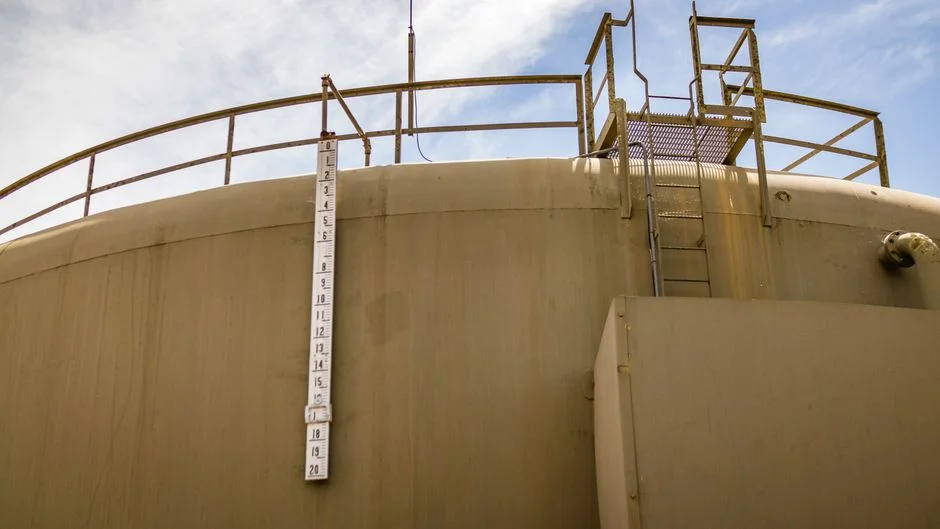
The train below is the order most local POTWs — including Fall River — expect to see on a process flow diagram because each stage protects the next, and each stage has a specific limit it is responsible for hitting.
- Mechanical screening. A rotary mechanical bar screen (typically 2–6 mm aperture) protects downstream pumps and DAF nozzles from plastic pellets, rags, latex coagulum, and large debris. Screenings are dewatered and containerized for solid-waste disposal.
- Equalization. A surge or buffer tank with HRT 8–24 h dampens BOD, pH, and temperature swings from batch washouts and cure-line drains. Without EQ, a single slug of spent cleaning solution can blow through the DAF and shock the biological stage.
- Primary clarification / DAF. A dissolved air flotation system removes free oil, grease, and floatable plastic fines; this is the workhorse for both rubber and plastics streams, with typical capacity range 4–300 m³/h. Coagulant (typically alum or PAC) and flocculant (cationic polyacrylamide, 0.5–3 mg/L) are dosed upstream. DAF typically removes 60–90% of oil and grease and 50–80% of TSS before biology.
- Biological treatment. An MBR membrane bioreactor or conventional activated-sludge aeration basin removes soluble BOD/COD. MBR produces a <1 μm filtrate, achieving TSS < 5 mg/L and a footprint 30–50% smaller than CAS — useful for tight industrial sites in the Fall River urban-industrial corridor.
- Polishing and disinfection. A high-efficiency sedimentation tank (lamella clarifier) catches biological floc carryover, and a chlorine dioxide generator handles residual color and pathogens. Final pH is trimmed to 6–9 before discharge to the POTW sewer.
- Solids handling. Side-stream DAF float and waste-activated sludge are thickened and dewatered with a plate and frame filter press to 25–35% dry solids before landfill disposal, consistent with the Fall River WWTF's own sludge-to-landfill path (S3).
| Stage | Equipment | Target Removal | Defensible Effluent to Next Stage |
|---|---|---|---|
| Screening | Rotary bar screen, 2–6 mm | Solids > 6 mm | No gross solids |
| Equalization | EQ tank, HRT 8–24 h | Flow / pH / BOD dampening | BOD swing ± 15% |
| DAF | DAF unit, 4–300 m³/h | 60–90% O&G; 50–80% TSS | O&G < 30 mg/L, TSS < 80 mg/L |
| Biological | MBR or CAS | 90–98% soluble BOD | BOD < 30 mg/L, COD < 150 mg/L |
| Polishing | Lamella + ClO₂ | TSS polish, color, pathogens | TSS < 10 mg/L, pH 6–9 |
| Solids | Plate and frame filter press | Sludge to 25–35% DS | Cake to landfill |
For plants that already run a clarifier and want to know whether to upgrade, the same selection logic that applies to chemical sites holds — see the DAF vs clarifier selection guide for the throughput-versus-emulsion trade-off.
Categorical Standards and Effluent Limits You Must Hit
Equipment is sized to a number. The numbers below come from the federal categorical standards and from how POTWs typically layer local limits on top. Confirm the active values with the Fall River pretreatment coordinator before commissioning, because the POTW can impose local limits stricter than the federal floor where its secondary treatment or NPDES permit is at risk (per 40 CFR 403.5, per EPA National Pretreatment Program, 2024).
| Parameter | 40 CFR Part 433 (Plastics) — Daily Max / 30-Day Avg | 40 CFR Part 427 (Rubber) — Subcategory-Dependent | Typical POTW Local Limit |
|---|---|---|---|
| BOD₅ | 385 mg/L / 197 mg/L | 50–250 mg/L (varies by subpart) | ≤ 250 mg/L (rubber); ≤ 300 mg/L (plastics) |
| TSS | 300 mg/L / 113 mg/L | 30–150 mg/L | ≤ 200 mg/L |
| Oil & Grease | 104 mg/L / 26 mg/L | 10–50 mg/L | ≤ 50 mg/L |
| pH | 6.0–9.0 | 6.0–9.0 | 6.0–9.0 |
| Zinc (rubber) | — | 1.0–3.0 mg/L (Tire, Mechanical) | ≤ 1.0 mg/L (frequent local trigger) |
For a plastics plant, 40 CFR Part 433 sets the daily-maximum BOD at 385 mg/L and 30-day average at 197 mg/L — equipment must be sized so that daily variability does not push a single grab above 385 mg/L. For a rubber plant, the right subpart matters: 40 CFR Part 427 subpart A (tire) and subpart D (footwear) carry different BOD and zinc limits, and the control authority will assign the subcategory based on SIC code and process description. Zinc is the parameter most likely to trigger a slug-control plan at a rubber plant, and most POTWs run zinc limits near 1 mg/L because of its impact on activated-sludge ecology. The Fall River WWTF's NPDES permit defines the receiving-water-quality envelope that the POTW must protect, and industrial local limits flow from that envelope (S3).
Sampling, Reporting, and POTW Coordination
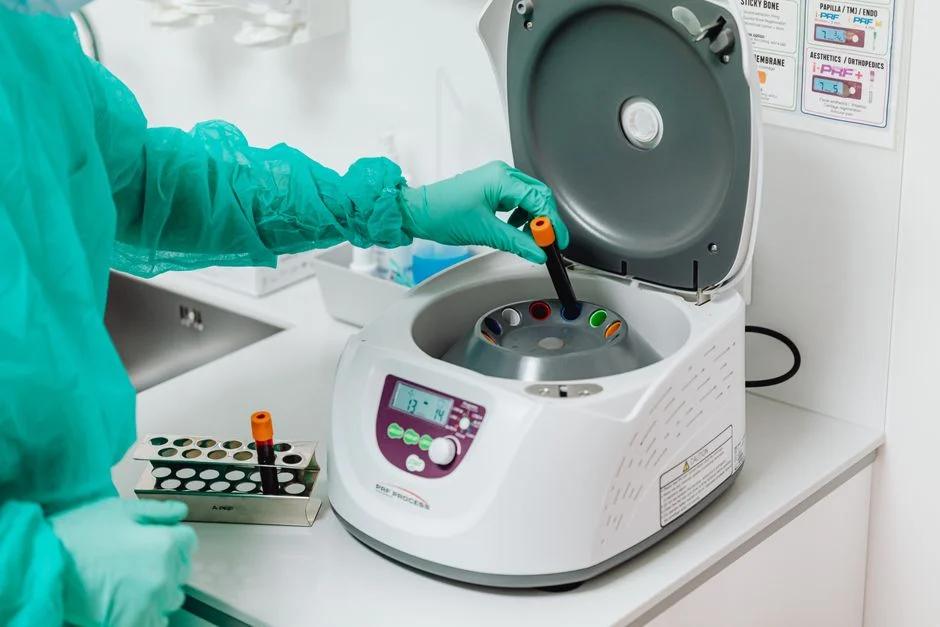
Once the equipment is installed, the local pretreatment program takes over. Under 40 CFR 403.12, a new industrial user submits a Baseline Monitoring Report (BMR) before the first discharge, a 90-day compliance report within 90 days of the BMR deadline, and then semi-annual Self-Monitoring Reports (SMRs) for the life of the discharge. The BMR describes each regulated process, expected flows, and expected pollutant concentrations; the SMRs report actual results on accredited-lab chain-of-custody forms. Standard methods: BOD₅ by EPA 5210B, TSS by 2540D, oil and grease by 1664 (HEM, silica-gel), and zinc by 200.8 (ICP-MS). 24-hour flow-proportional composites are required for BOD, TSS, and metals; grabs are acceptable for pH and temperature (per EPA 600-series methods, per 40 CFR 403.12(g)).
Slug-control plans are required when a process change could push any single parameter past 5× the daily-maximum limit, a frequent risk for rubber-batch operations where one bad washout can release a multi-kilogram slug of zinc or solvent. A defensible slug plan inventories every chemical above threshold quantities, defines maximum possible concentrations, lists the sensors and automatic diversion valves that route a slug to containment, and names the 24-hour contact. Submit the slug plan with the BMR; revise it whenever a new chemical enters the facility. For guidance on keeping the resulting system reliable after installation, see predictive maintenance for pretreatment systems; the same approach applies to plastics and rubber plants. A useful parallel for plants running mixed chemical lines is the chemical-plant pretreatment compliance workflow, which follows the same BMR → 90-day → SMR cadence under 40 CFR 403.12.
Frequently Asked Questions
What is the receiving POTW for plastics and rubber plants in Fall River, MA?
The receiving POTW is the Fall River Regional Wastewater Treatment Facility on Bay Street, a 106 MGD secondary plant that discharges to Mount Hope Bay under an NPDES permit enforced by EPA Region 1 and MassDEP, and serves Fall River plus portions of Westport, Freetown, and Tiverton, RI (S3).
Which federal categorical standards apply to plastics and rubber manufacturers?
Plastics processing and forming are regulated under 40 CFR Part 433 (daily-max BOD 385 mg/L, TSS 300 mg/L, O&G 104 mg/L), and rubber manufacturing falls under 40 CFR Part 427 subparts A–E, with subcategory-specific limits for tire, latex, mechanical goods, footwear, and miscellaneous operations.
What treatment stages does a Fall River plastics or rubber plant typically need?
The defensible train is screening → equalization (HRT 8–24 h) → DAF for oil, grease, and floatable fines → biological treatment (MBR or CAS) → polishing lamella clarifier and chlorine dioxide disinfection, with side-stream sludge dewatered by plate-and-frame filter press to 25–35% dry solids.
When is a slug-control plan required before discharging to the POTW?
A slug-control plan is required when a process change could push any single pollutant above five times its daily-maximum categorical limit — a routine risk at rubber-batch facilities where zinc or solvent slugs can release in a single washout, per 40 CFR 403.8(f).