What Changes at Deal Signing in 2026
A 2026 acquisition of a Coca-Cola system plant in Vietnam triggers three stacked wastewater compliance obligations that all attach at signing, not at the next permit renewal: (1) Vietnamese national and provincial law, with QCVN 40:2011/BTNMT industrial discharge limits administered by MONRE (now restructured under the Ministry of Agriculture and Environment, MoAE, since 2025) and QCVN 28:2010/BTNMT receiving-water standards under the 2023 Law on Water Resources (Law 28/2023/QH15); (2) Coca-Cola's corporate KORE requirements, anchored to the 2035 environmental goals announced 2024-12-02; and (3) any Alliance for Water Stewardship (AWS) Standard v2.0 site obligations already attached to the target. Passing the QCVN permit test is necessary but not sufficient — the corporate layer adds replenishment, water-use ratio, and packaging-recovery obligations that flow into the new plant's first 12-month public sustainability report.
Scale matters: the Coca-Cola system comprises more than 200 bottling partners across roughly 950 production facilities, and approximately 720 of those facilities were evaluated using the WRI Aqueduct 4.0 tool to identify the 200+ high-risk locations targeted for 100% water replenishment by 2035 (per Coca-Cola 2024-12-02 release). A Vietnam beverage or concentrates site is almost always inside that high-risk perimeter, so the buyer's compliance budget is set by corporate replenishment obligations, not just by local effluent ceilings. The 2024-12-02 release also explicitly excludes acquired businesses — BODYARMOR, CHI, Costa, doğadan, fairlife, innocent — from the 1.5°C emissions goal, signalling a staged integration model the deal team should mirror in its 100-day plan. Coca-Cola Vietnam is a founding member of PRO Vietnam, so the packaging layer is already institutionalised; the gap is on the industrial wastewater side, where permit transfer, KORE metering, and replenishment accounting all start fresh at closing.
| Compliance Layer | Governing Instrument | Administers | Attaches At |
|---|---|---|---|
| Vietnam national / provincial | QCVN 40:2011/BTNMT; QCVN 28:2010/BTNMT; Law 28/2023/QH15 | MoAE / provincial DoNRE | SPA signing + permit transfer |
| Coca-Cola corporate | KORE; 2035 water replenishment (2024-12-02 release); World Without Waste 2030 | The Coca-Cola Company sustainability office | Closing (12-month public reporting cycle) |
| Site-specific stewardship | AWS Standard v2.0 (if already certified) | AWS regional certifier | Pre-existing site obligation transfers |
Vietnam's National Wastewater Framework for Beverage Plants
The deal team and ETP engineer need to walk through three QCVN technical regulations and one organic law to plan permit timelines and lead times against closing. QCVN 40:2011/BTNMT is the national industrial discharge standard, with COD, BOD, TSS, pH, oil & grease, total nitrogen, and total phosphorus ceilings that apply to every beverage plant effluent stream. QCVN 28:2010/BTNMT is the receiving-water quality standard — Type A for waters used for domestic abstraction or aquaculture, Type B for irrigation or navigation — and the receiving-water classification drives the stricter limit applied at the discharge point. QCVN 14:2008/BTNMT covers domestic wastewater and applies separately if the plant runs a staff canteen or on-site dormitory, which is typical for Vietnam bottling sites.
The 2023 Law on Water Resources (Law 28/2023/QH15) replaced the 2012 version. It expanded groundwater abstraction licensing and added wastewater reuse provisions that are directly relevant to KORE replenishment accounting — a treated effluent stream reused in CIP or cooling can be counted toward the water-use ratio numerator if the metering is set up correctly at closing. The jurisdictional split matters: MoAE holds national water quality authority, provincial Departments of Natural Resources and Environment (DoNRE) issue and renew discharge permits, and MoH retains worker-safety and canteen-effluent jurisdiction. Permit transfer at closing typically takes 60–90 days through the provincial DoNRE; lead time should be modelled in the SPA conditions precedent.
| Parameter | QCVN 40:2011/BTNMT Limit (industrial discharge) | Typical Beverage Plant Influent | Removal Target |
|---|---|---|---|
| pH | 6.0–9.0 | 3–11 (batch CIP excursions) | Equalization + pH correction |
| BOD₅ | ≤ 50 mg/L | 800–2,500 mg/L | ≥ 98% across A/O + MBR |
| COD | ≤ 150 mg/L | 1,500–4,000 mg/L | ≥ 96% across biological train |
| TSS | ≤ 100 mg/L | 200–600 mg/L | DAF + MBR solids capture |
| Oil & grease | ≤ 10 mg/L | 50–300 mg/L | DAF float removal > 90% |
| Total nitrogen | ≤ 40 mg/L | 20–80 mg/L | Anoxic zone denitrification |
| Total phosphorus | ≤ 6 mg/L | 5–25 mg/L | Biological + chemical precipitation |
Coca-Cola KORE and World Without Waste Layers
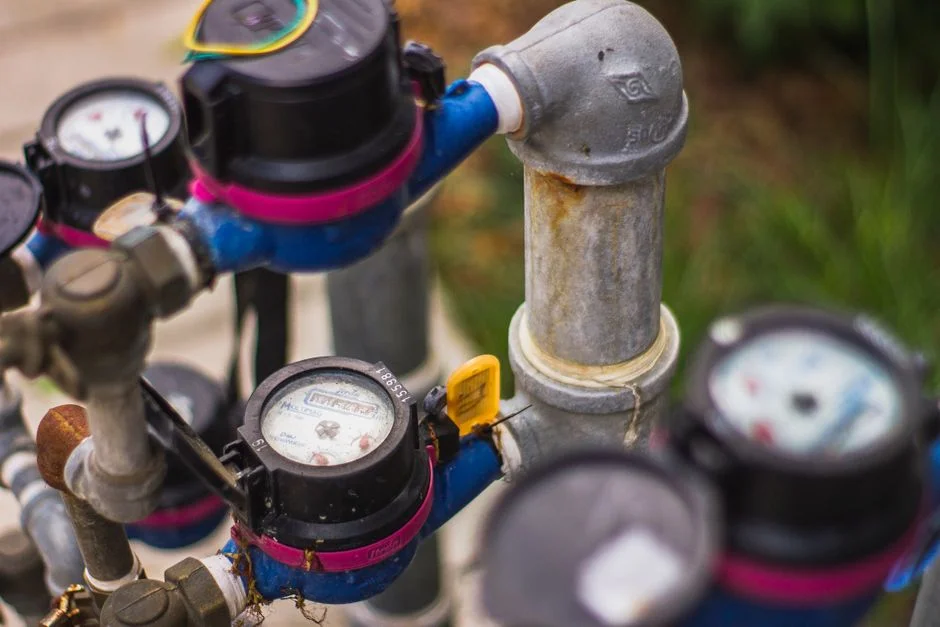
Passing the QCVN permit test only clears the legal floor. The corporate layer adds three obligations that flow straight into the parent company's public sustainability disclosures within the first full operating year. First, KORE water-use ratio: Coca-Cola's system target sits at 1.7–2.0 litres of water per litre of beverage depending on product mix, while Vietnam beverage plants typically run 1.8–2.4 L/L pre-retrofit (HydropureWater field data, 2025-2026). Closing the gap requires flow metering at every unit operation, not just a single influent meter on the WWTP inlet — and that metering has to be commissioned inside the first 90 days, not deferred to a Phase-2 capex plan.
Second, 2035 water replenishment: the 2024-12-02 corporate commitment targets 100% replenishment in the 200+ high-risk WRI Aqueduct 4.0 locations by 2035. Vietnam's Mekong Delta and Red River Delta catchments both sit in the high-risk band, which means replenishment capex is not optional — it is a balance-sheet liability that walks in at signing. Third, World Without Waste 2030 packaging goals — 100% recyclable packaging by 2025 and a bottle-or-can collected and recycled for each one sold by 2030 — are already institutionalised in Vietnam through PRO Vietnam, so packaging compliance carries forward without major restructuring.
Annual sustainability reporting means the acquired plant's WWTP performance, water balance, and replenishment accounting land in the parent's public disclosures within the first full operating year (per Coca-Cola 2024-12-02 release). Get the metering, the QA chain on self-monitoring reports, and the KORE documentation templates correct at closing, or the 12-month disclosure will surface gaps the deal team never saw in diligence.
2026 Treatment Train for a Vietnam Beverage Plant
A defensible 2026 unit-process train for a Vietnam beverage or concentrates facility discharging to municipal sewer or a Type-A receiving water runs: rotary mechanical bar screen → flow and pH equalization → DAF for FOG and suspended solids → A/O biological → MBR → disinfection, with a plate-and-frame filter press on the sludge side. Influent characterisation for a beverage concentrates site typically shows BOD 800–2,500 mg/L, COD 1,500–4,000 mg/L, TSS 200–600 mg/L, pH 3–11 batch excursions, and oil & grease 50–300 mg/L — driven by syrup batching, CIP chemical dumps, and bottle-washer overflows.
Headworks protection starts with a rotary mechanical bar screen for headworks protection (1–3 mm aperture) to keep packaging debris and bottle fragments out of downstream pumps and membranes. Equalization with 8–24 h HRT is mandatory for batch CIP streams — without it, pH swings will kill nitrification and starve the biological stage of alkalinity. A DAF unit for FOG and suspended solids removal (surface loading 5–20 m/h, capacity 4–300 m³/h) follows, then an A/O biological configuration for carbonaceous BOD removal plus partial denitrification. For plants targeting direct reuse-grade effluent or a smaller footprint, an MBR system for reuse-grade effluent cuts footprint by roughly 60% versus conventional activated sludge and produces a polished effluent suitable for the Law 28/2023/QH15 reuse provisions. Disinfection uses an on-site chlorine dioxide generator for biofilm control in cooling loops — preferred over UV for beverage plants because of the high organic load in the final effluent. Sludge from the DAF float and the biological stage dewateres to <60% moisture cake on a plate-and-frame filter press for sludge dewatering (1–500 m² filtration area), and that dewatering capacity is the line item most often under-scoped in pre-close reviews because operators focus on effluent quality and forget that dewatering gates the whole mass balance.
| Unit Operation | Design Parameter | Typical Range | Function |
|---|---|---|---|
| Rotary bar screen | Aperture | 1–3 mm | Debris / fragment removal |
| Equalization basin | HRT | 8–24 h | Flow + pH dampening |
| DAF | Surface loading | 5–20 m/h | FOG + suspended solids |
| A/O biological | MLSS / HRT | 3,000–5,000 mg/L / 12–24 h | BOD + partial denitrification |
| MBR | Flux / footprint | 15–25 LMH / 60% smaller than CAS | Solids separation + reuse-grade polish |
| ClO₂ disinfection | Dose / CT | 2–5 mg/L | Biofilm + pathogen control |
| Plate-and-frame press | Cake moisture | < 60% | Sludge volume reduction |
Mekong Delta and Other Vietnam High-Risk Water Catchments
Geographic position inside Vietnam determines whether the WRI Aqueduct 4.0 high-risk classification attaches at closing — and that classification sets the KORE water-use ratio target and the 2035 replenishment capex obligation. The Ocean Cleanup's Interceptor 003 (René) was deployed in the Can Tho river in Can Tho City, Mekong Delta, in January 2022, with solar-powered capacity to extract up to 50,000 kg of trash per day (per theoceancleanup.com 2022-01-11 release). The deployment was supported by the People's Committee of Can Tho and the provincial DoNRE, and Can Tho City holds the "ASEAN Environmentally Sustainable City" designation, which raises the political cost of any non-compliance event for a Coca-Cola plant in the catchment.
Coca-Cola Vietnam General Manager Leonardo Garcia has publicly tied Mekong Delta river health to the company's packaging circularity work, and local community scrutiny is high (per theoceancleanup.com 2022-01-11). The implication for the deal team: any new Coca-Cola plant in the Mekong Delta catchment will be treated as a WRI Aqueduct 4.0 high-risk site, triggering the 100% replenishment-by-2035 obligation and a tighter KORE water-use ratio target. Red River Delta sites around Hanoi and Hai Phong carry the same high-risk classification. Plants sited in lower-stress catchments (parts of the central coast, parts of the Central Highlands) may fall outside the high-risk band, but the deal team should not assume that without a documented WRI Aqueduct 4.0 run on the specific sub-catchment.
ETP Due-Diligence Checklist for the Vietnam Closing
The pre-close checklist for a Vietnam beverage acquisition has six items the deal team must land in the SPA or in the price, not on the post-closing balance sheet. The checklist below mirrors the 2026 ETP due-diligence checklist for factory acquisitions framework, with Vietnam-specific regulatory anchors. A parallel semiconductor plant acquisition wastewater compliance guide walks through the same standards-vs-corporate-layer tension in a different sector and is useful for the audit protocol.
- Pull the existing discharge permit and the last 24 months of self-monitoring reports from MoAE / provincial DoNRE — check for non-compliance events that survive the SPA's bring-down conditions.
- Audit the ETP for hydraulic capacity, sludge dewatering capacity, and ±20% design-flow stress tolerance (tanker-truck and batch CIP variability runs ±15–25% week to week).
- Stress-test treated effluent against QCVN 40:2011/BTNMT ceilings; documentation chains on supporting evidence are often the weak link.
- Negotiate an environmental indemnity for legacy soil and groundwater contamination, especially for prior concentrates operations with chemical cleaning.
- Confirm whether the site sits inside a WRI Aqueduct 4.0 high-risk basin — if yes, the KORE replenishment capex band is material.
- Model CAPEX as a band, not a single number: treatment train cost scales with flow rate and influent strength, from ~50 m³/day for a small concentrates line to ~5,000 m³/day for a large bottling hall. Procurement of the unit operations should be staged against the closing date, not deferred.
| Plant Flow Band | CAPEX Driver | Train Configuration | Lead Time |
|---|---|---|---|
| ≤ 200 m³/day | Single-stream DAF + packaged MBR | Screen → EQ → DAF → MBR → ClO₂ | 10–14 weeks |
| 200–1,000 m³/day | Modular A/O + MBR + sludge press | Screen → EQ → DAF → A/O → MBR → ClO₂ → press | 16–22 weeks |
| 1,000–5,000 m³/day | Concrete A/O basins + MBR + full sludge handling | Screen → EQ → DAF → A/O → MBR → ClO₂ → press + building works | 26–40 weeks |
Frequently Asked Questions
Do Vietnam wastewater permits transfer automatically at SPA signing?
No. Discharge permits issued by provincial DoNRE require a formal transfer application under Law 28/2023/QH15, typically 60–90 days, and the SPA should list permit transfer as a closing condition rather than a post-closing obligation. The buyer inherits the existing permit's limits and self-monitoring schedule on closing day, even if the transfer paperwork is still in process.
What are the binding QCVN 40:2011/BTNMT limits a beverage plant must meet?
The binding ceilings are pH 6.0–9.0, BOD₅ ≤ 50 mg/L, COD ≤ 150 mg/L, TSS ≤ 100 mg/L, oil & grease ≤ 10 mg/L, total nitrogen ≤ 40 mg/L, and total phosphorus ≤ 6 mg/L. Receiving-water classification under QCVN 28:2010/BTNMT (Type A vs Type B) can drive the discharge limits tighter than QCVN 40 at the point of discharge.
What unit-process train discharges a compliant effluent for a Vietnam beverage plant?
The 2026 standard train is screening → flow and pH equalization (8–24 h HRT) → DAF for FOG and TSS → A/O biological for BOD and partial denitrification → MBR for solids separation → ClO₂ disinfection, with a plate-and-frame filter press dewatering the sludge to <60% moisture cake. MBR cuts footprint by roughly 60% versus conventional activated sludge and supports direct effluent reuse.
Does the KORE 2035 water-replenishment obligation attach to a newly acquired Vietnam plant?
If the site sits inside a WRI Aqueduct 4.0 high-risk basin — which covers the Mekong Delta and Red River Delta catchments — the 100% replenishment-by-2035 obligation attaches at closing and must be funded inside the KORE capex line, not deferred. The 2024-12-02 corporate release confirmed 200+ high-risk locations across the ~950-facility system as the in-scope perimeter.
Why is the Mekong Delta catchment treated as higher-risk for Coca-Cola compliance?
Can Tho City is an ASEAN Environmentally Sustainable City and hosted the Ocean Cleanup Interceptor 003 (René) deployment in January 2022, capable of extracting up to 50,000 kg of trash per day from the Can Tho river (per theoceancleanup.com 2022-01-11). Any non-compliance event at a Coca-Cola plant in the catchment carries disproportionate political and reputational cost on top of the WRI Aqueduct 4.0 high-risk classification.