Why ETP Due Diligence Is a Deal-Affecting Issue for Nestlé Acquisitions
An ETP underperforming on biology — sludge cake consistently at 85–95% moisture (Team One Biotech field data, 2026) — is a balance-sheet liability, not a maintenance line item. When a target factory carries legacy wastewater infrastructure into a Nestlé acquisition, the ETP's compliance record, biological capacity, and documentation gaps feed directly into the purchase price, the environmental indemnity, and the post-close capex reserve. A brownfield ETP that barely passes its local discharge consent is not "good enough" for a Nestlé-owned site; the group's Creating Shared Value commitments and water stewardship targets (publicly reported in Nestlé's annual CSV report) require the same compliance posture the supplier code demands of contract manufacturers. Failing to price the gap converts a known liability into a hidden one.
The buyer-side checklist is therefore broader than the standard ETP self-audit, such as the seven-section ETP Assessment/Audit Checklist template circulating on Scribd (S3), which was built for an internal compliance officer. An M&A lead needs the same categories recast as risk questions: what is missing, what triggers a price chip, and what is severe enough to walk away. The three downstream deal consequences are price adjustment (reflecting quantified capex and opex), indemnity escrow (covering legacy non-compliance), and a post-close remediation roadmap (biology reinforcement, anaerobic pre-treatment, or full rebuild). The rest of this article walks through a 7-part audit adapted from the Scribd template, then layers a red-flag matrix and a tiered capex framework on top.
Phase 1 ETP Audit: Documentation and Design Basis Review
The first 4 weeks of due diligence are document work, and the deal team should treat the 12-month water-quality record as a hard condition precedent. If the seller cannot produce 12 months of ETP inlet and outlet data, water bills, and a breakdown consumption report, the buyer cannot run a load-based compliance analysis — and should not close without one. The Scribd checklist (S3) flags exactly these gaps: "Spare parts not available," "ETP Flow process chart submitted to authority — NOT AVAILABLE," "instrument calibration certificates — yet to receive," and "Future production plan(s) — NOT AVAILABLE" are the four items that, in our experience, most often translate into a price chip of 1–3% of enterprise value or a walk.
The table below maps the seven ETP audit categories to M&A risk questions and decision rules.
| Audit category (per S3) | Key documents to request | M&A red flag | Decision rule |
|---|---|---|---|
| General documents | Equipment list, spare parts inventory, water meter locations, instrument list, discharge permit | Spare parts not available (S3 example) | Reprice — Uptime risk transfers to buyer post-close |
| Design documents | Flow process chart, authority-submitted flow chart, designed flow rate, constructor's initial analysis | No authority-submitted flow chart (S3 example) | Reprice — permit non-conformity risk |
| Water consumption records | 12-month overall + breakdown consumption, water bills, ETP inlet/outlet records, improvement analyses | Missing 12-month inlet/outlet data | Walk or hold 5–10% of price in escrow |
| Operations documents | O&M manual, O&M records, chemical dosing records, on-site test records, calibration certificates, action plan for exceedances | No O&M manual or calibration certificates | Reprice — operating discipline is unverified |
| External documents | Sludge contractor agreement, contractor authorization, disposal method, external lab reports, lab ISO certification | No sludge disposal traceability | Reprice — chain-of-custody gap |
| Organization | Org chart, operator CVs, internal and external training records | No operator training records | Remediate — staffing capex |
| Emergency response | Factory risk assessment, ETP emergency response plan, drill records, failure action plan | No ETP drill records | Reprice — incident liability |
Two items deserve extra weight. First, the wastewater discharge permit and any historical non-compliance notices must be on the seller's disclosure schedule as a condition precedent — not a "to follow." Second, the spare parts inventory is a hidden liability: a seller that has run the ETP to failure with no spares forces the buyer to fund the rebuild inside the first 90 days of ownership.
Phase 2 ETP Audit: Performance and Biological Capacity Assessment
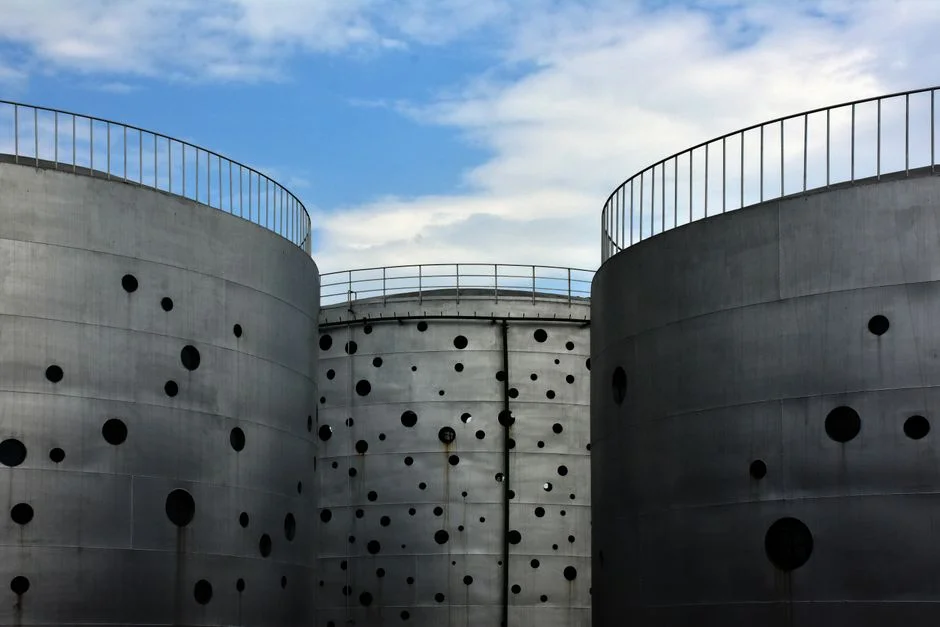
Once the paperwork is on the table, the technical advisor moves to performance. The single most useful diagnostic is sludge cake moisture from the dewatering step: a band of 85–95% moisture on a plate and frame filter press is the industry-typical range, but moisture consistently above 90% signals biological weakness upstream, not a dewatering-equipment failure (Team One Biotech field data, 2026). The biology is under-performing, the aeration tank is generating excess extracellular polymer, and operators are pouring more polymer flocculant into a system that is already waterlogged. That is opex drag today and biological capex tomorrow.
The second test is hydraulic and organic capacity. Most legacy ETPs were designed against a baseline that the current production schedule has long since exceeded — Team One Biotech's case work across Indian textile, distillery, dairy, and chemical plants repeatedly shows the ETP was "designed around a baseline that real operations almost never maintain" (S2). The deal team should request the constructor's initial design analysis, the current monthly inlet COD and flow, and the planned production schedule, then model the headroom. If the planned post-acquisition production exceeds design by 20% or more, the ETP is functionally undersized and a Tier 3 rebuild is on the table.
The third test is biology match. Generic, off-the-shelf microbial products are not matched to the substrate chemistry of complex industrial wastewater, and a brownfield ETP that has been running on generalist populations for years is fragile to influent spikes (S2). The question for the deal team is whether the biology is matched to the effluent matrix — sulfate-reducing bacteria for tannery, nitrifiers/denitrifiers for food processing, hydrocarbon-degrading strains for petrochemical. For high-strength effluents (distillery spent wash, dairy process water, chemical manufacturing effluent), the audit should also evaluate whether an anaerobic pre-treatment stage could remove the bulk of the organic load before the existing aerobic polishing stage, using the principles in our anaerobic digester engineering guide.
| Performance signal | What it tells the deal team | Indicative capex tier |
|---|---|---|
| Sludge moisture consistently 85–90% | Biology adequate, dewatering in normal range | Tier 1 — optimization only |
| Sludge moisture consistently >90% | Biological weakness, E&P excess, polymer overuse | Tier 1 — site-specific microbial consortium + dose optimization |
| Influent COD/BOD 20%+ above design | ETP undersized for current production | Tier 2 — add anaerobic pre-treatment |
| Influent COD/BOD 50%+ above design or toxic shock history | ETP fundamentally undersized, no biological headroom | Tier 3 — full rebuild, consider MBR membrane bioreactor system for tighter discharge |
| Generic biology, no site-specific consortium | Fragility to influent spikes; toxic intermediates risk | Tier 1 — bio-augmentation per S2 methodology |
Red-Flag Matrix: What Triggers a Deal-Affecting Finding
The red-flag matrix converts audit findings into deal-team decisions. Each row pairs a finding with a severity call, an indicative capex impact, and the deal protection that closes the loop. Cross-reference findings against the ETP Assessment/Audit Checklist (S3) so the evidence trail is auditable post-close.
| Finding | Severity | Indicative capex impact | Recommended deal protection |
|---|---|---|---|
| Missing 12-month inlet/outlet records | Walk or reprice | Cannot quantify — assume worst case (Tier 3) | Holdback or escrow at Tier 3 estimate; Phase II ESA condition precedent |
| Active non-compliance notice from regulator | Walk | Fine + remediation; reputational risk to Nestlé CSV reporting | Reps & warranties; specific indemnity; do not close until cleared |
| Undisclosed historical spill or soil/groundwater impact | Walk | Phase II ESA + remediation, often $1M+ | Specific indemnity, environmental insurance, escrow |
| ETP designed well below planned post-acquisition capacity | Walk or reprice | Tier 3 full rebuild | Price adjustment; deferred consideration tied to capex completion |
| Sludge moisture >90% on a routine basis | Remediate | Tier 1 — biological reinforcement | Specific warranty; escrowed remediation budget |
| No authority-submitted flow chart | Reprice | Permit risk; potential forced retrofit | Specific indemnity for permit non-conformity |
| No operator training records | Remediate | Staffing capex + 90-day retraining programme | Operational covenant in SPA |
| No instrument calibration certificates | Reprice | Data integrity risk; possible re-monitoring cost | Reps & warranties; escrow for re-baseline monitoring |
Three findings should trigger a walk-away regardless of price: an active non-compliance notice, an undisclosed historical spill or groundwater impact, and an ETP designed well below the planned post-acquisition capacity. The first two create open-ended liability that no escrow can fully ring-fence; the third converts the acquisition into a greenfield ETP project wearing a brownfield price tag.
Remediation Capex Estimation and Deal Structure
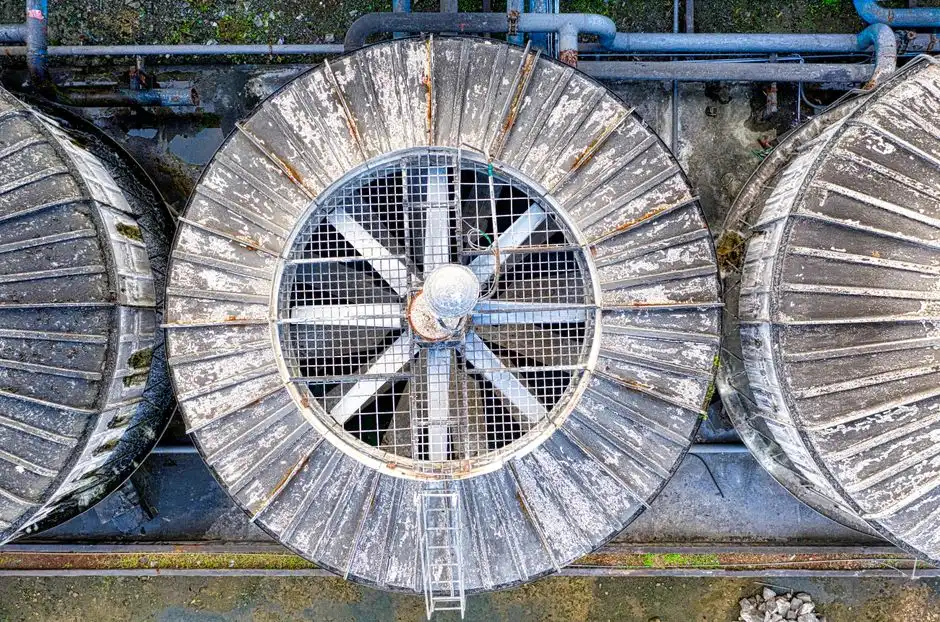
Translate the audit findings into a three-tier capex framework before the reps and warranties are drafted. Tier 1 covers biological reinforcement — site-specific microbial formulation, chemical dose optimization using an automatic chemical dosing system, and tuning of the aeration regime per the S2 bio-augmentation methodology. This is the most common outcome for a brownfield ETP with adequate hydraulic capacity but weak biology. Tier 2 covers the addition of an anaerobic pre-treatment stage for high-strength effluents (distillery, dairy, chemical), which removes the bulk of the organic load before the existing aerobic polishing stage (S2). Tier 3 covers a full ETP rebuild for systems that are fundamentally undersized — typically where the design capacity is more than 50% below the planned post-acquisition load, or where toxic-shock history indicates the existing biology has no headroom.
Size the environmental indemnity escrow at the high end of the Tier 1 + Tier 2 estimate plus a 50% contingency, held until a 90-day post-close Phase II environmental assessment is completed. Specific reps and warranties to require from the seller: (1) 12-month compliance with the discharge permit, (2) no outstanding non-compliance notices, (3) accuracy of ETP operating records, and (4) no undisclosed soil or groundwater impact. The Phase II ESA should be a condition for final escrow release, with a clear remediation roadmap embedded in the post-close covenants. Where the audit findings are severe, an environmental insurance policy (cost typically 2–4% of the covered indemnity) is worth the premium to backstop unknown legacy conditions.
For acquirers with a multi-site pipeline, the same framework can be applied to other regulated sectors — see our semiconductor factory ETP due diligence framework and UMC factory acquisition ETP due diligence guide for sector-specific overlays.
Post-Close ETP Remediation Roadmap
After signing, the operations team should run a 12-month remediation programme tied back to the audit findings. Days 0–30: commission an independent influent and effluent characterization campaign to confirm the design basis the due diligence used. Days 30–90: deploy the site-specific microbial consortium and begin chemical dose optimization, following the bio-augmentation methodology in S2, with an automatic chemical dosing system for repeatable control. Months 3–12: track sludge moisture reduction off the 85–95% band (Team One Biotech field data, 2026) and re-baseline discharge permit compliance for the first Nestlé CSV report cycle. A complementary anaerobic stage can be scoped in parallel where the audit indicated high-strength effluent, using the design principles in our anaerobic digester engineering guide and the sequencing approach in our SBR for distillery wastewater engineering guide.
Frequently Asked Questions
How long does an ETP due diligence review take for a Nestlé factory acquisition?
Typically 4–6 weeks: 2 weeks of document review against the seven-category audit checklist, followed by 2–4 weeks of site assessment, influent/effluent characterization, and biological capacity modeling before the reps and warranties are finalized.
What is the biggest red flag in ETP due diligence?
Missing 12-month inlet and outlet water quality records. Without a full year of paired data, no load-based compliance analysis is possible, and the buyer cannot quantify either the opex drag or the capex requirement.
Does Nestlé accept ETPs with generic biological treatment?
No. Nestlé's water stewardship commitments and supplier code require site-specific biological systems matched to the effluent matrix — sulfate-reducing bacteria for tannery, hydrocarbon-degrading strains for petrochemical, nitrifiers/denitrifiers for food processing (S2).
How is the ETP remediation escrow typically sized?
100–150% of the high-end Tier 1 plus Tier 2 capex estimate, held until a 90-day post-close Phase II environmental assessment is completed and a remediation roadmap is agreed.
What ETP documents should the seller provide before signing?
Discharge permit; 12-month water consumption and ETP inlet/outlet records; O&M manual; chemical dosing records; instrument calibration certificates; spare parts inventory; authority-submitted flow process chart; and any historical non-compliance notices or spill disclosures.