
The Federal Floor Every Owensboro EV/Auto Plant Sits On
An EV battery plant or Tier-1 stamping facility in the Owensboro, KY service area meets 2026 sewer-discharge pretreatment limits by operating under a layered compliance chain that runs Clean Water Act of 1972 (33 U.S.C. § 1251 et seq.) → EPA General Pretreatment Regulations at 40 CFR Part 403 → 40 CFR Part 433 Metal Finishing categorical standards for e-coat, plating, and phosphate pretreatment lines (per 40 CFR Part 433). The two anchor definitions the engineer should print are pass-through at 40 CFR 403.3(p) and interference at 40 CFR 403.3(k), and both apply from the day process wastewater first enters the sewer under 40 CFR 403.5(a) — there is no grace period while the control mechanism is being negotiated. Kentucky runs a delegated program called KPDES (Kentucky Pollutant Discharge Elimination System), approved by EPA and administered by the Kentucky Division of Water, so the receiving POTW sits under state oversight for its Industrial User permits even though the federal floor remains the binding standard. The Middlesboro, KY § 51.065 special industrial pretreatment ordinance is a useful citable surrogate for how an Owensboro-area POTW structures its surcharge schedule — it lists BOD 350, COD 1,000, TSS 350, NH3-N 30, total phosphorus 14 mg/L as the no-surcharge ceiling, plus HEM 100 mg/L and FOG 200 mg/L on the restricted-discharge side (Middlesboro § 51.062(A)–(N)). When a compliance examiner walks the plant, the citation chain above — federal floor, state delegation, local ordinance — is the answer to "why does this limit apply?" before any P&ID is discussed.
40 CFR Part 433 and KPDES Local Limits: The Ceiling Table to Pin Above the Control Desk
The Part 433 daily-maximum ceilings that bind every e-coat, plating, and metal-finishing line in 2026 are mirrored almost one-for-one in the Middlesboro § 51.062(N) metal table, and that is the table to print, laminate, and mount above the control desk. The numbers are not negotiable: any permit limit set more stringent than the federal ceiling under a city's right-of-revision clause overrides Part 433 and becomes the binding number on the discharge report. The MAHL/MAIL methodology under 40 CFR 403.5(c) is the mechanism the receiving POTW uses to back-calculate a Maximum Allowable Industrial Loading for each Significant Industrial User, and that allocation is what the plant's permit ceiling is sliced from.
| Parameter | Daily-Max Ceiling (mg/L) | Authority |
|---|---|---|
| Arsenic (As) | 0.75 | Middlesboro § 51.062(N) |
| Cadmium (Cd) | 0.07 | Middlesboro § 51.062(N) / 40 CFR Part 433 |
| Chromium, total (Cr) | 1.71 | Middlesboro § 51.062(N) / 40 CFR Part 433 |
| Chromium, hexavalent (Cr⁶⁺) | 0.41 | Middlesboro § 51.062(N) / 40 CFR Part 433 |
| Copper (Cu) | 1.2 | Middlesboro § 51.062(N) / 40 CFR Part 433 |
| Cyanide, amenable (CN) | 0.13 | Middlesboro § 51.062(N) / 40 CFR Part 433 |
| Lead (Pb) | 0.18 | Middlesboro § 51.062(N) / 40 CFR Part 433 |
| Mercury (Hg) | 0.001 | Middlesboro § 51.062(N) / 40 CFR Part 433 |
| Nickel (Ni) | 0.69–1.71 | Middlesboro § 51.062(N) / 40 CFR Part 433 |
| Selenium (Se) | 0.13 | Middlesboro § 51.062(N) / 40 CFR Part 433 |
| Silver (Ag) | 0.24 | Middlesboro § 51.062(N) / 40 CFR Part 433 |
| Zinc (Zn) | 1.48 | Middlesboro § 51.062(N) / 40 CFR Part 433 |
| HEM (oil & grease) | 100–200 (50 in water-reuse basins) | EPA Method 1664A / local limit |
| TSS | ~250 | 40 CFR §133.102 / local limit |
| pH | 6.0–9.0 standard units | 40 CFR §133.102 / local limit |
Zinc, nickel, and total phosphorus from phosphate pretreatment lines are the parameters that most often drive the local-limit conversation. The 100–200 mg/L HEM ceiling by EPA Method 1664A is the headline number, and stricter POTWs operating water-reuse basins tighten to 50 mg/L — that 50 mg/L floor should be the design basis on any new build.
Anatomy of the 2026 Four-Stage Pretreatment Train
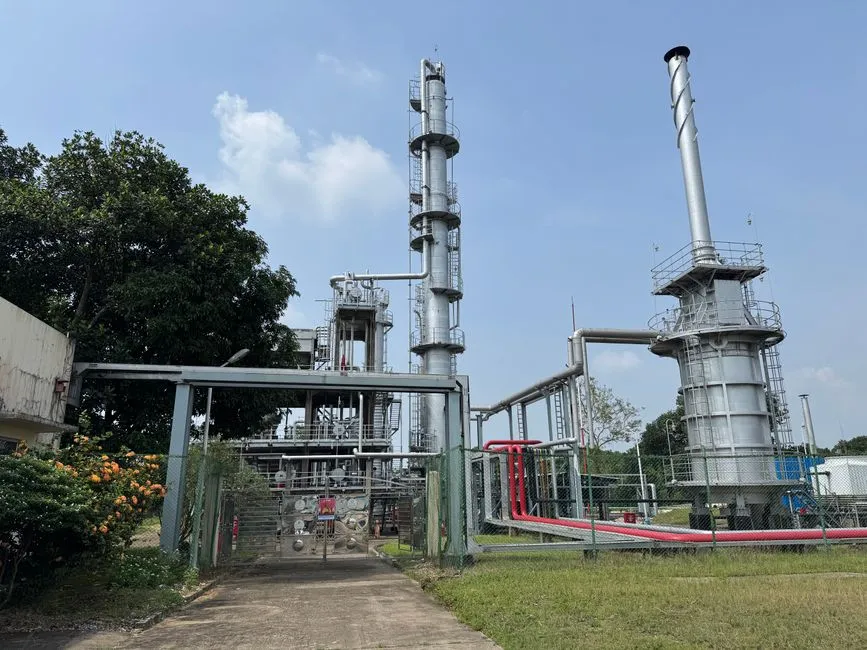
Source segregation is the cheapest first move and the only one with zero operating cost once it is built, and field data on retrofits shows 40–70% load reduction on the inlet to the downstream train (HydropureWater field data, 2025–2026). The P&ID order — segregation, primary separation, DAF polishing, biological or adsorption polishing — is a hydraulic and chemical dependency, not a preference. Skipping Stage 2 to save capex is the single most common audit-day finding, because free oil from a coalescer dump blankets DAF micro-bubbles and crashes the air-to-solids ratio inside minutes.
| Stage | Unit Operation | Operating Window | Typical Inlet → Outlet |
|---|---|---|---|
| 1 — Source segregation | Dedicated oil-water laterals, locked dump valves, segregated body-shop pads | Continuous; passive | 40–70% load reduction at near-zero opex |
| 2 — Primary oil/water separation | API gravity separator (≥30 min HRT at peak) or CPI with 1–2 in plate spacing, ~45° corrugation | HRT ≥30 min peak | ~15–30 mg/L O&G outlet |
| 3 — DAF polishing | HydropureWater dissolved air flotation system with HydropureWater automatic chemical dosing system for coagulant/demulsifier | ASR 0.02–0.06; HRT 15–30 min; recycle 20–50%; surface loading 2–5 gpm/ft²; pH 6.5–7.5; dose 50–200 mg/L | <50 mg/L HEM achievable with chemistry |
| 4 — Biological or adsorption polishing | MBBR, MBR flat-sheet PVDF 0.1 µm, or GAC + multimedia filter + online oil-in-water analyzer | MBR MLSS 8,000–12,000 mg/L; HRT 6–24 h | <5 mg/L TSS (MBR); <0.1 mg/L residual organics (GAC) |
A DAF alone, with no primary gravity stage ahead of it, fails under slug loads (HydropureWater field data, 2026). The DAF line covers 4–300 m³/h across 13 standard models, which lines up with the flow range a typical Owensboro-area auto plant or mid-scale gigafactory pretreatment skid will see. MBR flat-sheet modules are the alternative for tight-footprint EV retrofits where the polishing step has to deliver <5 mg/L TSS on the way to a water-reuse loop.
The EV Side Stream: Where Owensboro Gigafactories Diverge from Legacy Auto
EV cathode-coating operations add a third pollutant layer that legacy auto plants do not carry. N-methyl-2-pyrrolidone (NMP) from cathode slurry coating runs 5–50 mg/L in the binder side stream; fluoride from binder pyrolysis and trace Li, Co, and Ni from electrolyte mixing map to local-limit triggers on COD, F⁻, and the metal suite (HydropureWater field data, 2026). Lithium and cobalt show up in the analytical suite at low mg/L concentrations but are flagged as pollutants of concern in biosolids under 40 CFR Part 503, which is why the POTW's pretreatment coordinator asks about them even when grab-sample numbers look clean. The defensible P&ID response is a dedicated low-volume high-strength side stream — equalization, biological oxidation for COD, precipitation for F⁻, and GAC polishing for residual NMP — that joins the main train only after those unit operations have cut the side stream below its trigger concentration. The contrast with the legacy auto streams is sharp: stamping carries 10–60 µm drawing-lubricant emulsions and tramp oil that sit below the 60–150 µm free-oil band an API or CPI separator handles, and e-coat/phosphate lines contribute total phosphorus, nickel, and zinc under 40 CFR Part 433. Booth water with paint detackification sludge is batched through a HydropureWater lamella clarifier or DAF before joining the main sewer, and the cathode-coating side stream is routed through a dedicated HydropureWater MBR membrane bioreactor for COD and NMP removal. Conflating the two streams on a single sewer lateral is the mistake that turns a routine compliance report into a Show Cause narrative.
Sizing the DAF: Four Numbers That Drive a Defensible Basis-of-Design

A defensible DAF basis-of-design is a four-input worksheet the engineer can hand to a vendor and the operating envelope that locks into the control narrative. None of the four is the daily average flow, and all four are required because the worst case on the permit is not the mean day — it is the coalescer dump on a Monday morning.
| Input | How to Calculate | Engineering Margin |
|---|---|---|
| Peak instantaneous flow | Slug loads during coalescer dumps and tank drops can spike 3–5× the daily mean; size to peak in gpm or m³/h, not daily average | 20–30% above calculated peak |
| Daily O&G load | Calculated from press throughput, wash-rack volume, drip rates, and stamping line count, in lb/day or kg/day | 20–30% safety factor |
| Target residual O&G | Set 20–30% below the local permit ceiling so the train has margin against a single bad batch | 20–30% below ceiling |
| Air-to-solids ratio (ASR) and surface loading | ASR 0.02–0.06; surface hydraulic loading 2–5 gpm/ft² in oilfield service as the sizing reference | 20–30% safety margin on ASR |
The HydropureWater dissolved air flotation system covers 4–300 m³/h across 13 standard models, which matches the flow band a typical auto plant or mid-scale gigafactory skid will see. pH trim to 6.5–7.5 ahead of the DAF, with coagulant or demulsifier dose 50–200 mg/L delivered through the automatic dosing skid, is what unlocks the <50 mg/L HEM residual stricter POTWs in water-reuse basins now demand. For a worked air-to-solids and hydraulic-loading trade-off, the DAF unit engineering deep dive is the reference calculation.
Permit, Paper Trail, and the 2026 Audit Playbook
The five steps below turn a working train into a defensible one when the pretreatment coordinator or a Kentucky Division of Water inspector walks the site. Each step has a citation an engineer can quote, and the closing step is the math that decides whether the day ends in a Corrective Action Letter or a Show Cause hearing.
Step 1 — Get classified as a Significant Industrial User and obtain the control mechanism. Under 40 CFR 403.5(a), the plant is on the hook from the day it sends process wastewater to the sewer, whether or not the control mechanism has been issued. The permit locks in the numerical limits, the monitoring schedule, and the reporting cadence the plant will be measured against. KPDES pretreatment program oversight runs through the Kentucky Division of Water, and the local POTW issues the actual control mechanism under delegated authority.
Step 2 — Self-monitoring cadence. Daily visual free-oil inspection at the outlet weir (logged and initialed), weekly TSS grab, monthly HEM composite by EPA Method 1664A (24-hour flow-proportional where the permit specifies), and 24-hour flow-proportional composite for BTEX, TPH, F⁻, and the metal suite on the schedule the permit sets. Sampling taps must be accessible, the flow meter calibrated annually, and the chain-of-custody defensible — most SNC findings originate from sampling-procedure deficiencies, not from underlying treatment performance (HydropureWater field data, 2025).
Step 3 — Slug-control plan written, current, and trained out. EPA enforces 40 CFR 403.8(b)(4), and any discharge that could cause interference must be reported within 24 hours. A 10–20 mg/L sulfide slug from a sump pump is the textbook event that turns a routine day into a Show Cause hearing under 40 CFR 403.3(k). Cross-reference the slug plan against the solvent inventory on the EV cathode line so the plan names NMP and F⁻ by parameter, not by generic "process chemical."
Step 4 — BMPs the pretreatment coordinator looks for. Spill containment around chemical and lubricant storage, drip pans on truck loading arms, covered and locked dump valves on coalescers, segregated sewer laterals, and visible tagging of every sample point. Tie the BMP set to a written SPCC plan under 40 CFR Part 112 and the sewer map; a written, current SPCC tied to the sewer map eliminates roughly half of common audit findings (HydropureWater field data, 2025). For worked compliance templates in adjacent regulated sectors, the transportation equipment pretreatment compliance guide and the chemical plant pretreatment compliance guide walk through the documentation that survives an audit.
Step 5 — Keep the audit file and run the SNC math. The Significant Noncompliance matrix is linear: violation of a numerical limit by ≥1.5× for any single day, or by >5% of measurement days in a six-month period, or a report >30 days late, triggers SNC under 40 CFR Part 403. SNC triggers a Show Cause hearing and potential permit action. The paper trail is what turns a "no pass-through" claim into a defensible one — daily inspection logs, chain-of-custody forms, calibration records, SPCC, slug plan training records, and the six-month rolling compliance spreadsheet all live in the same folder.
Frequently Asked Questions
What HEM limit applies to an EV/auto plant discharging to an Owensboro-area POTW in 2026?
Most 2026 permits set HEM at 100–200 mg/L daily maximum by EPA Method 1664A, with ~250 mg/L TSS and pH 6.0–9.0, derived using EPA's MAHL method under 40 CFR 403.5(c). Stricter POTWs operating water-reuse basins tighten daily-maximum HEM to 50 mg/L (HydropureWater field data, 2026).
Does the plant need a primary oil/water separator ahead of the DAF?
Yes, in essentially every case. Free oil from coalescer dumps and tank drops blankets DAF micro-bubbles and crashes the air-to-solids ratio; a DAF alone fails under slug loads (HydropureWater field data, 2026). A CPI or API primary stage ahead of the DAF is standard practice, sized with 20–30% margin on hydraulic and ASR loading.
What 40 CFR Part 433 daily-max ceilings apply to e-coat and metal-finishing lines?
E-coat, plating, and metal-finishing lines pull the site into 40 CFR Part 433 categorical limits: 1.71 mg/L nickel, 1.48 mg/L zinc, 0.71 mg/L total chromium daily maximum, plus the conventional O&G, TSS, and pH suite. The Middlesboro § 51.062(N) table adds Cd 0.07, Cr⁶⁺ 0.41, Cu 1.2, Pb 0.18, Hg 0.001, Ag 0.24, Se 0.13, and amenable CN 0.13 mg/L as the local ceilings, and any more stringent number overrides Part 433.
What self-monitoring schedule will the pretreatment coordinator require?
Daily visual free-oil inspection at the outlet weir, weekly TSS grab, monthly HEM composite by EPA Method 1664A (24-hour flow-proportional where the permit specifies), and quarterly 24-hour flow-proportional composites for BTEX, TPH, F⁻, and the metal suite on the schedule the permit sets. Flow-meter calibration is annual, and chain-of-custody must be defensible.
How is Significant Noncompliance defined and what triggers a Show Cause hearing?
Under 40 CFR Part 403, SNC is triggered by any of the following: violation of a numerical limit by ≥1.5× for any single day, violation of a numerical limit for more than 5% of measurement days in a six-month period, or failure to provide required reports within 30 days of the due date. An SNC can lead to a Show Cause hearing, enforcement action, surcharges, or permit termination.