

The Compliance Chain That Governs an EV or Auto Plant Discharging to Sewer Near Woodhaven
EV and auto plants near Woodhaven, MI meet pretreatment limits before sewer discharge by following the 40 CFR Part 403 framework (general pass-through/interference prohibition, 40 CFR Part 433 Metal Finishing categorical standards, and DUWA/DDWF Technically-Based Local Limits), then running a four-stage train — source segregation, API/CPI primary oil removal, Dissolved Air Flotation (DAF) for emulsified oil and TSS, and biological or adsorption polishing — sized to hit typical 2026 ceilings of 100–200 mg/L HEM (EPA Method 1664A), ~250 mg/L TSS, and pH 6–9.
The legal citation chain a Woodhaven engineer can hand to an MDEQ/EGLE inspector runs Clean Water Act of 1972 (33 U.S.C. § 1251 et seq.) → EPA General Pretreatment Regulations at 40 CFR Part 403 → 40 CFR Part 433 Metal Finishing categorical standards (which pull e-coat, plating, and phosphate pretreatment lines into the federal floor) → 40 CFR Part 419 where on-site fuel blending occurs → DUWA-adopted Technically-Based Local Limits (TBLL) derived using EPA's Maximum Allowable Headworks Loading (MAHL) method. The MAHL is the workhorse: the POTW calculates the maximum mass of each pollutant of concern that can pass through the headworks without violating its downstream NPDES permit, state water-quality standards, biosolids disposal criteria (40 CFR Part 503), or worker/ecosystem protection thresholds, then issues a Maximum Allowable Industrial Loading (MAIL) to each Significant Industrial User (SIU).
Two definitions anchor the rest of this article. Pass-through (40 CFR Part 403.3(p)) is a discharge that exits the POTW into waters of the U.S. and is a cause of any NPDES permit violation, including an increase in magnitude or duration of an existing one. Interference (40 CFR Part 403.3(k)) is a discharge that, alone or with other sources, inhibits or disrupts the POTW, its treatment processes, or its sludge use/disposal, and therefore causes an NPDES or sludge-disposal violation. 40 CFR Part 403.5(a) imposes the general pass-through and interference prohibition on every Industrial User, whether or not the POTW has issued a control mechanism (per EPA pretreatment standards, 40 CFR Part 403.5) — there is no silent exemption while a permit is being negotiated. Woodhaven is in the Downriver service area; the Downriver Wastewater Treatment Facility, operated under the Downriver Utility Wastewater Authority (DUWA), is the regional authority that issues discharge permits and local limits in that corridor.
Why Auto and EV Wastewater Is a Different Compliance Problem Than Refinery Wastewater
Stamping and body-shop streams carry drawing-lubricant emulsions and tramp oil with droplet sizes commonly in the 10–60 µm range, well below the 60–150 µm free-oil band an API or CPI separator handles by gravity — which is why a DAF polishing stage is mandatory, not optional, on any auto press line.
E-coat and phosphate pretreatment lines contribute total phosphorus, nickel, and zinc, and this is what pulls the site into 40 CFR Part 433 Metal Finishing categorical limits. Daily-maximum ceilings under Part 433 sit at 1.71 mg/L nickel, 1.48 mg/L zinc, 0.71 mg/L chromium, plus oil & grease and TSS limits (per 40 CFR Part 433). Paint detackification sludge and booth water carry high TSS and COD; the booth wastewater overflow is typically batched and pre-treated through a lamella clarifier or DAF before joining the main sewer.
EV gigafactory lines add a third layer. N-methyl-2-pyrrolidone (NMP) from cathode coating, lithium/cobalt/nickel trace carryover from electrolyte mixing, and fluoride from binder pyrolysis map to local limits on COD, F⁻, and the metal suite, and almost always require a dedicated low-volume high-strength side stream before the main pretreatment train. Lithium and cobalt show up in the analytical suite at low mg/L concentrations but are flagged as pollutants of concern in biosolids.
Compare this against the refinery stream mix from standard petroleum playbooks (desalter brine, spent caustic, sour-water stripper bottoms, tank draw, loading-rack drip, oily utility water) and the contrast is sharp: auto and EV plants are lower-flow but more chemically diverse, with a wider molecular-weight spread between emulsion droplets, phosphate complexes, and solvent carryover. That diversity is exactly why source segregation — the cheapest first move — is the highest-leverage control in the whole train.
The Four-Stage Pretreatment Train Woodhaven Plants Actually Run in 2026
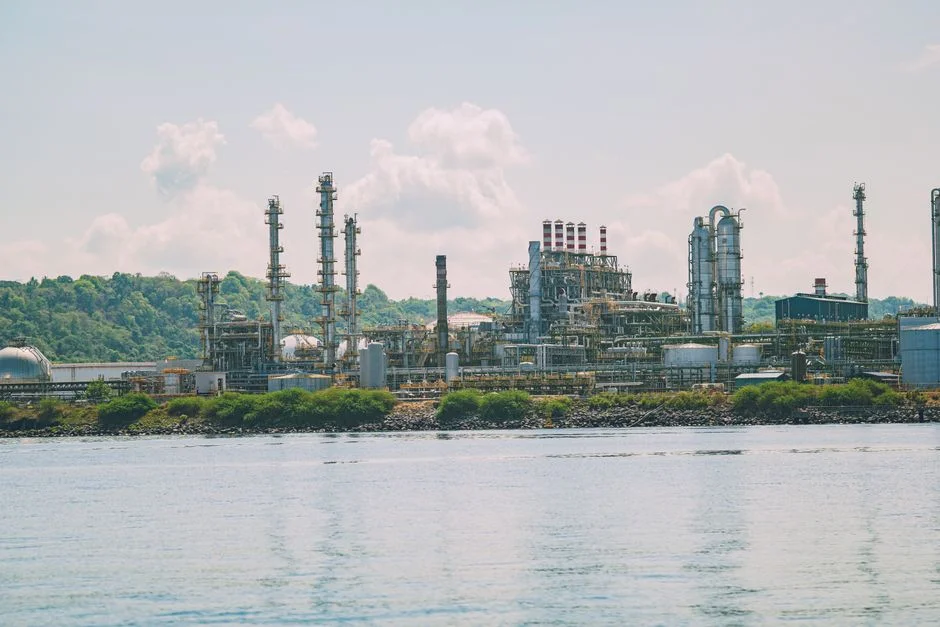
The unit operations below appear in the order they will sit on a P&ID; the order is not a preference, it is a hydraulic and chemical dependency.
Stage 1 — Source segregation. Dedicated oil-water sewering on truck loading islands, covered and locked dump valves on coalescers, and segregated laterals for body-shop pads. Field data on retrofits shows 40–70% reduction in the load hitting the downstream train (HydropureWater field data, 2025–2026). Source segregation is the cheapest control available, and the only one that costs nothing to operate once it is in place.
Stage 2 — Primary oil/water separation. API gravity separator sized for ≥30 min HRT at peak flow, or a corrugated plate interceptor (CPI) with 1–2 inch plate spacing at ~45° corrugation. Outlet typically 100–200 mg/L O&G; this stage sets the floor for the emulsified load the DAF will have to polish.
Stage 3 — Emulsified oil and TSS polishing with a DAF. Operating window: air-to-solids ratio (ASR) 0.02–0.06, HRT 15–30 min, saturator recycle 20–50% of forward flow, surface hydraulic loading 2–5 gpm/ft². Sized with a 20–30% margin on hydraulic and ASR loading to absorb slug loads from coalescer dumps and tank drops. pH trim to 6.5–7.5 ahead of the DAF, with coagulant or demulsifier dose 50–200 mg/L delivered through an automatic chemical dosing system, is what unlocks the <50 mg/L HEM residual stricter POTWs in water-reuse basins now demand. A DAF alone, with no primary gravity stage ahead of it, fails under slug loads — free oil blankets the bubble surface and crashes the air-to-solids ratio (HydropureWater field data, 2026). A dissolved air flotation (DAF) system in this duty is typically specified in the 4–300 m³/h capacity range.
Stage 4 — Biological or adsorption polishing. MBBR for COD/ammonia reduction where the local limit demands it; granular activated carbon (GAC) for trace NMP, BTEX, or low-level dissolved metals. MBR flat-sheet modules (0.1 µm PVDF) are the alternative for tight-footprint EV retrofits where the polishing step has to deliver <5 mg/L TSS on the way to a water-reuse loop. A multimedia filter and an online oil-in-water analyzer on the final effluent line close out the train, with pH and conductivity probes feeding the control room.
| Stage | Unit Operation | Primary Target | Typical Outlet to Next Stage | Key Design Parameter |
|---|---|---|---|---|
| 1 | Source segregation | Flow volume, free-oil | 40–70% load reduction | Dedicated oil-water sewer laterals, locked dump valves |
| 2 | API / CPI primary | Free oil ≥60 µm | 100–200 mg/L O&G | ≥30 min HRT at peak (API); 1–2 in plate spacing, ~45° (CPI) |
| 3 | DAF polishing | Emulsified oil 10–25 µm, TSS | 15–30 mg/L O&G; <50 mg/L achievable with chemistry | ASR 0.02–0.06; 2–5 gpm/ft²; recycle 20–50% |
| 4 | MBBR / MBR / GAC | COD, ammonia, trace metals, NMP, BTEX | <5 mg/L TSS (MBR); <0.1 mg/L residual organics (GAC) | HRT 6–24 h; MLSS 8,000–12,000 mg/L (MBR) |
Parameter-to-Stage Map: What Each Unit Operation Has to Hit
The table below is the engineering reference to pin above the control desk. Typical inlet range describes what the train actually sees at the Downriver corridor's auto and EV plants; the stage that does the primary removal is the unit operation responsible for most of the load reduction; the polishing step is what protects the permit ceiling on a bad day.
| Parameter | Typical Inlet Range | Primary Removal Stage | Polishing Step | 2026 Ceiling (mg/L or as noted) |
|---|---|---|---|---|
| Oil & Grease (HEM, EPA 1664A) | 500–5,000 mg/L | API / CPI | DAF | 100–200 mg/L (50 mg/L in water-reuse basins) |
| TSS | 200–1,500 mg/L | API / CPI (settled) | DAF, MBR | ~250 mg/L |
| pH | 5–11 swings | Equalization | Online trim | 6–9 (continuous) |
| Total Phosphorus | 10–80 mg/L (e-coat) | Chemical precipitation | DAF sludge blanket | Local limit (mg/L basis) |
| Nickel (Ni) | 2–10 mg/L | Hydroxide precipitation | Multimedia filter, quarterly compliance | 1.71 mg/L daily max (40 CFR Part 433) |
| Zinc (Zn) | 2–15 mg/L | Hydroxide precipitation | Multimedia filter | 1.48 mg/L daily max (40 CFR Part 433) |
| Chromium (Cr) | 0.5–5 mg/L | Reduction to Cr(III), precipitation | Sand filter | 0.71 mg/L daily max (40 CFR Part 433) |
| Fluoride (F⁻) | 5–50 mg/L (EV binder side stream) | Calcium precipitation | Quarterly compliance sampling | Local limit (set by MAHL) |
| NMP / COD | 500–5,000 mg/L COD | Source segregation, biological | GAC adsorption | Local COD limit (set by MAHL) |
| BTEX / TPH | 0.1–5 mg/L | Air stripping / biological | GAC, quarterly monitoring | MAHL-allocated; quarterly |
| Sulfide (S²⁻) | 0–20 mg/L slug potential | Equalization, biological oxidation | Online S²⁻ probe, slug-control plan | 1–10 mg/L (slug-controlled, not continuous) |
Flag sulfide as a slug-control parameter rather than a continuous one. A 10–20 mg/L spike from tank-bottom or sump water can knock a POTW nitrification basin off-line in hours, and that is the textbook interference event under 40 CFR Part 403.3(k).
DAF Sizing Numbers for an Auto or EV Wastewater Application

Four numbers drive a defensible DAF basis-of-design. Peak instantaneous flow in gpm or m³/h, not the daily average — slug loads during a coalescer dump or a tank drop can spike 3–5× the daily mean. Daily O&G load in lb/day or kg/day, calculated from press throughput, wash-rack volume, drip rates, and stamping line count. Target residual O&G in mg/L, set 20–30% below the local permit ceiling so the train has margin against a single bad batch. Air-to-solids ratio with 20–30% safety margin; surface hydraulic loading 2–5 gpm/ft² in oilfield service as the sizing reference.
The operating window for the DAF itself runs ASR 0.02–0.06, HRT 15–30 min, saturator recycle 20–50% of forward flow, and surface hydraulic loading 2–5 gpm/ft². The HydropureWater dissolved air flotation (DAF) system covers 4–300 m³/h across 13 standard models, which lines up with the flow range a typical auto plant or mid-scale gigafactory pretreatment skid will see. For a side-by-side look at the air-to-solids and hydraulic-loading trade-offs between DAF and induced air flotation, the DAF vs IAF flotation comparison is the worked reference.
The 2026 Self-Monitoring and BMP Program That Keeps an Auto Plant Out of SNC
Step 1 — Get classified as a Significant Industrial User and obtain a control mechanism from DUWA. Under 40 CFR Part 403.5(a), the plant is on the hook from the day it sends process wastewater to the sewer, whether or not the control mechanism has been issued. The permit locks in the numerical limits, the monitoring schedule, and the reporting cadence the plant will be judged against.
Step 2 — Self-monitoring cadence for 2026. Daily visual free-oil inspection at the outlet weir (logged and initialed), weekly TSS grab, monthly HEM composite by EPA Method 1664A (24-hour flow-proportional where the permit specifies), and 24-hour flow-proportional composite for BTEX, TPH, F⁻, and the metal suite on the schedule the permit sets. Sampling taps must be accessible, the flow meter calibrated annually, and the chain-of-custody defensible — most SNC findings originate from sampling-procedure deficiencies, not from the underlying treatment performance.
Step 3 — Slug-control plan written, current, and trained out. EPA enforcement actions under 40 CFR Part 403.8(b)(4) repeatedly target slug plans that exist on paper but were not followed. Any discharge that could cause interference must be reported within 24 hours. A 10–20 mg/L sulfide slug from a sump pump is the textbook event that turns a routine day into a Show Cause hearing.
Step 4 — BMPs the DUWA pretreatment coordinator looks for. Spill containment around chemical and lubricant storage, drip pans on truck loading arms, covered and locked dump valves on coalescers, segregated sewer laterals, and visible tagging of every sample point. Tie the BMP set to a written SPCC plan under 40 CFR Part 112 and the sewer map. A written, current SPCC tied to the sewer map eliminates roughly half of common audit findings (HydropureWater field data, 2025).
Step 5 — Keep the audit file. The SNC matrix is linear: violation of a numerical limit by ≥1.5× for any single day, or by >5% of measurement days in a six-month period, or a report >30 days late, triggers Significant Noncompliance. SNC triggers a Show Cause hearing and potential permit action (per 40 CFR Part 403). The paper trail is what turns a "no pass-through" claim into a defensible one. For plants working through acquisition or ETP due diligence in 2026, the Ford factory ETP due diligence checklist and the GM plant acquisition wastewater compliance guide walk through the documentation that survives an audit and the liability that does not.
Frequently Asked Questions
What HEM, TSS, and pH limits does a Woodhaven auto plant typically see on its DUWA permit?
Most 2026 permits set HEM at 100–200 mg/L daily maximum and approximately 250 mg/L TSS, with pH held at 6–9, derived using EPA's MAHL method under 40 CFR Part 403. Stricter POTWs in water-reuse basins push daily-maximum HEM toward 50 mg/L.
Is a DAF alone enough, or does the plant need a CPI or API ahead of it?
Yes, in most cases the plant needs a primary stage. Free oil from coalescer dumps and tank drops blankets DAF micro-bubbles and crashes the air-to-solids ratio; a DAF alone fails under slug loads (HydropureWater field data, 2026). A CPI or API primary stage ahead of the DAF is standard practice, sized with 20–30% margin on hydraulic and ASR loading.
Does an EV battery plant fall under 40 CFR Part 433?
The e-coat, plating, and metal-finishing lines pull the site into 40 CFR Part 433 Metal Finishing categorical limits (1.71 mg/L Ni, 1.48 mg/L Zn, 0.71 mg/L Cr daily maximum). The cathode-coating NMP and electrolyte side stream are handled by local limits on COD, F⁻, and the metal suite, and usually require a dedicated low-volume high-strength side stream before joining the main train.
What triggers Significant Noncompliance in 2026?
Under EPA's National Pretreatment Program, SNC is triggered by any of the following: violation of a numerical limit by ≥1.5× for any single day, violation of a numerical limit for more than 5% of measurement days in a six-month period, or failure to provide required reports within 30 days of the due date. An SNC can lead to enforcement action, surcharges, or permit termination.
How often does the plant have to sample?
Daily visual free-oil inspection at the outlet weir, weekly TSS grab, monthly HEM composite by EPA Method 1664A (24-hour flow-proportional where the permit specifies), and 24-hour flow-proportional composite for BTEX, TPH, F⁻, and the metal suite on the schedule the permit sets. Quarterly monitoring is typical for the metals, BTEX, and F⁻ parameters sized to the MAHL allocation.