

Why Chester-Area EV and Auto Plants Are in the EPA Pretreatment Crosshairs in 2026
The 2026 compliance letter arrives without warning: a Notice of Violation citing a hexane-extractable material (HEM) exceedance at a Chester County gigafactory, a 30-day cure window, and a footnote that escalates the event to Significant Noncompliance (SNC) if the next two reports miss the mark. The citation chain an environmental engineer can hand a regulator runs Clean Water Act of 1972 (33 U.S.C. § 1251 et seq.) → EPA General Pretreatment Regulations at 40 CFR Part 403 → POTW-adopted Technically Based Local Limits (TBLL) derived using the EPA's Maximum Allowable Headworks Loading (MAHL) method. EPA delegates implementation and enforcement of the Pretreatment Regulations to either the State or local POTW authority; once approved, the POTW must meet specific requirements to monitor, permit, and enforce industrial pretreatment regulations (per EPA pretreatment standards guidance, 2025-08).
Under 40 CFR Part 403, any discharger that meets the Industrial User (IU) criteria — generally facilities that discharge process wastewater to a POTW, or that contribute ≥25,000 gpd of non-domestic waste — is an IU. An EV battery gigafactory producing 30–50 GWh/yr hits that threshold on day one of operation; a greenfield body-in-white (BIW) and paint shop hits it before the first production vehicle rolls off the line. The macro pressure pushing tighter local enforcement in 2026 comes from three converging forces: aging POTW infrastructure struggling with hydraulic and biosolids capacity, more aggressive EPA pretreatment audits under the 2024–2026 National Pretreatment Program review cycle, and intensifying water-reuse demand in the Delaware River basin (per HydropureWater field data, 2025–2026). For a Chester-area plant discharging to DELCORA or the Chester Water Authority, the equipment decisions made this quarter determine whether the facility operates normally or spends 2027 in enforcement limbo.
The Wastewater Streams a Chester EV/Auto Plant Actually Generates
A Chester EV/auto plant typically runs six to eight non-domestic streams that the IU permit must cover individually, and the inventory drives which unit operations the treatment train needs. The dominant streams and their characteristic pollutants are summarized below.
| Stream | Source Area | Dominant Pollutants | Typical Generation |
|---|---|---|---|
| BIW weld coolant & floor wash | Stamping, body shop | Free oil (≥60 µm), suspended Fe, Al, grinding swarf | 5,000–20,000 gpd; intermittent slug |
| Cathodic e-coat rinse | EDIP paint line | Phosphate (PO₄³⁻), Zn, Ni, Pb (legacy), conductivity | 3,000–15,000 gpd; continuous low-flow |
| Paint spray booth | Booth, purge, gun cleaning | Overspray solids, HAPs (xylene, toluene, ethylbenzene, MEK), diisocyanates in some primers | 2,000–10,000 gpd; washwater dominated |
| Cell/module assembly | Electrode coating, NMP recovery | NMP, PVDF/Li-PAA binder residues, trace F⁻, Li-bearing rinsewater | 2,000–8,000 gpd; variable |
| Cooling-tower & boiler blowdown | Utilities | High TDS, hardness, scale inhibitors, biocides | 1,000–5,000 gpd; continuous |
| Stormwater on product-handling pads | Loading, staging, racks | Oil, metals, suspended solids — must stay segregated from clean roof runoff | Storm-driven; permit-triggered under MSGP |
Domestic waste (sanitary) is explicitly excluded from IU accounting per 40 CFR 403.3 but stays on the site sewer map for the local authority. Stormwater that contacts product-handling pads is the stream most often mis-handled in retrofits: cross-connection to the clean roof system pulls the plant into Multi-Sector General Permit (MSGP) thresholds and contaminates the clean side with oil and metals. Treating these streams as a single combined waste means oversizing every downstream unit and missing the segregated-lateral volume reduction the rest of this article relies on.
How TBLL Becomes Your End-of-Pipe Permit Number

The number printed on the discharge permit — 150 mg/L HEM, 2.0 mg/L zinc, 6.0–9.0 pH — is not a regulatory guess. It is the output of a four-input mass-balance calculation the local POTW runs before the permit is issued, and understanding the math is what lets an environmental engineer push back during negotiation (per the 2020 St. Joseph, MO TBLL evaluation by Black & Veatch, final report adopted 2020-12).
Four MAHL inputs drive every local limit a Chester-area plant will see:
- NPDES permit limits on the receiving POTW (e.g., the DELCORA permit's effluent ceilings for oil and grease, TSS, metals, and ammonia).
- State water quality standards for the receiving stream (Pennsylvania Chapter 93 criteria for the Delaware River basin).
- Biosolids disposal criteria, typically 40 CFR Part 503 numerical limits on metals and organics in the POTW's dewatered cake.
- Worker/ecosystem protection factors — NIOSH thresholds, aquatic toxicity data, and eco-protection screening benchmarks.
The POTW converts the resulting MAHL into a Maximum Allowable Industrial Loading (MAIL) for each IU, then allocates mass against flow and process characterization. End-of-pipe daily-maximum and monthly-average concentrations are then derived by dividing MAIL by the design daily flow. Because an EV/auto plant carries phosphate from e-coat, zinc and nickel from cathodic dip, lithium/NMP from cell assembly, and a metals watchlist that often includes chromium, copper, and lead from BIW grinding, the metals that dominate the permit are not generic — they are stream-specific. The St. Joseph, MO 2020 TBLL is the public benchmark document most readily available for review; an engineer can request the same calculation methodology from DELCORA or the Chester Water Authority pretreatment coordinator as a reference during permit negotiation.
Pretreatment Train Block Flow for a Chester EV/Auto Plant
The block flow below is what a process engineer or an equipment vendor should be able to drop onto a P&ID for a multi-stream EV/auto facility. The order of unit operations is non-negotiable — a single-technology approach fails under the slug loads a paint-booth dump or a coalescer discharge will produce.
- Source segregation. Segregated laterals for e-coat, paint, cell-assembly, and BIW areas; covered and locked dump valves; floor drains in product-handling zones plumbed separately from clean stormwater. Field retrofits routinely show 40–70% volume reduction hitting the treatment train (HydropureWater field data, 2025–2026), converting the remaining flow from design problem to design choice.
- Primary oil/water separation. API gravity separator or CPI (corrugated plate interceptor) for free oil ≥60–150 µm; sized for ≥30 minutes residence time at peak instantaneous flow (per S3 design rules).
- Equalization and pH adjustment. pH 6.5–7.5 ahead of the DAF, with chemical feed from a HydropureWater automatic chemical dosing system at 50–200 mg/L coagulant/demulsifier dose.
- Dissolved air flotation (DAF). 10–25 µm droplet removal, 60–90 psig micro-bubble generation, air-to-solids ratio with a 20–30% safety margin, surface hydraulic loading 2–5 gpm/ft². The HydropureWater DAF system is sized against peak instantaneous flow, not daily average, because a coalescer dump can spike 3–5× the daily mean.
- Metals precipitation and clarification. pH swing to 8.5–9.5 for zinc and nickel removal via hydroxide precipitation; a HydropureWater high-efficiency sedimentation tank (lamella clarifier) for sludge blanket control; sludge to a HydropureWater plate and frame filter press for dewatering to ≥35% dry solids.
- Polishing. Biological (MBBR) or activated carbon where the local limit demands ammonia, sulfide, or dissolved hydrocarbon reductions a physical train cannot deliver. A worked MBBR example for oily condensate appears in the upstream spray painting wastewater treatment guide.
- Flow monitoring and sampling. Calibrated magmeter, accessible sample tap, chain-of-custody documentation aligned to the EPA National Pretreatment Program audit checklist. This is where most SNC findings originate (HydropureWater field data, 2026), not from treatment performance.
Engineers evaluating the primary separator can compare technologies side-by-side in the DAF or clarifier selection guide for petroleum wastewater, which is directly applicable to a paint-booth or BIW floor-wash stream because the droplet-size distributions are similar. For a Glasgow, KY transportation equipment plant handling comparable streams, the transportation equipment plant pretreatment guide for Glasgow, KY is a useful peer reference.
Typical 2026 Permit Ceilings and Design Margins for Chester EV/Auto Plants
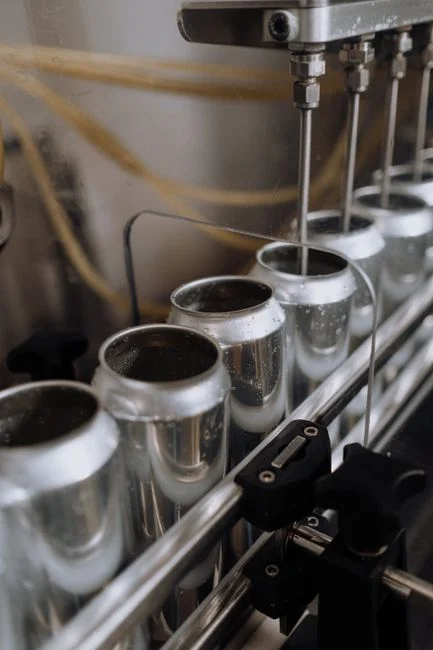
The numbers in a 2026 end-of-pipe permit are derived from the local TBLL using the MAHL method under 40 CFR 403.5(c), and the ceilings below reflect what a typical DELCORA-area permit prints (per St. Joseph, MO 2020 TBLL). Designers should target the design effluent column — 20–30% below the permit ceiling — to absorb slug loads and analytical variance.
| Parameter | 2026 Permit Ceiling (Daily Max) | Design Target (Effluent) | Lead Parameter for Negotiation? |
|---|---|---|---|
| HEM (oil & grease) | 100–200 mg/L | 80–160 mg/L (20% margin) | Yes — primary permit parameter |
| TSS | ~250 mg/L | 180–200 mg/L | No |
| BTEX (benzene/toluene/ethylbenzene/xylene) | Site-specific, MAHL-derived | Below detection where possible | Yes — constrains daily flow more than O&G |
| TPH | Site-specific, MAHL-derived | Below detection where possible | Yes — constrains daily flow more than O&G |
| Zinc, nickel, lead, chromium, copper | Site-specific from TBLL via MAIL | Derive from local TBLL using MAIL allocation | Yes — EV stream-specific |
| pH | 6.0–9.0 standard; 6.5–8.5 if water-reuse downstream | 6.5–8.5 | Yes — repeated excursions are an SNC trigger |
Engineers should treat benzene and TPH as the lead parameters for permit negotiation, because the MAHL they generate often constrains daily flow more than O&G does. For a Chester-area EV plant, the metals ceilings are not generic: phosphate from e-coat and zinc/nickel from cathodic dip dominate, while copper and lead enter from BIW grinding swarf and brass fittings. The correct way to derive site-specific ceilings is to ask the local POTW pretreatment coordinator for the TBLL calculation sheet and run the MAIL allocation against the design daily flow.
2026 Compliance and Audit Checklist for Chester EV/Auto Plants
Equipment only matters if the documentation behind it stays clean. The minimum self-monitoring cadence most POTWs expect from an EV/auto plant in 2026, anchored to the National Pretreatment Program (per HydropureWater field data, 2026), runs as follows:
- Daily visual free-oil inspection at the outlet weir, dated and initialed on a paper or digital log.
- Weekly TSS grab; monthly HEM composite by EPA Method 1664A (n-hexane extraction); 24-hour flow-proportional composite for BTEX and TPH where the limit is non-zero.
- Sampling taps accessible, flow meter calibrated annually, chain-of-custody defensible — most SNC findings originate from sampling-procedure deficiencies, not from the underlying treatment performance (HydropureWater field data, 2026).
- Spill containment around all aboveground storage, drip pans under loading arms, covered and locked dump valves on coalescers, segregated sewer laterals that keep product-handling pads out of the clean stormwater system, and a written Spill Prevention and Countermeasure Plan (SPCC) under 40 CFR Part 112 tied to the sewer map. This stack of BMPs eliminates roughly half of common audit findings (HydropureWater field data, 2025).
- Reports filed on the 15th of every month without exception; a pre-audit file aligned to the EPA National Pretreatment Program audit checklist categories.
The consequence matrix is linear and avoidable: one late monthly report triggers a Notice of Violation; two in twelve months escalate to SNC; SNC triggers a Show Cause hearing and potential permit action. A plant that runs the BMP list above, files reports on schedule, and keeps a pre-audit file in the categories EPA uses will not see an SNC finding in 2026.
Frequently Asked Questions
When does an EV/auto plant near Chester become an Industrial User?
Under 40 CFR Part 403, an Industrial User is any discharger that contributes process wastewater to a POTW, or that contributes ≥25,000 gpd of non-domestic waste. An EV battery gigafactory producing 30–50 GWh/yr hits that threshold on day one of operation, and so does a greenfield BIW and paint shop before the first production vehicle rolls off the line. Once the local POTW issues the permit, the operator owns the daily free-oil log, the monthly HEM composite, and the 30–60 day cure window.
What triggers Significant Noncompliance (SNC) in 2026?
Under EPA's National Pretreatment Program, SNC is triggered by any of the following: violation of a numerical limit by ≥1.5× for any single day, violation of a numerical limit for more than 5% of measurement days in a six-month period, or failure to provide required reports within 30 days of the due date. SNC can carry administrative orders, surcharges, mandated zero-discharge status, or permit termination, so equipment and SOP decisions made in the first quarter of operation determine the audit posture for years.
What is the typical 2026 HEM ceiling for a Chester-area permit?
Most 2026 permits in the Delaware River basin set HEM at 100–200 mg/L daily maximum and approximately 250 mg/L TSS, derived using EPA's MAHL method under 40 CFR 403 (per the 2020 St. Joseph, MO TBLL evaluation by Black & Veatch). Stricter POTWs in water-reuse basins push daily maximum HEM toward 50 mg/L. Engineers should design 20–30% below the permit ceiling, targeting 80–160 mg/L effluent on the HydropureWater DAF system.
Why does a DAF alone fail under slug loads at an auto plant?
Free oil from a coalescer dump or a paint-booth wash surge blankets DAF micro-bubbles and crashes the air-to-solids ratio; a DAF alone fails under slug loads (HydropureWater field data, 2026). A CPI or API gravity stage ahead of the DAF is standard practice, and equalization upstream of the DAF is what absorbs the 3–5× peak-to-mean spike typical of these operations.
What should a Chester EV plant do first when designing pretreatment?
Inventory the non-domestic streams and submit a waste survey to the local POTW (DELCORA or Chester Water Authority) before equipment selection. Request the TBLL calculation sheet and run the MAIL allocation against the design daily flow. Then design source segregation first — segregated laterals for e-coat, paint, cell-assembly, and BIW areas cut the volume hitting the treatment train by 40–70% (HydropureWater field data, 2025–2026) and convert the rest of the design from a problem into a choice.