
Why Industrial Plants Are Retrofitting UF in 2026
An ultrafiltration system retrofit and upgrade replaces aging spiral-wound or conventional media with modern hollow-fiber UF modules inside the existing footprint, cutting capex to roughly 30-50% of a new membrane plant and compressing timelines to 6-12 months. A 2026 retrofit typically delivers <0.1 NTU permeate turbidity, >99.99% pathogen removal, and SDI <1 for downstream RO protection.
Three pressures are converging on industrial operators in 2026. First, discharge and water-reuse standards have tightened, especially SDI and turbidity limits for RO feed, on plants that comfortably passed compliance five years ago. Second, RO membrane replacement cycles are shrinking as upstream solids carryover increases cleaning frequency and shortens element life. Third, spiral-wound UF modules are increasingly difficult and expensive to source, with 2026 supply consolidation concentrating spares into a small number of vendors. The result is a fleet of plants whose pre-treatment is now the bottleneck, not the membrane skid downstream.
Retrofit is not an experimental path. Membrane bioreactor and membrane retrofit have a documented 42-year track record in industrial and municipal applications (Dynatec Systems, since 1978), with thousands of conversions completed across landfill leachate, food and beverage, and petrochemical sites. The 2026 decision is no longer "is retrofit proven?" but "which retrofit architecture fits my feed, my footprint, and my capex window?" A 16-week mining retrofit documented in the WesTech 2026 case study — replacing an aging spiral-wound UF that needed costly, frequent membrane replacements and excessive downstream RO cleaning — is the template many operators are now following.
Retrofit Triggers: Five Symptoms That Mean You Need One
Five operating symptoms reliably distinguish a plant that needs a retrofit from one that needs a clean. Diagnose against these before you spend on membranes, chemicals, or contractor time.
1. Transmembrane pressure (TMP) drift >0.3 bar from baseline, or >20% loss of clean-water flux within 60 days. Reversible fouling recovers after CIP; irreversible fouling does not. If TMP is climbing faster than cleaning can knock it back, the fibers themselves are compromised. 2. Membrane replacement frequency exceeding once every 18 months, or chemical CIP more than twice per month. Both are spending alarms — either the modules are at end of life or the feed chemistry has shifted. 3. Downstream RO delta-P rising despite clean UF feed. This points upstream, to inadequate pre-filtration (DAF, screening, or sand media) loading the UF with particulates it was never sized to handle. 4. Permeate turbidity drifting above 0.2 NTU or SDI above 2.5. These are RO-protection ceilings, not abstract targets. Exceed them and RO membrane life drops measurably. 5. Plant capacity demand exceeding 85% of original design for 3+ months. The system is now capacity-limited, not just fouled — cleaning will not buy you back the 15% you have lost.
The WesTech 2026 mining case study exhibited this exact trigger pattern: "significant maintenance, costly and frequent UF membrane replacements, and excessive cleaning of the downstream reverse osmosis system." That combination — high UF spend plus high RO spend plus operator overtime — is the diagnostic signature of a retrofit candidate, not a clean-and-pray plant.
| Symptom | Threshold | Indicates | Retrofit Justified? |
|---|---|---|---|
| TMP drift from baseline | > 0.3 bar or > 20% flux loss in 60 days | Irreversible fouling, fiber degradation | Yes, if persistent after CIP |
| Membrane replacement frequency | More than once per 18 months | End-of-life modules or feed shift | Yes, especially with rising RO CIP |
| RO delta-P trend | Rising despite "clean" UF feed | Pre-treatment underperforming | Yes, scope to UF + pre-treatment |
| Permeate turbidity | Drifting > 0.2 NTU | RO-protection ceiling breached | Yes |
| Permeate SDI | Drifting > 2.5 | RO membrane life at risk | Yes |
| Capacity utilization | > 85% of design for 3+ months | System is capacity-limited, not fouled | Yes, scope to capacity expansion |
| CIP frequency | > 2x per month | Chemical / operating cost alarm | Yes, if budget impact > retrofit capex |
Hollow-Fiber vs. Spiral-Wound UF: Why the 2026 Retrofit Default Has Shifted
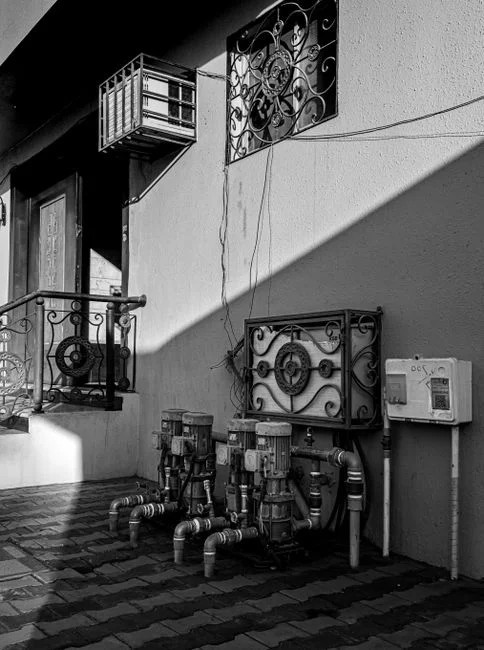
Hollow-fiber UF has become the 2026 retrofit default because it tolerates backwash, accepts aggressive CIP, and runs at higher recovery than spiral-wound — three properties that directly address the failure modes listed above. Spiral-wound UF remains space-efficient and cheaper per square meter of membrane area, but it cannot be backwashed effectively: foulants accumulate in the feed spacer and the only recovery is full chemical cleaning or module replacement.
Hollow-fiber modules operate in either outside-in or inside-out flow with periodic reverse flush. PVDF fibers tolerate 2,000 ppm continuous free chlorine, pH 1-14 during CIP, and operating pressure up to 6.0 bar (87 psi). Spiral-wound polyamide or PES composites are far more restricted on both chlorine tolerance and backpressure, which is why the retrofit-kit spec sheet (DAGYEE UF Membrane Retrofit & Upgrade Kit) defaults to PVDF hollow fiber with fiber inner diameter 0.6-1.0 mm, outer 1.0-1.6 mm, and 0.01-0.02 µm pore size. Recovery runs 85-95% for hollow-fiber versus typically 70-85% for spiral-wound under comparable feed; reject stream is only 5-10% of feed.
The WesTech 2026 mining retrofit moved from spiral-wound to a 6x25% hollow-fiber configuration, with cross-flow, feed antiscalant dosing, and a dual-unit CIP system that cleans two skids simultaneously to halve downtime. That 6x25% architecture — six units at 25% capacity each — is now the standard N+1 redundancy pattern for industrial UF retrofits because it allows one unit offline for CIP while the others stay in service, eliminating the production penalty that plagued earlier single-skid designs.
| Parameter | Hollow-Fiber PVDF (2026 default) | Spiral-Wound (legacy) |
|---|---|---|
| Backwash capability | Yes, periodic reverse flush | No — spacer traps foulants |
| Continuous chlorine tolerance | 2,000 ppm | Limited, typically < 1 ppm |
| CIP pH range | 1 - 14 | Narrow, module-specific |
| Max operating pressure | 6.0 bar (87 psi) | Typically lower, backpressure-sensitive |
| Recovery | 85 - 95% | 70 - 85% |
| Reject stream | 5 - 10% of feed | 15 - 30% of feed |
| Pore size | 0.01 - 0.02 µm | 0.01 - 0.05 µm |
| Pathogen removal | > 99.99% bacteria and virus | > 99.99% bacteria, variable virus |
| Typical configuration | 6 x 25%, N+1 redundancy | Single skid, full stand-by |
| PVDF service life | 3 - 5 years | 2 - 3 years, depending on feed |
Retrofit Architectures: Drop-In, Out-of-Basin, and MBR Conversion
Three engineering paths cover the bulk of 2026 industrial retrofits, and the right choice depends on whether your bottleneck is hydraulic capacity, biological treatment, or both. A drop-in skid retrofit replaces the existing module rack with hollow-fiber modules and reuses feed, backwash, and CIP piping plus existing tanks. It is the lowest-cost, fastest-install option and fits plants whose biological or pre-treatment step is already adequate. The WesTech mining retrofit followed this pattern, fitting the new hollow-fiber system inside the existing footprint with redesigned piping and a controls overhaul in 16 weeks.
An out-of-basin retrofit relocates the membranes outside the biological tank. The existing aeration basin is then available to be repurposed for new process steps — for example, upgraded aeration, anoxic zones for nutrient removal, or equalization. This is the architecture Dynatec Systems has deployed for decades, with the explicit goal of reusing existing tankage and "rarely requiring new tanks to be built" (Dynatec, 2026). Out-of-basin is right when MBR upgrade is part of the scope but the existing biological process also needs rework.
MBR conversion combines activated-sludge tankage with submerged PVDF UF, typically delivering sub-1-micron effluent and shrinking the footprint by roughly 60% versus conventional activated sludge. MBR is right when the plant needs both BOD/TSS removal and reuse-quality effluent in a single step. MBR conversion usually demands more hydraulic and aeration redesign than a pure UF drop-in because the membranes sit in or beside the aeration basin and the air-scour system must be re-engineered. An integrated MBR membrane bioreactor system is the standard scope; for plants reusing existing tankage with submerged modules, a PVDF flat sheet MBR membrane module is the typical replacement. For a parameter-level comparison of MBR effluent against CAS and other reuse options, see the MBR effluent quality vs alternatives comparison.
Capex, Timeline, and ROI: What a 2026 UF Retrofit Actually Costs
A 2026 UF retrofit typically runs 30-50% of the capex of a new membrane plant. The cost driver is reuse: existing basins, piping, pumps, and buildings stay in service, and the budget goes only to the new membrane modules, control system, and minor piping modifications (per the DAGYEE retrofit kit specification, 2026). Timeline compresses from 2-3 years for greenfield to 6-12 months for retrofit, with phased installation during scheduled shutdowns and no requirement for temporary treatment capacity. The WesTech 2026 mining case completed design, fabrication, retrofit, and installation in 16 weeks, including a complete piping redesign and control-system overhaul.
Payback is built from avoided costs, not new revenue alone. The line items to model:
- Avoided spiral-wound replacement. Industry baseline 2-3 year life; switch to 3-5 year PVDF service life and the spend line drops by 30-50%.
- Reduced RO membrane replacement frequency. Cleaner UF feed (SDI <1 versus 2.5-5) typically extends RO element life 50% or more.
- Lower CIP chemical use. Hollow-fiber backwash removes the bulk of foulants chemically, cutting NaClO and acid consumption.
- Higher recovery. 85-95% versus 70-85% means 10-15 percentage points less feedwater intake and less waste brine downstream.
- Reduced operator attention. PLC + HMI with remote monitoring, automatic backwash and CEB sequencing — fewer manual CIP rounds.
Typical payback for a 2026 industrial retrofit falls in the 18-30 month window when downstream RO protection, water-reuse revenue (where the plant sells or reuses permeate), and avoided downtime are credited. ESG procurement teams increasingly credit the embodied-carbon saving from reusing existing concrete and steel — fewer tonnes of new material, less construction waste, a smaller Scope 3 line on the sustainability report. This is becoming a scored criterion in 2026 industrial capex approvals, especially for mining and food & beverage sites with public ESG targets.
| Cost / Benefit Line | Greenfield Membrane Plant | 2026 UF Retrofit |
|---|---|---|
| Capex (relative) | 100% | 30 - 50% |
| Design-procure-install timeline | 24 - 36 months | 6 - 12 months |
| Civil works required | Full new basins, buildings | Reuse existing |
| Temporary treatment during construction | Often required | Not required |
| Permeate quality | < 0.1 NTU, SDI < 1 | < 0.1 NTU, SDI < 1 |
| RO membrane life extension | Baseline | ~50% longer |
| Payback window (typical) | N/A | 18 - 30 months |
| Embodied carbon (Scope 3) | High — new concrete and steel | Significantly lower — reuse |
Implementation Roadmap: From Site Audit to Commissioning
A 2026 retrofit project runs through five steps. Plant engineers can use this to plan internally or to vet a vendor proposal; deviations from this sequence are a risk flag.
- Site audit (4-6 weeks). Feed characterization, fouling history review, hydraulic profile, downstream RO performance data, and discharge-limit review. Output: a retrofit feasibility memo with go/no-go and recommended architecture.
- Pilot or bench test (4-8 weeks). Run site feed through candidate hollow-fiber modules. Design-acceptance targets: permeate < 0.1 NTU, SDI < 1, sustainable flux, and CIP recovery. Output: vendor selection and confirmed membrane area.
- Skid design. Specify 6x25% (or N+1) configuration so one unit can be in CIP while others run — the same architecture WesTech delivered in the 2026 mining case. Include cross-flow, antiscalant dosing, and dual-unit CIP to halve downtime. Output: P&ID, GA drawings, controls architecture.
- Phased installation during scheduled shutdowns. Preserve existing plant operation throughout. No months-long outage. Output: commissioned skids tied into existing header piping.
- Commissioning, training, and 90-day performance warranty. PLC + HMI controls with remote monitoring as standard 2026 scope. Vendor operator training (2-3 hours per shift for typical systems, longer for MBR conversions). Output: performance-trended handover with warranty terms.
Vendor selection criteria: documented PVDF membrane track record on feeds similar to yours (mining, leachate, food & beverage), in-house controls and programming capability, in-basin and out-of-basin flexibility, and at least one retrofit reference plant you can visit or call. For plants that need a single packaged water-reuse train, an integrated water purification skid combines UF, sterilisation, and polishing in one factory-tested unit — useful when the retrofit scope is reuse-grade effluent rather than RO pretreatment alone. For pre-treatment retrofit decisions upstream of UF (DAF, screening, lamella), the lamella clarifier retrofit and upgrade guide 2026 and the filter press retrofit and upgrade guide 2026 are directly relevant.
Frequently Asked Questions
How do I decide between a hollow-fiber UF retrofit and keeping my existing spiral-wound modules?
Switch to hollow-fiber PVDF if your CIP frequency exceeds twice per month, permeate turbidity is drifting above 0.2 NTU, or spiral-wound replacement is costing more than 30-50% of a new retrofit. Hollow-fiber supports periodic backwash, tolerates 2,000 ppm continuous chlorine, and runs at 85-95% recovery versus 70-85% for spiral-wound.
What is the realistic capex saving of a retrofit versus a new membrane plant in 2026?
A 2026 retrofit runs 30-50% of greenfield capex because existing basins, piping, pumps, and buildings are reused. Timeline compresses from 2-3 years to 6-12 months, and the WesTech 2026 mining case study completed a full retrofit with piping redesign and controls overhaul in 16 weeks.
What permeate quality should I specify as design acceptance for a 2026 UF retrofit?
Specify < 0.1 NTU turbidity, SDI < 1, and > 99.99% pathogen (bacteria and virus) removal. These are the operating envelope that protects a downstream RO system and meets tightened 2026 reuse-discharge standards. Pilot testing on site feed should demonstrate these values sustainably before skid fabrication begins.
How long do PVDF hollow-fiber modules last, and what determines service life?
PVDF hollow-fiber modules typically deliver 3-5 years of service life with proper CIP discipline (NaClO, citric acid, NaOH, EDTA per the retrofit-kit chemical matrix). Service life shortens if CIP frequency exceeds design, if pre-filtration upstream is inadequate, or if the feed contains oils or solvents that the membrane chemistry cannot tolerate.
When does MBR conversion make more sense than a pure UF retrofit?
Specify MBR conversion when the plant needs both biological BOD/TSS removal and reuse-quality effluent in one step, when footprint reduction of roughly 60% versus CAS is a project driver, or when the existing activated-sludge system has chronic settling and sludge-ability problems. A pure UF retrofit is correct when the biological step is already adequate and only the membrane separation step needs replacement.
What is the typical 2026 ROI window for an industrial UF retrofit, and are there non-financial benefits?
Payback typically falls in the 18-30 month range when downstream RO protection, water-reuse revenue, and avoided downtime are credited. ESG procurement teams increasingly credit the embodied-carbon saving from reusing existing concrete and steel — a scored criterion in 2026 industrial capex approvals, particularly for sites with public sustainability targets.