Why Germantown pharma plants face a three-layer pretreatment stack
Pharma plants discharging to the sanitary sewer in the Germantown, MD / I-270 corridor sit at the intersection of three regulatory layers, and the most stringent applicable number is the one that controls the design. Layer 1 is the general and specific prohibitions at 40 CFR 403.5(a) and (b), which ban any discharge that causes pass-through or interference and lists specific prohibited pollutants (per EPA, 2026). Layer 2 is the categorical pretreatment standard in 40 CFR Part 439 — Pharmaceutical Manufacturing, which sets numeric BOD, TSS, and COD limits for fermentation, extraction, chemical synthesis, mixing/compounding/formulation, and research subcategories (source: watertechonline.com, citing 40 CFR 439.12–439.15). Layer 3 is the local limit set by the Control Authority at the point of connection to the POTW — in the Germantown service area, that is the Washington Suburban Sanitary Commission (WSSC), with pretreatment delegation held by Maryland DES under COMAR 26.08 (per EPA guidance, 2026).
Two legal triggers apply even when no numeric limit is exceeded. Pass-through, defined at 40 CFR 403.3(p), is a discharge that exits the POTW in concentrations that cause a violation of the POTW's NPDES permit (per EPA, 2026). Interference, defined at 40 CFR 403.3(k), is a discharge that inhibits or disrupts the POTW, its treatment processes, or its sludge processes and therefore causes an NPDES or sewage-sludge permit violation (per EPA, 2026). EPA regulates the underlying chemistry tightly because the universe of regulated inputs is large: about 10,000 pharmaceuticals with roughly 3,000 active ingredients are approved and marketed in the U.S. (source: watertechonline.com). Local limits can be more stringent than the federal categorical numbers when the receiving plant's hydraulic or biological capacity is constrained (per EPA, 2026) — which is why one number is never enough.
What 40 CFR Part 439 actually requires from a fermentation or API plant
Part 439 splits pharmaceutical manufacturing into five subcategories: fermentation products, extraction products, chemical synthesis products, mixing/compounding and formulation, and research (source: watertechonline.com). Most Germantown-area API and fill-finish operations sit in the chemical synthesis or mixing/compounding subcategories. The Best Practicable Control Technology Currently Available (BPT) math in 40 CFR 439.12(a) is the binding floor for existing sources and reads: BOD₅ must reflect no less than 90% reduction of the long-term average daily BOD₅ load of the raw (untreated) process wastewater, multiplied by a variability factor of 3.0 (per 40 CFR 439.12(a)). The "long-term average daily BOD₅ load" is the average daily BOD load during any calendar month, over 12 consecutive months within the most recent 36 months, and must include one or more periods during which production was at maximum (per 40 CFR 439.12(a)(1)).
From that floor, three derivable numbers drop out: TSS is calculated as 1.7× the BOD₅ limit (per 40 CFR 439.12(b)), and COD is fixed at 1,675 ppm maximum daily load and 856 ppm maximum monthly average unless an alternative mass-based limit applies (per 40 CFR 439.12(c)). Practices of recovery and separate disposal or reuse — physical separation of separable mycelia, solvent recovery, incineration of concentrated solvent waste streams, and broth concentration for off-site disposal — are credited toward the BOD limit and can be combined with end-of-pipe treatment to hit it (per 40 CFR 439.12(a)(3)). New sources face the New Source Performance Standards (NSPS) floor at 40 CFR 439.15, and the Best Available Technology Economically Achievable (BAT) limits at 40 CFR 439.14 add numeric mg/L ceilings for specific basic process chemicals on top of BPT (source: watertechonline.com).
Antibiotic-resistance concerns are explicit in the rulemaking record: certain APIs require extra management to prevent selection of resistant microorganisms, and the 1998 EPA Development Document flags this as a categorical concern (source: watertechonline.com). A defensible pretreatment design therefore cannot be defended on BOD/COD/TSS alone — the envelope has to be sized to the chemistry of the API and solvent list actually produced.
| Parameter | Federal limit (40 CFR Part 439) | Subcategory coverage | Source |
|---|---|---|---|
| BOD₅ reduction | ≥90% of long-term average daily load × 3.0 variability factor | All subparts (BPT) | 40 CFR 439.12(a) |
| TSS | 1.7 × BOD₅ limitation (mass basis) | All subparts (BPT) | 40 CFR 439.12(b) |
| COD | 1,675 ppm daily max / 856 ppm monthly avg | All subparts (BPT, default) | 40 CFR 439.12(c) |
| Basic process chemicals | Numeric mg/L limits (daily max, monthly avg) | All subparts (BAT) | 40 CFR 439.14 |
| New-source performance | Numeric mg/L limits (daily max, monthly avg) | New sources (NSPS) | 40 CFR 439.15 |
WSSC and Maryland DES: the local-limit layer most engineers under-design for

Local limits are site-specific numeric or narrative effluent discharge limits, including BMPs, that a POTW imposes at the end-of-pipe discharge from an industrial user — i.e., at the point of connection to the POTW's collection system (per EPA, 2026). Their purpose is to protect the POTW, its sludge, and its receiving waters from pass-through and interference, and they can be more stringent than the federal categorical numbers when the receiving plant's hydraulic or biological capacity is constrained (per EPA, 2026). In the Germantown service area, the controlling POTW is WSSC, and the pretreatment program is administered under Maryland DES delegation through COMAR 26.08.
The parameters most local-limit programs hit are: pH 6–9, FOG cap, total metals (often individual ceilings on Cd, Cr, Cu, Ni, Pb, Zn), BOD/COD, TSS, ammonia, and sometimes total nitrogen or sulfides (per EPA guidance on common local-limit parameters, 2026). EPA guidance requires POTWs to identify pollutants of concern, calculate maximum allowable headworks loadings, and re-evaluate annually — so a local-limit basis a plant was designed to in 2018 may already be obsolete (per EPA, 2026). The action item is unambiguous: request the current WSSC local limits and the latest headworks-loading analysis from the Control Authority before any equipment decision. Any engineer who skips this step is designing to a number that has not been validated for 2026.
The six-step compliance workflow for a Germantown SIU
Step 1 — Characterize. List every wastewater stream and map it to a Part 439 subcategory. The list typically includes chemical reactor rinses, fermentation broth, solvent extraction, mixing/granulation rinse, equipment and floor cleaning, scrubber blowdown, lab wastewater, RO concentrate, cooling tower and boiler blowdown, and sanitary flow (source: pharmamanufacturing.com). Each stream carries a different pollutant envelope — for example, chemical reactor rinses can carry acids, bases, metals, halides, sulfates, and API traces, while extraction streams carry residual solvents such as ethanol, methanol, acetone, isopropanol, and acetic acid (source: pharmamanufacturing.com).
Step 2 — Match the standard. Identify the controlling pollutant for each stream and assign the applicable 40 CFR Part 439 subpart plus the WSSC local limit as the binding number. The most stringent applicable value controls. Step 3 — Engineer the train. Select equalization, pH adjustment, suspended-solids removal, biological treatment, and polishing or evaporation to hit the binding number (per EPA, 2026). Step 4 — Document. Prepare the Baseline Monitoring Report (BMR) at the point of categorical standard promulgation or new-discharge startup, and a slug load control plan under 40 CFR 403.8(f) for batch operations (per EPA, 2026). Step 5 — Monitor. Run 90-day compliance reports, POTW inspections, and self-monitoring under 40 CFR 403.12, with pH and flow at the equalization outlet for batch plants (per EPA, 2026). Step 6 — Audit. Re-permit on the WSSC control-mechanism cycle and re-validate the local-limit basis annually.
The slug load control plan is non-negotiable for batch SIUs. A slug load is any non-routine pollutant release or hydraulic surge that can cause pass-through or interference at the POTW, and the plan must combine equalization capacity, flow and pH monitoring, and written operating procedures for batch releases (per 40 CFR 403.8(f), per EPA, 2026). Plants that fail to maintain this documentation chain are the most common enforcement targets in WSSC's audit findings (per EPA enforcement guidance, 2026).
The unit-operation train most Germantown plants end up installing
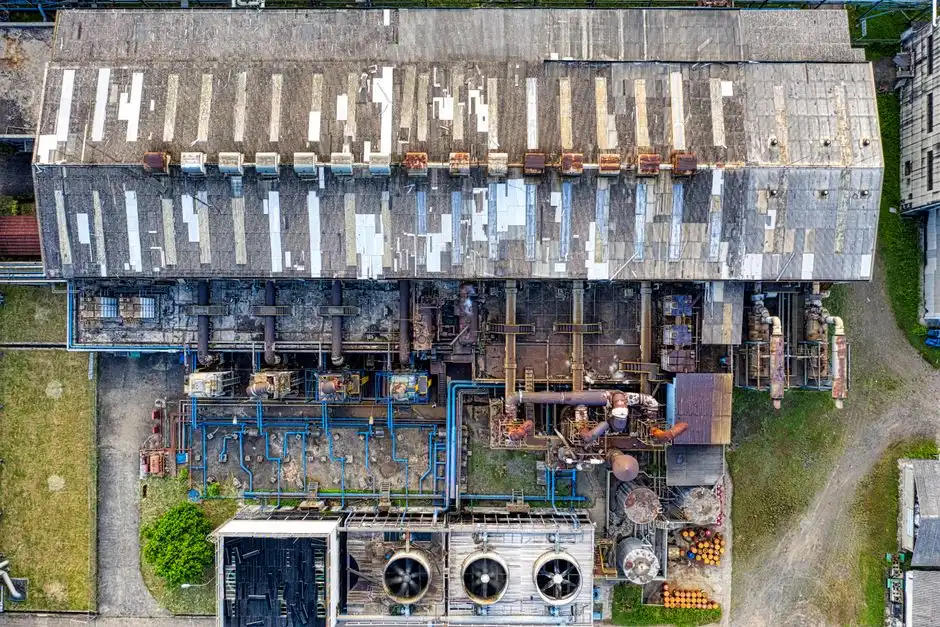
The right subset of unit operations is a function of the controlling pollutant, but most Germantown plants end up with five or six of the following in series. Equalization dampens batch pH, flow, and concentration swings before downstream operations see them — hours-to-days retention for batch plants, 4–8 hours for continuous (per EPA, 2026). Under-sizing it is the most common root cause of failed compliance events. pH adjustment to the local 6–9 band happens through a PLC-controlled chemical dosing system with set-point logic for strong acid/caustic batches. A dissolved air flotation (DAF) system handles FOG, TSS, and colloidal matter via micro-bubble skimming ahead of biological polishing. A high-efficiency sedimentation tank (lamella clarifier) follows chemical precipitation for dissolved metals where Part 433-style ceilings apply.
Biological polishing is the workhorse for COD/BOD. Activated sludge is the lowest-footprint-cost option for discharge-only trains; an MBR membrane bioreactor system is the right pick when API trace removal or downstream RO is in scope, because it delivers sub-1-µm filtered effluent and stable performance across batch swings (per EPA, 2026; for troubleshooting see the MBR common problems and solutions (2026 guide)). Polishing closes the train: multimedia and carbon filtration, then an industrial RO polishing system when reuse or ZLD is targeted. A properly designed RO removes up to 99.5% of incoming dissolved salts and impurities, and vacuum evaporation can hit residual total solids concentrations above 85% (source: pharmamanufacturing.com). Sludge handling downstream is the next-line OPEX lever — see the sludge thickener OPEX in 2026 breakdown for the realistic energy and polymer numbers.
| Unit operation | Influent problem solved | Parameter controlled | Regulatory driver |
|---|---|---|---|
| Equalization basin | Batch pH, flow, temperature, concentration swings | Flow / variability | 40 CFR 403.5(a); 403.8(f) slug control |
| PLC-controlled pH adjustment | Strong acid/caustic batches | pH (typical 6–9 local limit) | 40 CFR 403.5(b); local limit |
| Dissolved air flotation (DAF) | FOG, TSS, colloidal matter | Oils & TSS | 40 CFR 403.5(a); categorical standard; local limit |
| Chemical precipitation + lamella clarifier | Dissolved metals | Cd, Cr, Cu, Ni, Pb, Zn | Categorical standard (e.g., 40 CFR Part 433); local limit |
| Biological polishing (AS / MBR) | Soluble COD/BOD, API traces | BOD, COD | Categorical standard; local limit |
| Multimedia / carbon filtration + RO | Residual TSS, dissolved salts | TDS, conductivity | Local limit; reuse-quality targets |
BMR, slug load plan, and the documents that close most audit findings
Documentation is where most audit findings originate, and four documents close out the compliance program. The Baseline Monitoring Report (BMR) is required at categorical standard promulgation or new-discharge startup and establishes the baseline pollutant envelope the rest of the program is measured against (per 40 CFR 403.12, per EPA, 2026). The slug load control plan under 40 CFR 403.8(f) must combine equalization capacity, flow and pH monitoring, and written operating procedures for batch releases (per EPA, 2026). The control mechanism — a permit or equivalent control document issued by the WSSC Control Authority — formalizes the limits, monitoring, and reporting obligations for every IU, even those that are not SIUs (per EPA, 2026). Self-monitoring under 40 CFR 403.12 plus routine POTW inspections complete the chain. Engineers who treat these as paperwork rather than as the binding operating envelope end up designing to the wrong number.
Reuse, ZLD, and the 2026 cost angle for a Germantown plant
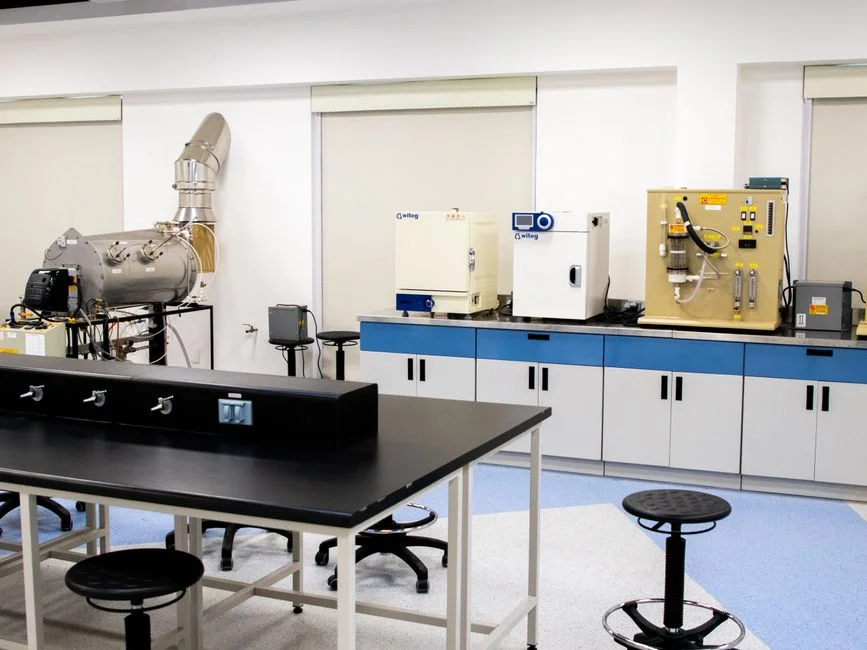
The 2026 economic case for moving beyond compliance-only design is straightforward. Sewer fees, BOD/COD surcharges, and overage fines are all rising; the U.S. DOE-tracked average annual water-price escalation rate is 4.1% (source: pharmamanufacturing.com, citing DOE). Wastewater recycling systems can drop disposal costs up to 15× and reduce water volumes up to 98% (source: pharmamanufacturing.com). In a documented pharma lab case, adding vacuum evaporation to treat about 4 tons/day of effluent recovered more than 90% of the water for reuse (source: pharmamanufacturing.com). Reuse targets at Germantown plants are typically low-grade — cooling-tower makeup, boiler feed, cleaning, or irrigation — so polishing is sized for those endpoints rather than for potable (source: pharmamanufacturing.com).
The 2026 decision rule is simple. If reuse is on the three-to-five-year roadmap, an MBR-plus-RO path is favored over discharge-only activated sludge because it produces reuse-quality water and offsets fresh-water purchase (per EPA, 2026). Pure discharge-to-sewer operations can stay on a conventional aerobic basin. Either way, the same three-layer compliance stack still controls the design, and the binding number is whichever of 40 CFR Part 439, 40 CFR 403.5(a)/(b), and the current WSSC local limit is most stringent. For a parallel international reference on pharma wastewater trains, see the pharma wastewater treatment in Ghana (2026 guide).
Frequently Asked Questions
Which 40 CFR Part 439 subcategory applies to a typical Germantown API or fill-finish plant?
Most Germantown API operations fall under the chemical synthesis subcategory, and most fill-finish operations fall under mixing/compounding/formulation, both of which are subject to the BPT math at 40 CFR 439.12: BOD₅ ≥90% reduction × 3.0 variability, TSS = 1.7 × BOD₅, COD 1,675 ppm daily / 856 ppm monthly (source: watertechonline.com).
How does the BMR interact with the slug load control plan for a batch SIU?
The BMR establishes the baseline pollutant envelope at startup or at categorical standard promulgation under 40 CFR 403.12; the slug load control plan under 40 CFR 403.8(f) then governs day-to-day batch operations by combining equalization capacity, flow and pH monitoring, and written release procedures (per EPA, 2026).
Do antibiotic-resistance concerns change the pretreatment design?
Yes. The 1998 EPA Development Document for Part 439 flags antibiotic resistance as a categorical concern, and 40 CFR 439.12 credits recovery and separate disposal of mycelia and solvent streams toward the BOD₅ limit, which means segregation of biologically active streams is often the lowest-cost way to keep resistant-microorganism selection risk out of the downstream train (source: watertechonline.com).
Is ZLD worth the capital cost for a Germantown plant in 2026?
The economic case is strong when sewer surcharges, BOD/COD fines, and water-price escalation are stacked: documented pharma systems cut disposal costs up to 15× and water volumes up to 98%, with vacuum evaporation recovering >90% of the water in a published case (source: pharmamanufacturing.com).