
Why a Tier-1 Berea Supplier Needs More Than a DAF
Transportation equipment plants discharging to the Berea Municipal Utilities (BMU) sewer face a three-layer limit stack before the water leaves the plant: 40 CFR Part 403 sets the federal frame, 40 CFR Part 433 (Metal Finishing) or 40 CFR Part 464 (Metal Molding and Casting) applies where a plant is categorical, and BMU enforces local limits at the monitoring manhole under Article IV, Paragraph 31 of the City of Berea Code of Ordinances (per BMU's published Industrial Pretreatment Program). US EPA sets the categorical structure, the Kentucky Division of Water Waste Management branch oversees state-level enforcement, and Hall Environmental Consultants serves as the program coordinator for BMU.
A representative Tier-1 transmission supplier in the Madison County service area runs about 50 m³/day with a 2.5× peak factor during cleaning-line batch dumps. The four dominant streams split roughly as parts-wash rinse 30–40%, floor wash 10–20%, vibratory deburring 10–20%, phosphate machining fluid 5–15%, and compressor condensate 5–10% of total flow (HydropureWater field data, 2026). A dissolved air flotation (DAF) unit sized to daily average will deliver 60–100 mg/L TSS and 40–80 mg/L COD — numbers that fail dissolved metals under Part 433 and trip zinc excursions during a parts-wash peak. The fix is a four-stage train that flattens the peak first, then polishes biologically.
The Three Compliance Layers Stacked Side by Side
The single most common audit finding at Madison County industrial users (IUs) is a discharge that meets one limit set and trips another. The controlling-limit rule is simple: where federal categorical and BMU local limits differ, the more stringent value controls. The table below pulls the three enforcement layers plus an internal design basis into one artifact that can be lifted directly into a BMU permit application.
| Parameter | 40 CFR Part 433 daily max / monthly avg | KY DOW (enforced through BMU delegation) | BMU local limit (monitoring manhole, Art. IV ¶31) | Design basis (engineered target) |
|---|---|---|---|---|
| pH | — | 5.0–10.0 narrative | 5.0–10.0 (site-specific; confirm with Hall Environmental) | 6.5–8.5 |
| Oil & Grease | — | ≤100 mg/L narrative | ≤100 mg/L daily max | ≤25 mg/L |
| TSS | — | ≤250 mg/L narrative | ≤250 mg/L daily max | ≤30 mg/L |
| COD | — | Narrative; pass-through test | Site-specific | ≤150 mg/L |
| Total Chromium | 2.77 / 1.71 mg/L | Narrative ceiling | Site-specific; ≤5 mg/L typical corridor | ≤1.0 mg/L |
| Zinc | 1.48 / 1.06 mg/L | Narrative ceiling | Site-specific; ≤2.6 mg/L typical corridor | ≤1.0 mg/L |
| Lead | 0.69 / 0.43 mg/L | Narrative ceiling | Site-specific; ≤0.6 mg/L typical corridor | ≤0.2 mg/L |
| Nickel | 3.98 / 2.38 mg/L | Narrative ceiling | Site-specific; ≤2.0 mg/L typical corridor | ≤0.5 mg/L |
| PFAS (2026 monitoring) | — | Monitoring access only in 2026 | Added to IU sampling list for 2026 | Sample ports installed; no removal specified yet |
The categorical numbers in column 2 are from 40 CFR Part 433. The BMU values in column 3 are site-specific and must be confirmed with Hall Environmental rather than copied from a third-party summary (per EPA's local-limits framework at 40 CFR 403.5(c)). The design-basis column targets 20–30% below the local limit to absorb the 2024–2025 POTW permit cycle tightening, which is the right margin for a 2026 plant.
Characterizing the Four Waste Streams Before Sizing Equipment
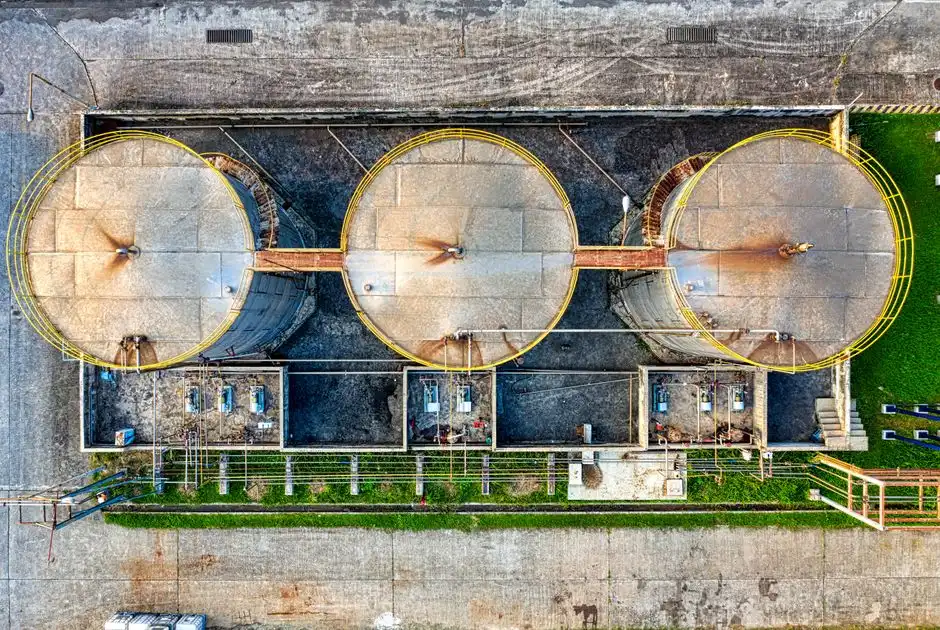
Sizing a treatment train on a generic "industrial wastewater" assumption is the single most common cause of BMU permit excursions. Each stream has distinct chemistry, and blending them in the sewer without equalization turns a 1.2× peak into a 4× shock on the DAF cell. Characterize the source first, then size the equipment to the blended equalized flow.
| Stream | Volume share | COD (mg/L) | TSS (mg/L) | O&G (mg/L) | pH | Notes |
|---|---|---|---|---|---|---|
| Parts-wash rinse (alkaline aqueous) | 30–40% | 200–800 | 50–200 | 50–200 | 9–11 | Surfactant load; the dominant flow contributor and the most common source of zinc excursions |
| Vibratory deburring slurry | 10–20% | 500–1,500 | 800–3,000 | 20–100 | 7–9 | Elevated iron and aluminum from media and parts; abrasive fines foul membranes if not screened and floated first |
| Phosphate machining fluid | 5–15% | 1,500–5,000 | 100–500 | 200–800 | 9–10 | Highest-COD stream per unit volume; free oil must be skimmed before equalization |
| Compressor condensate | 5–10% | 50–300 | 10–50 | 200–1,000 | 6–8 | Emulsifies readily under plant pressure; Kentucky winter humidity (Nov–Mar) increases volume 10–20%, which the equalization basin must absorb |
Total plant hydraulic load scales at 25–80 m³/day per 100 production employees (HydropureWater field data, 2026). Floor wash (10–20% of flow) is typically blended with parts-wash after coarse screening, so it does not warrant a separate treatment stage. The four streams above are what drive unit-process selection; the rotary bar screen at the head of the train protects everything downstream from the rags, plastics, and tramp metal that ride in with floor wash and parts-wash. A GX-series rotary mechanical bar screen at 2–5 mm aperture with dual overload bypass is the standard pick for this duty.
The Four-Stage Train That Reaches the Monitoring Manhole
Flow order is not optional. Each stage protects the one downstream of it, and the sizing numbers below are what an engineer can lift directly into a BMU permit application or an equipment specification.
Stage 1 — Headworks screening. A GX-series rotary mechanical bar screen at 2–5 mm aperture, sized to the 2.5× peak instantaneous flow rather than the daily average. A deburring tank dump will define the required hydraulic capacity, not the average shift flow. Specify dual overload bypass and a self-cleaning brush discharge so a single rag bundle does not take the screen down during a cleaning-line flush.
Stage 2 — Equalization. A surge basin sized for 4–6 hours of average flow — roughly 8–20 m³ per 100 employees depending on the cleaning-line schedule. Use air mixing, not mechanical mixers, to prevent grease re-emulsification. Hydraulic buffering is the most cost-effective pretreatment upgrade available: a 2.5× peak becomes a 1.0–1.2× load on everything downstream, which is the difference between an over-sized DAF and a right-sized one.
Stage 3 — DAF for oil, grease, and suspended solids. A dissolved air flotation system operating at 4–20 m³/h surface loading with polymer flocculation ahead of the cell. Air-to-solids ratio 0.04–0.08 kg air per kg suspended solids drives free-oil and emulsified-oil capture to under 100 mg/L. Specify 4–8 m/h surface loading for free oil and 15–25 m/h for emulsified oil with coagulant. Size the DAF hydraulic capacity at the equalized peak flow, not the daily average.
Stage 4 — MBR polishing. An integrated MBR membrane bioreactor system using a DF-series PVDF flat sheet membrane module at 0.1 µm pore size, MLSS 8,000–12,000 mg/L, design flux 12–18 LMH. Effluent TSS reliably under 10 mg/L and COD under 50 mg/L — well inside BMU local limits and inside the tighter 40 CFR Part 433 categorical numbers for chromium, zinc, lead, and nickel. A PLC-controlled chemical dosing skid for coagulant, polymer, and pH adjustment should be specified in the same purchase order as the major unit processes, not as a separate line item. Specifying the skid separately is the most common way a project ends up with a dosing system that cannot communicate with the DAF or MBR PLCs.
Engineers familiar with the Berkeley envelope or the Carson petroleum plant pretreatment guide will recognize the same headworks-equalization-DAF-MBR architecture; the Madison County difference is the 20–30% metals margin and the seasonal condensate swing the basin has to absorb.
Solids Mass Balance BMU Will Ask For at Permit Renewal
Hall Environmental will request a solids mass balance at the next permit cycle, and presenting one up front is the difference between a routine renewal and a special inspection. The numbers below are typical for a 50 m³/day Tier-1 plant in the corridor.
DAF skimmings come off at 3–6% solids; MBR waste activated sludge (WAS) at 0.8–1.2% solids. A plate-and-frame filter press sized to operate one shift per day on the combined DAF plus WAS stream targets cake solids of 22–28%, which keeps hauling cost manageable for a plant producing 200–600 kg of dry solids per day (HydropureWater field data, 2026). One shift is the right operating envelope — two shifts drive labor cost without meaningfully reducing hauling volume, and zero shifts means a lagoon that Hall Environmental will flag at the next site visit. The dewatering stage is the de facto standard for Kentucky metal-finishing IUs because it produces a stackable cake that can be hauled as non-hazardous waste rather than a liquid slurry that triggers liquid-waste manifest requirements.
Madison County 2026 Planning Items That Change the Design
Three 2026-specific items separate a current Berea design from a 2022 design that is already obsolete. A permit application that does not address them will come back with revision requests.
PFAS monitoring is now on the BMU IU sampling list for 2026. Treatment is not yet required, but sample ports must be installed at the monitoring manhole and the design must allow a future polishing stage (likely granular activated carbon or ion exchange) to be tied into the existing MBR effluent pipe without replumbing the building drain.
Lead and zinc trend monitoring remains active because of legacy corridor soils in Madison County. The 20–30% metals margin in the design basis covers both the enforcement density BMU applies today and the local-limit tightening that follows the 2024–2025 POTW permit cycle.
Specify chemical dosing skids with feed-forward capacity for additional coagulant. If BMU tightens a local limit after the 2024–2025 permit cycle, the fix should be a chemistry change, not a hardware retrofit. The dosing skid should accept a second coagulant metering pump without panel rework.
Self-monitoring cadence for non-categorical IUs runs quarterly for conventionals (pH, TSS, O&G) and annually for metals; monthly sampling triggers after any parameter exceeds 80% of its BMU local limit in the prior 12 months. Categorical facilities under 40 CFR Part 433 follow the more frequent schedule defined in the standard. The same trigger logic applies to a comparable transportation equipment pretreatment guide for Berkeley plants and the US mining pretreatment compliance guide, both of which discuss the 80% trigger as a control point for the upcoming permit cycle.
Frequently Asked Questions
Which limit controls if federal categorical and BMU local limits differ?
The more stringent limit controls. 40 CFR Part 433 sets categorical daily maximum and monthly average values for total chromium (2.77/1.71 mg/L), zinc (1.48/1.06 mg/L), lead (0.69/0.43 mg/L), and nickel (3.98/2.38 mg/L); where BMU local limits are tighter — for example a corridor zinc limit of 2.6 mg/L versus the categorical monthly average of 1.06 mg/L — the BMU number is the controlling day-to-day target. The 20–30% design margin in the table above covers both.
How is a 50 m³/day Tier-1 plant's flow actually split between the four streams?
Parts-wash rinse carries 30–40% of the flow, floor wash 10–20%, vibratory deburring 10–20%, phosphate machining fluid 5–15%, and compressor condensate 5–10% (HydropureWater field data, 2026). The 2.5× peak factor is driven by the cleaning-line batch dump, which is why equalization is the highest-leverage stage in the train.
Why does a DAF-only system fail BMU compliance?
DAF is a physical, not biological, process. A DAF-only plant delivers 60–100 mg/L TSS and 40–80 mg/L COD, which fails dissolved metals under 40 CFR Part 433 because DAF does not reduce soluble species. The MBR stage is what removes the dissolved metals and the soluble COD that DAF cannot touch; without it, the zinc and lead excursions during parts-wash peaks are inevitable.
What changes in 2026 versus a 2022 design?
Three items: PFAS monitoring has been added to the BMU IU sampling list for 2026, lead and zinc trend monitoring remains active because of legacy corridor soils, and BMU local limits may tighten after the 2024–2025 POTW permit cycle. A 2022 design without PFAS sample ports and without feed-forward chemical dosing capacity will need a retrofit before the next permit renewal.