
Why the 2023 BYD-Megha rejection still shapes 2026 acquirer strategy
India's Department of Commerce and DPIIT rejected the July 2023 proposal by BYD and Megha Engineering to invest $1 billion in a joint EV and battery venture, citing security concerns tied to Chinese investments (CleanTechnica, 2023-07). The same month, Great Wall Motor's $1 billion plan to convert an abandoned General Motors plant in Talegaon was declined, and MG Motor India (SAIC) was under investigation for alleged financial irregularities (CleanTechnica, 2023-07). BYD had publicly targeted 40% of India's EV market by 2030, an ambition unlikely to be met through a green-field gigafactory in the current FDI envelope (CleanTechnica, 2023-07).
For any 2026 acquirer, wastewater compliance is necessary but never sufficient. FDI and security clearance must clear before the four-statute consent stack discussed below becomes the binding constraint. The most probable deal structure is a brown-field acquisition of a stranded GM, Ford, or Mahindra asset—which triggers the operator-change re-papering obligation under Section 25 of the Water Act 1974 rather than a fresh Consent to Establish. Build a political-risk register alongside the environmental one, and assume the diligence window runs in parallel with FDI screening, not after it.
The four-statute stack: what must be re-issued in the buyer's name within 90 days
Four statutory consents must be re-issued in the buyer's name within 90 days of closing on any Indian battery or EV plant. Each layer has a distinct transfer mechanic, and none transfer automatically on share purchase; they require fresh applications, fresh documentation, and a fresh fee cycle.
Layer 1 is the Environmental Clearance under EIA Notification 2006 (S.O. 1533 (E)), required where the industrial area exceeds 5 ha or hazardous waste handling exceeds 1 TPD; the transfer procedure requires a fresh Form-1, Form-1A, and an updated EIA report from a QCI-NABET-accredited consultant. Layer 2 is Consent to Establish and Consent to Operate under Section 25 of the Water (Prevention and Control of Pollution) Act 1974, administered by the State Pollution Control Board. Layer 3 is Consent under Section 21 of the Air (Prevention and Control of Pollution) Act 1981 for stack emissions from cathode-coating ovens, electrolyte dryers, and DG sets. Layer 4 is Authorisation under the Hazardous and Other Wastes (Management and Transboundary Movement) Rules 2016 (as amended 2022), with Schedule I categories 17.1 (battery waste) and 17.2 (lead-bearing) being the streams a cathode-line plant must declare. OCEMS is mandatory for Red category industries under the CPCB 2014 directive, and the seller's OCEMS calibration records form part of the CTO renewal dossier. CPCB's Revised Classification of Industries (2016) scores 17 environmental parameters into Red, Orange, Green, and White categories; battery and large EV assembly fall in Red—making CTE, CTO, ETP, and OCEMS all mandatory.
| Layer | Statute / Rule | Administering Authority | Transfer Mechanic on Acquisition |
|---|---|---|---|
| 1. Environmental Clearance | EIA Notification 2006 (S.O. 1533 (E)) | MoEFCC / SEIAA | Fresh Form-1, Form-1A, updated EIA from QCI-NABET consultant; public hearing may be re-opened |
| 2. Consent to Establish + Operate | Water (Prevention and Control of Pollution) Act 1974, Section 25 | State PCB (GPCB, MPCB, TNPCB, KSPCB, RPCB) | Fresh CTE/CTO application in buyer's name; 90-day window from closing |
| 3. Air Consent | Air (Prevention and Control of Pollution) Act 1981, Section 21 | State PCB | Fresh application covering cathode-coating ovens, electrolyte dryer, DG stacks |
| 4. Hazardous Waste Authorisation | HWM Rules 2016 (amended 2022), Schedule I 17.1/17.2 | State PCB | Re-declare Schedule I categories including NMP solvent recovery, black-mass, electrolyte spillage |
What the seller's historic CTO actually covered — and what a cathode-line really discharges
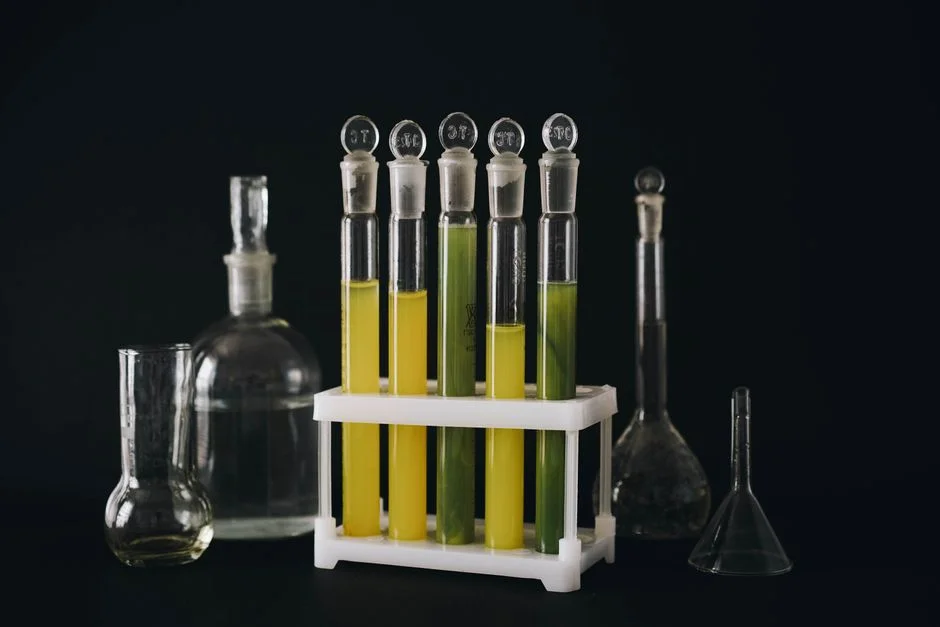
The seller's Consent to Operate almost always covered a legacy auto-assembly fingerprint: oil-bearing paint-shop wastewater, low-strength sanitary flow, and a TOC envelope well under 100 mg/L. A cathode-coating line inverts that profile. The binding stream is cathode-coating line rinse water carrying refractory phosphorus from organophosphate binders and high organic nitrogen from binder wash-off, not the sanitary flow that a legacy CTO assumed. Electrolyte spillage and black-mass processing water add Li, Ni, Co, Mn, and fluoride from LiPF6 hydrolysis, routing into HW Rules 17.1 and 17.2 segregated equalisation. Cooling-tower blowdown adds high TDS at low P/N loading (handled with side-stream filtration and a TDS bleed), while boiler blowdown is low-volume and hot with softener chloride load, and softener regeneration brine is periodic but high-NaCl.
State PCB inlet limits typically run 2–5 mg/L total phosphorus and 50–100 mg/L total nitrogen, and the legacy auto-assembly CTO almost never covered refractory P or NH4-N spikes. The CPCB general fluoride standard is 2 mg/L, and HW Rules Schedule II caps heavy metals at Ni 3 mg/L, total Cr 2 mg/L, and Mn 2 mg/L. The CPCB general TDS ceiling is 2,100 mg/L, but the CPCB 2023 inventory of municipal STPs shows roughly 5,723.8 MLD of installed capacity treating approximately 20,236 MLD of sewage (CPCB 2023, re-verify)—the receiving envelope is already overloaded in most industrial corridors. Sanitary and kitchen streams are municipal-strength and segregated, and represent the only legal counter-argument that the site discharges nothing industrial, mirroring the position taken in the parallel Tesla India compliance guide.
| Parameter | Seller's Historic CTO (Auto-Assembly) | Cathode-Line Reality (BYD Inherits) | Binding Limit / Source |
|---|---|---|---|
| Total Phosphorus | Not typically limited; oil & grease envelope only | 2–5 mg/L state inlet; refractory P fraction needs FeCl3/PAC polish to <1 mg/L | State PCB; <1 mg/L polish (HydropureWater field data, 2026) |
| Total Nitrogen | Not typically limited | 50–100 mg/L; NH4-N spikes from binder wash-off and electrolyte spillage | State PCB inlet standard |
| Fluoride | Not declared | LiPF6 hydrolysis; lime precipitation upstream of biology | 2 mg/L CPCB general standard |
| Nickel | Not declared | Black-mass processing water | 3 mg/L HW Rules Schedule II |
| Total Chromium | Not declared | Black-mass processing water | 2 mg/L HW Rules Schedule II |
| Manganese | Not declared | Black-mass processing water | 2 mg/L HW Rules Schedule II |
| TDS | Not typically limited | Cooling-tower blowdown + RO concentrate; ZLD push in RJ/GJ/MH | 2,100 mg/L CPCB; ZLD in three states |
The on-site train that brings an indirect-discharge signature within Indian state-PCB inlet specs
A five-stage train brings cathode-line wastewater within the binding inlet envelope. Stage 1 is segregated equalisation and flow/load dampening for cathode-line rinse and electrolyte-spill streams, sized to absorb LiPF6 hydrolysis peaks without shocking the downstream biological stage. Stage 2 is a dissolved air flotation unit—specifically the HydropureWater DAF system—for suspended solids, FOG, and emulsified oils from the paint-shop and cathode-coating pre-rinse, with a 4–300 m³/h envelope that covers the gigafactory scaling band. Stage 3 is biological nitrification-denitrification, MBBR or SBR, chloride-tolerant, which strips only the orthophosphate and biodegradable nitrogen; refractory P passes through to Stage 4, where a PLC-controlled FeCl3 and PAC dosing skid precipitates the residual to below 1 mg/L total P (HydropureWater field data, 2026). Stage 5 is polishing: a sand/multi-media filter for residual TSS, MBR or UF polishing where the state PCB pushes reuse-grade effluent (as in the Rajasthan ZLD pilots), and a plate-and-frame filter press for sludge dewatering to meet HW Rules handling and disposal thresholds. Following this treatment sequence, the MBR installation and commissioning guide covers the polish-stage ramp-up.
The biological stage is chloride-tolerant, not chloride-proof: at softener regeneration brine concentrations the nitrifiers will strip, so brine is routed to a separate equalisation tank and bled back at a controlled ratio. The chemical precipitation stage is PLC-controlled rather than manually dosed because the refractory P fraction has a narrow optimum pH band (6.5–7.2) and overdosing FeCl3 wastes reagent while underdosing fails the polish target.
Seven items that must clear before closing on an Indian battery/EV plant
Seven items must clear before closing. First, confirm the existing CTO can be transferred under Section 25 of the Water Act 1974—the Indian parallel to the German Genehmigungsbescheid re-issuance process. Second, pull the EIA Notification 2006 EC transfer procedure: typically a fresh Form-1, Form-1A, and an updated EIA report from a QCI-NABET-accredited consultant. Third, re-baseline the wastewater fingerprint against CPCB Schedule-VI general standards and the relevant state PCB's category-specific standards for the planned process—not the seller's historic permit. Fourth, check proximity to the CPCB list of 88 critically polluted industrial areas and any river or water-body setback that may trigger a statutory prohibition. Fifth, confirm the HW Rules authorisation scope covers all Schedule-I categories 17.1 and 17.2 the planned process will generate, including NMP and black-mass streams. Sixth, verify the Central Ground Water Authority NOC for any new bore wells, given volumetric caps now active in water-stressed states. Seventh, build a political-risk register: state industrial-policy alignment, public-hearing status, and any pending PILs in the National Green Tribunal.
CTO renewal requires the previous period's monthly effluent monitoring data, hazardous waste management records, OCEMS calibration records, fee payment, and an ETP operation log summary; under the Water Act 1974, operating on an expired CTO is illegal and subject to the same penalties as operating without any consent. The EV/auto pretreatment compliance playbook for a US analogue covers the same gap analysis from a different statutory base.
ZLD convergence: why the 2026 acquisition decision is not a 10-year decision
Rajasthan, Gujarat, and Maharashtra state PCBs are actively pushing zero liquid discharge for battery and EV plants against the CPCB general TDS ceiling of 2,100 mg/L. The trajectory is converging with the EU UWWTD recast (Directive 2024/3019), which is due for Indian alignment by 2026 and effectively re-opens every Consent to Operate on that timetable. For an acquirer, indirect-discharge sizing must be paired with an RO + brine-management contingency where ZLD applies. Any cathode-line retrofit quoted in 2026 should be specified with a ZLD-ready polishing loop even if the immediate CTO is for indirect discharge—retrofitting a brine evaporator after the fact is two to three times the cost of building for it on day one.
Frequently Asked Questions
Which four Indian consents must be re-issued in the buyer's name after a battery/EV plant acquisition?
Environmental Clearance under EIA Notification 2006, Consent to Establish and Operate under Section 25 of the Water Act 1974, Consent under Section 21 of the Air Act 1981, and Authorisation under the Hazardous Waste Management Rules 2016—all four must be re-papered within 9
Frequently Asked Questions
Does BYD need fresh environmental clearance to acquire a plant in India?
Under the Environmental Impact Assessment (EIA) Notification of 2006, as amended through 2026, an Environmental Clearance (EC) is generally project-specific and non-transferable without prior regulatory approval. If the acquisition involves a change in the product mix, production capacity expansion, or significant process modifications—common in EV battery manufacturing—a fresh EC or a formal amendment under the "General Conditions" may be triggered.
The Ministry of Environment, Forest and Climate Change (MoEFCC) requires the new owner to formally apply for the transfer of the existing EC. Failure to secure this transfer before commencing operations under the new entity can lead to the classification of the facility as an "operating without valid clearance" site, resulting in potential closure notices or heavy environmental compensation fines.
What happens to the existing Consent to Operate when a battery plant changes hands in India?
A Consent to Operate (CTO) granted under the Water (Prevention and Control of Pollution) Act, 1974, and the Air Act, 1981, is legally linked to the specific legal entity identified in the application. When a plant changes ownership, the existing CTO does not automatically transfer to the acquirer; the new entity must apply for a "Change of Name" or a fresh CTO from the respective State Pollution Control Board (SPCB).
The acquirer must submit the original CTO, the sale/transfer deed, and an undertaking that all pollution control infrastructure and conditions specified in the previous consent remain operational. Continued operation under the previous entity's name post-acquisition without filing for a transfer is a violation that can result in the forfeiture of existing operational rights.
Which Indian states are pushing zero liquid discharge for EV and battery plants in 2026?
As of 2026, Zero Liquid Discharge (ZLD) mandates have become standard for high-water-intensity industries in states including Gujarat, Maharashtra, Tamil Nadu, and Karnataka. Specifically, State Pollution Control Boards in industrial hubs like Sriperumbudur (Tamil Nadu) and Sanand (Gujarat) enforce ZLD for any facility categorized as "Red" category, which includes large-scale battery and cathode manufacturing plants.
These states require the installation of robust Effluent Treatment Plants (ETP) coupled with Reverse Osmosis (RO) and Multi-Stage Flash (MSF) evaporators to ensure that no industrial wastewater is discharged into external water bodies or municipal sewers. Facilities must maintain a "Closed-Loop" water system where treated water is recycled back into the cooling or manufacturing process.
What wastewater parameters bind a cathode-coating line under Indian state PCB rules?
Cathode-coating lines are strictly regulated due to the presence of heavy metals and organic solvents like N-Methyl-2-pyrrolidone (NMP). SPCBs typically mandate strict adherence to parameters including pH (6.5–8.5), Total Suspended Solids (TSS) (<30 mg/l), Chemical Oxygen Demand (COD) (<250 mg/l), and specifically, heavy metal concentrations such as Lithium, Nickel, Manganese, and Cobalt, which must be kept below 1.0–2.0 mg/l depending on the specific state norms.
Furthermore, because NMP is a volatile organic compound, wastewater effluent is often monitored for Total Dissolved Solids (TDS) and specific solvent residue levels. Any discharge must comply with the General Standards for Discharge of Environmental Pollutants under Schedule VI of the Environment (Protection) Rules, unless the SPCB has stipulated more stringent site-specific standards in the CTO.
How long does an acquirer have to re-issue environmental consents after closing in India?
Regulatory timelines for transferring or re-issuing environmental consents vary by state, but the general expectation is to initiate the application process immediately upon the effective date of the acquisition. Most SPCBs mandate that the application for a transfer of CTO must be filed within 30 to 60 days of the change in ownership.
If the acquisition requires a new EC due to capacity changes, the timeline is significantly longer, often requiring 6 to 12 months for the appraisal process by the State Level Environment Impact Assessment Authority (SEIAA). Operating during this transition period requires a valid "Interim Consent" or a formal acknowledgment of the transfer application from the Board to avoid punitive inspections.