Why the DAF-vs-Clarifier Question Matters for Springdale Transportation Plants
The Tyson Poultry facility at 2200 Don Tyson Parkway in Springdale, AR processes high-strength organic wastewater through two dissolved air flotation units rated at 1200 gpm each before equalization and biological treatment, with discharge routed to the Little Muddy Creek (USGS 10300103-0404) and Coon Creek–Muddy Creek (10300103-0405) basins (per Missouri DNR permit MO-0115061, 2021). That 2 × 1200 gpm DAF train is the local precedent every transportation-equipment plant in the Springdale industrial corridor is implicitly benchmarked against, and it tells you what regulators expect to see upstream of a biological step when oil and grease are significant.
For 2026 capital planning, the question for any Springdale stamping, trailer-assembly, railcar, or aerospace-component plant is whether the primary oil-and-solids removal step should be a dissolved air flotation (DAF) unit or a gravity/lamella clarifier. The wrong choice is expensive in either direction: oversizing with DAF on a low-FOG rinse stream burns polymer budget, while undersizing with a clarifier on a stamping line guarantees an emulsified-oil breakthrough that overloads the downstream biology and risks an NPDES excursion.
Transportation-equipment wastewater in this region typically runs 100–2,000 mg/L TSS and 50–5,000 mg/L oil & grease, depending on whether the source is stamping draw lubricant, parts-washer overflow, paint-booth water, or final rinse. Final NPDES limits on Little Muddy Creek and Coon Creek–Muddy Creek drive the upstream primary-unit selection, because what you do not remove here you will be forced to remove biologically or pay for at the outfall. Engineers specifying primary treatment should also review the Lopez transportation-equipment DAF vs clarifier guide, which applies the same logic to a different receiving-water context.
Transportation Equipment Wastewater Characteristics That Drive Unit Selection
Stamping and drawing lines are the most FOG-aggressive sub-stream a Springdale transportation plant will see, with influent typically at 200–2,000 mg/L TSS and 200–2,000 mg/L oil, much of it emulsified by the drawing compound. That emulsion chemistry is what kills gravity settling, because emulsified oil droplets in the 5–20 μm range will pass through a clarifier essentially unhindered. Parts-washer rinse water is a borderline case at 50–500 mg/L oil and moderate TSS; whether a clarifier or DAF wins depends on the surfactant package in the wash fluid. Assembly and machining coolant streams carry free oils plus emulsifiers and are almost universally routed to DAF with coagulant dosing in transportation plants built in the last decade. Paint overspray and booth water present a different problem — 100–800 mg/L TSS with high COD from solvents — and typically require DAF plus chemical conditioning before any clarifier, because the paint binder resists settling. Final assembly rinse is the one sub-stream where a clarifier is genuinely competitive: oil below 50 mg/L, low TSS, and a chemistry that is amenable to lamella surface loading of 20–40 m/h.
| Sub-stream | Typical TSS (mg/L) | Typical Oil & Grease (mg/L) | Chemistry flag | Default primary unit |
|---|---|---|---|---|
| Stamping / drawing | 200–2,000 | 200–2,000 | Emulsified lubricant | DAF |
| Machining coolant | 300–1,500 | 500–3,000 | Free + emulsified oil | DAF with coagulant |
| Parts-washer rinse | 100–500 | 50–500 | Surfactant-dependent | DAF or hybrid |
| Paint overspray / booth | 100–800 | <100 (high COD) | Solvent-laden binder | DAF + chemical dosing |
| Final assembly rinse | <100 | <50 | Mostly settleable | Lamella clarifier |
The chemistry flag column is what should drive your specification, not the flow rate. A 50 gpm stamping line at 1,500 mg/L emulsified oil is a DAF problem; a 500 gpm rinse stream at 30 mg/L oil is a clarifier problem.
DAF vs Clarifier: Head-to-Head Comparison for 2026
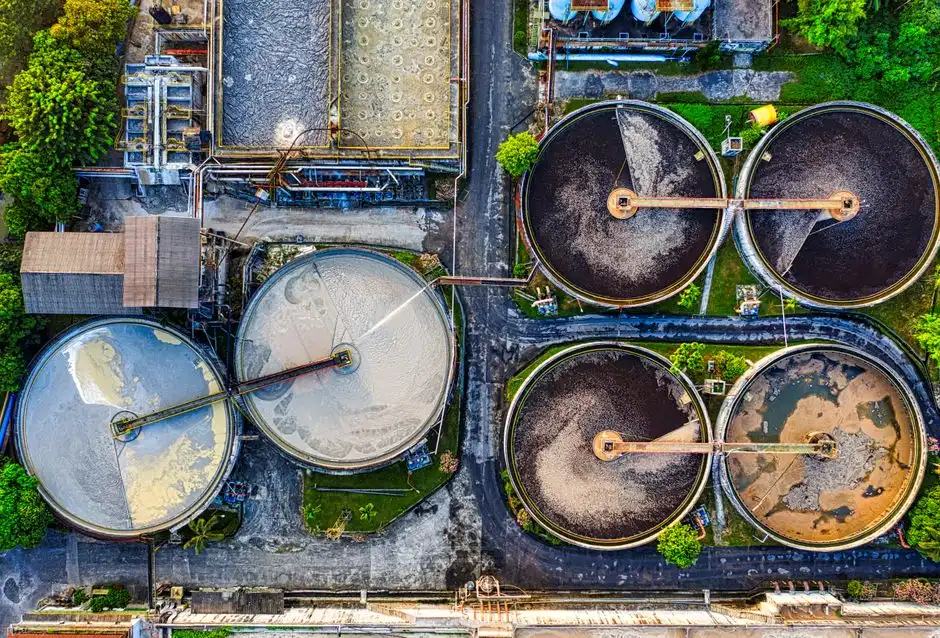
DAF and lamella clarifiers are not interchangeable — they remove different things at different rates, and the CapEx/OPEX crossover sits at roughly the 50 mg/L FOG line. A properly sized DAF system delivers 80–95% FOG removal and 60–90% TSS removal in 5–20 minutes of hydraulic retention, while a HydropureWater lamella clarifier running at 20–40 m/h surface loading typically achieves 40–70% TSS removal and only 10–30% free-oil removal because emulsified oil simply does not settle. The footprint difference is the second key driver: a 200 m³/h DAF unit fits in roughly 15–25 m² of floor area, whereas an equivalently rated clarifier needs 60–120 m² because of its 1–3 hour retention requirement. DAF float is also thicker at 2–5% dry solids versus 0.5–1.5% for clarifier underflow, which directly cuts downstream dewatering cost (HydropureWater field data, 2026).
| Parameter | DAF | Lamella / gravity clarifier |
|---|---|---|
| FOG removal | 80–95% | 10–30% (free oil only) |
| TSS removal | 60–90% | 40–70% |
| Hydraulic retention | 5–20 min | 1–3 h |
| Surface / hydraulic loading | 5–25 m/h | 20–40 m/h (HydropureWater catalog) |
| Chemical demand | Polymer + coagulant | Up to 30% less chemical (HydropureWater product data) |
| Sludge dryness | 2–5% DS float | 0.5–1.5% DS underflow |
| Energy | 0.5–1.5 kWh/m³ (saturator recycle) | Mostly passive |
| CapEx ranking (low→high) | High | Low (gravity) to mid (lamella) |
| Footprint for 200 m³/h | 15–25 m² | 60–120 m² |
| Flow range | 4–300 m³/h per unit | Matched to lamella plate pack |
Energy is the one place a clarifier wins outright — a DAF saturator recycle pump draws 0.5–1.5 kWh/m³, while a lamella clarifier is essentially gravity-driven once installed. CapEx ranking runs from conventional gravity clarifier (lowest) through lamella clarifier to DAF (highest), but OPEX reverses that order on high-FOG streams because the clarifier cannot remove emulsified oil and you pay for it downstream in polymer, biology, and sludge handling. For plants considering the same decision in a different regional context, the Lopez transportation-equipment DAF vs clarifier guide walks through the same parameter table against different discharge limits.
When a Springdale Transportation Plant Should Choose DAF
Specify DAF as the primary unit when influent oil & grease sits above the 50 mg/L line and the oil is at least partially emulsified, which is the operating reality on every stamping, drawing, and machining coolant line in a transportation-equipment plant. DAF's 80–95% FOG removal in 5–20 minutes also makes it the right answer when the plant is footprint-constrained — a 200 m³/h DAF unit occupies 15–25 m² versus 60–120 m² for an equivalently rated clarifier, and that ratio gets worse as flow scales up. A third decisive factor is downstream biology protection: DAF's 60–90% TSS removal prevents the activated-sludge or MBR stage from being blindsided by an oil slug, and it is the reason the Tyson Springdale 2 × 1200 gpm DAF train sits ahead of the anaerobic lagoons and CMAS reactors on the Little Muddy Creek discharge path (per Missouri DNR permit MO-0115061).
For batch operations — stamping presses cycling on and off, parts washers loaded on shifts, paint-booth dumps — DAF recovers faster than a clarifier blanket, which can take 30–60 minutes to restabilize after a hydraulic or contaminant shock. Pair the DAF with a HydropureWater automatic chemical dosing system to handle the polymer and coagulant swings that come with emulsified-oil variability, and you have a robust primary step that meets the variability of transportation manufacturing. Flow rates of 4–300 m³/h per unit also mean a single DAF train can usually cover an entire mid-sized Springdale plant's oily side stream without paralleling.
When a Lamella or Conventional Clarifier Is the Better 2026 Choice
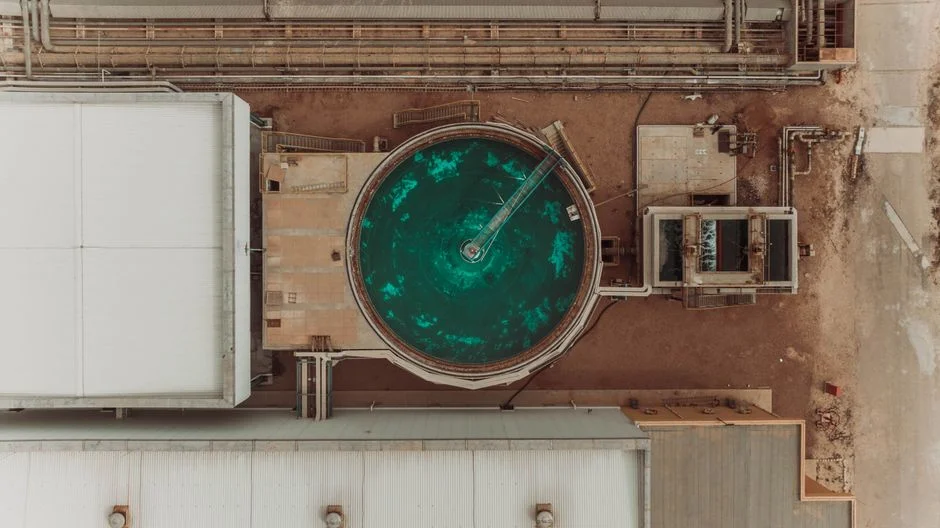
Specify a lamella or conventional clarifier when the stream is genuinely low-strength — influent oil & grease under 50 mg/L and mostly settleable solids — because that is the operating envelope where a clarifier's lower chemical demand and zero saturator energy beat DAF on lifetime cost. A HydropureWater lamella clarifier running at 20–40 m/h surface loading handles high-volume rinse water in a compact footprint, and the 30% reduction in polymer consumption versus DAF (HydropureWater product data) shows up fast on a 2026 OPEX spreadsheet. Conventional gravity clarifiers remain the lowest CapEx option in this segment, with no moving parts in the separation zone and well-understood maintenance.
The 2026 retrofit pattern that is showing up most often at transportation-equipment plants in the Midwest is a hybrid: DAF on the oily side stream (stamping, machining, parts washing) and a lamella clarifier on the dilute rinse stream, with the two effluents combined ahead of biological polishing. This configuration respects the chemistry of each sub-stream, minimizes total polymer use, and keeps the clarifier out of the FOG range where it cannot perform. Clarifiers also fit sites that lack the operator skill or chemical-dosing infrastructure to run a DAF reliably, or plants that simply want to keep polymer storage off-site.
2026 Selection Framework for Springdale Transportation Equipment Factories
The decision tree below gives a defensible specification in five steps and can be presented to procurement, management, or an ADEQ auditor as the basis for a primary-unit selection. Run it on the combined plant stream first; if the result points to a hybrid, run it again on each sub-stream.
- Characterize the combined stream. Pull TSS, FOG, COD, flow, temperature, and emulsion stability (jar test with and without coagulant) on a representative 24-hour composite. Free oil vs emulsified oil is the single most important number.
- Apply the 50 mg/L FOG rule. Above 50 mg/L oil & grease, default to DAF. Below 50 mg/L with mostly settleable solids, default to lamella clarifier.
- Check footprint. If 5–20 minutes of DAF retention fits the available floor area but 1–3 hours of clarifier retention does not, DAF wins on space even when the chemistry is borderline.
- Check the discharge path. Final NPDES limits on Little Muddy Creek or Coon Creek–Muddy Creek may force a tighter primary step than the chemistry alone suggests; if downstream BOD/TSS limits are stringent, push the primary unit toward DAF.
- Consider the hybrid. DAF on oily side streams + lamella clarifier on rinse water, with combined MBR membrane bioreactor polishing, is the most common 2026 retrofit in transportation plants. For installation sequencing and commissioning on the MBR side, see the 2026 MBR installation and commissioning guide.
| Stream profile (influent) | Primary unit | Rationale |
|---|---|---|
| FOG > 50 mg/L, emulsified | DAF | 80–95% FOG removal; 5–20 min retention |
| FOG > 50 mg/L, free oil only | DAF or CPI separator | DAF still preferred for TSS polishing |
| FOG < 50 mg/L, low TSS | Lamella clarifier | 20–40 m/h loading, ~30% less chemical |
| Variable batch, FOG swings | DAF | Faster recovery than clarifier blanket |
| High flow rinse + oily sub-stream | Hybrid DAF + lamella | Match unit to each sub-stream's chemistry |
| Footprint-constrained retrofit | DAF | 15–25 m² vs 60–120 m² at 200 m³/h |
For plants evaluating adjacent pretreatment challenges — solvent capture, hexavalent chromium from conversion coatings, or PFAS from certain machining fluids — the EV/auto pretreatment compliance guide for Saint Clair covers complementary unit operations that often sit alongside the DAF or clarifier in a 2026 capital plan.
Frequently Asked Questions
What is the 50 mg/L FOG cutoff for choosing DAF over a clarifier?
The 50 mg/L oil & grease cutoff is a working rule of thumb drawn from the chemistry gap between DAF and gravity separation: DAF routinely removes 80–95% of FOG in 5–20 minutes, while a lamella clarifier typically removes only 10–30% of free oil and essentially zero emulsified oil. Above 50 mg/L FOG, a clarifier cannot reliably protect downstream biology, so DAF becomes the default primary unit for transportation-equipment plants in Springdale.
Why is the Tyson Springdale DAF train relevant to a transportation plant?
The Tyson facility at 2200 Don Tyson Parkway runs two 1200 gpm DAF units ahead of anaerobic lagoons and a CMAS reactor, with discharge to Little Muddy Creek (USGS 10300103-0404) and Coon Creek–Muddy Creek (10300103-0405) per Missouri DNR permit MO-0115061. That 2 × 1200 gpm precedent demonstrates DAF as the established primary step for high-strength industrial wastewater in the Springdale corridor, at flow rates directly comparable to a mid-sized transportation-equipment plant.
Can a Springdale plant combine DAF and a lamella clarifier?
Yes — the hybrid DAF-plus-lamella configuration is the most common 2026 retrofit pattern at transportation-equipment plants. DAF handles the oily sub-stream (stamping, machining, parts washing) at 80–95% FOG removal, while a HydropureWater lamella clarifier polishes the dilute rinse stream at 20–40 m/h surface loading with up to 30% less chemical demand, and the two effluents combine ahead of an MBR or activated-sludge polish step.
How does the Lopez transportation-equipment guide differ from this Springdale one?
The Lopez transportation-equipment DAF vs clarifier guide applies the same 50 mg/L FOG cutoff, 5–20 minute DAF retention, and 20–40 m/h lamella surface loading to a different receiving-water context. Reading both gives a plant engineer a regionally defensible specification whether the discharge path runs to Lopez-area basins or to Little Muddy / Coon Creek in Springdale.