Why the Tanjung Malim licence is a wastewater story, not just a trade story
MITI's March 2026 clarification of BYD's interim CKD licence in Tanjung Malim is the trade headline most readers will see: an export-oriented assembly licence capped at 10,000 units/year for the domestic market, with an RM100,000 minimum price point to keep BYD positioned in the higher-value segment, and a localisation framework applied identically to every new automotive investor under Malaysian rules (per NST/MITI, 2026-03). That licence does not, however, contain a single effluent number. The operational constraint that locks in capex for the plant engineer is the Department of Environment's (DOE) Industrial Effluent Regulations 2009 (P.U.(A)434), made under the Environmental Quality Act 1974, and the Sewerage Services Act 1993 acceptance limits that Indah Water Konsortium (IWK) applies to the receiving catchment.
Once the MITI licence triggers construction, the project must clear a separate DOE Environmental Compliance Approval (ECA), a scheduled-waste notification under the Scheduled Wastes Regulations 2005 (P.U.(A)294), and an IWK pre-treatment approval before any stream can be tied into the municipal sewer that serves the Proton City / Tanjung Malim industrial corridor. The 2026 CKD ramp-up — small initial volumes, growing through 2027 and 2028 — is the window in which the IWK tie-in, the Standard B effluent envelope, and any reuse offtake for Tenaga Nasional Berhad (TNB) steam or cooling-tower make-up become binding rather than aspirational. Treat the licence as the door, not the room.
Which Malaysian regulators and standards actually apply to the plant
Five legal instruments govern the plant side-by-side, and the engineer must design to the tightest of them on a stream-by-stream basis. The Industrial Effluent Regulations 2009 (P.U.(A)434) under the Environmental Quality Act 1974 is the primary instrument; it sets two effluent quality tiers — Standard A for discharge into inland waters, Standard B for discharge into controlled waters — and publishes the parameter schedule (COD, BOD, SS, FOG, NH3-N, total nitrogen, total phosphorus, pH, fluoride, total heavy metals) that DOE inspectors enforce (per Environmental Quality (Industrial Effluent) Regulations 2009, P.U.(A)434). Most CKD coating and degreasing streams at Tanjung Malim are best engineered to Standard B with margin, then routed either to controlled waters or to a downstream reuse loop; sanitary and some segregated coating rinses can be designed against IWK acceptance instead.
The Scheduled Wastes Regulations 2005 (P.U.(A)294) governs waste that cannot go down any drain: spent N-methyl-2-pyrrolidone (NMP) solvent from cathode coating, electrode-cleaning residues, spent degreasing baths with high total dissolved solids (TDS), electrolyte rinses containing LiPF6 breakdown products, and any MBR/RO concentrate that fails reuse criteria must be collected by a DOE-licensed scheduled-waste contractor. The Sewerage Services Act 1993 governs any stream routed to the municipal sewer, and IWK's discharge acceptance limits for the Sungai Siput sub-catchment are tighter than DOE IER on heavy metals, with Ni, Cu, Zn, total Cr, Pb and Cd each on the controlled list. The Water Services Industry Act 2006 (Act 655) and the National Water Services Commission (SPAN) regulate Perak Water Sdn Bhd if treated effluent is sold to the receiving utility, which is the most likely route for RO permeate reuse at the Tanjung Malim site in the Kinta–Batang Padang corridor. Finally, the DOE Guidance Document on Environmental Compliance Approval for Industrial Activities (most recent edition) sets the EIA-exempt versus EIA-required threshold — a CKD assembly footprint on a previously disturbed industrial lot almost always lands in the ECA-only path if scheduled wastes and IWK tie-in are clean, but it triggers EIA review if the site includes electrolyte formulation, NMP recovery, or any plating on site.
| Instrument | Scope | Typical binding parameters for a CKD site |
|---|---|---|
| Industrial Effluent Regulations 2009 (P.U.(A)434) | Discharge to inland (Std A) or controlled (Std B) waters | COD ≤200 mg/L (B), SS ≤100 mg/L (B), FOG ≤10 mg/L (B), pH 6.0–9.0, F⁻, total Ni/Cu/Zn, total N/P |
| Scheduled Wastes Regulations 2005 (P.U.(A)294) | Spent NMP, electrolyte residues, MBR/RO concentrate, spent degreasing bath | Licensed collector, consignment note, DOE online reporting |
| Sewerage Services Act 1993 / IWK acceptance | Discharge to municipal sewer in Sungai Siput sub-catchment | Ni ≤0.5 mg/L, Cu ≤0.5 mg/L, Zn ≤1.5 mg/L, total Cr ≤1.0 mg/L, Pb ≤0.5 mg/L, Cd ≤0.05 mg/L (typical IWK industrial band) |
| Water Services Industry Act 2006 (Act 655) / SPAN | Sale of treated effluent to Perak Water Sdn Bhd | Permit conditions, tariff, meter accuracy class |
| DOE Guidance Document on ECA for Industrial Activities | EIA-exempt vs EIA-required threshold for CKD assembly | ECA-only if no on-site electrolyte formulation or plating; otherwise EIA submission |
Stream-by-stream cross-walk: Chinese GB practice vs DOE IER parameters
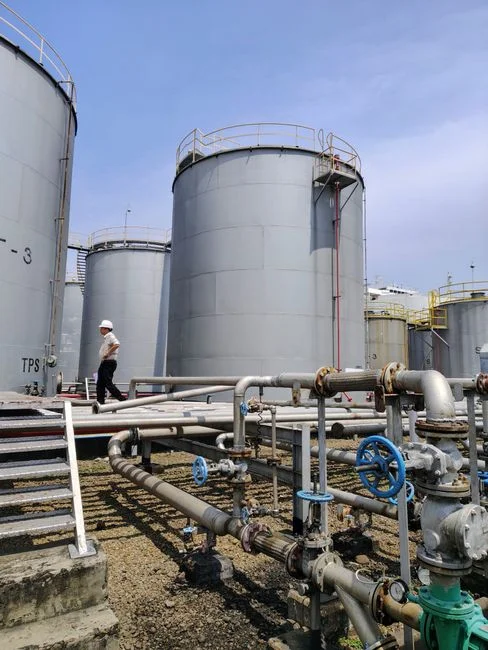
BYD's published Chinese practice runs against GB 8978-1996 (integrated wastewater discharge), GB 30485-2013 (battery production wastewater) and GB 21900-2008 (electroplating pollutants), and most of the influent data in the public record is Chinese (SustainabilityMag, 2025-10; Mining Digital, 2025). Porting that to Malaysia is not a copy-paste — the parameters DOE inspectors actually sample, and the heavy-metal limits IWK enforces on the receiving sewer, are tighter than GB 8978-1996's catch-all for several important streams. The table below shows the cross-walk the design engineer should pin to the wall before sizing any unit operation.
Cathode and anode coating wastewater carries the highest load: COD 2,000–8,000 mg/L from PVDF binder and carbon black, suspended solids 1,000–3,000 mg/L, NMP carry-over, and fluoride from LiPF6 electrolyte ingress. The DOE IER Standard B envelope requires COD ≤200 mg/L, SS ≤100 mg/L, F⁻ on the schedule and total heavy metals (Ni, Cu, Zn) at the same time — so a single biological step is not enough; the train needs DAF front-end for NMP colloid and FOG, then biological COD/N reduction, then MBR solids polish, then RO for reuse. Degreasing wastewater (alkaline or neutral aqueous cleaners) is oils/FOG plus SS; DOE IER sets FOG ≤10 mg/L and SS ≤100 mg/L Standard B, and a well-run DAF lands effluent in the 50–150 mg/L SS band, so degreasing is the easy stream to close but it must be kept off the sanitary line (HydropureWater field data, 2026). Electrolyte handling and electrode cleaning carry high TDS, low pH swings, and phosphate from LiPF6 breakdown; the design pH band is 6.0–9.0, and the typical Standard B phosphate envelope sits around 5 mg/L — a gap to flag because Chinese GB practice does not always require biological phosphorus removal on this stream. Plating rinse water (if any part-finishing is outsourced on-site) is the stream that bites hardest: Ni ≤0.5 mg/L, Cu ≤0.5 mg/L, Zn ≤1.5 mg/L, total Cr ≤1.0 mg/L Standard B, which is the same intent as GB 21900-2008 but with the DOE IER sampling frequency at the outlet, not at the workstation. The domestic sanitary stream is sized with a 1.5× design factor for shift-change peaks; the Sewerage Services Act caps pH and BOD on the IWK tie-in, and the stream is routed to septic or a packaged A/O ahead of the sewer. Phosphorus and nitrogen from electrolyte salt breakdown are the most common design gap when porting Chinese practice; flag for inclusion in the biological nutrient removal step.
| BYD process stream | Typical Chinese influent band | Governing DOE IER / IWK parameter | Standard B limit |
|---|---|---|---|
| Cathode/anode coating (NMP-bearing) | COD 2,000–8,000 mg/L; SS 1,000–3,000 mg/L; F⁻ from electrolyte | COD, SS, F⁻, total heavy metals | COD ≤200; SS ≤100; F⁻ on schedule |
| Degreasing (alkaline/neutral) | Oils/FOG 200–1,000 mg/L; SS 300–800 mg/L | FOG, SS | FOG ≤10; SS ≤100 |
| Electrolyte handling / electrode cleaning | High TDS; pH 2–5; phosphate; F⁻ | pH 6.0–9.0; TP | pH band; TP typically 5 mg/L |
| Plating rinse (if on-site) | Ni, Cu, Zn, total Cr at workstation | DOE IER heavy-metal schedule | Ni ≤0.5; Cu ≤0.5; Zn ≤1.5; total Cr ≤1.0 |
| Sanitary (canteen + toilets) | BOD 200–400 mg/L; shift peaks 11:00–13:00 and 06:00/18:00 | Sewerage Services Act / IWK | pH 6–9; BOD per IWK acceptance |
The 2026 treatment train that actually closes the gap
The unit-operation sequence that closes the gap between BYD's published Chinese practice and Malaysian Standard B is a seven-step train. Step 1 is dual-pipe segregation at point of generation — industrial and sanitary kept physically separate from the source. The failure mode of mixing is biomass poisoning from heavy metals on the biological step and hydraulic shock at the canteen shift peaks on the equalisation basin; both are avoidable only at the source. Step 2 is flow equalisation with pH correction, sized to 1.5× the average daily flow to buffer coating-line peaks and shift-change sanitary peaks (HydropureWater field data, 2026).
Step 3 is a DAF system for coating-line and degreasing wastewater pre-treatment, with cationic polyacrylamide (PAM) dosing at 2–8 mg/L; the DAF removes 60–90% of influent SS and 70–95% of FOG, dropping SS from 1,000–3,000 mg/L down to a 50–150 mg/L effluent band (HydropureWater field data, 2026). Step 4 is biological treatment — anoxic/oxic (A/O) or sequencing batch reactor (SBR) — to drop influent COD from the 2,000–8,000 mg/L band down to 100–300 mg/L ahead of the membranes, with simultaneous nitrification/denitrification for NH3-N and total nitrogen. Step 5 is an integrated MBR train sized to Standard B discharge limits using DF-series PVDF flat-sheet submerged membrane modules at 0.1 μm; this lands TSS below 5 mg/L, turbidity below 1 NTU, and BOD in the 10–30 mg/L band, with a 60% footprint saving versus a conventional activated-sludge/clarifier pair (HydropureWater field data, 2026; see the MBR installation and commissioning field guide for commissioning practice). Step 6 is an industrial RO system for cooling-tower and paint-shop reuse, with 65–75% permeate recovery at under 50 µS/cm conductivity; concentrate is routed either to brine recovery or to scheduled-waste handling. Step 7 is the scheduled-waste handling and sludge line: a plate-and-frame filter press for biological sludge dewatering takes biological sludge to 18–25% dry solids, and a PLC-controlled coagulant, flocculant and pH dosing package ties reagent control to the flow signal so the chemistry stays in band on a coating-line swing.
Perak-specific reuse drivers and the 2026 procurement checklist
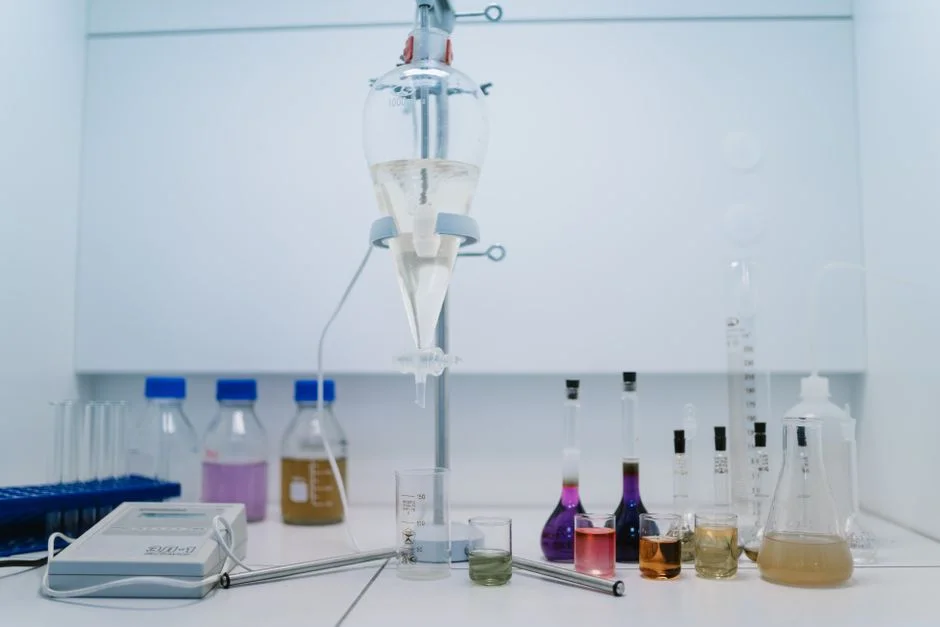
Perak's Kinta–Batang Padang corridor is more water-stressed than the Malaysian average, and Tenaga Nasional's industrial steam demand at the Sultan Azlan Shah power cluster creates a real cost signal for RO permeate reuse in cooling-tower make-up and paint-shop rinse. At a CKD plant of typical 2,000–3,000 m³/day combined industrial-plus-domestic flow, a 65–75% permeate recovery on the MBR polish displaces 1,300–2,200 m³/day of fresh water per operating day — a number that justifies the RO capex within the standard 4–7 year payback band used in the published 2026 hybrid DAF-MBR-RO design references for fab-grade wastewater (HydropureWater engineering references, 2026).
The procurement checklist for the 2026 RFQ shortlist is short and non-negotiable: (1) a DOE-approved flow meter and online multi-parameter probe (pH, COD, NH3-N, TP, TN, total heavy metals) with 12-month tamper-evident data retention, per the standard Chinese environmental compliance practice that DOE inspectors will recognise; (2) a scheduled-waste licence in the contractor's name for NMP, electrolyte residues, and MBR/RO concentrate, with a consignment-note protocol aligned to SW Regulations 2005; (3) IWK pre-treatment approval issued before the sewer tie-in, including the heavy-metal acceptance schedule; and (4) a WSZ-series underground package plant for the domestic stream sized for 1.5× the average sanitary flow to absorb the shift peaks. CAPEX bands for a packaged DAF + A/O + MBR + RO train at 1,000 m³/day industrial flow sit in the multi-million USD range in the 2026 Malaysian market; specific numbers belong in the RFQ, not in a public article, but hybrid DAF-MBR-RO references of that scope published in our 2026 engineering guides provide the comparator baseline. For context on comparable Malaysian compliance work, see the Tesla's Malaysia plant wastewater compliance guide for 2026, the textile wastewater treatment in Malaysia 2026 guide, and the Malaysian residential wastewater compliance and packaged plant guide.
Frequently Asked Questions
Which Malaysian standard governs the BYD Tanjung Malim plant's industrial discharge?
The Industrial Effluent Regulations 2009 (P.U.(A)434) under the Environmental Quality Act 1974. Cathode coating, degreasing, electrolyte handling and any on-site plating rinse are designed to Standard B (controlled waters): COD ≤200 mg/L, SS ≤100 mg/L, FOG ≤10 mg/L, pH 6.0–9.0, plus fluoride, total nitrogen, total phosphorus, and total heavy metals on the published schedule.
Does BYD's Chinese GB practice transfer directly to Malaysia?
No. Chinese GB 8978-1996, GB 30485-2013 and GB 21900-2008 set the design intent, but the controlling Malaysian instruments are the Industrial Effluent Regulations 2009, the Sewerage Services Act 1993, and the IWK sewer acceptance limits for the Sungai Siput sub-catchment, which are tighter than GB 8978-1996 on heavy metals and on the parameter set actually sampled at the outlet.
What unit operations close the gap to Standard B at 1,000 m³/day industrial flow?
Dual-pipe segregation, equalisation with pH correction at 1.5× average flow, DAF (60–90% SS, 70–95% FOG), biological A/O or SBR (COD from the 2,000–8,000 mg/L band to 100–300 mg/L), MBR (TSS <5 mg/L, turbidity <1 NTU, BOD 10–30 mg/L), and RO for reuse at 65–75% permeate recovery, with plate-and-frame dewatering of biological sludge to 18–25% DS.
How much fresh water can a Tanjung Malim CKD plant displace with RO reuse?
At a typical 2,000–3,000 m³/day combined industrial-plus-domestic flow, 65–75% permeate recovery on the MBR polish displaces 1,300–2,200 m³/day of fresh water per operating day — enough to justify the RO capex against Perak's Kinta–Batang Padang water-stress signal and the TNB steam-cluster offtake.