Why Trapper Creek Mining and Metals Discharges Are Regulated Under 40 CFR 403
Mining and metals plants near Trapper Creek, Wyoming meet pretreatment limits by routing wastewater through a 40 CFR 403-aligned treatment train—equalization, pH adjustment with cyanide destruction, coagulant dosing, high-rate ballasted clarification, and activated-carbon or ion-exchange polishing—before sewer discharge to the local POTW. Compliance hinges on the POTW's local limits, an EPA 40 CFR 403 permit, and quarterly self-monitoring reports. The General Pretreatment Regulations at 40 CFR 403.1 et seq. establish two parallel compliance pathways: federal categorical standards such as 40 CFR 440 (ore mining) and 40 CFR 433 (metal finishing), and site-specific local limits set by the Control Authority on the receiving POTW's NPDES permit. Where a categorical standard exists, it acts as a floor; the local limit is the binding number when it is more stringent (per EPA 40 CFR 403).
The jurisdictional trigger is a total POTW design flow greater than 5 million gallons per day (5 MGD) combined with industrial waste that could pass through or interfere with plant operations. POTWs at or below the 5 MGD line may still be required to implement a pretreatment program if their industrial load warrants it—matters because many Trapper Creek-area POTWs sit just below that cutoff yet still receive acid-rock drainage, tailings decant, and contact stormwater (per California State Water Resources Control Board, NPDES Pretreatment Program). The audit cadence is fixed: a comprehensive compliance audit every 5 years, annual compliance inspections, and semiannual compliance reports reviewed by the Regional Water Board (per S1, waterboards.ca.gov).
The consequence chain is unambiguous—pass-through, interference, and sludge contamination each carry civil penalties that escalate with duration, and the OSTI mine-water study (2021) documents that "permit violations can substantially degrade the environment and can result in steep fines and discharge authorization revocation" (per S3, OSTI 1834735). For a small-to-mid hard-rock or uranium operator, that chain typically means an Order to Comply first, then stipulated penalties of roughly $10,000–$25,000 per violation per day under 40 CFR 403.8 enforcement actions, and ultimately permit revocation that shuts the discharge point.
What Trapper Creek Operations Actually Discharge: A Realistic Influent Profile
Hard-rock, copper, gold, and uranium operations in the Trapper Creek watershed typically send a mixed stream to the sewer, and the contaminant set is wider than most engineers anticipate. Commercial water-treatment vendors serving this segment report influents contaminated with aluminum, arsenic, cadmium, copper, hardness, salts, radioactivity (radium and uranium), ammonia, sulfate, cyanide, nitrate, dissolved or suspended solids, silica, and acidity (per S3, OSTI 1834735). The exact mix depends on the ore body, the mill circuit, and whether the operation runs an in-situ leach, heap leach, or conventional mill-and-flotation flowsheet.
Three stream families have to be separated at the gatehouse, because each demands a different first unit operation:
- Acid rock drainage (ARD/AMD): net-acidic water with elevated dissolved metals and sulfate. First step is lime or sodium hydroxide neutralization to pH 8.5–9.5 to precipitate target metals as hydroxides.
- Process water from milling, Merrill-Crowe, or flotation: typically carries residual cyanide, mercury (gold circuits), and high TSS. First step is WAD cyanide destruction (SO2/air or H2O2 + CuSO4) followed by coagulant dosing.
- Contact stormwater and pit dewatering: variable flow and suspended solids. First step is equalization and sedimentation to dampen slug loads before joining the main treatment train.
The OSTI review is explicit that "the chemical composition of the mine rock and subsequent wastewater (both of which can vary in quality over the mine's life)" drives technology selection, so a static design is a compliance risk over a 10- to 20-year operating horizon (per S3). For regional context, the U.S. Geological Survey documented the mineral endowment of the Medicine Lodge, Alkali Creek, and Trapper Creek Wilderness Study Areas in Big Horn County, Wyoming in Bulletin 1756-A (1989), which is why the local POTW writes conservative local limits—uranium, vanadium, and base metals are not hypothetical here (per S2, USGS Bulletin 1756-A).
The 2026 Pretreatment Train: Five Unit Operations That Move the Numbers
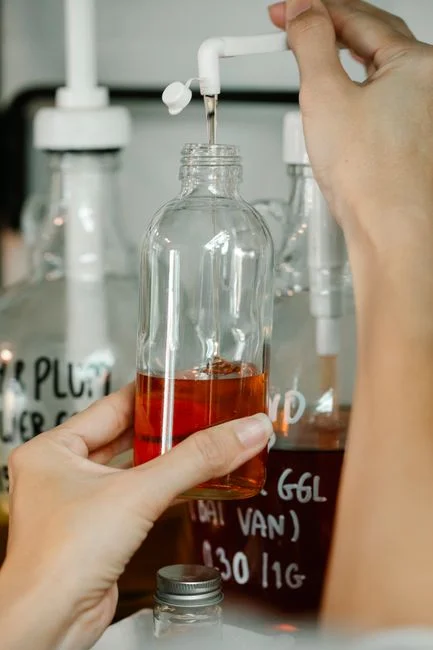
A 2026 pretreatment train that clears Trapper Creek-area POTW local limits is a five-stage flow with PLC-controlled chemistry at every transition. The block flow below is the same architecture Goldcorp used at the Marlin mill (2,200 gal/min design) and scales linearly to 200–500 gpm operations common in the Wyoming copper/uranium segment (per S4, E&MJ April 2009).
- Equalization and screening. A 6–8 hour HRT equalization basin damps slug loads from batch leach cycles and storm events. A rotary bar screen upstream protects downstream pumps and the clarification stage from rags and large debris; rotary bar screens in the 5–10 mm opening class are standard for this duty.
- pH adjustment and cyanide destruction. Raise pH to 8.0–9.0 with lime or NaOH, then oxidize WAD cyanide using either SO2/air with a copper catalyst or hydrogen peroxide with copper sulfate catalysis. Marlin lab treatability confirmed the peroxide + CuSO4 route, hitting 0.5 ppm WAD, 0.1 ppm free CN⁻, and 1.0 ppm total CN⁻ in the effluent (per S4). Mercury is simultaneously driven to below detection (0.0002 mg/L) by iron-sludge adsorption and a heavy-metal chelating polymer.
- Coagulant and flocculant dosing. PLC-controlled injection of ferric chloride (typically 50–150 mg/L) and an anionic polymer (0.5–2.0 mg/L) precipitates dissolved metals as hydroxides and builds a dense, settlable floc. Lime is co-dosed to lock pH at the target for the metals of concern. A PLC-controlled coagulant and cyanide-destruction chemical dosing skid with redundant pH and ORP probes is the standard 2026 control package.
- High-rate ballasted clarification (Actiflo-class). Raw water is mixed with coagulant in a high-shear zone for ~2 minutes, then dosed with polymer and microsand (specific gravity 2.65) for another 2 minutes, matured for ~6 minutes, and settled. The microsand-ballasted flocs sink immediately because of the added density, and the system delivers the same clarification in 5–20× less footprint than a conventional basin (per S4). A high-rate DAF unit is the alternative when influent FOG or oil sheen is a recurring issue, but for heavy-metal-bearing waters ballasted settling wins on floc density.
- Polishing. A disc filter or sand filter takes residual TSS below 5 mg/L, and PICA-grade activated-carbon columns strip residual mercury and trace organics. For uranium and radium-226, a strong-base anion-exchange resin polishes the effluent to below 0.03 mg/L U and below 5 pCi/L Ra-226, which clears typical local limits at Trapper Creek-area POTWs.
| Stage | pH | ORP (mV) | TSS (mg/L) | Total Metals (mg/L) | WAD CN⁻ (mg/L) | Expected Removal % |
|---|---|---|---|---|---|---|
| Raw influent (design case) | 2.5–6.5 | +200 to +400 | 200–800 | 5–50 | 5–50 | — |
| After equalization | 2.5–6.5 | +200 to +400 | 150–600 | 5–50 | 5–50 | 20–30 (TSS) |
| After pH/CN destruction | 8.0–9.0 | +300 to +500 | 200–700 | 2–20 | <0.5 | 90+ (WAD CN⁻), 95+ (Hg) |
| After coagulant dosing | 8.0–9.0 | +250 to +450 | — | 0.5–5 | <0.2 | 80–95 (dissolved metals) |
| After Actiflo clarification | 7.5–8.5 | +200 to +400 | 5–20 | 0.1–1.0 | <0.1 | 90–99 (TSS, metals) |
| After GAC / IX polishing | 7.0–8.5 | +150 to +300 | <5 | <0.1 | <0.05 | 70–95 (residual Hg, U, Ra) |
Two support items belong on the P&ID regardless of flow: an automatic chemical dosing skid for precise PLC control, and a rotary bar screen on the inlet channel. A reference cross-check against the AAO biological polishing reference is useful when the receiving POTW allows biological polishing downstream for ammonia/nitrate reduction.
Choosing the Clarifier: DAF, Lamella, or Ballasted Flocculation
The clarification stage is where most of the mass actually leaves the water, and the technology choice drives both CAPEX and the chemical bill. Three platforms dominate the U.S. mining pretreatment market, and the right one depends on influent FOG, metal loading, and the available footprint.
- Dissolved Air Flotation (DAF): rated 4–300 m³/h, the workhorse for oily, low-density, high-FOG streams. DAF struggles on heavy-metal-bearing waters because floc density—not buoyancy—controls the separation, and floc can drop out of the float layer when the metal hydroxide is the dominant solid.
- Lamella clarifier: surface loading 20–40 m/h, typically 30% lower chemical use than DAF on stable, moderate-TSS influents. A reliable baseline for sites with a steady flow and a known metal mix.
- Sand-ballasted flocculation (Actiflo): the high-rate option for heavy metals, variable influent, and space-constrained sites. Actiflo units are typically 5–20× smaller than conventional clarification systems offering similar capacity (per S4, E&MJ April 2009).
| Technology | Flow Range (m³/h) | Footprint Index | Best-Fit Influent | Indicative CAPEX Band (USD, 2026) |
|---|---|---|---|---|
| DAF | 4–300 | 1.0× (baseline) | High FOG, oil sheen, low TSS | $80,000–$250,000 |
| Lamella clarifier | 10–500 | 0.5–0.7× | Moderate TSS, stable flow | $60,000–$180,000 |
| Actiflo (sand-ballasted) | 50–2,000+ | 0.05–0.20× | Heavy metals, variable influent, tight site | $400,000–$1,200,000 |
For a typical 200–500 gpm Trapper Creek-area operation, the procurement decision usually comes down to footprint and chemical handling. A high-efficiency sedimentation tank covers the lamella case, and a high-rate DAF unit covers the FOG case; for heavy-metal-dominant influents, Actiflo-class ballasted flocculation is the engineering default. A useful peer reference is the East Finley PA mining pretreatment blueprint, which addresses a colder-climate, coal-influenced analog of the same decision tree, and the Fernley NV chemical pretreatment blueprint for a chemical-sector clarifier comparison.
Sludge, Monitoring, and 2026 Audit-Readiness
Two failure modes catch most small operators: sludge they cannot dispose of and monitoring records that cannot survive a 5-year audit. Metal-precipitation sludge from the train above routinely fails TCLP for one or more heavy metals (lead, cadmium, arsenic) and must be managed as a characteristic hazardous waste under 40 CFR 261.24, which means routing it to a TSDF or dewatering it on-site with a plate-and-frame filter press to cut volume 75–85% before transport. A 1.5 m³/hr filter press paired with a 10 m³ sludge holding tank is the standard 2026 configuration for 200–500 gpm flows.
Self-monitoring has to be defensible at the next compliance audit: 24-hour flow-proportional composite sampling for metals and cyanide, plus continuous pH and ORP recording on the discharge line, with calibration logs retained for three years. Reports are submitted to the Control Authority on the schedule written into the POTW's NPDES permit—typically monthly for pH, flow, and TSS, and quarterly for the full metals and cyanide panel (per S1, waterboards.ca.gov). Records must demonstrate categorical compliance against 40 CFR 440 (ore mining) or 40 CFR 433 (metal finishing) and any more stringent local limit; a single missing calibration log is the most common audit finding that escalates to a Notice of Violation.
Frequently Asked Questions
Which federal rule applies to a mining or metals discharge to a Trapper Creek-area POTW?
The General Pretreatment Regulations at 40 CFR 403.1 et seq. apply to any industrial discharge to a POTW, and the categorical standards at 40 CFR 440 (ore mining) and 40 CFR 433 (metal finishing) set the federal floor for metal and cyanide limits. The Control Authority (typically the Regional Water Board or the POTW itself) can write more stringent local limits in the site's NPDES or SIU permit, and those local limits are the binding compliance number.
Does the 5 MGD trigger exclude smaller Trapper Creek-area POTWs?
No. POTWs with a design flow at or below 5 MGD may still be required to implement a pretreatment program if they receive industrial waste and pretreatment is warranted, per the California State Water Resources Control Board NPDES Pretreatment Program description. In practice, any Trapper Creek-area POTW receiving mine or mill wastewater will run a pretreatment program regardless of size, and the audit cadence is a comprehensive review every 5 years with annual compliance inspections.
What cyanide and mercury removals are realistic from a 2026 train?
Operating data from the Marlin gold mill (2,200 gal/min Actiflo-scale plant) confirms that a peroxide + copper-sulfate cyanide oxidation step followed by iron-sludge adsorption and chelating-polymer dosing hits 0.5 ppm WAD, 0.1 ppm free CN⁻, and 1.0 ppm total CN⁻ at the discharge, with mercury driven below 0.0002 mg/L (per S4, E&MJ April 2009). A downstream PICA-grade GAC polisher is typically retained as a contingency for mercury.
How much smaller is an Actiflo clarifier than a conventional basin?
Actiflo high-rate, sand-ballasted flocculation systems are typically 5 to 20 times smaller than conventional clarification systems offering the same capacity, because microsand-ballasted flocs settle in minutes rather than hours (per S4). That footprint reduction is the main reason the technology has become the default for tight, hard-rock sites where the clarification stage would otherwise dominate the plant layout.
What self-monitoring records do regulators require at the 2026 audit?
Expect to produce 24-hour flow-proportional composite sampling records for the full metals and cyanide panel, continuous pH and ORP charts from the discharge line, calibration logs for all in-line probes, chemical dose logs from the dosing skid, and sludge manifests for any waste leaving the site. The Control Authority will compare those records against the categorical standards in 40 CFR 440 or 40 CFR 433 and against the local limits in the site's permit; missing calibration logs and incomplete dose logs are the most common audit findings that escalate to enforcement.