
What cooling-tower blowdown means for a San Diego data center in 2026
Cooling-tower blowdown is the concentrated recirculating water a data center intentionally purges to keep total dissolved solids, silica, hardness ions, and residual treatment chemicals below the thresholds that foul heat exchangers and packings. It is not the same as evaporation; the evaporated fraction is essentially pure water, while blowdown carries every dissolved species that arrived in the makeup plus everything added by the chemical program.
The widely cited Water Usage Effectiveness (WUE) range of 0.47-0.65 Gal/kWh (1.8-2.5 L/kWh) hides a simple mass-balance reality: 20-40% of site intake leaves as blowdown, water that has already been purchased, treated to makeup standards, and paid to discharge (per Genesis Water Technologies, 2026). Sustainability leads who report WUE without tracking discharge quality are effectively crediting a facility for sending paid-for water to the sewer.
The blowdown fraction is governed by the cycles of concentration (CoC) using the relation 1/(CoC - 1). At 4 CoC, blowdown equals 25% of makeup; at 6 CoC it drops to 20%. The headline move from 4 to 6 CoC is a 5-percentage-point gain, not a 50% gain, and the biological and scaling risk above 5-6 CoC grows nonlinearly without advanced treatment (per Genesis Water Technologies, 2026).
Anchoring the math: a 10 MW San Diego facility on evaporative cooling typically intakes around 15 million gallons per month. At 4 CoC that produces roughly 3.75 million gallons per month of blowdown, the design flow any treatment train must handle. San Diego complicates the simple picture because makeup is rarely a single source. Imported MWD water and Pure Water San Diego recycled supply have different TDS baselines, different chloride signatures, and different silica carry-through, so the CoC ceiling has to be set from a real water analysis, not from a generic 4-6 CoC rule of thumb.
What is actually in the blowdown at a San Diego site
Blowdown concentrates everything the cooling loop has seen. The contaminant families that drive treatment selection are: total dissolved solids (TDS), calcium and magnesium hardness, silica, sulfate, chloride, residual phosphonate scale inhibitors and corrosion inhibitors, suspended solids from drift and corrosion byproducts, and biocide residuals. A February 2026 TNFD case study flagged in Water Utility Report (2026-04) notes that mismanaged blowdown can carry elevated salts and heavy metals into receiving waters, which is why water-quality management, not just water-quantity reporting, is the new pressure point for data-center permits.
San Diego municipal makeup is relatively low in hardness, so a 4 CoC loop on imported MWD water can usually run on a standard phosphonate program. When a site blends in Pure Water San Diego recycled supply, chloride and TDS rise, and the silica scaling risk on the cooling loop climbs. That same shift complicates downstream reverse osmosis because the antiscalant envelope has to cover silica and calcium phosphate, not just calcium carbonate.
Many jurisdictions use 1,500 mg/L TDS as a hard ceiling for surface or sewer discharge without treatment (per Environmental Expert, 2025-08). A 4 CoC loop on San Diego imported water can reach that ceiling quickly in summer, which is one reason on-site recovery is moving from a sustainability nice-to-have to a discharge-compliance requirement.
| Parameter | Typical range at 4 CoC (San Diego) | Driver for treatment selection |
|---|---|---|
| Total dissolved solids | 800-1,500 mg/L | Discharge cap; RO recovery limit |
| Calcium hardness | 200-500 mg/L as CaCO3 | Antiscalant selection; scaling potential |
| Silica (SiO2) | 30-80 mg/L | RO recovery ceiling; ZLD economics |
| Chloride | 150-400 mg/L | Corrosion rate; stainless selection |
| Phosphonates / biocides | 5-30 mg/L (residual) | RO membrane compatibility; discharge permit |
| Suspended solids | 20-100 mg/L | SDI to RO; prefilter sizing |
California and San Diego rules that govern blowdown discharge and reuse
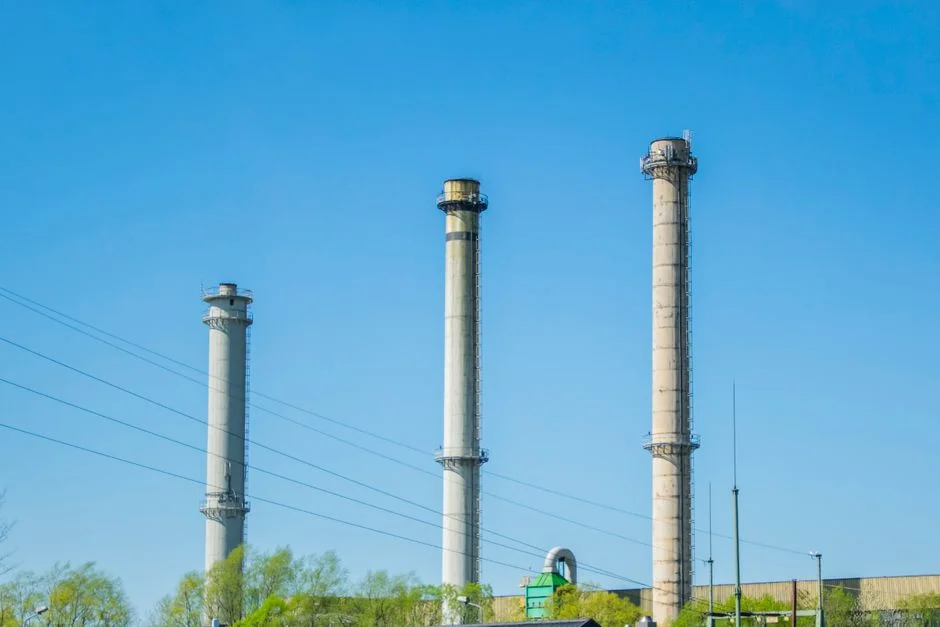
If the goal is to reuse the treated stream as cooling-tower makeup, the design has to clear California Title 22 reclaimed water criteria, which set envelopes on total nitrogen, turbidity, and pathogen reduction that effectively require a polishing step (typically RO or membrane bioreactor followed by RO) before the water returns to the loop. Title 22 is the regulatory backbone, not a finishing touch.
For discharge to the municipal sewer, the City of San Diego's industrial wastewater ordinance and Sewer Use Ordinance control pH, metals, oil and grease, and discharge temperature, and they impose local limits that are often tighter than the EPA categorical standards. The State Water Resources Control Board oversees groundwater recharge projects that may accept concentrate under site-specific permits, which becomes relevant if a hyperscale site wants to send RO concentrate to a managed aquifer recharge program rather than the sewer.
At the planning level, the San Diego County Water Authority and the Pure Water San Diego program are now embedded in board filings for new data-center projects. Developers are expected to demonstrate water-budget neutrality, meaning any net new groundwater or imported-water draw has to be offset by reuse, recycling, or alternative supply. A blowdown treatment train that returns treated water to the cooling loop is one of the cleanest ways to satisfy that expectation.
Matching the treatment train to the site: side-stream filtration, RO, or ZLD
Three realistic trains cover almost every San Diego data-center scenario: side-stream filtration, single- or dual-stage reverse osmosis, and thermal zero liquid discharge. The choice is driven by recovery, capex, opex, and whether the goal is to lift CoC or to fully close the loop.
Side-stream filtration treats a slipstream of the recirculating water, not blowdown directly, and uses media or disc filtration to remove suspended solids so the loop can run at higher CoC with cleaner chemistry. Recovery for the side-stream itself is 90-95%, and capex is $50,000-200,000 with modest opex (per Environmental Expert, 2025-08). It does not by itself produce a Title 22-quality reuse stream; it makes the blowdown easier and cheaper to handle downstream.
Single- or dual-stage RO on the blowdown stream produces permeate at 10-50 mg/L TDS, suitable for direct return as cooling-tower makeup, at 50-85% overall recovery. Capex runs $100,000-500,000 for most colocation and enterprise sites, and the typical payback window is 2-3 years at stressed-region tariffs (per Environmental Expert, 2025-08). Conventional brackish water RO tops out around 75-80% recovery before silica and calcium sulfate scaling force the system offline; pushing past that requires a high-recovery industrial reverse osmosis system architecture that controls precipitation of sparingly soluble salts rather than fighting them.
Zero liquid discharge achieves 95-99% recovery by combining RO concentration with thermal evaporation and crystallization, but capex of $3-8 million and 2-4 kWh/m3 energy intensity mean ZLD only pencils at hyperscale sites with no viable discharge path or with strong corporate water-stewardship mandates (per Environmental Expert, 2025-08).
| Technology | Recovery | Capex band | Permeate TDS | Best fit in San Diego |
|---|---|---|---|---|
| Side-stream filtration | 90-95% (slipstream) | $50k-$200k | n/a (returns to loop) | Enable higher CoC; pretreatment |
| Single/dual-stage RO | 50-85% | $100k-$500k | 10-50 mg/L | Makeup reuse under Title 22; default for colo/enterprise |
| High-recovery RO (e.g., MAXH2O) | up to 95% | $300k-$1M+ | 10-30 mg/L | Silica-driven scaling; coastal recycled makeup |
| ZLD (RO + thermal) | 95-99% | $3M-$8M | near zero liquid | Hyperscale; no-discharge sites |
Worked example for a San Diego colocation site treating 60,000 gallons per day of blowdown at 65% recovery: 14.2 million gallons recovered per year, $113,600 in avoided water at $8/kgal and $142,000 in avoided discharge at $10/kgal, against $54,750 in operating cost at $2.50/kgal, for a net annual benefit of $200,850 and a simple payback of roughly 2 years on a $400,000 membrane system (per Environmental Expert, 2025-08). San Diego's Metropolitan Wastewater Department and San Diego Water Authority tariffs sit firmly inside the stressed-region range that makes this math work.
Designing the train for a San Diego coastal climate
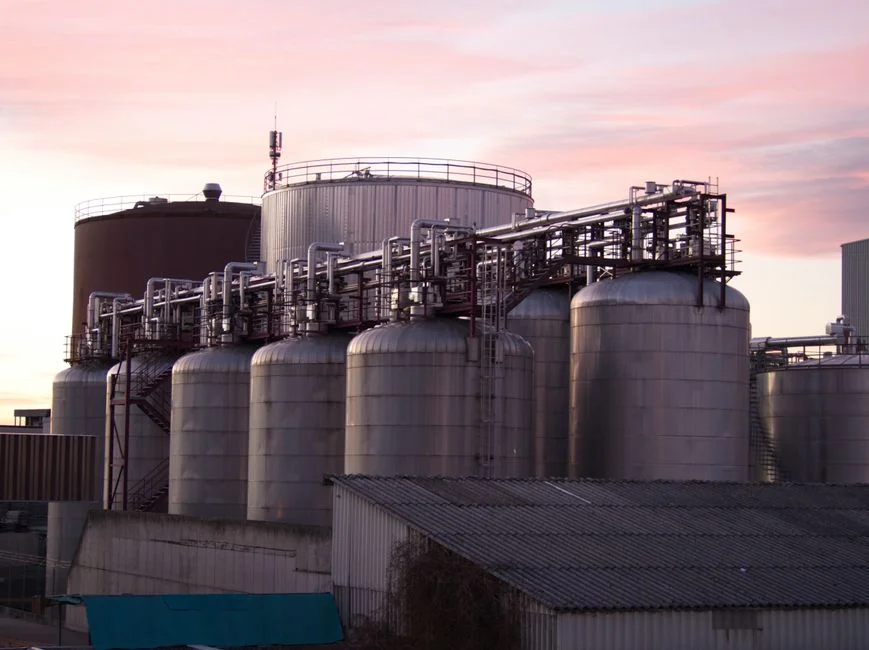
The pretreatment stack is what protects the membrane capital downstream, and in San Diego the stack has to handle a blended makeup that swings seasonally as Pure Water recycled supply comes on- and off-line. A multi-media pretreatment filter sized to drop the Silt Density Index below 3 is the first non-negotiable step; without it, RO membranes foul quickly on the high-TDS recycled feed that defines summer operations in this region.
Upstream of the filter, a PLC-controlled chemical dosing skid handles antiscalant for silica and calcium phosphate, plus an oxidizing biocide rotation for microbiological control. The dosing envelope is $0.30-0.80 per thousand gallons, and total energy for the treatment train lands at $0.50-2.00 per thousand gallons (per Environmental Expert, 2025-08), which together set the operating budget a finance reviewer will want to see in the capex justification.
On the cooling loop itself, side-stream filtration is what enables higher CoC without forcing more frequent blowdown. The combination of media filtration, chemical dosing, and side-stream on the loop is the configuration most enterprise and colocation sites in San Diego should be specifying; hyperscale operators with discharge restrictions can layer high-recovery RO on top, and only the largest sites should be evaluating ZLD. A useful peer reference is the data center cooling blowdown treatment in Boston guide, which works through a similar train selection logic in a colder-climate context, and the Atlanta data center blowdown and ZLD design piece, which covers a more humid, sewer-restricted scenario.
Step-by-step checklist to specify and procure a blowdown treatment system in San Diego
Step 1 — Instrument and baseline. Install meters on makeup, blowdown, and evaporation, plus online conductivity and pH on the loop. Compute true CoC from the conductivity ratio. Expect actual blowdown to run 15-30% above the theoretical 1/(CoC - 1) value because of unmeasured leaks and emergency dumps (per Genesis Water Technologies, 2026). Without this baseline, every downstream number is a guess.
Step 2 — Stop the easy losses first. Kill once-through cooling, repair leak paths, and reset blowdown control logic before any capex on reuse. Most sites that skip this step find their new RO is sized to recover water they were never going to lose in the first place.
Step 3 — Simplify the chemistry. Retire heavy-metal and persistent biocide programs and move to non-oxidant microbiological control. The result is cleaner feed for downstream RO and fewer discharge permit complications, because the antiscalant envelope can stop covering biocide interference.
Step 4 — Deploy modular RO. For most colocation and enterprise sites in San Diego, a modular RO at 100-300 GPM is the right scale (per Genesis Water Technologies, 2026). Hyperscale operators with no discharge path can evaluate ZLD, but the opex gap is real and the bar for justification is high.
Step 5 — Total-cost accounting. Combine avoided freshwater, avoided sewer, amortized capex, and ESG reporting upside into a single business case. A defensible San Diego case will reference the local water authority tariff, the City of San Diego industrial discharge rate, and the Title 22 reuse criteria as the regulatory anchors; for related membrane-operations troubleshooting, a nanofiltration troubleshooting field guide is worth keeping on the engineer's desk during commissioning.
Frequently Asked Questions
What discharge limits does a San Diego data center face on cooling-tower blowdown?
Discharge to the City of San Diego sewer is governed by the industrial wastewater ordinance and Sewer Use Ordinance, which set local limits on pH, metals, oil and grease, and temperature; many jurisdictions also enforce a 1,500 mg/L TDS ceiling that effectively bans untreated blowdown discharge at 4 CoC (per Environmental Expert, 2025-08).
Can treated blowdown be reused as cooling-tower makeup in California?
Yes, but the polishing step has to meet California Title 22 reclaimed water criteria on total nitrogen, turbidity, and pathogen reduction, which in practice means RO or membrane bioreactor plus RO producing permeate at 10-50 mg/L TDS.
How much does a San Diego data center save by treating 60,000 gpd of blowdown at 65% recovery?
At $8/kgal avoided water and $10/kgal avoided discharge, the net annual benefit is roughly $200,850 against $54,750 in operating cost, giving a 2-year simple payback on a $400,000 membrane system (per Environmental Expert, 2025-08).
Why does silica scaling matter more in San Diego than in other markets?
San Diego's blend of imported MWD water and Pure Water recycled supply raises chloride and TDS in the cooling loop, and recycled water carries higher silica carry-through; at 4 CoC that pushes silica past 30-80 mg/L, which constrains conventional brackish RO to 75-80% recovery and forces the design toward controlled-precipitation high-recovery architectures (per IDE Water Tech, 2026).
Is zero liquid discharge realistic for a San Diego data center?
Technically yes, with RO plus thermal evaporation at 95-99% recovery, but capex of $3-8 million and 2-4 kWh/m3 energy intensity limit ZLD to hyperscale sites with no viable discharge path or unusually strong corporate water-stewardship mandates (per Environmental Expert, 2025-08).