Why a Steel Plant Expansion Changes the Wastewater Equation
Adding 2–5 Mt/year of crude steel capacity to an ArcelorMittal-style integrated works raises total water demand by 25–60 m³ per tonne of crude steel produced — the working band for Indian plants (IJESI, 2021). On a 1 Mt/yr brownfield add at the mid-point of that band (40 m³/t), raw water demand climbs by roughly 40,000 m³/day before any recycle credit, and the corresponding wastewater flow to the ETP rises to ~120,000 m³/day once blowdown, gas-cleaning wash, and pickle-line rinse are netted against internal reuse. The existing ETP was sized for the pre-expansion load envelope — typically a single-shift diurnal pattern with coke-oven wastewater segregated from pickle liquor — and cannot absorb a step-change of this magnitude without an additional train or a parallel tertiary/recycle line.
Three changes make a brownfield ETP retrofit harder than a greenfield build. First, shock loadings: new coking capacity pushes ammonia and thiocyanate spikes that the old equalisation tank cannot buffer at 8–16 h HRT. Second, salinity creep: a new DRI-EAF or BOF module closes the water loop and concentrates chlorides and TDS in the recirculating cooling water, which leaks back to the ETP. Third, consent tightening: brownfield consent renewals in 2026 typically require COD ≤125 mg/L and total nitrogen ≤15 mg/L under group/IED-aligned policies, against the older CPCB inland surface water envelope of COD <250 mg/L and BOD <30 mg/L (IIT Delhi, 2016 standards table). Any new train has to be designed to the stricter line from day one.
Pollutants by Steel-Making Unit: What Each Stream Brings to the ETP
Steel-mill wastewater is not a single stream — it is the sum of process-specific effluents, each with a characteristic pollutant signature. The ETP has to be configured so that each signature maps to a specific unit operation, which is why segregation at the plant drain is the first design decision.
| Unit operation | Typical flow share | pH range | Dominant pollutants | Downstream treatment stage |
|---|---|---|---|---|
| Coke oven (ammonia liquor, dephenoliser overhead) | 5–15% | 7.5–10 | COD 3,000–6,000 mg/L, phenols 200–1,500 mg/L, NH₃-N 200–800 mg/L, thiocyanate 100–600 mg/L, free & complex cyanide, dark colour, oily film | Stripping → anaerobic UASB → biological (MBBR/IFAS/MBR) → ozone/Fenton |
| Sinter plant & slag granulation | 15–25% | 6–9 | TSS 500–3,000 mg/L, NH₃ from SCR, occasional Zn/Pb spikes, fluoride, low BOD/COD | Equalisation → primary clarifier/lamella → biological polishing |
| Blast furnace (gas-cleaning wash, cast-house spray) | 20–30% | 7–9 | TSS 200–1,500 mg/L, oil & grease 50–500 mg/L, Zn, Pb, Cr, Ni, cyanide traces, low BOD/COD ratio (<0.2) | API/DAF oil removal → chemical precipitation → biological |
| BOF (converter gas cleaning, slag pit) | 10–20% | 7–10 | High TSS, oil, dissolved Fe, Ca, Mg, occasional fluoride; BOD minimal | Equalisation → DAF → primary clarifier |
| Rolling mill & pickle line | 15–25% | 1–4 (pickle liquor) / 6–9 (rinse) | Free acid (HCl or H₂SO₄) up to 200 g/L, dissolved Fe up to 100,000 mg/L in spent liquor, F⁻ up to several hundred mg/L from HF pickles, oils, surfactants | Acid recovery / diffusion dialysis → neutralisation + lime precipitation → dedicated sludge line |
| Continuous casting & hot strip cooling | 5–15% | 7–9 | Oil, TSS, low dissolved solids, scale particles (Fe, Ca, Mg) | DAF → multimedia filter → cooling-tower reuse |
The blast furnace and BOF streams are dominated by suspended solids and oil rather than dissolved organics, which is why they pass through a DAF pre-treatment and skip the high-rate biological stage. Coke oven wastewater, by contrast, carries the highest toxicity load and the most complex organic chemistry — phenols, thiocyanate, polycyclic aromatics — and it anchors the design of the biological and AOP sections.
The Four-Stage Treatment Train for an Expanded ArcelorMittal-Style Plant
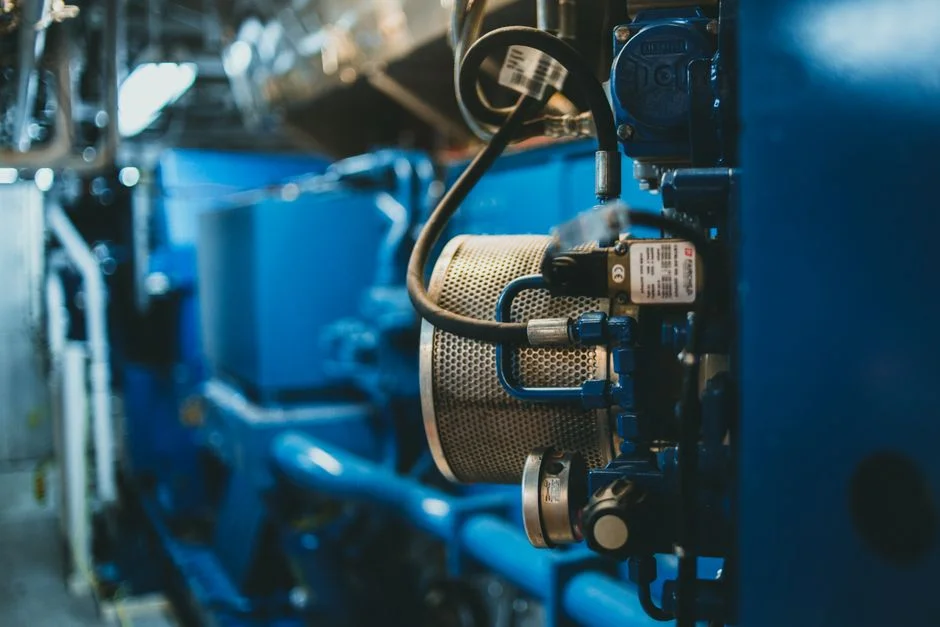
The reference train below is what an engineer should expect to see in a 2026 EPC proposal for an ArcelorMittal/AMNS India brownfield ETP. It is built stage-on-stage so that each downstream unit is protected from upstream variability.
Stage 1 — Equalisation, oil and cyanide stripping. Segregated streams are recombined in an equalisation tank sized for 8–16 h HRT (IIT Delhi, 2016). Free oil is removed with a 10 mm bar screen followed by an API separator or DAF oil and suspended-solids pre-treatment ahead of the equalisation tank. pH is corrected with lime/NaOH (for acidic pickle rinse) or H₂SO₄ (for alkaline ammonia liquor). Ammonia and free cyanide are stripped in a packed tower with air/steam at elevated pH and 12–14 h residence time; the stripper overhead is sent to a dedicated ammonia absorption column for recovery as ammonium sulphate.
Stage 2 — Physico-chemical primary. Coagulation uses alum, PAC, or FeSO₄ in the 200–1,000 ppm range plus 0.2–2 ppm polyelectrolyte; the flash mix/flocculator feeds a primary clarifier or high-efficiency sedimentation tank (lamella) with surface loading 25–40 m³/m²·day. Pickle-liquor sidestreams are pre-precipitated with lime to pH 8.5–9.5 to drive fluoride and dissolved metals (Fe, Zn, Cr³⁺) into a settled sludge before the clarifier.
Stage 3 — Two-stage biological. High-COD coke oven liquor passes first through an anaerobic UASB (HRT 12–24 h, COD removal 60–75%) to reduce inhibitory shock on the aerobes, then into an aerobic stage — activated sludge, MBBR, IFAS, or an MBR membrane bioreactor polishing unit. A mixed culture of Pseudomonas, Arthrobacter, Micrococcus and Bacillus has been reported to drive COD/BOD removal up to 95% on steel-mill influent (IJESI, 2021). Nitrification is required to meet the ~15 mg/L TN target; denitrification is done in a pre-anoxic zone with methanol or spent pickle liquor as carbon source.
Stage 4 — Tertiary polishing and recycle. The biological effluent passes through multimedia filtration, then an industrial RO polishing step at 97% rejection for residual heavy metals, TDS, and oil and grease (IJESI, 2021). An ozone or Fenton AOP is inserted before RO when thiocyanate and colour from coke-oven residues are not fully biologically oxidised — Chang et al. report complete thiocyanate and colour removal with 80% BOD reduction in 1 h of ozone contact (IJESI, 2021).
| Stage | Unit operation | Key design parameter | Target removal / output |
|---|---|---|---|
| 1 | Screening, equalisation, oil/cyanide stripping | 8–16 h HRT; 10 mm screens; pH correction 6.5–8.5 | Oil & grease <50 mg/L; free CN⁻ <1 mg/L; homogenised flow |
| 2 | Coagulation/flocculation + lamella + pickle-line precipitation | Alum/FeSO₄ 200–1,000 ppm; PE 0.2–2 ppm; surface loading 25–40 m³/m²·day | TSS <100 mg/L; F⁻ <10 mg/L; Fe, Zn, Cr sludge |
| 3 | UASB + aerobic (MBBR/IFAS/MBR) | MLSS 3,500–5,000 mg/L; aerobic HRT 6–10 h; F/M 0.15–0.25 | COD <125 mg/L; BOD <15 mg/L; NH₃-N <5 mg/L |
| 4 | MMF + AOP (O₃/Fenton) + RO | Ozone dose 5–20 mg/L; RO recovery 70–95%; rejection 97% | TDS <50 mg/L in permeate; thiocyanate <0.1 mg/L; ≥70% stream recycled |
Sizing the New ETP: A Worked Example for a 1 Mt/Year Capacity Add
Take the design basis: 1,000,000 t/year of new crude steel, 330 operating days/year, water intensity 40 m³/t (mid-point of 25–60 m³/t per IJESI 2021). The design flow is 1,000,000 × 40 / 330 = 121,212 m³/day, say 121,500 m³/day. Use the 25 and 60 m³/t bounds to bracket the low and high cases at 75,800 m³/day and 181,800 m³/day respectively — those are the envelope to test equalisation, biological, and RO capacity against.
Equalisation tank volume at 12 h HRT and 1.4 Q_avg peak factor: 121,500 × 1.4 × 12 / 24 = 85,050 m³ (two parallel basins of ~42,500 m³ each is typical on this scale). Aerobic biological volume at HRT 8 h and 5,000 mg/L MLSS: 121,500 × 8 / 24 = 40,500 m³ — split across 4–6 trains of ~7,000–10,000 m³ each. Aeration demand at 1.5–2.0 kg O₂/kg BOD removed with 350 mg/L feed BOD: 121,500 × 350/1,000 × 1.8 = ~76,500 kg O₂/day, or roughly 80,000 Nm³/h of blower capacity. RO sized for 70% recovery on the polished stream: 121,500 × 0.65 (post-biological recycle fraction) = ~79,000 m³/day RO feed, producing ~55,000 m³/day of permeate for cooling-tower and gas-cleaning make-up. For background on hybrid biological selection in a similar metallurgical context, the IFAS hybrid biological reference walks through MLSS, HRT, and SRT trade-offs.
| Design parameter | Mid-case (40 m³/t) | Low (25 m³/t) | High (60 m³/t) |
|---|---|---|---|
| Design flow, m³/day | 121,500 | 75,800 | 181,800 |
| Equalisation tank, m³ (12 h HRT, 1.4× peak) | 85,000 | 53,000 | 127,000 |
| Aerobic reactor volume, m³ (8 h HRT) | 40,500 | 25,300 | 60,600 |
| Blower capacity, Nm³/h O₂ | ~80,000 | ~50,000 | ~120,000 |
| RO feed (65% of flow), m³/day | 79,000 | 49,300 | 118,200 |
| RO permeate (70% recovery), m³/day | 55,300 | 34,500 | 82,700 |
Compliance Targets and Recycle Targets for a 2026 Brownfield ETP
Two limit sets govern the design. The regulatory floor is the CPCB inland surface water envelope used by GPCB consent orders: pH 5.5–9.0, TSS <100 mg/L, oil & grease <10 mg/L, BOD <30 mg/L, COD <250 mg/L (IIT Delhi, 2016). The de facto ceiling is the ArcelorMittal group policy, which typically aligns with EU IED BAT-AEL ranges — COD ≤125 mg/L, total nitrogen ≤15 mg/L, total suspended solids ≤30 mg/L, and Zn, Pb, Cr, Ni each at sub-1 mg/L discharge. Engineers should design the tertiary train to the group line, not the regulator line; the regulator limit becomes the consent ceiling, and the gap is consumed by operational variability. Recycle targets should be set independently: ≥70% of the RO permeate reused as cooling-tower and gas-cleaning make-up, with RO concentrate sent to a filter press and the cake routed to the sinter plant or to secure landfill. For pretreatment and indirect-discharge framing that overlaps with metallurgical plant compliance, the metals-plant pretreatment compliance guide is a useful parallel read.
Sludge and Side-Stream Management
The water train is only half the design — sludge yield and dewaterability decide whether the new ETP is operable. Biological sludge yield is typically 0.2–0.4 kg DS/kg BOD removed; on the 1 Mt/yr mid-case that is ~14,000–28,000 kg DS/day from the biological stage alone, before pickle-line and lamella chemical sludge are added. Thickening to 3–5% DS in a gravity thickener, then dewatering to 25–35% DS cake on a plate-and-frame filter press for sludge dewatering, is the standard 2026 configuration. Pickle-line sludge is segregated because it is iron-hydroxide-rich and can be re-fed to a Waelz kiln or sinter plant as iron-bearing flux — an internal-recovery credit that often tips the project economics. Chemical conditioning (polymer dose 4–8 kg/t DS) is delivered by an automatic chemical dosing system tied to the press feed line, with feed-forward control from the sludge solids meter. For context on how a comparable brownfield ETP train lines up in another heavy-industry sector, the expansion-driven ETP sizing companion piece shows the same four-stage logic applied to FMCG wastewater.
Frequently Asked Questions
What is the design flow for an ArcelorMittal brownfield ETP on a 1 Mt/yr capacity add?
Using the 25–60 m³/t Indian benchmark (IJESI, 2021) at 330 operating days, the design flow brackets from ~75,800 m³/day (low) to ~181,800 m³/day (high), with a mid-case of ~121,500 m³/day at 40 m³/t. The high case sets the equalisation and RO sizing; the low case sets the biological MLSS turn-down limit.
Which biological technology is preferred for coke oven wastewater in a 2026 brownfield ETP?
Two-stage anaerobic (UASB) followed by aerobic MBBR, IFAS, or MBR is the standard reference train, with MBR preferred where land is constrained and the operator can sustain the membrane-replacement cost. A mixed culture including Pseudomonas, Arthrobacter, Micrococcus and Bacillus has been documented to deliver up to 95% COD/BOD removal on steel-mill influent (IJESI, 2021). Ozone or Fenton AOP is added before RO when thiocyanate and colour persist past the biological stage.
What compliance limits should the new ETP be designed to?
Design to the stricter of the CPCB inland surface water envelope (COD <250 mg/L, BOD <30 mg/L, TSS <100 mg/L, O&G <10 mg/L, pH 5.5–9.0, per IIT Delhi 2016) and the ArcelorMittal group standard (typically COD ≤125 mg/L, total nitrogen ≤15 mg/L). The group limit is the binding number for 2026 brownfield consents in India.
How is pickle-line wastewater handled separately from the mixed stream?
Pickle liquor (HCl or H₂SO₄, with dissolved Fe up to 100,000 mg/L and F⁻ from HF pickles) is segregated at the drain, passed through acid recovery or diffusion dialysis, then neutralised with lime to pH 8.5–9.5 to precipitate fluoride, iron, and trace heavy metals. The sludge is routed to a dedicated line and recovered as iron-bearing feed to the sinter plant or Waelz kiln where logistics allow.
What is the typical sludge yield and how is it dewatered?
Biological sludge yields 0.2–0.4 kg DS per kg BOD removed. On the 1 Mt/yr mid-case that is 14,000–28,000 kg DS/day before pickle-line sludge. The standard 2026 dewatering train thickens to 3–5% DS, then dewaters to 25–35% DS cake on a plate-and-frame filter press, with polymer conditioning at 4–8 kg/t DS from an automatic dosing skid.