The Nashville Enforcement Reality: Why Pretreatment Is a Permit, Not a Drain
In April 2025, David Ray Stark (former Plant Manager) and Caleb Warren Randall (former supervisor) of Allwaste Onsite LLC, doing business as Onsite Environmental, pleaded guilty in U.S. District Court for the Middle District of Tennessee to conspiring to bypass waste pretreatment and to tampering with a monitoring device placed by Nashville's Department of Water and Sewerage Services in January 2023 (DOJ press release, 2025-04). Court filings state both men admitted to bypassing treatment processes and discharging untreated wastes into the Nashville sewer system in late 2022 and early 2023, and to directing employees to place the sampling-device hose into a bucket of cleaner water so the city's compliance samples did not represent actual discharge.
The exposure is concrete. Stark and Randall each face up to 5 years in prison and a $250,000 fine. The corporate entity was previously sentenced to a $512,000 fine after its own guilty plea, and Nashville recouped over $80,000 in additional sewer maintenance and repair costs plus $299,576 in unpaid surcharges through a separate civil action (DOJ press release, 2025-04). The U.S. Attorney for the Middle District underscored that the conduct "endangered local sewer infrastructure" and that the EPA Criminal Investigation Division, EPA OIG, and Metro Nashville government collaborated on the case.
For a petroleum plant in Davidson County, the lesson is operational, not theoretical. A sewer connection is a regulatory contract under the Clean Water Act, and Metro Water Services' Industrial Pretreatment Program actively audits sampling devices, not just discharge reports. The Onsite Environmental prosecution is the local enforcement benchmark: bypass plus sampling tampering produces felony exposure for individuals and seven-figure exposure for the company.
The Regulatory Stack That Governs Every Nashville Sewer Discharge
The citation chain a Nashville pretreatment coordinator hands to a regulator runs Clean Water Act § 307(b) → 40 CFR Part 403 (General Pretreatment Regulations) → 40 CFR Part 419 (petroleum refining categorical standards) → Metro Water Services Technically-Based Local Limits (TBLL) adopted under the local sewer use ordinance.
Layer 1 is the federal floor. 40 CFR Part 403.5(a) prohibits any Industrial User from discharging pollutants that cause "pass-through" or "interference" at the receiving POTW, and 40 CFR Part 403.5(b) makes that prohibition applicable whether or not the POTW has an approved pretreatment program and whether or not the IU has been issued a control mechanism. Pass-through is defined in 40 CFR 403.3(p) as a discharge that, alone or with other sources, causes a violation of the POTW's NPDES permit, including an increase in the magnitude or duration of an existing violation. Interference, under 40 CFR 403.3(k), is a discharge that alone or with other sources both (1) inhibits or disrupts the POTW, its treatment processes, or its sludge use/disposal and (2) therefore causes a violation of the POTW's NPDES permit or of sewage-sludge use/disposal requirements under CWA § 405 or RCRA. The legal pivot is the receiving plant's effluent quality and biosolids, not what the refinery thinks it is sending down the sewer.
Layer 2 is the categorical bar. 40 CFR Part 419 sets technology-based effluent limits for the petroleum refining category, and 40 CFR § 401.16 / EPA Method 1664A define Hexane Extractable Material (HEM) as the federally used surrogate for fats, oils, and grease in U.S. pretreatment. Method 1664A uses n-hexane extraction, and "O&G" on a typical Metro permit is shorthand for HEM.
Layer 3 is the local ceiling. Metro Water Services' TBLL is derived using EPA's Maximum Allowable Headworks Loading (MAHL) method, with the four MAHL inputs being the receiving POTW's NPDES limits, state water quality standards, Part 503 biosolids criteria, and worker/ecosystem protection factors. Typical 2026 Nashville-area local limits for a petroleum SIU fall in the 50–100 mg/L O&G range, 1–10 mg/L sulfides, 0.5–5 mg/L phenols, approximately 250 mg/L TSS, and 100–200 mg/L HEM at the bulk-plant tier (per the 2020 St. Joseph, MO TBLL evaluation by Black & Veatch, used here as a representative published MAHL derivation). The lowest applicable bar governs; a refinery's compliance strategy has to clear whichever of 40 CFR Part 419, the MAHL-derived TBLL, or the SIU control mechanism is most stringent.
The Five-Stage Treatment Train Nashville Refineries Actually Run
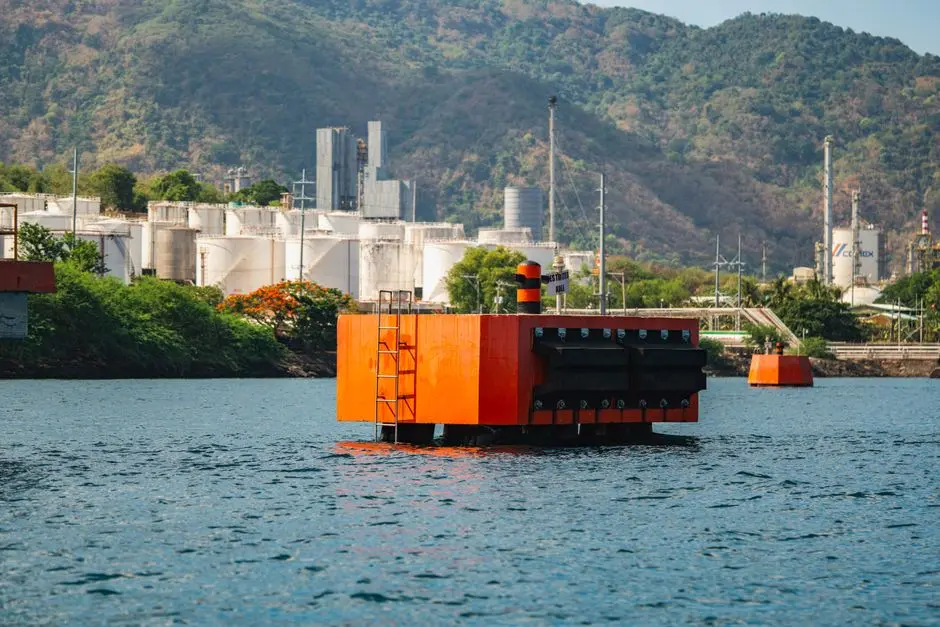
The unit operations and their order are remarkably consistent across U.S. refineries; what changes is the sizing margin and the chemistry package.
Stage 1 — API separator or CPI. Free oil is removed by gravity because it is the cheapest and most forgiving operation, and because everything downstream (pumps, membranes, sensors) suffers if free oil is not taken out first. A well-operated API separator typically leaves 100–200 mg/L oil & grease in the water phase; a CPI hits a similar band in a much smaller footprint with 1–2 inch plate spacing and a roughly 45° corrugation angle. This stage sets the floor for emulsified-oil load on Stage 2.
Stage 2 — Dissolved air flotation (DAF). Micro-bubble flotation strips the emulsified oil, FOG, and colloidal TSS that the API unit cannot catch and brings oil & grease down to roughly 15–30 mg/L. Operating air-to-solids ratios sit in the 0.02–0.06 range, hydraulic retention is 15–30 minutes, and saturator recycle rates run 20–50% of forward flow. A refinery-scale DAF in this duty is typically specified in the 4–300 m³/h capacity range, with skid-mounting for tie-in during scheduled turnarounds. A practical worked example is in the pressure flotation engineering and performance data reference, and a dissolved air flotation system is a typical skid selection for this service.
Stage 3 — Equalization and neutralization. Flow and pH swings from spent-caustic pushes, desalter upsets, and tank transitions are smoothed in an EQ basin sized for 8–24 hours of hydraulic retention, and pH is trimmed to 6–9 before the biological stage. This is the single most important control point for preventing interference events: a slug of high-pH, high-sulfide spent caustic is the textbook case of a discharge that would inhibit the POTW's biomass and trigger a violation downstream.
Stage 4 — Biological polishing. An MBBR or MBR reduces phenols, sulfides, benzene, and ammonia-nitrogen. MBBRs are robust to load swings and tolerate the 200–800 mg/L COD that survives the front of the train. MBRs add a 0.1 µm flat-sheet PVDF membrane barrier that holds biomass at 8,000–12,000 mg/L and produces a polished effluent with <5 mg/L TSS and <1 NTU turbidity, in roughly 60% of the footprint an equivalent CAS basin would need, which is why MBR is the default for space-constrained Nashville metro retrofits. A typical selection is an integrated MBR wastewater treatment system sized in the 10–2,000 m³/day range for refinery polish duty.
Stage 5 — Polishing and monitoring. A multimedia filter catches any TSS breakthrough, an online fluorescence oil-in-water analyzer alarms on a 10–20 mg/L setpoint, and pH/conductivity probes feed the control room and a sewer shutoff interlock. Chemistry closes the gap: pH adjustment to 6.5–7.5 ahead of the DAF and a coagulant/demulsifier dose of 50–200 mg/L via a HydropureWater automatic chemical dosing system is what unlocks the residual <50 mg/L HEM a strict POTW will demand. A broader refinery-vs-bulk-plant selection comparison is in the DAF vs clarifier petroleum wastewater buyer's guide.
Parameter Map: Influent vs Nashville POTW Limit vs Removal Stage
The table below maps the refinery-side pollutant to a typical inlet range, a typical Nashville-area POTW local limit, the stage that does the primary removal, and the polishing step that protects the permit. The numbers describe engineering bands seen in practice; the specific number in your permit is set by Metro Water Services and can be more stringent than 40 CFR Part 403 alone.
| Parameter | Typical refinery influent | Typical Nashville POTW ceiling | Primary removal | Polish / safeguard |
|---|---|---|---|---|
| Oil & Grease (HEM) | 200–1,000 mg/L | 50–100 mg/L (HEM 100–200 mg/L at bulk tier) | API / CPI gravity | DAF; multimedia filter; online oil-in-water alarm |
| Sulfides (S²⁻) | 5–50 mg/L | 1–10 mg/L | Equalization + biological sulfide oxidation | MBBR/MBR; online S²⁻ probe on polish |
| Phenols | 5–100 mg/L | 0.5–5 mg/L | Biological oxidation (MBBR/MBR) | Activated carbon or advanced oxidation if residual exceeds local number |
| BTEX (benzene/toluene/ethylbenzene/xylene) | 1–10 mg/L | 0.1–1 mg/L (often quarterly GC/MS) | Air stripping / biological oxidation | GAC polishing; quarterly compliance sampling |
| Ammonia-nitrogen | 10–100 mg/L | Site-specific | MBR flat-sheet modules | Online NH₃ probe |
| Total Suspended Solids | 100–500 mg/L | ~250 mg/L | EQ + DAF | MBR (<5 mg/L) or multimedia filter |
| pH | 2–12 swings | 6–9 | Equalization / neutralization | Online trim with interlock to sewer shutoff valve |
| Hexavalent Chromium | 0.05–5 mg/L | 0.1–1 mg/L (typical) | Reduction to Cr(III) + precipitation | Sand/multimedia filter; quarterly metals sampling |
For tight-footprint refinery retrofits, the polishing step in the last four rows is increasingly the MBR flat-sheet module (0.1 µm PVDF), which is used as the final barrier before the sewer rather than as the sole biological stage. The role of the MBR here is containment of biomass and solids, not a free-standing removal claim.
The Documentation Discipline That Actually Wins Audits
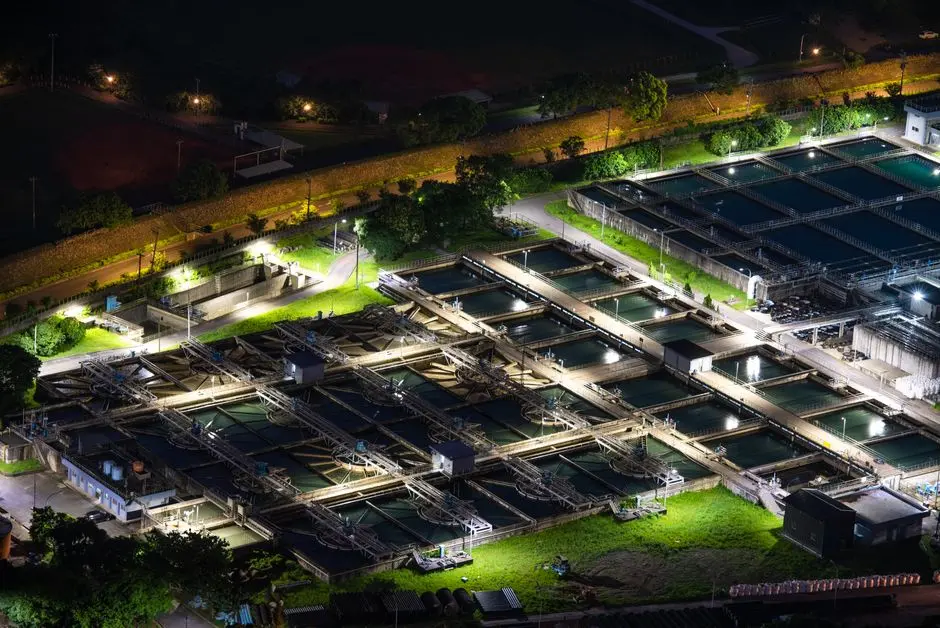
The treatment train is the engineering side; the documentation side is where most EPA and state enforcement actions actually land. A refinery's pass-through/interference defense runs through five repeatable steps.
- Get classified as a Significant Industrial User (SIU) and obtain a control mechanism from Metro Water Services. The control mechanism lists the local numerical limits, the monitoring schedule, and the reporting cadence the refinery will be judged against. Until that document is in hand, the refinery is still on the hook under 40 CFR 403.5(a) but has no defined sampling schedule.
- Self-monitor with 24-hour flow-weighted composites. Monthly for O&G, TSS, sulfides, phenols, and ammonia; quarterly for metals, BTEX, and hexavalent chromium. Results are reported on a DMR or its local equivalent, and exceedances trigger accelerated monitoring.
- Maintain a written, trained-out slug-control plan. EPA enforcement under 40 CFR 403.8(b)(4) repeatedly targets the slug-control plan. The plan must cover loading racks, tank transitions, and batch discharges; it must define what counts as a slug, what the refinery will do to contain it, and how it will notify the POTW. As a rule of thumb, any discharge that could cause interference must be reported within 24 hours.
- Execute accidental-discharge reporting and root-cause corrective action. When a slug escapes (spent-caustic overflow, desalter upset, tank-bottom-water release), notify the POTW and follow up with a written report describing the cause, the corrective action, and the revised prevention measures. The Onsite Environmental case shows that plans on paper that were not followed are the most common root cause in consent decrees.
- Keep auditable records. BMPs, restricted-chemical inventory from the SIU permit, online-analyzer calibration logs, operator training records, and chain of custody for every composite sample. The paper trail is what turns a "no pass-through" claim into a defensible one.
For context on how a comparable permitting jurisdiction structures the same documentation stack, the chemical plant pretreatment near Fernley 2026 guide walks the equivalent step list for a different industrial category.
Cost of Failure vs Cost of Compliance: A Nashville Case Study
The DOJ numbers from the Onsite Environmental prosecution are the cleanest cost-of-failure anchor available for a Nashville pretreatment budget meeting.
| Item | Value | Source |
|---|---|---|
| Corporate fine (Allwaste Onsite LLC d/b/a Onsite Environmental) | $512,000 | DOJ press release, 2025-04 |
| Recovered sewer maintenance / repair cost to Nashville | $80,000+ | DOJ press release, 2025-04 |
| Recovered unpaid surcharges | $299,576 | DOJ press release, 2025-04 |
| Maximum individual sentence (Stark, Randall) | 5 years prison + $250,000 fine each | DOJ press release, 2025-04 |
Secondary cost of failure is automatic. Significant Noncompliance (SNC) status triggers administrative orders, surcharges, mandated zero-discharge operating mode, or permit termination; two missed reports in twelve months or any single exceedance of 1.5× the numerical ceiling can land a refinery there.
Cost of compliance runs far lower than the enforcement exposure and is mostly an engineering decision. Primary oil removal at a CPI or API sized for 30-minute residence at peak flow and 1–2 inch plate spacing handles the free-oil load at a fraction of seven-figure enforcement exposure. A DAF with a 20–30% safety margin on air-to-solids and surface hydraulic loading of 2–5 gpm/ft², paired with a chemical dosing skid for 50–200 mg/L coagulant/demulsifier, is the standard path below 50 mg/L HEM. An MBR skid in the 10–2,000 m³/day range buys <5 mg/L TSS and <1 NTU polish plus roughly 60% footprint reduction versus CAS, which is what makes it the default for retrofits that have to fit inside an existing Nashville metro site.
The math a plant engineer takes to a budget meeting is: one SNC cycle costs more than the entire treatment train, and the equipment that prevents it pays for itself on first avoided enforcement event.
Frequently Asked Questions
What do "pass-through" and "interference" mean under 40 CFR Part 403 for a Nashville petroleum plant?
Pass-through (40 CFR 403.3(p)) is a discharge that exits the POTW into waters of the U.S. and, alone or with other sources, causes a violation of the POTW's NPDES permit, including an increase in the magnitude or duration of any existing violation. Interference (40 CFR 403.3(k)) is a discharge that alone or together with other sources both inhibits or disrupts the POTW, its treatment processes, or its sludge use/disposal and therefore causes an NPDES or RCRA violation.
What are the typical Nashville Metro Water Services local limits for a petroleum SIU in 2026?
Typical Nashville-area local limits for a petroleum SIU fall in the 50–100 mg/L O&G range, 1–10 mg/L sulfides, 0.5–5 mg/L phenols, approximately 250 mg/L TSS, and 100–200 mg/L HEM at the bulk-plant tier. These numbers are derived using EPA's MAHL method, with the four MAHL inputs being the receiving POTW's NPDES limits, state water quality standards, Part 503 biosolids criteria, and worker/ecosystem protection factors (per the 2020 St. Joseph, MO TBLL evaluation by Black & Veatch).
Can a DAF unit alone meet a Nashville POTW oil & grease limit on refinery wastewater?
Rarely, and never reliably on slug load. A DAF polishes emulsified oil and colloidal TSS down to roughly 15–30 mg/L, but free oil from a coalescer dump or a tank drop blankets the micro-bubbles and crashes the air-to-solids ratio. A CPI or API primary stage ahead of the DAF is standard practice, and the chemistry package (pH 6.5–7.5, 50–200 mg/L coagulant/demulsifier) is what unlocks the residual <50 mg/L HEM a strict POTW will demand.
How do MBBR and MBR compare for biological polishing of refinery pretreatment effluent?
MBBR is robust to load swings and tolerates the 200–800 mg/L COD that survives the front of the train, with a smaller footprint than CAS. MBR adds a 0.1 µm flat-sheet PVDF membrane barrier that holds 8,000–12,000 mg/L MLSS and produces <5 mg/L TSS and <1 NTU turbidity, in roughly 60% of the CAS footprint. Choose MBBR for load tolerance; choose MBR for tight sites and the cleanest polish.
What is the local enforcement benchmark set by the 2025 Onsite Environmental guilty plea?
Allwaste Onsite LLC d/b/a Onsite Environmental was sentenced to a $512,000 corporate fine; Nashville recouped $80,000+ in sewer maintenance costs and $299,576 in unpaid surcharges. Former Plant Manager David Ray Stark and former supervisor Caleb Warren Randall each pleaded guilty and face up to 5 years in prison and a $250,000 fine (DOJ press release, 2025-04). The case is the local benchmark: bypass plus sampling-device tampering produces felony exposure for individuals and seven-figure exposure for the company.