Why Miami Data Centers Cannot Treat Blowdown as a Generic Problem
A medium U.S. data center draws up to 300,000 gpd for cooling, and hyperscale campuses reach 5 MGD — roughly 1.8 billion gallons per year (per UGA Extension TP-121, Saha, June 2026). In Miami-Dade, that volume cannot be treated as a national-average problem because three local constraints bind simultaneously: the sole-source Biscayne Aquifer feeding every potable supply, SFWMD consumptive-use caps on how much a facility can withdraw, and hurricane-season salt intrusion that spikes makeup-water TDS for weeks at a time. Cooling-tower blowdown is the controlled purge of recirculating water that has concentrated salts, treatment chemicals, and suspended solids which do not evaporate (per Water Utility Report). Any gallon that leaves the fence un-reused is a permanent basin loss, not a paper transaction. Roughly two-thirds of data centers built since 2022 sit in water-stressed regions (Bloomberg/Lincoln Institute), and Miami-Dade qualifies under that definition. The permit conversation starts with discharge quality, not intake volume.
What Is Actually in Miami Cooling-Tower Blowdown
The blowdown stream concentrates 4–8× the makeup water at typical 4 cycles of concentration (CoC), landing at 1,200–6,000 mg/L TDS (per Genesis Water Technologies). Scaling minerals — calcium, magnesium, silica, and alkalinity — accumulate fastest; silica is the persistent RO foulant in South Florida makeup because quartz-sand aquifer contact keeps baseline silica high. The treatment-chemistry load is heavier than the salt load: residual oxidizing and non-oxidizing biocides, phosphonate scale inhibitors, corrosion inhibitors, and the occasional legacy chromate or high-phosphate program. Suspended solids run 10–50 mg/L, dominated by corrosion products, biofilm fragments, and the airborne dust pulled through tower fill. The biological content — planktonic bacteria, algae, and biofilm-formers — is a Florida-specific concern because Legionella control sits inside FDEP and CDC water-management plans. For an automatic chemical dosing system feeding the cooling loop, the implication is straightforward: whatever is dosed upstream will appear in the blowdown, and the downstream RO and discharge permit must be designed around that chemistry, not around clean water.
FDEP, WASD, and NPDES: The Compliance Stack That Drives Equipment Choice

EPA guidance published in 2026 identifies data-center cooling-tower blowdown as a wastewater stream that may require permits before discharge (per Commercial Water Lab citation of EPA). A Miami project inherits at least five overlapping authorities, and the equipment train must be specified against all of them at once. These regulatory layers dictate the operational constraints for any facility discharging into the local ecosystem.
| Authority | Reference | What it controls on a Miami data-center project |
|---|---|---|
| EPA NPDES (FDEP-issued) | Clean Water Act | Direct discharge to surface water; site-specific temperature, TDS, metals, biocide limits |
| FDEP Industrial Pretreatment | Ch. 62-625 | Categorical and local pollutant limits before discharge to a domestic WWTP |
| FDEP Surface-Water Quality | Ch. 62-302 | Receiving-water standards for any indirect or wet-weather discharge; some jurisdictions cap TDS <1,500 mg/L (per Genesis) |
| WASD Industrial Waste | Local limits + Ch. 62-625 | BOD/TSS surcharges, pH excursions, oil and grease, metals, biocide residuals |
| SFWMD Consumptive Use Permit | Basin-specific | Cap on Biscayne Aquifer withdrawals — the binding limit on total facility water budget |
Direct discharge to surface water is rare in Miami-Dade, so most projects route blowdown to the WASD sewer, which subjects the facility to FDEP Ch. 62-625 pretreatment plus WASD's local industrial-waste surcharges. Florida Building Code and hurricane standards add a parallel set of constraints on outdoor equipment siting, chemical-storage secondary containment, and emergency overflow sizing. Specifying a treatment train before this map is complete is the most common way Miami projects get value-engineered into a permit fight.
Sizing the Treatment Train: Cycles, Volumes, and Right-Sized Technology
The blowdown ratio equals 1/(CoC−1): at 4 CoC the stream is 25% of makeup, at 6 CoC 20%, at 8 CoC roughly 14% (per Environmental-Expert). The gain from pushing 4→6 CoC is five percentage points — a 20% reduction in blowdown volume — and biological and scaling risk rises sharply above 5–6 CoC without advanced chemistry. That math sets the upper bound on what cycles alone can deliver. A right-sized Miami train stacks four stages.
| Stage | Equipment | Operating envelope | CAPEX band | OPEX band |
|---|---|---|---|---|
| 1. Side-stream filtration | Self-cleaning spiral filter, 10–25 µm | 1–5% of circulation flow | $50K–$200K | Minimal (solids disposal only) |
| 2. Membrane separation | Industrial RO system for blowdown recovery with multi-media pretreatment | 150–400 psi, 50–85% recovery (typical 65%); permeate 10–50 mg/L TDS | $250K–$500K for 50 KGD | $1.50–$3.00/Kgal (per Genesis) |
| 3. Brine management | Haul to FDEP-approved industrial waste facility OR partial MVC/ZLD | Concentrate 20–30% TDS if MVC; crystallizer for full ZLD | Haul = low; partial ZLD $1.5M–$3.5M; full ZLD $3M–$8M | Haul = $5–15/Kgal; ZLD = $5–15/Kgal thermal OPEX |
| 4. Disinfection polish | On-site chlorine dioxide generator for Legionella control | Permeate return to cooling tower; avoids trihalomethane formation | $20K–$80K | Precursor chemicals only |
For most 5–15 MW Miami sites, hauling RO concentrate to an FDEP-approved facility is cheaper than full MVC/ZLD, which only pays for itself under a true zero-discharge mandate. Push CoC cautiously: every point above 6 CoC demands stronger antiscalant chemistry and tighter side-stream TSS control to keep the RO from fouling faster than it pays back.
A Miami-Specific Cost and ROI Snapshot for a 10 MW Facility
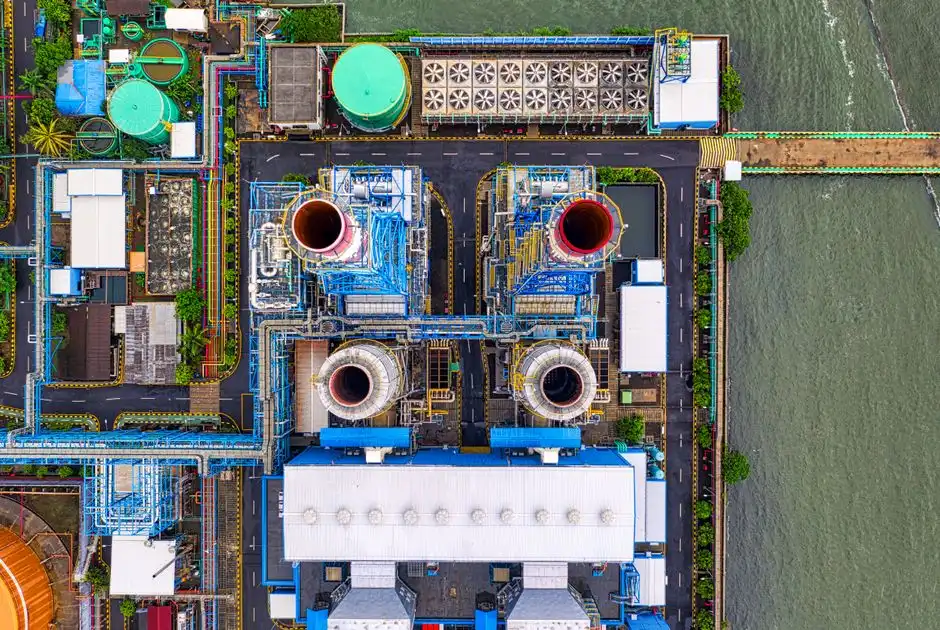
A 10 MW Miami-Dade data center on evaporative cooling at 4 CoC pulls roughly 15 Mgal/yr of makeup and discharges about 3.75 Mgal/yr as blowdown (volume logic per Environmental-Expert). The cost stack dictates the financial viability of a treatment system.
| Cost line | Miami assumption (2026) | Annual impact at 15 Mgal makeup / 3.75 Mgal blowdown |
|---|---|---|
| FPL industrial blended power (GSD) | 10–12 ¢/kWh | Drives RO pumping + any thermal ZLD OPEX |
| WASD sewage treatment charge | ~$5–6/Kgal inside service area | ~$19K–$23K/yr on discharged blowdown alone |
| SFWMD water-supply surcharges | A few $/Kgal on Biscayne withdrawals | Adds directly to avoided-makeup value |
| Industrial discharge fees (water-stressed region) | $5–15/Kgal per Genesis | Up to $56K/yr on full blowdown stream |
Three CAPEX tiers define the procurement strategy:
- Side-stream filtration + RO only ($300K–$700K): RO at 65% recovery reclaims ~2.4 Mgal/yr as permeate; OPEX $1.50–$3.00/Kgal (per Genesis). Simple payback inside 5–7 years at Miami cost-of-water, helped by PLC-controlled antiscalant and biocide dosing that keeps the RO membranes from fouling on salt-intrusion spikes.
- RO + partial ZLD / MVC ($1.5M–$3.5M): drops hauled-brine volume by 80–90%. Payback lengthens to 6–9 years unless the site has a zero-discharge constraint or very high freshwater cost.
- Full ZLD ($3M–$8M): $5–15/Kgal OPEX, 95–99% recovery. Clearing a 7-year CFO hurdle at 10 MW is difficult unless a regulator or a hyperscale customer requires it. The 2026 water-reuse outlook for industrial facilities shows that right-sized hybrid stacks pay back inside the 5-year window for sub-50 MW sites.
Non-cash items that strengthen the CFO case include avoided WASD discharge surcharges, reduced SFWMD permit pressure, and improved WUE scoring that impacts ESG disclosures — the same regulatory pressure driving Georgia Senate Bill 421 (Data Center Transparency Act) is moving through Florida policy discussions.
Five Mistakes Miami Data Centers Make When Specifying Blowdown Treatment
1. Importing a Phoenix or Loudoun County design. FDEP Ch. 62-625 and WASD local limits differ from Arizona and Virginia baselines, and Biscayne Aquifer salinity swings are not in the standard design envelope. Re-check every limit against the actual permit. 2. Chasing 8 CoC to cut blowdown 50% on paper. The real gain from 4→6 CoC is 20%; above 6, biological and scaling risk rises sharply without advanced chemistry. 3. Buying hyperscale ZLD for a 10 MW colocation hall. Capital per gallon treated runs 3–4× higher at sub-hyperscale (per Environmental-Expert), and the skid ends up underused. 4. Ignoring salt-intrusion events on Biscayne Aquifer makeup. Hurricane and king-tide events can spike intake TDS for weeks, and the antiscalant program must be designed for the spike, not the average. 5. Neglecting public-records transparency. Georgia Senate Bill 421 is the canary; Florida policy is heading the same way, and facilities that cannot produce discharge volume and chemistry on request will face scrutiny from the community and the regulator. For a comparison of how Atlanta handled these drivers, see the Atlanta data center cooling blowdown treatment guide; for a colder-climate contrast, the Boston data center cooling blowdown treatment guide shows what changes when thermal discharge, not chemistry, is the binding constraint.
Frequently Asked Questions
What TDS range should a Miami data center expect in cooling-tower blowdown?
At 4 cycles of concentration, expect 1,200–6,000 mg/L TDS — roughly 4–8× the Biscayne Aquifer makeup water (per Genesis Water Technologies). Hurricane-season salt intrusion can push the high end of that band for weeks, and the RO antiscalant program must be designed around the spike, not the annual average. Permit caps below 1,500 mg/L on the discharge side mean most untreated blowdown cannot be sent to the WASD sewer without some form of treatment.
Which FDEP chapter governs discharge of cooling-tower blowdown to the Miami-Dade WASD sewer?
FDEP Chapter 62-625 (industrial pretreatment) sets the categorical limits, and WASD's local industrial-waste limits layer on top with surcharges for high-strength BOD/TSS, pH excursions, and biocide residuals
Frequently Asked Questions
What wastewater does a data center in Miami produce and how is it regulated?
Data centers in Miami primarily generate cooling tower blowdown, which contains concentrated dissolved solids, scale inhibitors, biocides, and corrosion inhibitors. Secondary wastewater streams include condensate from HVAC systems and periodic floor drain wash-down water.
These discharges are regulated under the Clean Water Act via the National Pollutant Discharge Elimination System (NPDES) program. Facilities must adhere to specific local limits set by the Miami-Dade Water and Sewer Department (WASD) regarding pH levels (typically 5.0–10.0), total suspended solids, and chemical concentrations to prevent interference with municipal wastewater treatment plants.
How much does cooling-tower blowdown treatment cost for a Miami data center?
Treatment costs for cooling-tower blowdown generally range from $0.02 to $0.08 per gallon, depending on the concentration of total dissolved solids (TDS) and the specific removal technology employed. For a typical mid-sized data center, operational expenses for membrane-based filtration or ion exchange systems can range from $15,000 to $50,000 annually, excluding capital expenditures for equipment.
Costs are heavily influenced by the local Miami-Dade sewer utility rates and the required level of pretreatment necessary to meet industrial discharge permits. Implementing advanced water recovery systems can reduce long-term utility costs by 30% to 50% by minimizing the volume of blowdown sent to the sewer.
Is zero liquid discharge required for data centers in Florida?
Zero Liquid Discharge (ZLD) is not currently mandated by state or local regulations for data centers in Florida. However, ZLD systems are increasingly utilized by facilities aiming to meet stringent sustainability certifications or to mitigate the risk of rising sewer utility surcharges.
While not a regulatory requirement, some local utility departments may incentivize ZLD adoption in water-stressed areas to preserve regional aquifers. Facilities opting for ZLD must manage the byproduct of solid waste or brine concentrates, which must be disposed of in accordance with Florida Department of Environmental Protection (FDEP) hazardous waste guidelines.
What FDEP or WASD permits do Miami data centers need for blowdown discharge?
Data centers discharging into the municipal sewer system are required to obtain an Industrial User Permit from the Miami-Dade Water and Sewer Department (WASD). This permit outlines the specific pretreatment requirements and monitoring frequencies for effluent parameters such as conductivity, heavy metals, and organic compounds.
If a facility discharges directly to surface waters rather than the sanitary sewer, an NPDES permit issued by the Florida Department of Environmental Protection (FDEP) is required. This process involves rigorous water quality modeling and proof that the discharge will not violate established Class III water quality standards for Miami-Dade County.
Can cooling-tower blowdown be reused as cooling-tower makeup water in Miami?
Yes, cooling-tower blowdown can be recycled as makeup water using technologies such as electrodialysis reversal (EDR), reverse osmosis (RO), or advanced chemical softening. Recycling typically allows a data center to achieve 4 to 8 cycles of concentration, significantly reducing total water consumption.
In the high-humidity climate of Miami, biological growth and high alkalinity in makeup water must be carefully managed through automated chemical dosing and side-stream filtration. Successful reuse requires consistent monitoring of silica levels and conductivity to prevent scaling on heat exchange surfaces and to ensure the longevity of the server cooling infrastructure.