
Why Chicago Data Centers Face a Two-Permit Problem
Chicago data centers pulling evaporative makeup from Lake Michigan and discharging to the MWRD sanitary sewer face a dual-permit stack: an IEPA-issued NPDES permit governs direct surface-water returns to Lake Michigan, while the Metropolitan Water Reclamation District of Greater Chicago (MWRD) pretreatment ordinance governs discharge to the sanitary system under 35 Ill. Adm. Code. The federal floor is 40 CFR Part 423; EPA's 2026 Effluent Limitation Guidelines target TSS <30 mg/L, COD <50 mg/L, and pH 6–9 for steam-electric baseline categories, which Illinois applies as a backstop. MWRD local limits typically run stricter than the Part 423 backstop on heavy metals, total dissolved solids, residual chlorine/bromine, oil and grease, and temperature. A system designed to clear MWRD will clear EPA automatically, but the reverse is not true. Chicago's combined water-plus-sewer rate sits near $5.85/1,000 gal in 2026, so every 1,000 gallons avoided represents $5.85 saved before any reuse credit.
What Chicago's Lake Michigan Source Water Does to Your Blowdown
Lake Michigan is a relatively soft, silica-bearing source with TDS typically 150–220 mg/L, total hardness around 140 mg/L as CaCO₃, silica 1–3 mg/L, and chloride 8–12 mg/L. This baseline is multiplied by cooling-tower cycles of concentration. At 4 cycles, blowdown runs TDS 600–900 mg/L; at 6–8 cycles, 1,200–2,000 mg/L; and modern inhibitor programs land between 5,000–15,000 mg/L TDS with conductivity 8,000–25,000 µS/cm. These concentrations include bromine biocides, isothiazolones, phosphate and silicate corrosion inhibitors, and trace metals leached from basin hardware. Winter introduces a separate spike: glycol-bearing heat-trace loops and dry-coil freeze protection dump propylene or ethylene glycol into the basin, and reduced evaporation from November through March lifts COD into the 400–500 mg/L range while adding BOD that MWRD monitors for sewer discharge (per MWRD Ordinance 14-1, 2024 limits).
| Parameter | Lake Michigan Makeup | Blowdown at 4 COC | Blowdown at 6–8 COC | Modern Inhibitor Program |
|---|---|---|---|---|
| TDS (mg/L) | 150–220 | 600–900 | 1,200–2,000 | 5,000–15,000 |
| Hardness as CaCO₃ (mg/L) | ~140 | ~560 | ~840–1,120 | 700–1,100 (softened) |
| Silica (mg/L) | 1–3 | 4–12 | 6–24 | 15–60 (silicate inhibitor) |
| Chloride (mg/L) | 8–12 | 32–48 | 48–96 | 100–300 |
| COD (mg/L) | <10 | 40–100 | 100–250 | 100–500 (winter glycol spike: 400–500) |
| TSS (mg/L) | <5 | 10–50 | 50–150 | 50–200 |
The Five-Stage Treatment Train Chicago Actually Uses
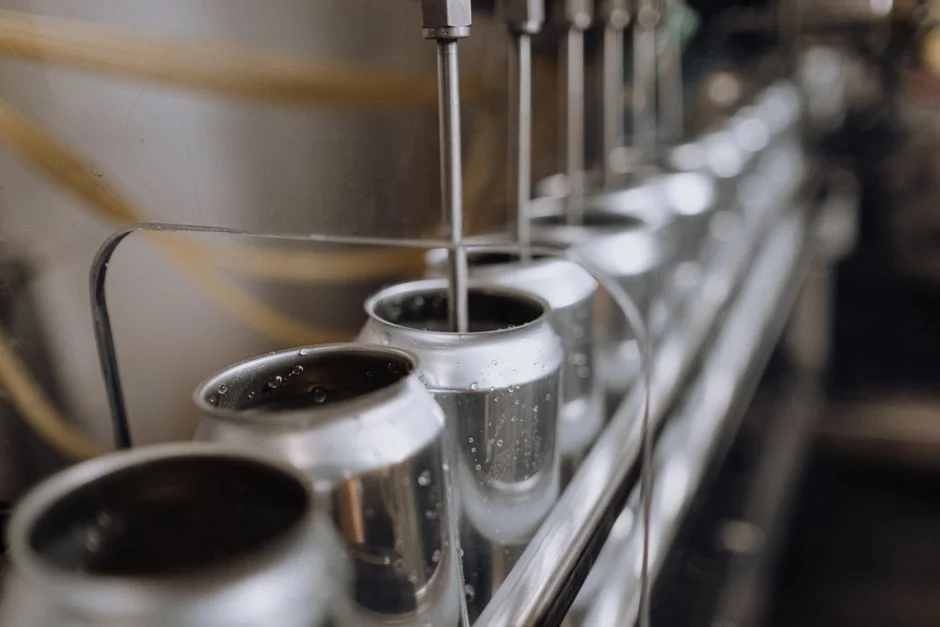
The dominant Chicago configuration for sewer-discharge facilities is MBR followed by RO, with MVC evaporation added only where ZLD is mandated. Stage 1 is side-stream filtration: self-cleaning spiral filters at 10–25 µm, sized to 1–5% of circulation flow, with CAPEX of $50K–$200K. Stage 2 is clarification using a dissolved air flotation pretreatment unit or a high-efficiency sedimentation tank for FOG and suspended-solids carryover. Stage 3 is the MBR membrane bioreactor: submerged PVDF at 0.1 µm, delivering effluent COD <50 mg/L and TSS <5 mg/L. Stage 4 is the industrial RO system: 70–85% recovery, permeate TDS typically <500 mg/L, with antiscalant injection and CAPEX of $300K–$800K. Stage 5, reserved for ZLD sites, is MVC or a brine concentrator at 95–98% recovery and 15–25 kWh/1,000 gal, which becomes economic in water-stressed submarkets.
| Stage | Unit Operation | Function | Effluent Spec | CAPEX (2026) | OPEX Driver |
|---|---|---|---|---|---|
| 1 | Self-cleaning spiral filter (10–25 µm) | Sidestream TSS reduction | TSS <30 mg/L | $50K–$200K | Solids disposal |
| 2 | DAF or lamella clarifier | FOG, basin biology, TSS polishing | TSS <20 mg/L | $100K–$250K | Polymer, skimmings |
| 3 | MBR (submerged PVDF, 0.1 µm) | COD/BOD reduction | COD <50 mg/L, TSS <5 mg/L | $500K–$1.5M | Aeration, CIP |
| 4 | RO (150–400 psi) | Dissolved solids, silica, hardness | Permeate TDS <500 mg/L | $300K–$800K | Energy, membranes |
| 5 | MVC / brine concentrator (optional) | ZLD brine volume reduction | Distillate TDS <10 mg/L | $1.2M–$3M | 15–25 kWh/kgal |
Matching Your Discharge Path to the Right Treatment Skid
Discharge destination dictates the required unit operations. For sewer discharge to MWRD, MBR followed by RO is the practical minimum; verify local limits on TDS, phosphorus, oil and grease, and residual oxidizing biocide before finalizing the spec. For surface discharge to Lake Michigan via NPDES, full RO plus polishing is required, and effluent temperature plus dissolved oxygen become permit drivers under Clean Water Act §316 thermal-discharge provisions. For on-site reuse as cooling makeup, RO permeate at TDS <500 mg/L is ideal and supports 60–85% reuse rates when paired with a multi-media filter on the cooling-tower side. For partial ZLD, RO followed by MVC captures 90%+ overall recovery at lower CAPEX than full ZLD.
| Discharge Destination | Minimum Train | Permit Driver | Recovery Target | Compliance Note |
|---|---|---|---|---|
| MWRD sanitary sewer | MBR → RO | MWRD local limits, 35 Ill. Adm. Code | 70–85% | Verify TDS, P, O&G, residual biocide |
| Lake Michigan via NPDES (IEPA) | MBR → RO → polishing | 40 CFR Part 423, CWA §316 thermal | 70–85% | Temperature & DO control in summer |
| On-site cooling makeup reuse | RO permeate + multi-media filter | Internal chemistry compatibility | 60–85% | TDS <500 mg/L target |
| Partial ZLD | RO → MVC | Volume reduction, hauling minimization | 90–95% | CAPEX $1.5M–$3M range |
2026 Cost Benchmarks for a Chicago Data Center
For a 10 MW facility, an MBR-plus-RO skid installed in Chicago lands between $800K and $2.3M CAPEX. OPEX is driven by energy and membrane replacement: RO runs $0.50–$1.20/m³, MBR $0.80–$1.50/m³, with RO membranes on a 3–5 year replacement cycle and MBR membranes on 5–7 years. A defensible 5-year TCO includes $600K CAPEX + $360K/yr OPEX against $2.1M in water-plus-sewer savings at the $5.85/1,000 gal rate, assuming a 40% makeup reduction. Pretreatment DAF adds ~$150K, sludge disposal runs $0.05–$0.20/gal, and compliance monitoring adds ~$20K/yr. Antiscalant chemistry should be specified through an automatic antiscalant dosing skid to manage silica scaling.
| Cost Line | 2026 Value (Chicago) | Notes |
|---|---|---|
| Combined water+sewer rate | $5.85 / 1,000 gal | 2026 MWRD published tariff |
| MBR+RO CAPEX (10 MW) | $800K–$2.3M installed | Flow and redundancy dependent |
| RO OPEX | $0.50–$1.20 / m³ | Energy + cleaning chemicals |
| MBR OPEX | $0.80–$1.50 / m³ | Aeration dominates |
| RO membrane life | 3–5 years | Antiscalant-dependent |
| MBR membrane life | 5–7 years | CIP frequency dependent |
| 5-year TCO net savings (worked) | ~$300K | 40% makeup reduction, $600K CAPEX |
| Hidden: DAF pretreatment | ~$150K | One-time |
| Hidden: sludge disposal | $0.05–$0.20 / gal | Waste hauler, Illinois |
| Hidden: compliance monitoring | ~$20K / yr | MWRD self-monitoring |
Frequently Asked Questions
Does MWRD or EPA Part 423 govern a Chicago data center blowdown discharge?
Both govern simultaneously. MWRD's local pretreatment ordinance under 35 Ill. Adm. Code sets sewer discharge limits, while EPA's 40 CFR Part 423 ELG sets the federal floor at TSS <30 mg/L, COD <50 mg/L, and pH 6–9. MWRD local limits typically run stricter on TDS, heavy metals, and biocide residuals, so a treatment train designed to clear MWRD automatically clears the federal backstop.
How do Chicago winters change blowdown chemistry and treatment design?
Reduced evaporation from November through March concentrates salts faster, and glycol-bearing heat-trace loops can spike COD into the 400–500 mg/L range. Treatment trains should be sized for the winter peak COD load, and the MBR stage requires sufficient aeration capacity to handle higher organic loading without missing the <50 mg/L effluent target.
When does ZLD pencil out for a Chicago data center?
Full Z