What Pretreatment Compliance Actually Requires for a Chemical Plant
Chemical plants near Lake Placid meet sewer-discharge limits by satisfying a three-layer federal framework under 40 CFR Part 403 before any equipment is selected. The first layer is the controlling regulation itself: 40 CFR Part 403 defines an Industrial User (IU) under §403.3(j) as a nondomestic source discharging to a POTW, and it obligates every IU to obtain a permit, meet discharge limits, and report results (per 40 CFR 403, EPA). The second layer is the set of categorical pretreatment standards codified in 40 CFR subchapter N — for organic chemicals, plastics, and synthetic fibers these are found at 40 CFR Part 414, which sets numeric effluent limits by subcategory. The third layer is the site-specific local limits set by the receiving POTW under 40 CFR 403.5(c); EPA states that "POTWs impose local limits at the end-of-pipe discharge from an industrial user" and that "EPA can enforce local limits that are developed and approved in accordance with 40 CFR Part 403.5(c) as pretreatment standards" (EPA, "Pretreatment Standards and Requirements-Local Limits").
Two legal triggers drive enforcement against any industrial user, and engineers should memorize the EPA language verbatim. Pass through under 40 CFR 403.3(p) is "a discharge that exits the POTW into waters of the United States in quantities or concentrations that, alone or in conjunction with a discharge or discharges from other sources, is a cause of a violation of any requirement of the POTW's NPDES permit." Interference under 40 CFR 403.3(k) is "a discharge that, alone or in conjunction with a discharge or discharges from other sources, both (1) inhibits or disrupts the POTW, its treatment processes or operations, or its sludge processes, use, or disposal; and (2) therefore is a cause of a violation" of the POTW's NPDES permit or sludge program. Either finding is enough to open a compliance action. The 40 CFR Part 403.5 general prohibitions — including the ban on pollutants that create fire/explosion hazards, corrosive discharges with pH below 5.0, and any discharge with a closed-cup flashpoint below 60 °C (140 °F) — are enforced as categorical standards and apply to every chemical plant regardless of subcategory (per 40 CFR 403.5, EPA). Engineers new to pretreatment should also review the fabricated-metals pretreatment compliance guide for a parallel view of how a different industry maps to the same three layers.
Identifying the Receiving POTW and Its Local Limits Near Lake Placid
The village of Lake Placid, NY, in Essex County, is served by a small village sewer district rather than a large regional POTW, and the local control authority (LCA) is typically the village or town DPW that operates the wastewater treatment plant and issues sewer-use permits. Because this POTW is not represented in the public EPA PCS discharge-monitoring records for industrial users, the practical first step for any chemical plant engineer is to identify the LCA directly through the village clerk or the NYSDEC regional office in Ray Brook, then submit a written request for four documents: the sewer-use ordinance, the local-limits technical justification, the monitoring-manhole location map, and the surcharge formula. EPA guidance specifies that "local limits are site-specific and can be numeric or narrative effluent discharge limits, including BMPs," and that POTWs must perform "annual reviews and periodic reevaluations" (EPA, "Pretreatment Standards and Requirements-Local Limits").
The standard analyte panel a chemical plant should expect to negotiate — drawn directly from the 40 CFR 403.5 prohibited-discharge framework — is: pH, total suspended solids (TSS), BOD₅ and/or COD, oil & grease, sulfides, total cyanide, phenols, adsorbable organically bound halides (AOX), temperature, and the priority metals lead, zinc, copper, nickel, total chromium, cadmium, and mercury. Some POTWs also require whole-effluent toxicity (WET) testing and Volatile Organic Compounds (VOC) scan. Where a small upstate POTW has not formally adopted numeric local limits for every analyte, narrative Best Management Practices (BMPs) — slug-control plans, pH excursion alarms, zero discharge of process waters to floor drains — are enforced instead. The same EPA notice reminds facilities that "POTWs impose local limits at the end-of-pipe discharge from an industrial user (i.e., at the point of connection to the POTW's collection system)" — that manhole is the legal sampling point for every compliance event.
Pollutants of Concern Specific to Chemical Manufacturing Discharges
Chemical manufacturing streams carry a broader and more aggressive analyte list than the typical metal-finishing or food plant, and the engineer designing a pretreatment system must map raw stream concentrations against each analyte's likely local limit before sizing unit operations. The table below summarizes the working parameter envelope; numeric limits vary by POTW, so the column shows the typical local-limit range observed across NY State categorical permits rather than a single binding value.
| Parameter | Typical raw chemical-plant strength | Common removal mechanism | Typical local-limit form |
|---|---|---|---|
| pH | 2 – 13 (highly variable) | Neutralization with acid/caustic dosing | Numeric range, often 5.0 – 11.0 SU (per 40 CFR 403.5) |
| COD | 1,000 – 10,000 mg/L | Biological oxidation, adsorption | Daily-max (mg/L) |
| BOD₅ | 300 – 4,000 mg/L | Biological oxidation | Daily-max and/or monthly-average (mg/L) |
| TSS | 200 – 3,000 mg/L | Coagulation, sedimentation, DAF, filtration | Daily-max and monthly-average (mg/L) |
| Oil & Grease (HEM) | 100 – 5,000 mg/L | DAF, lamella, API separator | Daily-max (mg/L) |
| Sulfides (S²⁻) | 1 – 50 mg/L | Oxidation (Cl₂, H₂O₂, O₃), precipitation | Daily-max, often <1 mg/L |
| Total Cyanide | 0.1 – 20 mg/L | Alkaline chlorination, biological degradation | Daily-max, often <0.2 mg/L |
| Phenols | 1 – 200 mg/L | Biological treatment, GAC adsorption | Daily-max (mg/L) |
| AOX | 0.5 – 25 mg/L | GAC adsorption, advanced oxidation | Daily-max (mg/L) |
| Temperature | 20 – 70 °C | Quench/cooling, equalization | Daily-max often ≤40 °C (per 40 CFR 403.5) |
| Lead, Zinc, Copper, Nickel, Chromium, Cadmium, Mercury | 0.1 – 50 mg/L (varies) | Hydroxide or sulfide precipitation, ion exchange | Daily-max and monthly-average (mg/L) per categorical standard |
The three parameters that most often drive excursions in chemical plants are pH (because batch processes produce slugs of acid or caustic that overwhelm equalization), sulfide (because it forms in any stream carrying sulfate-reducing conditions and trips the 40 CFR 403.5 prohibition on toxic gases), and cyanide (because metal-complexed cyanide resists alkaline chlorination and frequently requires a WAD-CN destruction step). Engineers should also note that sludge disposal regulations under 40 CFR Part 503 govern the solids removed in this process train, so metals and AOX loadings on the cake affect downstream disposal routing as much as the effluent limits do.
The Pretreatment Process Train Used by Most Chemical Plants
The canonical pretreatment train for a chemical plant is a five-stage sequence: equalization → pH adjustment → coagulation/clarification (DAF or lamella) → biological treatment → polishing and disinfection. Each stage has a defined envelope of removal performance and a typical sizing range, summarized in the table below; engineers should treat the cited ranges as starting points for design and confirm them with site-specific bench and pilot testing.
| Stage | Typical sizing / operating range | Function in the train | Notes & trade-offs |
|---|---|---|---|
| 1. Flow & load equalization | 8 – 24 h HRT; mechanical or jet mixing | Buffers batch and CIP spikes; stabilizes downstream feed | Larger basins improve pH/sulfide stability but tie up footprint |
| 2. pH / chemical adjustment | Online pH probe; 5.0 – 9.0 SU target; PLC-controlled dosing | Neutralizes acid/caustic; precipitates metals as hydroxides | Most permit excursions originate here — see pH adjustment system maintenance for probe calibration discipline |
| 3. Coagulation / flocculation + DAF or lamella | 10 – 30 min flocculation; 5 – 20% recycle (DAF); 60 – 120 min settling (lamella) | Removes TSS, FOG, precipitated metals | A DAF system for chemical plant pretreatment handles FOG-heavy streams better; a lamella clarifier for industrial pretreatment suits high-solids inorganic streams |
| 4. Biological treatment (MBR / SBR / CAS) | F/M 0.05 – 0.3 d⁻¹; HRT 6 – 24 h; MLSS 3,000 – 10,000 mg/L (MBR) | Removes soluble COD/BOD and ammonia; partial destruction of phenols and cyanide | A MBR biological treatment stage offers the smallest footprint and the most consistent effluent; SBR handles batch feeds; CAS has the lowest capex |
| 5. Polishing + disinfection | 5 – 15 m/h filtration rate; 30 – 60 min contact (ClO₂) or 30 – 40 mJ/cm² (UV) | Removes residual TSS, AOX, and refractory organics; inactivates pathogens before discharge | A multi-media polishing filter ahead of GAC extends carbon life |
The pH stage is the single largest source of non-compliance in chemical plant pretreatment and is best handled with a PLC-controlled chemical dosing skid tied to redundant online pH probes with automatic switchover. Engineers should expect to remove the bulk of suspended solids, FOG, and precipitated metals in stage 3, the bulk of biodegradable COD/BOD and ammonia in stage 4, and any refractory organics (phenolics, AOX, trace VOCs) in stage 5. Where the receiving POTW enforces a tight AOX or phenols limit, an additional advanced oxidation step (ozone or Fenton) may be inserted between stages 4 and 5.
Monitoring, Sampling, and Self-Audit Practices That Keep Plants Compliant
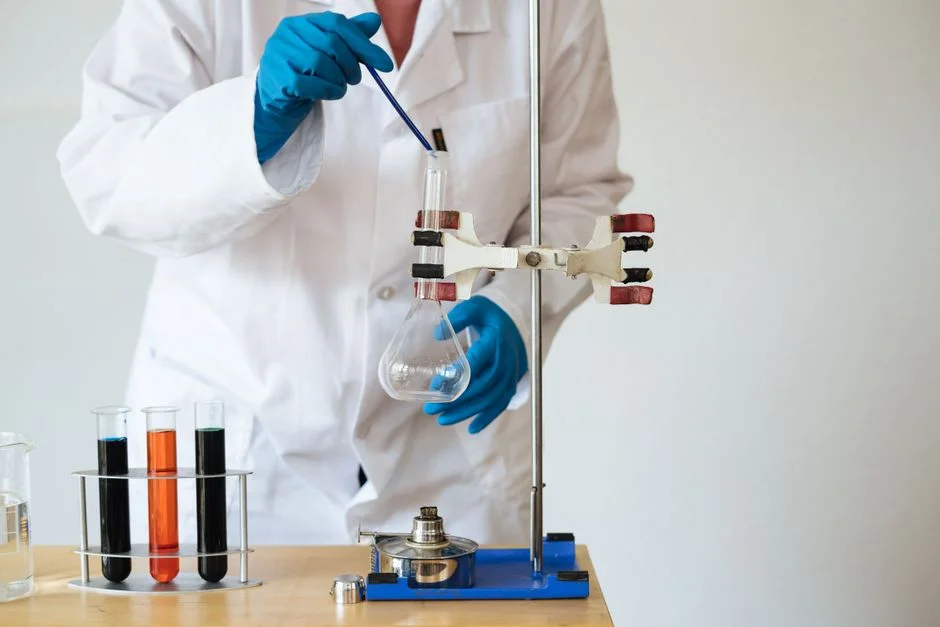
The 40 CFR 403.12 reporting and recordkeeping rules require every Industrial User to sample at the monitoring manhole, maintain chain-of-custody records, and submit Discharge Monitoring Reports (DMRs) on a schedule set by the POTW. The practical baseline in 2026 is a 24-hour flow-proportional composite sampler for regulated analytes (COD, TSS, metals, cyanide) plus a grab sample for pH, temperature, sulfides, and oil & grease, with online instrumentation — pH, conductivity, and a TOC or COD analyzer — providing continuous trend data on the discharge line. Self-monitoring records and BMP logs are the primary evidence the POTW reviews during a compliance inspection, so any deviation must be logged with a root cause and corrective action within 24 hours.
Two practices have become the de facto 2026 standard for chemical plants seeking to stay ahead of enforcement: an annual third-party split-sample audit against the POTW's lab (typically in spring, before the summer production ramp) and a written slug-control plan that defines which process streams may not be discharged to the sewer, the maximum permitted batch volume, the required equalization time before release, and the 24/7 on-call contact. The slug-control plan, in particular, is what the POTW uses to evaluate whether a plant has "interfered" with the collection system under 40 CFR 403.3(k) after an event, and a well-maintained plan is the difference between a warning letter and a consent order.
Frequently Asked Questions
Which federal regulation controls chemical plant sewer discharge in New York?
40 CFR Part 403 establishes the General Pretreatment Regulations, including the categorical standards at 40 CFR Part 414 for organic chemicals, plastics, and synthetic fibers, the general prohibitions at 40 CFR 403.5, and the local-limits framework at 40 CFR 403.5(c). New York State implements this program through the NYSDEC SPDES Industrial Permit program, but the underlying federal text drives the limits.
How does a chemical plant find its local limits when the POTW is small and not in EPA's public database?
Submit a written request to the local control authority (typically the village or town sewer district) for the sewer-use ordinance, the local-limits technical justification, the surcharge formula, and the monitoring-manhole location. If the POTW has not formally adopted numeric local limits, narrative BMPs and the general prohibitions in 40 CFR 403.5 become the enforceable floor.
What is the difference between pass through and interference?
Under 40 CFR 403.3(p), pass through is a discharge that exits the POTW in concentrations or quantities that cause a violation of the POTW's NPDES permit. Under 40 CFR 403.3(k), interference is a discharge that inhibits or disrupts the POTW, its treatment processes, or its sludge processes and thereby causes an NPDES or sludge violation. Either finding is sufficient to trigger enforcement.
What is the most common cause of pretreatment excursions at a chemical plant?
Uncontrolled pH from batch discharges is the single most frequent excursion driver, followed by sulfide spikes and oil & grease upsets from process spills. A PLC-controlled chemical dosing skid with redundant online pH probes and adequate equalization (typically 8 – 24 h HRT) addresses the majority of these events.