Why Gaborone Projects Need a Containerized MBR
Gaborone sits on a semi-arid plateau at roughly 1,014 m elevation with annual rainfall under 450 mm and seasonal water stress that pushes the cost of municipal supply above ZAR-equivalent tariffs seen in wetter SADC neighbors. A 300-person mining accommodation camp discharging 60 m³/day of sewage will, over a 12-month deployment, lose roughly 22,000 m³ of treated water to the environment if that effluent is not reused on-site for toilet flushing or landscape irrigation. Containerized MBR packages eliminate the secondary clarifier and tertiary sand filter, cutting site footprint by roughly 60% versus a conventional activated sludge (CAS) package of the same design flow, and arrive on a flatbed requiring only power and water connections — bypassing the 3–6 month civil works permit cycle that fixed concrete structures trigger in the Gaborone City Council jurisdiction.
Decentralized membrane bioreactors are explicitly suited to remote locations, communities, camps, and temporary installations where haulage by sewer-truck runs ZAR 150–250 per kiloliter and breaks down on gravel access roads in the Kalahari fringe. For housing estates, lodge camps, and worker accommodation blocks within a 100 km radius of Gaborone, a containerized MBR wastewater treatment system delivers reuse-quality effluent that meets Botswana Bureau of Standards discharge limits for irrigation reuse without the civil footprint of a buried concrete works.
Sizing Inputs You Need Before Selecting a Container
Missing occupancy data is the single most common reason containerized STPs in southern Africa are undersized within 18 months of commissioning — a camp specified at "150 beds" arrives with 220 occupants on day one because the developer counted single beds as occupancy units. Lock the design population (P) before quoting: for camps use maximum-shift occupancy, not nominal bed count, and for residential use 3.5–4.5 persons per household unit depending on plot size.
Per-capita flow (q) is the second most-misused input. A defensible Botswana baseline is 150 L/c/d for residential, rising to 200 L/c/d for camps with meals, laundry, and shift shower blocks; the Pure Aqua containerized MBR baseline cited by vendors is 50 gpd (≈190 L/c/d) at design temperature 20°C (S2). Apply a peaking factor (PF) of 1.3 for residential estates with distributed occupancy and up to 1.5 for camps with synchronized shift showers and meal blocks — without this, the morning peak will overload the equalization tank and starve the membrane tank of HRT.
| Parameter | Residential estate | Camp / lodge / worker accommodation |
|---|---|---|
| Design population basis | 3.5–4.5 persons per unit | Maximum shift occupancy |
| Per-capita flow q (L/c/d) | 150 | 200 |
| Peaking factor PF | 1.3 | 1.4–1.5 |
| Influent BOD (mg/L) | 250–400 | 400–600 |
| FOG / grit removal | Minimal kitchen input | Grease trap + drum screen upstream |
Q_avg (m³/day) = P × q ÷ 1000; Q_peak (m³/day) = Q_avg × PF. Camp influent BOD of 400–600 mg/L versus 250–400 mg/L for residential directly raises required MLSS and F:M ratio in the bioreactor, so do not borrow the residential number for a camp tender.
Step-by-Step Sizing Calculation
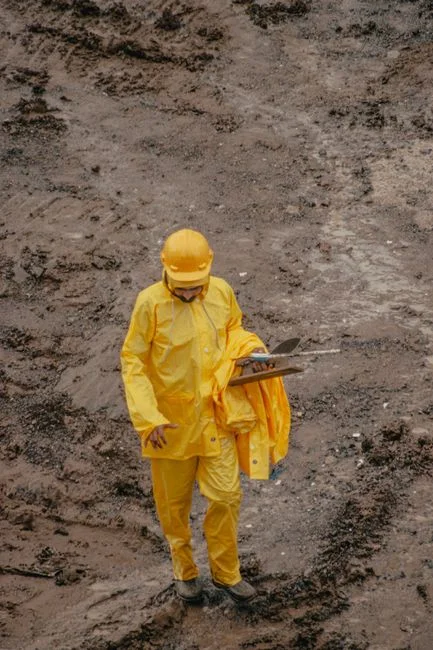
Run the worksheet in the order below; each step feeds the next, and a mistake in step 1 propagates through to membrane area in step 4.
- Step 1 — Average daily flow. Q_avg (m³/day) = Population × per-capita flow ÷ 1000. Example: 300 × 200 ÷ 1000 = 60 m³/day.
- Step 2 — Aeration tank volume. V_aero (m³) = Q_avg × HRT. Design HRT for MBR is 6–8 hours, shorter than CAS (8–12 h) because MBR runs at 8,000–12,000 mg/L MLSS versus 2,000–4,000 mg/L for CAS. At HRT 7 h, V_aero = 60 × 7 ÷ 24 = 17.5 m³.
- Step 3 — Membrane tank volume. V_mb (m³) ≈ 0.3 × V_aero. Submerged hollow-fiber UF or flat-sheet cassettes run at design flux 15–25 L/m²·h; the typical operating envelope for a DF series PVDF flat-sheet MBR module sits at 18 L/m²·h at 20°C.
- Step 4 — Required membrane area. A_m (m²) = Q_peak (L/h) ÷ design flux. Convert Q_peak to L/h first: 84 m³/day × 1000 ÷ 24 = 3,500 L/h; at 18 L/m²·h, A_m ≈ 194 m².
- Step 5 — Equalization buffer. Size for at least 25% of Q_avg to absorb the morning peak — for the 60 m³/day example, ≥15 m³ buffer with coarse bubble mixing to prevent septicity.
- Step 6 — Sludge production. Yield 0.3–0.5 kg DS per kg BOD removed; for Q_avg 60 m³/d at 500 mg/L BOD and 95% removal, daily DS production is roughly 9–15 kg. Sludge storage must hold ≥7 days between dewatering cycles, so design for 70–110 kg DS holding capacity.
Worked Example: 300-Person Camp Near Gaborone
Inputs: P = 300, q = 200 L/c/d, PF = 1.4 (camp with shift blocks), design HRT 7 h, design flux 18 L/m²·h, design temperature 20°C. Run the worksheet:
- Q_avg = 300 × 200 ÷ 1000 = 60 m³/day
- Q_peak = 60 × 1.4 = 84 m³/day ≈ 3.5 m³/h
- V_aero = 60 × 7 ÷ 24 = 17.5 m³
- V_mb ≈ 0.3 × 17.5 = 5.3 m³
- A_m = 3,500 L/h ÷ 18 L/m²·h = ≈194 m² of submerged membrane
- Equalization buffer ≥ 15 m³
- Sludge storage ≥ 7 days × 12 kg DS/d ≈ 85 kg DS holding
| Parameter | Value | Notes |
|---|---|---|
| Population P | 300 | Max-shift, not nominal beds |
| Per-capita flow q | 200 L/c/d | Camp with meals + laundry |
| Q_avg | 60 m³/day | Daily average |
| Peaking factor PF | 1.4 | Shift-block camp |
| Q_peak | 84 m³/day (3.5 m³/h) | Design peak |
| HRT | 7 h | MBR operating range 6–8 h |
| V_aero | 17.5 m³ | Aeration tank volume |
| V_mb | 5.3 m³ | Membrane tank volume |
| Design flux | 18 L/m²·h | PVDF at 20°C |
| A_m | 194 m² | Required membrane area |
| Equalization | ≥15 m³ | 25% of Q_avg |
| Recommended configuration | 1 × 40 ft HC + 2 parallel flat-sheet cassettes, OR 2 × 20 ft HC in series (anoxic + MBR) | Either fits the 194 m² membrane area |
For a tender submittal, carry the membrane area figure (194 m²) as a separate line item — it is the only number a membrane supplier cannot fudge without changing the cassette count or the design flux assumption.
Matching Flow to Container Size
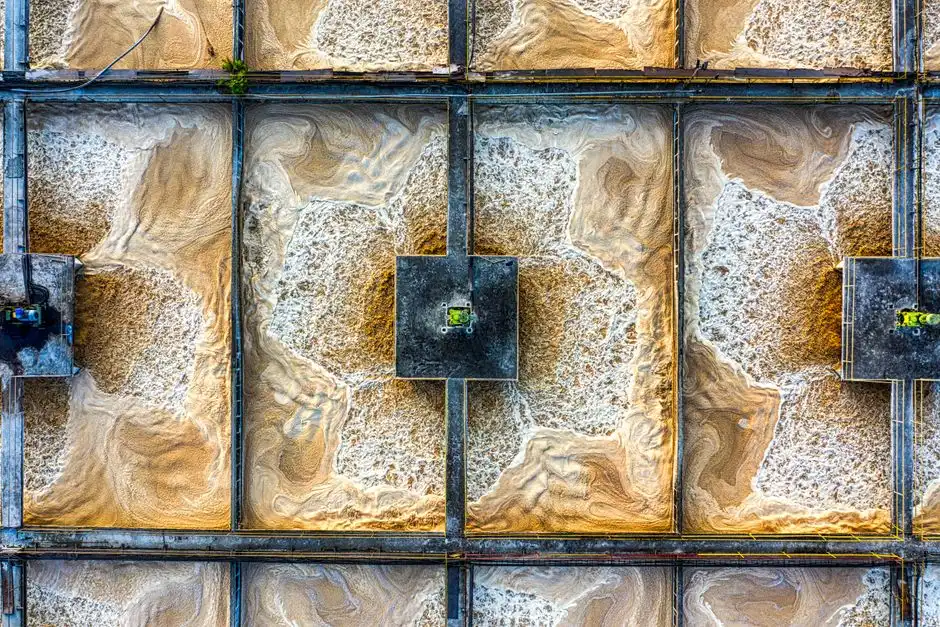
Translating a sizing output into a catalog model is the step most engineers skip, then quote three different vendors and end up with three different answers. The mapping below is based on Pure Aqua's 20 ft HC and 40 ft HC containerized MBR-C envelope (S2) plus the multi-container scalability that SIGMADAF notes for decentralized plants (S1).
| Container configuration | Design flow envelope | Approx. population @ 200 L/c/d | Typical configuration |
|---|---|---|---|
| 1 × 20 ft HC | Up to ~50 m³/day | ≤ 250 people | Single submerged UF cassette train; pre-treatment on upstream skid |
| 1 × 40 ft HC | 50–150 m³/day | 250–750 people | Two cassette trains OR anoxic + MBR split |
| 2 × 40 ft HC (parallel trains) | 150–300 m³/day | 750–1,500 people | Common header piping, shared MCC, redundant cassette trains |
| 3+ × 40 ft HC trains | > 300 m³/day | Estate-scale or municipal | Modular expansion; PLC with load-sharing |
The 20 ft HC internal envelope (~6.0 m × 2.35 m × 2.7 m) physically limits a single cassette train to roughly 100 m² of membrane area; above 150 m³/day, plan a second container rather than over-stuffing a single 40 ft HC. For sub-50 m³/day flows where the project calls for a buried concrete aesthetic, a WSZ underground package sewage treatment plant is the alternative catalog line to evaluate, but it loses the plug-and-play redeployability that containerized units offer remote camps.
Botswana Climate, Power, and Reuse Considerations
Generic MBR sizing pages stop at "designed for municipal wastewater." Botswana-specific operating conditions will break a container shipped from a 60 Hz default configuration if they are not addressed in the purchase order.
- Temperature. Pure Aqua's MBR-C is rated for 20–30°C operating envelope with design point at 20°C (S2). Gaborone winter minimums drop below 5°C and can approach 0°C on the surrounding plateau; specify insulated container walls and trace heating on the equalization line and permeate manifold, or winter flux will fall 30–40% below summer rating.
- Power. Default electrical supply is 460 V / 3Ph / 60 Hz (S2). Botswana grid supply is 230 V / 50 Hz at single-phase residential or 400 V / 3Ph / 50 Hz for commercial feeds. Confirm the vendor will reconfigure the MCC and blower starters before shipping, or budget a step-up transformer that will eat 3–5% of total connected load as heat.
- Reuse targets. MBR effluent at ≤30 mg/L BOD and ≤30 mg/L TSS is suitable for sub-surface landscape irrigation and toilet flush under Botswana Bureau of Standards BOS 746:2017 reuse guidelines. For any reuse with potential human contact (showers, ornamental fountains), pair the MBR with a chlorine dioxide disinfection generator sized at 0.5–1.0 mg/L ClO₂ residual for a 30-second contact time. Reference effluent quality benchmarks in MBR effluent quality benchmarks if the design report needs a citable standard.
- Sludge handling. For flows under 100 m³/day, a plate-and-frame sludge filter press of 1–5 m² plate area running one cycle per week will produce a cake at 18–22% DS that can be co-disposed with camp solid waste. Skipping sludge dewatering is the fastest way to fill the sludge holding tank and shut the plant down for manual emptying within 6 months.
For a worked tropical-climate comparison case, see packaged MBR STP sizing for a tropical camp project in Sierra Leone — the climate envelope is wetter but the sizing math is identical. For Southern African industrial parallels, the industrial wastewater treatment in Bloemfontein 2026 guide covers similar voltage and reuse compliance points within 400 km of the Gaborone market.
Frequently Asked Questions
What per-capita flow should I use for a 300-person camp near Gaborone?
Use 200 L/c/d for a camp with meals, laundry, and shift shower blocks; that gives Q_avg = 60 m³/day. A 150 L/c/d figure is too low for a camp context and will undersize the equalization tank by 25–30%.
How many people can a 20 ft HC containerized MBR treat?
A single 20 ft HC container typically covers up to ~50 m³/day, which at 200 L/c/d is roughly 250 people. Above 250 people, step to a 40 ft HC or two 20 ft HC containers plumbed in series for anoxic + MBR duty.
What HRT should I design an MBR for?
Design HRT for an MBR is 6–8 hours, shorter than the 8–12 hours used in conventional activated sludge because MBR runs at 8,000–12,000 mg/L MLSS. For camp wastewater with 400–600 mg/L BOD, target the upper end at 7–8 hours to keep F:M in the 0.05–0.15 kg BOD/kg MLSS·d range.
Can a containerized MBR run on Botswana's 230 V / 50 Hz grid?
Yes, but the standard 460 V / 3Ph / 60 Hz default (S2) must be reconfigured at the factory before shipping. Confirm the MCC, blower VFDs, and pump starters are rated for 400 V / 3Ph / 50 Hz, otherwise the plant will not start on Botswana grid supply.
What reuse quality can I expect from a containerized MBR?
MBR effluent typically meets ≤30 mg/L BOD, ≤30 mg/L TSS, and ≤5 NTU turbidity, which qualifies for sub-surface irrigation and toilet flushing under Botswana reuse guidelines. Add a chlorine dioxide disinfection generator for any reuse with potential human contact.