Industrial wastewater treatment in Bloemfontein requires systems capable of handling Free State’s stringent effluent limits (e.g., COD < 75 mg/L, TSS < 25 mg/L per SANS 241:2015) while addressing local challenges like high organic loads from food processing and mining. In 2025, dissolved air flotation (DAF) systems achieve 95% TSS removal for industrial effluents, while MBR systems deliver near-reuse-quality water (<1 NTU turbidity) for facilities prioritizing water scarcity mitigation. Costs range from R 2.5–8 million for a 50–200 m³/h system, depending on technology and automation level.
Why Bloemfontein’s Industrial Wastewater Needs Specialized Treatment
Bloemfontein maintains a 98% reliance on surface water via the Maselspoort Project, placing extreme pressure on industrial users to manage discharge quality as demand rises by 12% annually per the Free State Water Strategy 2023. The region's industrial facilities often produce high-strength wastewater that municipal works are not equipped to process, leading to a surge in localized pretreatment requirements.
Key industries in the region, particularly food processing, generate effluents with Chemical Oxygen Demand (COD) ranging from 3,000 to 10,000 mg/L. Mining operations contribute heavy metals and pH extremes, while the textile sector introduces complex dye toxicities. These pollutants cannot be discharged directly into the municipal sewer without violating the National Water Act of 1998, which empowers authorities to issue fines up to R 5 million for non-compliance. The 2023 Glen wastewater system test highlighted the fragility of local infrastructure, signaling that industrial players must achieve higher self-sufficiency in treatment to avoid being throttled by municipal capacity limits.
Compliance triggers are increasingly focused on Free State wastewater regulations that align with SANS 241:2015. To meet these, engineers must look beyond basic settlement tanks toward advanced physical-chemical and biological processes. Investing in localized treatment is no longer just about avoiding penalties; it is about securing a "license to operate" in a region where water allocations are becoming a competitive disadvantage for the unprepared.
Industrial Wastewater Treatment Technologies for Bloemfontein: How They Work and When to Use Them
Dissolved Air Flotation (DAF) systems utilized in Free State food processing facilities typically achieve over 95% removal efficiency for Fats, Oils, and Grease (FOG) and suspended solids. The process involves dissolving air into the wastewater under pressure and then releasing it at atmospheric pressure in a flotation tank. For high-TSS effluents, a high-efficiency DAF system for Bloemfontein’s industrial effluents is often the first line of defense, reducing influent TSS from 5,000 mg/L to under 50 mg/L before secondary treatment.
For facilities targeting water reuse, Membrane Bioreactor (MBR) technology has become the gold standard. By combining activated sludge biological treatment with PVDF membranes featuring a 0.1 μm pore size, MBR systems eliminate the need for secondary clarifiers. This results in an effluent with turbidity <1 NTU, suitable for cooling towers or process irrigation. An MBR system for water reuse in Bloemfontein’s water-scarce environment allows industrial sites to mitigate the impact of municipal water restrictions. These systems are particularly effective for space-constrained sites, as the high MLSS concentrations (8,000–12,000 mg/L) allow for a significantly smaller footprint than traditional activated sludge plants.
Sludge management remains a critical cost driver in the Free State. Utilizing a sludge dewatering solution for Bloemfontein’s industrial facilities, such as a plate-and-frame filter press, can produce a dry cake with 20–30% solids content. Chemical dosing also plays a vital role, with lime used for pH adjustment in mining effluent and coagulants like Polyaluminium Chloride (PAC) used to enhance flocculation in hospital or textile wastewater.
| Technology | Primary Application | Removal Efficiency (TSS/COD) | Best For |
|---|---|---|---|
| DAF (Dissolved Air Flotation) | Physical-Chemical Separation | TSS: 95%+, FOG: 99% | Food Processing, Abattoirs |
| MBR (Membrane Bioreactor) | Biological Treatment + Filtration | COD: 90%+, TSS: 99.9% | Water Reuse, High-Strength Organics |
| Plate-and-Frame Press | Sludge Dewatering | 25-35% Cake Solids | Volume Reduction for Disposal |
| Anaerobic Digestion | High-Load Biological | COD: 70-85% | Breweries, Biogas Recovery |
Effective treatment systems require careful consideration of local conditions. Industrial wastewater treatment in Bloemfontein demands a deep understanding of regional regulations and environmental challenges.
Technical Specifications: Matching Treatment Systems to Bloemfontein’s Effluent Challenges
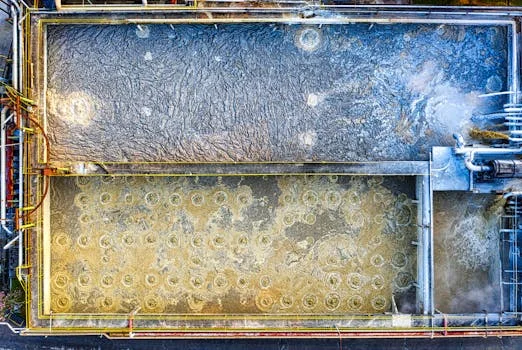
Engineering specifications for industrial wastewater systems in Bloemfontein must align with the SANS 241:2015 Class II standards for non-potable discharge or Class I for potable reuse. When sizing a DAF unit, flow rates typically range from 4 to 300 m³/h. A 50 m³/h unit requires a footprint of approximately 10 m², making it highly efficient for existing facility retrofits. In contrast, MBR systems are sized based on membrane flux, typically 15–25 Liters per Square Meter per Hour (LMH), with energy consumption hovering between 0.8 and 1.2 kWh/m³ (HydropureWater field data, 2025).
Meeting Bloemfontein industrial effluent limits requires precise control over chemical consumption. For example, polymer consumption in sludge dewatering typically ranges from 3 to 5 kg per ton of dry solids. The following table outlines the gap between raw industrial effluent and the required compliance targets for discharge into Free State water bodies.
| Parameter | Raw Food Processing Effluent | SANS 241:2015 Limit | Recommended Tech |
|---|---|---|---|
| COD (mg/L) | 3,000 – 10,000 | < 75 | DAF + MBR |
| TSS (mg/L) | 500 – 5,000 | < 25 | DAF / Filter Press |
| Ammonia (mg/L) | 50 – 200 | < 1.5 | Biological (MBR) |
| FOG (mg/L) | 200 – 1,000 | < 2.5 | DAF |
| Turbidity (NTU) | > 100 | < 1 | MBR + Ultrafiltration |
For more detailed technical comparisons, engineers can refer to the detailed MBR system specs and ROI analysis for South African facilities. These benchmarks ensure that the selected equipment is not over-engineered (leading to wasted CAPEX) or under-engineered (leading to compliance failure).
Cost Breakdown: Industrial Wastewater Treatment Systems in Bloemfontein (2025 Data)
Capital expenditure for a 100 m³/h industrial wastewater treatment plant in Bloemfontein averages between R 3.5 million and R 6 million in 2025, depending on the complexity of the influent. Operating costs (OPEX) are driven by energy, chemicals, and labor. Energy costs typically range from R 0.50 to R 1.50 per m³ treated. Chemical costs for coagulants and polymers add another R 0.80 to R 2.00 per m³.
| System Type | Flow Rate (m³/h) | CAPEX (ZAR) | OPEX (ZAR/m³) |
|---|---|---|---|
| DAF | 50 – 100 | R 2.5M – R 4M | R 1.20 – R 2.50 |
| MBR Integrated | 50 – 100 | R 5M – R 8M | R 2.50 – R 4.50 |
| Filter Press System | N/A (Sludge) | R 0.8M – R 1.5M | R 800/ton (dry) |
Financial assistance is sometimes available through the Free State Green Fund, which offers grants for up to 30% of project costs for water-saving initiatives. For a comparison of regional pricing, see the Gauteng’s wastewater treatment standards and cost benchmarks.
Free State Compliance Checklist: Permitting, Testing, and Reporting for Industrial Facilities
The Free State Department of Water and Sanitation (DWS) requires a minimum of three to six months for the processing of new industrial effluent discharge permits. Facility managers must provide a comprehensive Environmental Impact Assessment (EIA), detailed site plans, and effluent quality projections. A notable 2023 case involved a Bloemfontein textile plant fined R 2.3 million for exceeding chromium limits, a penalty that could have been avoided with a robust pretreatment strategy and proper permitting.
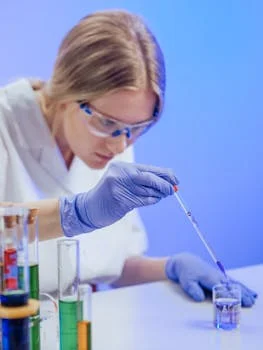
Sampling requirements are strictly enforced. Industrial facilities are typically required to conduct weekly testing for COD and TSS, while monthly testing for heavy metals and ammonia is standard for mining and chemical sectors. All samples must be analyzed by accredited laboratories, such as the CSIR or DWS-approved local providers.
"Compliance is not a one-time event but a continuous engineering discipline. In the Free State, the transition from municipal reliance to industrial self-regulation is the only path to long-term sustainability." — Regional Compliance Audit Report, 2024.
Vendor Selection Framework: How to Choose a Wastewater Treatment Partner in Bloemfontein
Local vendor support in the Free State reduces unplanned downtime by an average of 40% compared to relying on technical teams dispatched from Gauteng or Cape Town. When evaluating a partner, the first question should always be: "Can you provide a Free State-specific compliance guarantee?" This ensures the vendor takes responsibility for the treated water quality meeting SANS 241 standards. National players often have broader technology portfolios, but local vendors offer faster response times and a deeper understanding of the specific quirks of Bloemfontein’s municipal grid and water chemistry.
Pilot testing is a non-negotiable step for any investment over R 2 million. On-site trials lasting 2 to 4 weeks allow engineers to validate the performance of a DAF system selection guide for South African industrial effluents using the actual waste stream.
Frequently Asked Questions
What are the three types of industrial wastewater treatment?
Industrial treatment is categorized into Primary (physical separation like DAF), Secondary (biological processes like MBR), and Tertiary