

Why Kennesaw Chemical Plants Cannot Discharge Straight to the Sewer
Chemical plants in the Kennesaw / northwest Atlanta metro discharge to the Cobb County Water System collection system, which conveys flow to the Noonday Creek Water Pollution Control Plant (WPCP) and to the R.L. Sutton WPCP on the Chattahoochee. Under 40 CFR 403.5(c), every POTW with a POTW-developed industrial pretreatment program must derive site-specific local limits from a Maximum Allowable Headworks Loading (MAHL) analysis that protects the plant, its biosolids, and the receiving stream — limits that are imposed at the end-of-pipe, the point of connection to the collection system (per EPA, NPDES Pretreatment Standards and Local Limits). Because that measurement point is the IU's discharge tap, the only way to meet a Cobb County local limit is to treat on-site to below the ceiling before flow crosses the property line. A pass-through event — defined in 40 CFR 403.3(p) as a discharge that exits the POTW in concentrations that cause or increase an NPDES violation — or an interference event that disrupts POTW unit operations or biosolids disposal is the legal hook for an enforcement action, and EPA can enforce any local limit that was developed and approved in accordance with 40 CFR 403.5(c). For a chemical plant, that means a slug load of pH 2, a 50,000 mg/L COD batch, or a 200 mg/L nickel dump from a catalyst changeover is not just an operational problem; it is a 403.3(p) trigger waiting to be sampled.
What the Local Limits Actually Cover
Cobb County local limits for chemical-plant Significant Industrial Users (SIUs) typically combine numeric ceilings, narrative BMPs, and the federal prohibited discharge standards at 40 CFR 403.5. The numeric parameters fall into five families: conventional (pH 5.0–10.0 SIU range, TSS, COD/BOD₅, FOG), metals (Cd, Cr, Cu, Pb, Ni, Zn, Ag — and sometimes Hg, Se, As), anions/cyanide (free and total cyanide, sulfides, phenols), toxic organics (TTO composite of specific volatile and extractable priority pollutants), and sludge-trace pollutants that pass through into biosolids. Limits are site-specific and may be numeric ceiling limits, narrative BMPs, or both (EPA, NPDES Pretreatment Standards). The MAHL calculation that produces each metal ceiling back-calculates from three constraints: NPDES receiving-stream water-quality criteria, NPDES permit limits at the POTW outfall, and biosolids quality criteria (typically ceiling concentrations for land application under 40 CFR Part 503) — whichever is tightest becomes the headworks loading, then is allocated across the SIU base (per the St. Joseph, MO Technically-Based Local Limits study, Black & Veatch 2020, which is representative of MAHL methodology). Categorical pretreatment standards in 40 CFR 400-series subparts (e.g., 414 for the Organic Chemicals, Plastics, and Synthetic Fibers category) apply directly to the IU when the plant fits a subcategory, and the more stringent of the two always controls.
| Parameter family | Typical SIU ceiling (Cobb County pattern) | Driver |
|---|---|---|
| pH | 5.0–10.0 (instantaneous) | 40 CFR 403.5 prohibited discharge |
| TSS | 200–300 mg/L daily max | POTW NPDES TSS limit + biosolids |
| COD / BOD₅ | 600 / 250 mg/L daily max (typical) | POTW NPDES oxygen demand |
| FOG | 100 mg/L daily max | POTW NPDES + 40 CFR 403.5 |
| Cd, Cr, Cu, Pb, Ni, Zn, Ag | 0.1–10 mg/L, site-specific | MAHL from NPDES + 40 CFR 503 biosolids |
| Total cyanide / sulfides | 0.1–10 mg/L, site-specific | MAHL + worker safety / collection-system corrosion |
| TTO (40 CFR 413/414) | 2.13 mg/L composite | Categorical standard overlay |
The Standard Kennesaw-Area Pretreatment Process Train
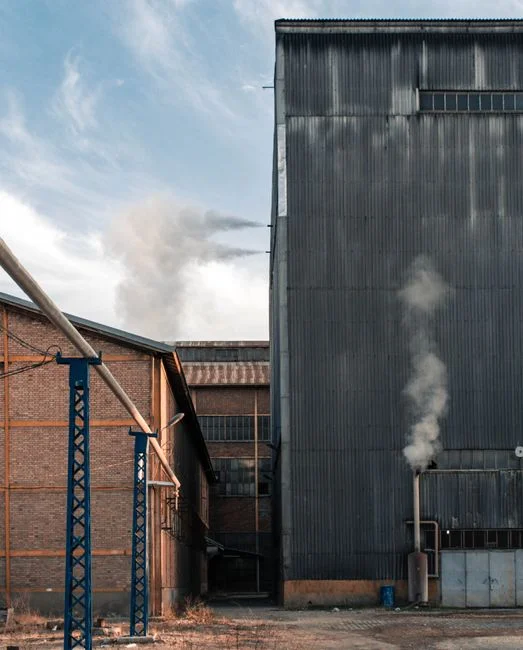
The reference train for a Kennesaw-area chemical plant is equalization → DAF → chemical precipitation → equalization to biological → MBR or activated-sludge secondary clarification → multi-media filtration → optional RO, with a plate-and-frame filter press on every sludge stream. These systems ensure that facility output remains compliant with site-specific regulatory mandates. Flow and pH equalization at 6–24 hours HRT is the slug-load buffer that prevents a shift turnover or a CIP dump from showing up as a 403.3(p) pass-through event. DAF then strips free and emulsified oil, FOG, and floatable solids, routinely removing >90% of oil and grease when the influent is in the 200–1,000 mg/L range. Chemical precipitation with lime or caustic plus a coagulant (often a polyacrylamide emulsion) targets dissolved metals by pH-staging — most transition metals drop below 1 mg/L between pH 9 and 10.5 — and the metal-rich hydroxide sludge is sent straight to dewatering. Equalization to a low-HRT biological stage follows the NETL/DOE 2021 reference train for chemical precipitation plus low-HRT bio plus ultrafiltration (per DOE/NETL-2021/2874), then MBR or secondary clarification takes residual COD/BOD and biomass out, and multi-media filtration polishes to an SDI low enough to support an RO polish if the plant is reclaiming process water. Sizing the train is driven by the controlling parameter — usually the tightest metal ceiling or the BOD₅ ceiling — at the plant's peak hourly flow, not its average day.
| Stage | Unit operation | Target pollutant(s) | Typical design figure |
|---|---|---|---|
| 1 | Flow / pH equalization | Slug loads, pH spikes | 6–24 h HRT |
| 2 | DAF system for FOG and floatable solids removal | Free/emulsified oil, FOG, TSS | >90% O&G; 10–25 m/h hydraulic loading |
| 3 | Chemical precipitation | Dissolved metals, residual pH | pH 9.0–10.5; coagulant 5–25 mg/L |
| 4 | Low-HRT activated sludge | Soluble COD/BOD, residual organics | HRT 4–8 h; F/M 0.2–0.5 d⁻¹ |
| 5 | MBR or secondary clarifier | Biomass, residual TSS | MLSS 8,000–12,000 mg/L (MBR) |
| 6 | Multi-media filtration ± RO | SDI control, final polishing | SDI < 3 before RO |
| 7 | Plate-and-frame filter press | Hydroxide sludge volume reduction | Cake > 25% DS |
Matching Each Pollutant to the Right Unit Operation
The mental shortcut from pollutant to equipment is what turns a regulatory ceiling into a procurement line item. Free and emulsified oil and FOG go to a DAF system for FOG and floatable solids removal — the air bubble attaches to the oil droplet, floats it, and the skimmer pulls it off. Settleable and suspended solids go to a lamella clarifier or to the DAF underflow; either works, but DAF also captures the FOG that a clarifier would miss. Dissolved heavy metals (Cu, Ni, Zn, Pb) go to pH adjustment with lime or caustic plus a coagulant injected by a PLC-controlled chemical dosing skid calibrated to the precipitation pH curve, and the metal hydroxide floc is then separated in a clarifier or, increasingly, in the same DAF. Soluble COD/BOD₅ from organic reactions, sulfides, and phenols go to biological treatment — an MBR system for organics removal is the default for chemical plants because the membrane retains biomass at high MLSS and tolerates the shock loads that a clarifier would lose. Trace organics, color, and the last 5–15% of COD go to activated carbon or advanced oxidation if the local ceiling is tight. Final polishing before the POTW connection is a multi-media filter for SDI control with anthracite over sand over garnet, plus a pH trim to land the discharge inside the 5.0–10.0 window.
Equipment Specifications That Hold Up to a POTW Audit
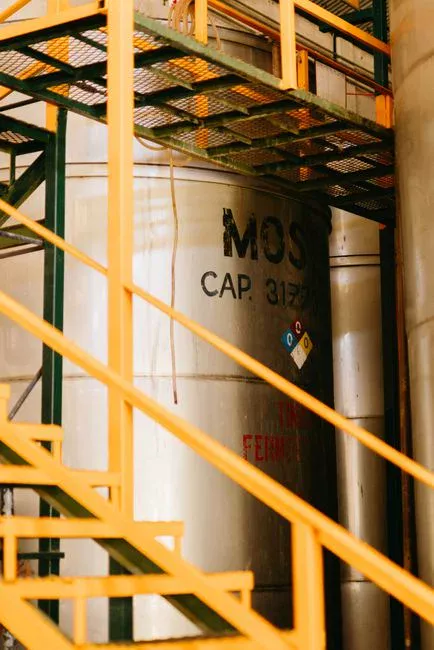
An auditor is going to ask for the design basis sheet on each unit. For the DAF, name the surface loading rate (typically 10–25 m/h on a rectangular unit), the recycle ratio (20–50% with saturator at 4–6 bar), the micro-bubble contact zone geometry, and a skimmer drive rated for 24/7 chemical-plant duty with a fiberglass or 316L skimmer. For the PLC-controlled chemical dosing skid, the spec needs redundant metering pumps, HDPE tanks with secondary containment, calibration against the precipitation pH curve (each metal has a minimum-solubility pH window), and a pH probe loop with auto-shutoff if pH drifts outside the target band. For the MBR, the spec is PVDF submerged membranes at 0.1–0.4 µm pore size, a designed flux of 10–20 L/m²·h consistent with low-HRT chemical wastewater, an aeration scour rate around 0.3–0.5 m³ air per m² membrane area, and an in-line turbidity or TMP trip to trigger cleaning-in-place. The multi-media filter needs anthracite (0.8–1.2 mm) over silica sand (0.45–0.55 mm) over garnet (0.2–0.3 mm), automatic backwash triggered by differential pressure, and an SDI target below 3 to protect any downstream RO. Finally, the metal-rich hydroxide sludge is dewatered on a plate-and-frame filter press for hydroxide sludge rated for 6–9 bar feed pressure, with HDPE plates and a cake target of 25–35% dry solids so the disposal route meets Georgia EPD solid-waste criteria and the filtrate returns to the head of the train.
| Equipment | Key spec | Audit-defensible figure |
|---|---|---|
| DAF | Surface loading / recycle | 10–25 m/h; recycle 20–50% at 4–6 bar |
| Chemical dosing skid | pH control band | ±0.2 pH; redundant pumps; HDPE tanks |
| MBR | Membrane flux / pore size | 0.1–0.4 µm PVDF; 10–20 L/m²·h |
| Multi-media filter | SDI target | Anthracite/sand/garnet; SDI < 3 before RO |
| Plate-and-frame press | Cake dryness | 6–9 bar feed; 25–35% DS cake |
Frequently Asked Questions
What is the legal basis for the Cobb County local limits on a chemical plant discharge?
Local limits are derived under 40 CFR 403.5(c) using a Maximum Allowable Headworks Loading analysis, then imposed at the point of connection to the POTW collection system (per EPA, NPDES Pretreatment Standards and Local Limits). For a chemical plant that fits a 40 CFR 400-series subcategory, the more stringent of the categorical standard and the local limit controls.
What is the difference between a pass-through violation and an interference violation?
Pass-through under 40 CFR 403.3(p) is a discharge that exits the POTW in concentrations that cause or worsen an NPDES permit violation. Interference is a discharge that disrupts POTW treatment processes, operations, or biosolids use and disposal. Either one can trigger enforcement on a Kennesaw chemical plant whose on-site pretreatment
Frequently Asked Questions
What local limits apply to chemical plants discharging to the Cobb County sewer?
Chemical plants discharging to the Cobb County Water System must adhere to the specific local limits established in the Cobb County Sewer Use Ordinance. These limits typically include maximum allowable concentrations for heavy metals, such as 2.0 mg/L for Copper, 0.5 mg/L for Cadmium, and 1.0 mg/L for Total Chromium, alongside pH requirements generally maintained between 5.0 and 11.0 standard units.
In addition to metals, facilities must comply with mass-based or concentration-based limits for Total Suspended Solids (TSS), Biochemical Oxygen Demand (BOD), and Chemical Oxygen Demand (COD). Plants must consult their individual industrial discharge permit to confirm specific parameter caps, as these are often adjusted based on the plant's flow volume relative to the capacity of the receiving Water Reclamation Facility.
How do you calculate a MAHL-based local limit under 40 CFR 403.5(c)?
Calculating a Maximum Allowable Headworks Loading (MAHL) involves determining the most restrictive limit for a pollutant based on the POTW's NPDES permit, sludge disposal standards (40 CFR 503), and inhibition levels for biological treatment processes. The formula is: MAHL = (Water Quality Standard or Sludge Standard) / (Removal Efficiency of the Treatment Plant).
Once the MAHL is established, the formula for a local limit is: Local Limit = (MAHL - Safety Factor - Uncontrolled Sources) / (Total Industrial Flow). This ensures that the cumulative discharge from all industrial users, including chemical plants, does not exceed the capacity of the treatment plant to process the pollutant without violating environmental or operational constraints.
What is the best pretreatment process train for a chemical plant near Kennesaw?
For chemical facilities in the Kennesaw area, an effective pretreatment train typically begins with equalization and pH adjustment to stabilize influent chemistry. This is followed by chemical coagulation and flocculation using polymers or metal salts to destabilize colloidal matter, and subsequent dissolved air flotation (DAF) or sedimentation to remove solids and heavy metals.
If the discharge contains organic contaminants or high COD, the process train should incorporate advanced oxidation processes (AOP) or biological treatment, such as a Membrane Bioreactor (MBR) or moving bed biofilm reactor (MBBR). Final polishing via activated carbon adsorption or ion exchange is often necessary to ensure consistent compliance with strict local discharge limits for specific chemical constituents.
Do chemical plants in Georgia need a SIU discharge permit from the POTW?
Yes, any chemical plant that meets the definition of a Significant Industrial User (SIU) must obtain a discharge permit from the local POTW. Under federal and Georgia EPD regulations, a facility is classified as an SIU if it discharges an average of 25,000 gallons per day or more of process wastewater, contributes a process waste stream which makes up 5% or more of the average dry weather hydraulic or organic capacity of the POTW, or is subject to Categorical Pretreatment Standards.
Even if a plant does not meet these flow criteria, the Control Authority may designate it as an SIU if it has a reasonable potential for adversely affecting the POTW's operation or for violating any pretreatment standard. Failure to maintain an active, valid permit for these discharges constitutes a violation of the Clean Water Act and local ordinances.
How is metal-rich chemical sludge disposed of under Georgia EPD rules?
Metal-rich sludge generated from chemical pretreatment processes is classified as industrial solid waste and must be managed according to Georgia EPD rules under Chapter 391-3-4. Before disposal, the sludge must undergo the Toxicity Characteristic Leaching Procedure (TCLP) to determine if it exhibits hazardous characteristics under RCRA regulations.
If the sludge is determined to be non-hazardous, it must be disposed of in a permitted Subtitle D industrial or municipal solid waste landfill. If the sludge exceeds the regulatory thresholds for toxicity, it must be handled, manifested, and transported as hazardous waste to a permitted Subtitle C facility, with strict adherence to cradle-to-grave tracking requirements mandated by both state and federal law.